
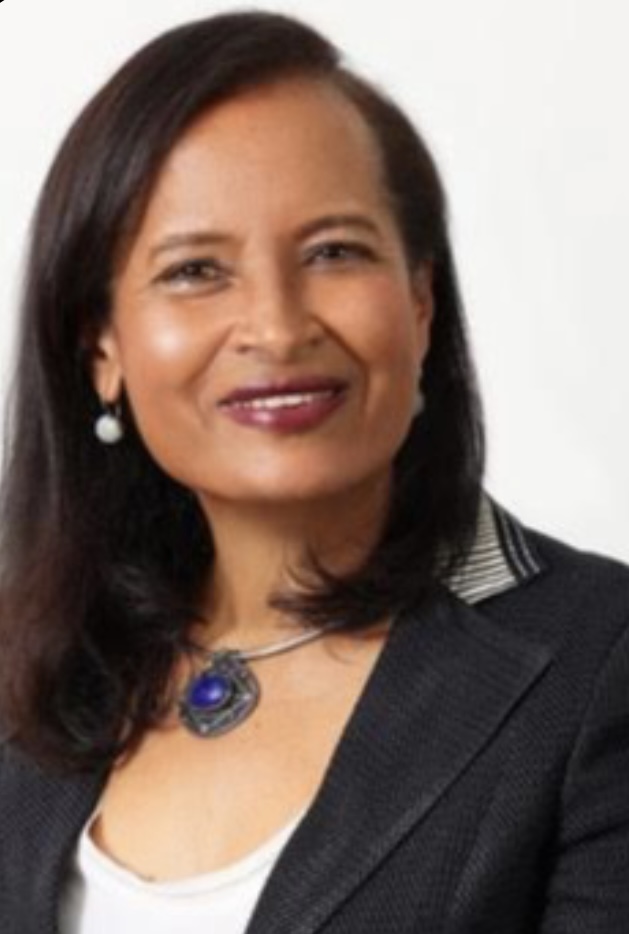
This is a keynote address delivered at a conference organised by Knowledge Anchors Group on 31 August 2023 in Johannesburg…
Distinguished guests,
ladies and gentlemen
A very warm welcome to you all
I greet you in my capacity as Chancellor of the Nelson Mandela University, an institution which I am so very proud to be associated with – not only because we are the only institution in the world that has been given the honour and privilege of bearing the name of this globally iconic statesman, but also because so much of who he was and what he stood for, speak directly to our topic today.
As is so often the case in South Africa, a brief analysis will demonstrate that our legislative framework has not failed us when it comes to setting out what is required of us in regard to sound and transparent (corporate) governance in both the public and private sectors.
Since I speak as the Chancellor this morning, allow me to briefly sketch the legislative and regulatory regime in which universities function, bearing in mind that they are governed by their own Higher Education Act (Act no 101 of 1997), as amended, which makes provision for their own institutional statutes, and which are bolstered by various regulatory reporting requirements.
Perhaps the most relevant of these reporting requirements for our purposes today, is the Regulations for Reporting by Public Higher Education Institutions (DHET 2014) . The regulations contain a manual which sets out in detail what is required from public institutions when it comes to their reporting including in regard to governance.
Public higher education institutions must demonstrate good governance, sustainability and corporate citizenship. King III describes these in the following terms:
“Good governance is essentially about effective leadership. Leaders should rise to the challenges of modern governance. Such leadership is characterised by the ethical values of responsibility, accountability, fairness and transparency and based on moral duties.”
However, acknowledging that King III (and now IV) does not cater adequately for higher education institutions, DHET released the Guidelines for Good Governance Practice and Governance Indicators for Councils of South African Public Higher Education Institutions (2017:4) which coincided with an amendment to the HE Act in that same year.
In the foreword to the Guidelines, the following is stated :
“Over the past several years, independent assessors have been appointed for a number of universities in terms of the Higher Education Act (Act No 101 of 1997, as amended) as a result of poor institutional governance and mismanagement. The work done by the independent assessors revealed serious challenges with regard to governance, administration and management of some universities that were destabilising and undermining the effective functioning of the institutions. Various governance failings stemmed from amongst others, inexperience and lack of the required expertise among some of the council members towards the fulfilment of their governance and fiduciary role; fraught relationships between councils and executive management and members of staff; lack of leadership, especially at the level of the chairpersons of councils; unacceptable and counter-productive conduct by some council members; and non-adherence to proper meeting procedures (2017: 3).”
One of the reasons I am putting emphasis on improving governance of universities, is the need to ensure that our universities do not become hubs for corrupt practices. The success of a public higher education institution rests, to a large extent, on accountable and effective governance and sound management practices (2017:5).
Chapter 4 (pg. 24) of the guidelines enumerates and extrapolates on the contributing factors to the collapse of sound governance at many of our institutions under the following headings: “Inadequate leadership; Role confusion and contestation; Factionalism and internal divisions; Non-adherence to rules and procedures; Council/Vice-chancellor relationships; and other governance challenges such as ‘Stakeholderisation,’ Appointment of council members and the size of Councils (4:24).”
Now for those among us who are in business or other enterprises, much of this will undoubtedly sound familiar. One might simply substitute boards for Council, and CEO and Chairman for VC and Council Chair, to find resonance.
As Davids and Kitcat (2023) set out the legislative and regulatory regime for companies in their article “Corporate Governance Review: South Africa” (Davids and Kitcat 2023) and one immediately notes the alignment with the governance framework in higher education, particular in regard to governance per se when it asserts:
“Insofar as ‘good practice’ standards are concerned, the King IV Code on Corporate Governance (the King Code), which is recognised as one of the world’s leading corporate governance codes, sets out principles and recommended practices that an organisation should apply to demonstrate good governance, reflected in four outcomes: ethical culture, good performance, effective control and legitimacy. Certain recommended practices in the King Code are incorporated into the Listings Requirements.”
One is therefore able to discern commonalities – both in terms of governance requirements (good practice) and in terms of the clear non-compliance with these prescripts, which have brought us to the dire situation in which we find ourselves as a country at this juncture.
Much has to do with the understanding of effective leadership, the challenges of modern governance and the entire notion of the ethical values of responsibility, accountability, fairness and transparency and moral authority, duty and stewardship. And we need to understand these imperatives in the context where our behaviours cannot be legislated. And for some, where aspects such as integrity and morality, which should surely underpin our every act of service, theses imperatives are simply cast aside. And it is this, distinguished guests, which has led to our current predicament. Simply put, we are a corrupt nation, both personally and professionally.
The Oxford dictionary defines corruption as “illegal, bad, or dishonest behaviour, especially by people in positions of power”.
In South Africa, “Corruption can informally be described as the act of unfairly or illegally influencing a decision-making process through the giving or receiving of a benefit (gratification) for the person making the decision or a third party connected to the decision maker.”
In terms of South African criminal Law, corruption is defined as follows:
“Anybody who (a) accepts any gratification from anybody else, or (b) offers or gives any gratification (benefit) to anybody else in order to influence the receiver to conduct herself or himself or itself in a way which amounts to the unlawful or irregular exercise of any duties, commits corruption.”
I think one is able to discern the very clear moral link between leadership accountability, ethics and integrity which reside at the very foundation of ensuring a functional and functioning society.
I thus pose an important question confronting leaders in the 21st Century, one which has been posed throughout the ages, and which one would suggest, tends to have found its own resolution, good or bad.
The question is this: ‘Where is society when rogue leaders and individuals plunge companies, cities and nations into crises? ‘
The topic of my address today will, I hope, shed some light on this intractable issue, since it speaks directly to the context, challenges and failures which I have already sketched in my introduction. I speak here, distinguished guests, ‘On The Burden of Leadership, Ethics and Governance: Perspectives For 21st Century Leaders. ‘
In so doing, I would like to demonstrate to all of us, the burden we have as members of organisations, to take the responsibilities bequeathed/bestowed upon us more seriously. I want to remind us all of the heavy price that we all pay when we fail to fulfill our duties to the organisations we lead and to society.
I wish to highlight the fact that the consequences of our actions are often borne by a wider group of stakeholders in unimaginable ways, and finally, armed with this understanding, I wish to exhort us all to lead by example – to ensure ethical conduct and accountability wherever we are charged with a governance responsibility, or a position of some influence and in fact in the exercise of our everyday citizenship.
And these objectives are aligned to the four outcomes expected from governing bodies/ boards in King IV (Four) report, namely an ethical culture, good performance, effective control and legitimacy.
There is a well-known IsiXhosa proverb, isizwe sifa ngomntu omnye which stated simply, means, ‘A nation may perish on account of one person!’ Its sophistication, for 21st century leaders, lies in its simplicity – in the obvious fact that the consequences of actions of individuals ultimately affect society at large. Like the ripples from a stone that is thrown into a pond, our conduct – including every single unethical decision – has a ripple effect and impact on society, from the richest, to the poorest.
This simple isiXhosa proverb alludes to the ongoing question in studies of human societies, namely, the ‘structure-agency’ debate.
For instance, it may be inferred that while it takes the village to raise the child, the child may in turn grow up and trigger events that may cause the village to perish. In a critical realist sense, this recognises the dynamism between structure and agency. It acknowledges that the frameworks of rules, institutions and systems that condition individual behaviour, that is, the structure, is also subject to the will and behaviour of individuals, the agency. This links directly back to the governance challenges and failures which I have already addressed. We have the structure, but we must ask: Where and how effective is the agency?
Every generation has witnessed how individual actions have caused unbearable harm across the world. These range from wars, evil political economic systems, genocides, a lack of corporate integrity corruption scandals, truly evil human beings and many others. Those of us who are old enough to recall the horrors and outcomes of WWII and then the madness that was Apartheid, will understand this all too well.
We think for example, of the ‘Watergate’ scandal and subsequent investigations from 1972 to 1974 which ended the career of President Richard Nixon and the five people who broke into the Democratic National Committee Headquarters. Sixty nine (69) people were indicted in total and 48 were convicted.
In the early 1990s, Siemens was caught in a corruption scandal that involved more than $1.4 billion in bribes to government officials in Asia, Africa, Europe, the Middle East and the Americas. As a consequence, the company reportedly paid more than $1.6 billion in fines, penalties and disgorgement of profits.
Sani Abacha, the president of Nigeria from 1993 until his death in 1998, allegedly took between US$3 and $5 billion of public funds for personal gain. In the investigations conducted since his passing, private businesses and banks were found to be complicit in the graft, including a premium brand like Deutsche Bank.
Between the years 2016 and 2018, the tropical holiday destination in South Asia, the Maldives, was entangled in money laundering scandals that allegedly involved local businessmen, international hotel operators, and even President Abdulla Yameen. It was discovered that fake tourism investments had been used to launder almost 1.5 billion US dollars and banks were found to have enabled the scandal.
The Steinhoff corruption reportedly eroded R216 billion from the company’s market value in 2017, negatively affecting the lives of stakeholders from investors and employees to pensioners linked to it through institutional investors.
Finally, we all know about the revelations of the state captors in South Africa in recent years, and the activities of the so-called ‘Deep State’ in the United States.
Many careers have been sacrificed on the altar of individual greed and unfettered power, and many lives have been lost in the pursuit of truth and justice – so many of these in our own country on an almost daily basis.
And so we must ask: where is society when rogue individuals plunge companies, cities and nations into crises?
From moral philosophy to religion and praxis among various cultures, there are guidelines on how we ought to respond to all forms of corruption. Philosophers have debated humanity’s pursuit of good from two broad perspectives, that is, the teleological approach, whose premise can be summed up by the adage, ‘the ends justify the means’, and the deontological approach, which focuses on “duty” and is associated with Immanuel Kant, and where it is suggested that it should not be the ends that justify the means but that rather, the means themselves should be just.
Somewhat ironically in our 21st century world, and in the context of our gathering today, this debate is resolved for us, through our advanced constitutional and legislative and regulatory framework as well as a large variety of codes such as the King Code, in South Africa’s case. (Each country tends to have their own bespoke governance codes.)
The crux of it all is the idea that power is limited, or circumscribed, in a constitutional order, whether that power is vested in individuals, in government, or in private organisations. This does not just relate to formal delegations of authority which ought to inform the behaviour of managers, executives and their boards, but it should also guide, and hopefully, regulate their choices and views about their entitlements.
However, the breakdown in trust, the abuse of power, the theft of billions of rands from taxpayers, shareholders or beneficiaries of corporate social investments happens and is on the increase, despite the framework of rules established to govern our institutions and guide and hold to account the behaviour of leaders.
In the words of Haile Selassie: “Throughout history, it has been the inaction of those who could have acted; the indifference of those who should have known better; the silence of the voice of justice when it mattered most; that has made it possible for evil to triumph.”
I suggest that there are three fundamental principles we may learn from Madiba, which we can invoke in playing our roles effectively in boards/councils to achieve the King IV outcomes of sound and transparent governance. These are humility, courage and sacrifice.
Humility denotes modesty, a view of the self that is not arrogant and prideful, and more importantly, the elevation of others more than the self. (This resonates with the kind of ‘Servant Leadership’ espoused by Robert Greenleaf.)
At the core of every corruption scandal is an underlying assumption that one is more entitled to what should benefit the greater good than the legitimate beneficiaries. This goes against the grain of everything that Madiba stood for. When offered his personal freedom from jail by the PW Botha regime in exchange for renouncing the armed struggle, Madiba refused to capitulate, asserting that it was better to continue to suffer than to elevate the self – his personal freedom – above the freedom of his people. This stance continued into the hammering out of our new constitutional democracy and deep respect for the sanctity and pre-eminence of the laws of our country – our constitutional democracy. Who can forget his preparedness to subject himself to judicial processes, where this was required.
Given this example and commitment to social justice and equity, Madiba is an important example to emulate, now more than ever, at a time when the corrupt seem to cherish the idea that they are entitled to more benefits than are due to them in terms of remuneration and other incentives. They use devious means to get their way. Arrogance, and not humility rule the roost with this mindset.
Given the billions of rands over which we have been made stewards in government, the private sector and non-profit organisations, we should not elevate the needs of our families and friends above the needs of the legitimate stakeholders that depend on our goodwill – some for their very existence.
Francis Fukuyama refers to political systems in which benefits are distributed based on kinship and friendship as repatrimonialisation or neopatrimonialism and they are a sign of decay. For him, societies that have become advanced determine benefits based on merit.
What this means for our purposes today, is that we are there to serve the stakeholders who have invested, or legitimately expect benefits from our organisations, and therefore, our families and friends benefit only from what is due to them, from the income we draw legitimately for our service. All else is a prideful elevation of ourselves above society – and the consequences of non compliance are dire.
It costs us as society when senior executives and managers in the public and private sectors ignore talent and competency and choose their often incompetent friends and family to render services which would be rendered more efficiently and at a lesser cost, by more competent people.
Not only does corruption of this kind sabotage good performance for one organisation, but it also tends to have a knock-on effect on other stakeholders, and none of it can in any way be construed as positive.
When it comes to courage and sacrifice, I would like to draw from the example of the woman we should not fail as a country as we soldier on to ensure better state and corporate conduct. I speak of one Babita Deokaran whose life was brutally extinguished for blowing the whistle on corruption.
At the risk of being targeted by a powerful cabal that had ‘captured’ Thembisa Hospital, she dared to investigate and act when she saw that the poor were being swindled of crucial resources necessary for their health. She paid the ultimate price which I spoke of earlier. It is utterly soul destroying to think that a life of a wife, mother and a beloved family member was snuffed out because of greed and corruption. For being honest and having courage and integrity. At the very least, and it is cold comfort indeed, her family will be able to be proud of her character and her commitment to our country and our people. It is particularly heartrending that she warned in emails that she feared for her life for revealing this corruption.
As News24 reported Deokaran “tried to stop R100 million in dodgy payments and flagged nearly R850 million in other suspicious transactions at the Gauteng Department of Health just days before she was killed – confiding in colleagues that her last investigation could result in her death”.
May there be more people in government, the private sector, and NPOs who will have her courage. Indeed, sacrifice relates to the price we have to pay at times, in pursuit of our responsibilities.
In this regard one recalls the words of Madiba as he stood in the dock at the Rivonia trial, when he said “it is an ideal which I hope to live for and to achieve. But if needs be, it is an ideal for which I am prepared to die”.
He was referring to this all-consuming ideal that made generations of liberation fighters sacrifice their careers and the comfort of their homes to fight for a better tomorrow. What will we be known for as leaders in the 21st century? What are we fighting for, making sacrifices for, aspiring for? What will be our legacy? What will our children be writing about us?
Will it be our complicity and passive victimhood at the hands of rogues who have no burning desire for or vision of a better tomorrow. Or will we courageously join others who have paid a heavy price for the ideal of a good society?
Let me leave you with these thoughts on the moral imperatives for a just and equitable society and move on to some practicalities.
South Africa remains, unequivocally, an unjust society. Having said that we must similarly acknowledge that we have a duty to bequeath to generations after us, a country that Steve Biko, Chris Hani, Bram Fischer, Florence Matomela, Rahima Moosa and countless others, would be proud of.
The Bureau of Market Research has reported recently that 73% of income earners in South Africa earn below R6 000 per month, while only 3.3% earn more than R52 000. The report confirms the high dependency ratio in the country, with over 32% of the working age population depending only on friends and family as their sources of income.
The Global Wealth Report (2023) also shows that wealth inequality has increased in South Africa over the last two decades. And there is a gendered aspect to inequality. Statistics South Africa has once again revealed that “equality in the job market eludes women”. “The labour market in South Africa remains more favourable to men than women, revealing large gender gaps in employment.
The Quarterly Labour Force Survey for the second quarter of 2023 shows that “South Africa’s labour force participation rate increased to 59,6% in the second quarter of 2023, from 58,6% recorded in the second quarter of 2022, an increase of 1 percentage point year-on-year. This is a marginal but important uptick for a country like ours with so much joblessness. However, the agency says, “The labour force participation rate for women stood at 54,3% compared with 64,9% for men.” This shows a staggering gap of 10,6 percentage points. “The female labour force participation rate has seen an increase over 10 years by 4 percentage points from 50,3% in Q2:2013 to 54,3% in Q2:2023. However, women remain less likely to participate in the labour force compared to men.”
The trends we see are both discouraging and encouraging. The increase in the participation rate of women and the increase in the number of highly educated people who form part of the higher income earning South Africans shows that some of the policies of the democratic government and the bursary initiatives by the public and private sectors are bearing good results.
However, the challenges we face are many. Unprecedented youth unemployment, multidimensional poverty, collapsing infrastructure, the burden of disease, and many others, need our collective action. Succeeding in what we do is no longer just about us. It is our civic responsibility and national duty.
Evidently, we need to work to reboot our economy in an inclusive and sustainable way.
Words like “recovery, reconstruction, growth, redistribution and sustainability are common” in the key policy frameworks that have influenced (in particular)the role government plays in the economy – from the RDP to the latest Economic Reconstruction and Recovery Plan.
Let me engage briefly on what some of the pathways to growth may be.
Various scholarly disciplines from management and economic sciences to humanities have grappled with the question of what drives socioeconomic growth and development. There is consensus in the global South that there is a role to play for the state and market to ensure the country not only grows but grows in a sustainable way. We can only talk about rebooting a stagnant economy like SA if we can find the real driving force behind economic activity.
In 1912 the Austrian-Hungarian born economist Joseph Schumpeter identified the ‘Hamlet’ of an economy as the entrepreneur. He stated that the growth and development of an economy was unthinkable without the entrepreneur just as Shakespeare’s drama is impossible without the Prince of Denmark (who was of course, Hamlet).
Schumpeter answered the question about how entrepreneurs were vital to the economy by naming inventions and innovations linked to what have come to be known as the industrial revolutions.
• The invention of steam as a source of energy resulted in the production of the steam engine as a leading innovation. This was the first industrial revolution.
• The second was driven by the invention of fossil fuels as a source of energy. This saw the internal combustion engine.
• The third industrial revolution was driven by microchip renewable energy, which manifested in innovations like computers and the internet.
• Likewise, the fourth is based on the same invention of microchip renewable energy but expressed in the innovation of artificial intelligence (and more latterly robotics.)
What is clear from the patterns identified by economists throughout history is the centrality of scientific inquiry, research and development of the processes of discovering inventions that matter, and the ability to harness these into innovations that can continue to drive industries to achieve growth.
A collaborative approach is needed for South Africa to harness its potential as a highly knowledgeable and scientifically talented country. For example:
• The significant initiatives aimed at enhancing entrepreneurial potential need to be continued but with a lot more focus on outcomes. The range of small business development institutions we have from local to national levels need to be strengthened.
• Greater support and enabling conditions should be provided to existing entrepreneurs who are ready to turn existing inventions into thriving innovations that are licenced in South Africa that can help the country.
• A symbiotic instead of adversarial relationship is needed between the private and the public sector to commit to these mutually beneficial processes.
• Building a transformed and inclusive economy should be undertaken with greater intentionality, because the exclusionary ways in which many sectors are arranged prevents the leveraging of networks between informal or small operators and their bigger counterparts.
However, if we are going to give our economy a more effective ‘shot-in-the arm’, our exports must be able to reach our harbours and airports faster and more efficiently. Further, our harbours and airports must function efficiently. There should a better approach to enhancing efficiencies in the state-owned enterprises that operate our logistics network, including public-private partnerships where it makes the most sense.
The implications for these are tremendous for the organisations we lead, raising the following questions:
• What do we do as governing boards to influence the organisations we lead towards superior Research and Development investments in ways that can help discover new inventions and innovation?
• What do we do to encourage supplier and enterprise development to boost entrepreneurship potential in the country?
• What do we do to bridge the gap between the government and the private sector at a business or group level?
• To what extent do we discourage anti-competitive behaviour and unnecessary concentration; and encourage the companies we lead to become more inclusive – even to get remote communities to play a meaningful role in production?
The Blue Ocean Strategy approach shows that there need not necessarily be a trade-off between value and cost. In fact, W. Chan Kim and Rénee Mauborgne, professors of strategy at INSEAD and co-directors of the INSEAD Blue Ocean Strategy Institute in Fontainebleau, France, debunk the idea of a value-cost trade off.
The King Code is an important guide for us in the private sector to achieve the vision of a ‘good’ and healthy society, particularly given its focus on triple-bottom-line principles and its exhortation to sound, ethical, moral and transparent governance.
If South Africa is to prevail and rise to reach its full potential – and I am in no doubt of its potential – then we must have courage and boldness to act against rogues who steal from the poor, shareholders, employees and stakeholders in general. When people with no ethics are allowed to thrive, they do not only do so at the cost of their immediate stakeholders but innocent and vulnerable victims like pensioners and ordinary citizens.
Lastly, leadership is not simply positions we secure for distinguishing ourselves from others in our careers, or worse, because of who we know. Leadership comes with a burden which is borne on behalf of the wider society for the greater good.
Let us all leave with these words of Madiba resounding in our ears: “There will be life after Mandela. On my last day I want to know that those who remain behind will say: ‘The man who lies here has done his duty for his country and his people.'”- 1999
What will those who remain behind say of us? We dare not fail!
Thank you!
****
Dr Geraldine Fraser-Moleketi is the Chancellor of Nelson Mandela University