

Jambo Africa Online’s Publisher, SAUL MOLOBI, introduces a ground-breaking book by Sello Lediga that looks at the “secret talks” between the ANC and National Party from 1985 until the unbanning of the national liberation movements in 1990 opening up a space for multiparty negotiations. The book ends with Nelson Mandela’s exit from the presidency of the country in 1999…
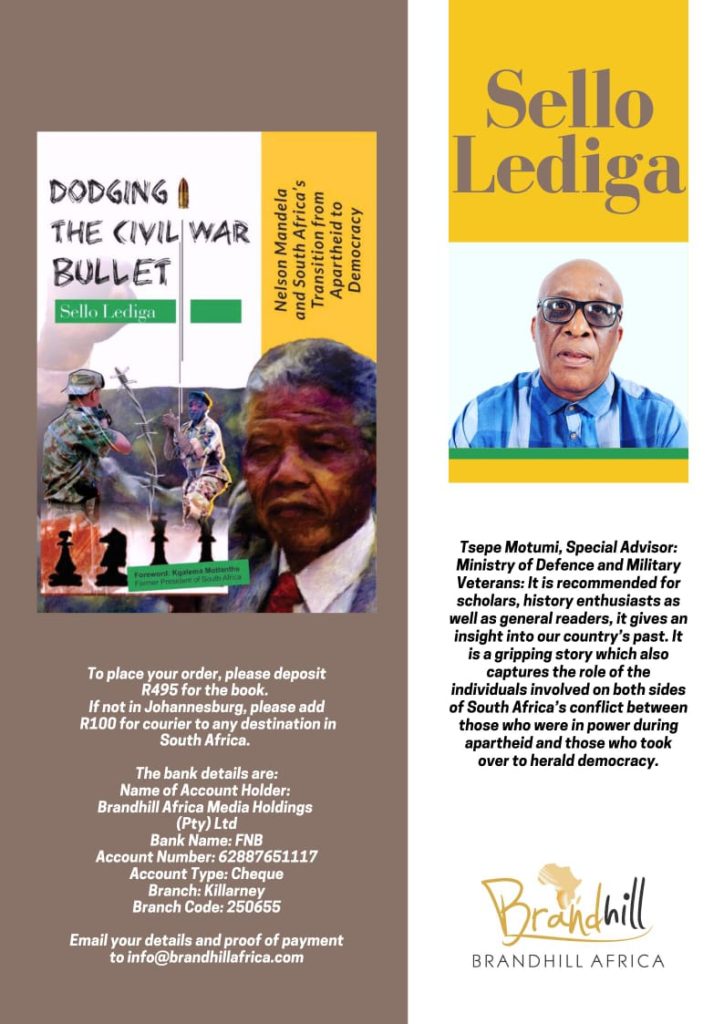
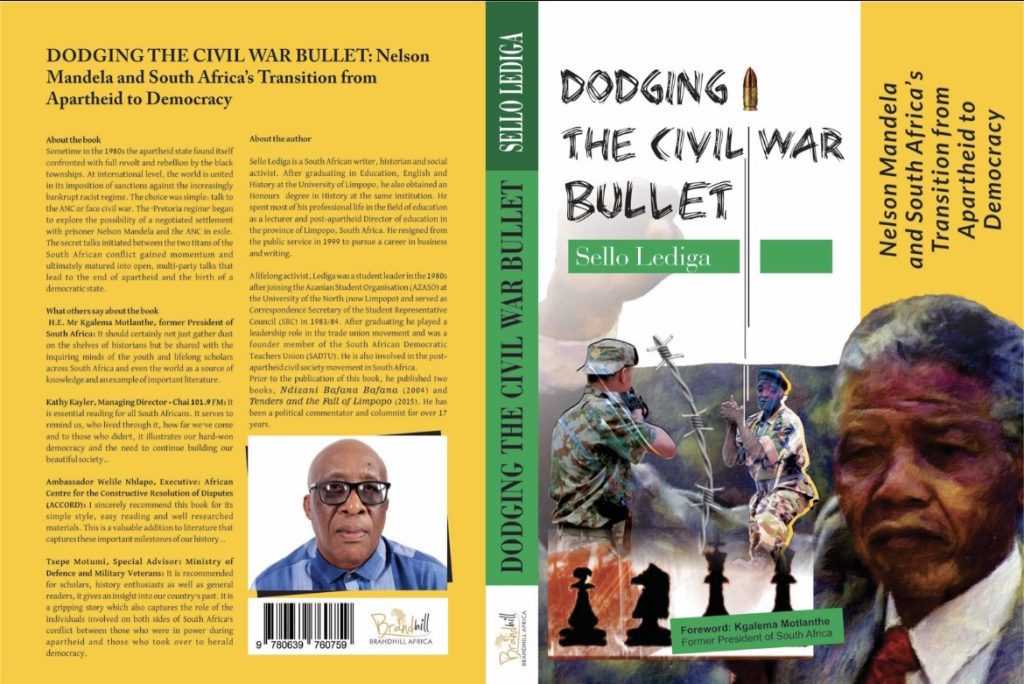
In the realm of historical literature, there are authors who illuminate the past, and then there are those who shape the very fabric of our understanding of history. Sello Lediga, a South African writer, historian, and social activist, undoubtedly belongs to the latter category. With the release of his highly anticipated book, “Dodging the Civil War Bullet: Nelson Mandela and South Africa’s Transition from Apartheid to Democracy,” Sello will take a centre stage in the world of academic discourse and historical storytelling. This new book will leave a lasting impact of his contributions to South African history and beyond.
Inspired by an indefatigable quest to understand events and processes that led to the end of apartheid and the birth of a democratic South Africa, this book is an endeavour to shed light on the resolution of one of the most intractable political conflicts of the twentieth century. With civil war staring the country in its face, the key protagonists from the apartheid government and the liberation movements engaged in secret and formal talks that averted certain civil war in the country.
Sometime in the 1980s the apartheid state found itself confronted with full revolt and rebellion by the black townships. At international level, the world is united in its imposition of sanctions against the increasingly bankrupt racist regime. The choice was simple: talk to the ANC or face civil war. The ‘Pretoria regime’ began to explore the possibility of a negotiated settlement with prisoner Nelson Mandela and the ANC in exile. The secret talks initiated between the two titans of the South African conflict gained momentum and ultimately matured into open, multi-party talks that lead to the end of apartheid and the birth of a democratic state. In all this political drama, the towering figure of Nelson Mandela is central to the resolution of the conflict. The 1994 first ever democratic elections propel the ANC to power with Mandela as president.
The Journey of Sello Lediga
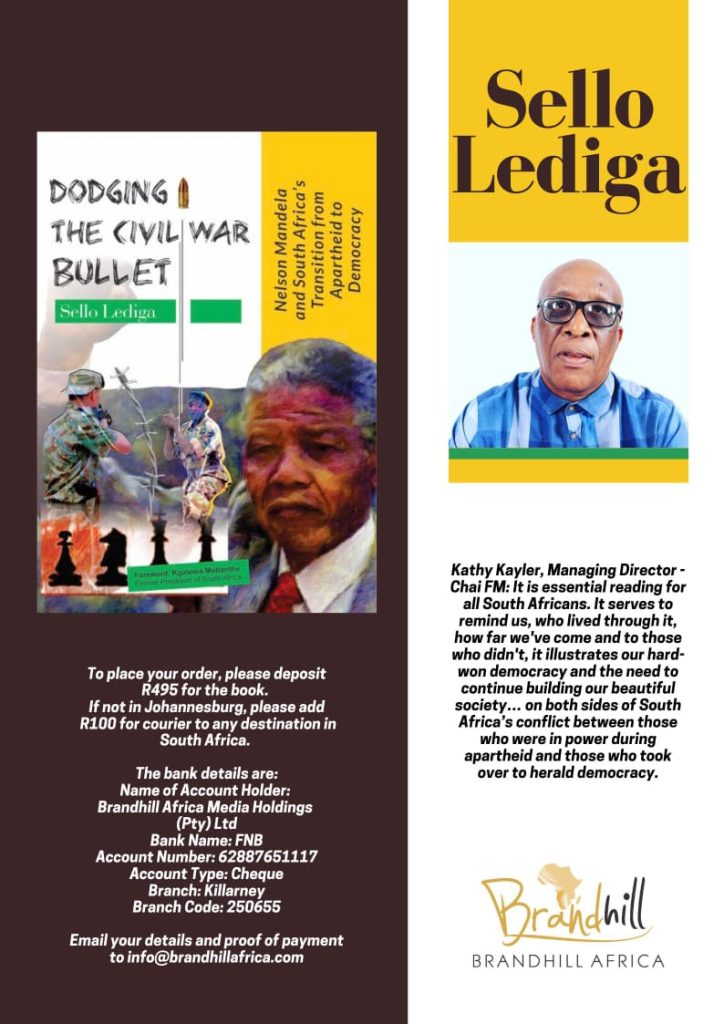
Before we explore the depths of his new book, it is essential to understand the man behind the pages. Sello Lediga’s journey is one of intellectual curiosity, unyielding activism, and a relentless commitment to the truth.
Sello’s academic path began at the University of Limpopo, where he pursued degrees in Education, English, and History. His academic pursuits culminated in an Honours degree in History from the same institution, a testament to his dedication to the subject.
However, Sello’s contribution to society extends far beyond the confines of knowledge production. He spent the majority of his professional life in the field of education, serving as a lecturer and post-apartheid Director of Education in the province of Limpopo, South Africa. This role allowed him to influence the minds of young South Africans, instilling in them a sense of social justice and historical consciousness.
But Sello’s journey took a new turn in 1999 when he decided to resign from the public service. This bold step marked the beginning of a new chapter in his life — one that would see him venturing into business and writing. It was a decision that would ultimately lead to the creation of historical narratives that would captivate readers and challenge established notions of South African history.
A Lifelong Activist
Sello Lediga’s commitment to justice and nonracialism has been a constant thread throughout his life. His activism began to take shape during his time as a student leader in the 1980s when he joined the Azanian Student Organisation (AZASO) at the University of the North (now Limpopo). His role as the Correspondence Secretary of the Student Representative Council (SRC) in 1983/84 marked the beginning of his activism, as he fearlessly voiced the concerns of students during a turbulent period in South African history.
Upon graduating, Lediga continued to play a pivotal role in the trade union movement and was a founding member of the South African Democratic Teachers Union (SADTU). His involvement in SADTU allowed him to champion the rights of educators and contribute to the broader struggle for equality in post-apartheid South Africa.
Even beyond the realms of formal organisations, Sello Lediga remained deeply entrenched in the post-apartheid civil society movement in South Africa. His unwavering commitment to social justice has seen him involved in various initiatives and campaigns aimed at addressing the systemic issues that continue to affect South Africa.
Literary Prowess
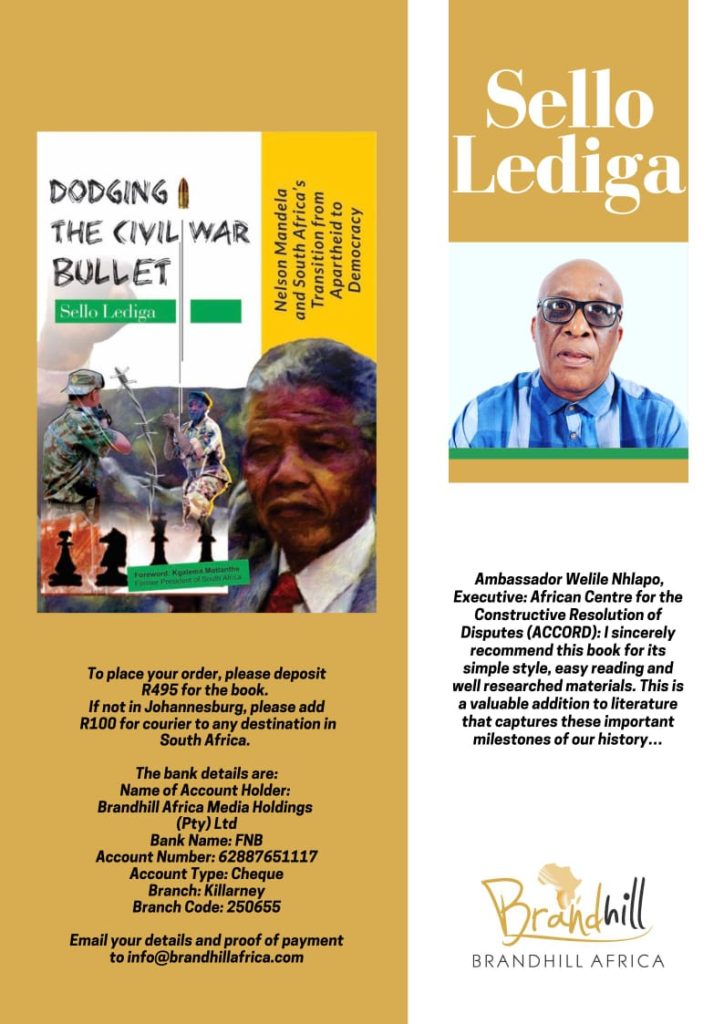
While Sello Lediga’s activism and educational contributions are formidable, his literary prowess has added a distinctive dimension to his legacy. Prior to the publication of “Dodging the Civil War Bullet,” he authored two other books, each shedding light on critical aspects of South African history and society.
In 2004, Lediga published “Ndizani Bafana Bafana,” a work that explored the world of South African football and its profound sociopolitical implications. This book, characterised by its depth of research and insightful analysis, was a significant contribution to the understanding of the role of sports in the context of apartheid and the post-apartheid era.
In 2015, Lediga unveiled “Tenders and the Fall of Limpopo,” a scathing exposé on the corruption and mismanagement that plagued the Limpopo province. This work served as a wake-up call, shining a harsh light on the issues of governance and accountability in South Africa’s post-apartheid landscape.
For over 17 years, Sello Lediga has also been a prominent political commentator and columnist. His incisive insights and fearless commentary have made him a respected voice in the public discourse on South African politics, economics, and society.
The Magnum Opus: “Dodging the Civil War Bullet”
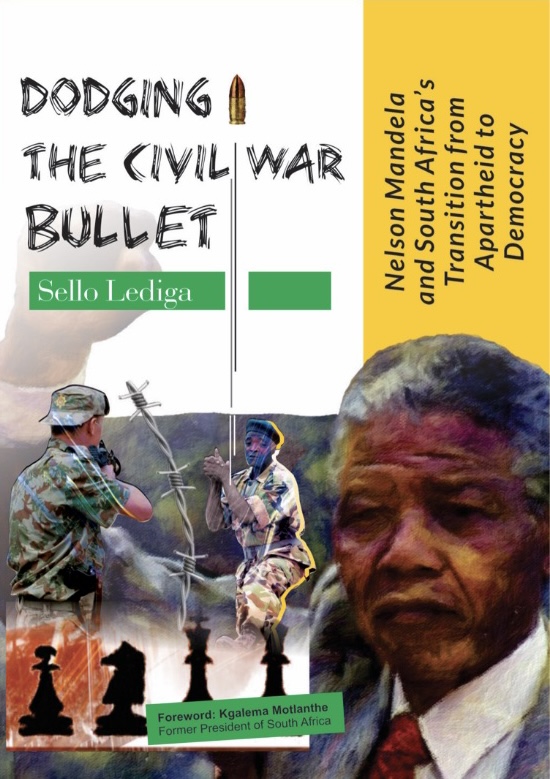
While his previous works have made significant contributions to the literary landscape, it is Lediga’s latest masterpiece, “Dodging the Civil War Bullet: Nelson Mandela and South Africa’s Transition from Apartheid to Democracy,” that has garnered widespread attention and acclaim.
The book is nothing short of a historical tour de force, offering a meticulously researched and deeply nuanced account of a pivotal period in South African history. Lediga’s decision to focus on Nelson Mandela, the iconic figure of the anti-apartheid struggle, is a deliberate one. In this work, he seeks to unravel the complexities of Mandela’s leadership and the choices he made during a tumultuous time.
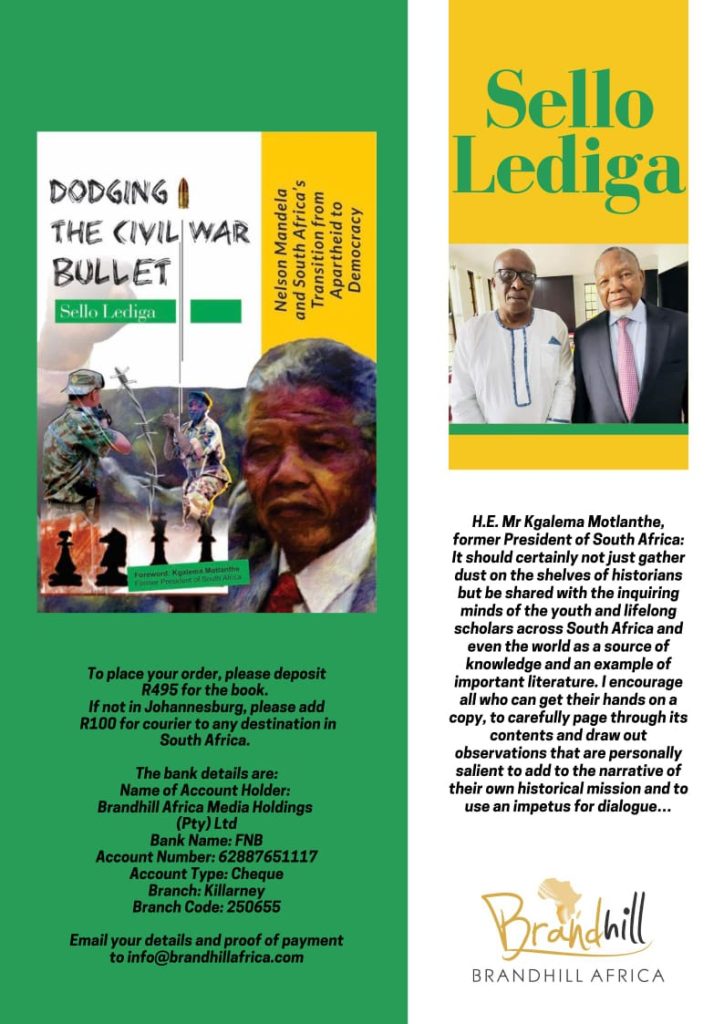
One of the standout features of the book is the foreword, penned by Kgalema Motlanthe, the former president of South Africa. Motlanthe’s endorsement speaks to the gravity and significance of Lediga’s work. The foreword sets the stage for the reader, framing the narrative that follows in a context of profound historical importance.
“Dodging the Civil War Bullet” goes beyond the conventional narratives of Nelson Mandela as a messianic figure who single-handedly brought an end to apartheid. Instead, Lediga delves into the intricate web of political manoeuvring, negotiations, and power struggles that defined the transition from apartheid to democracy.
The book meticulously examines the various factions and interests at play during this critical period. It sheds light on the immense challenges and obstacles that Mandela and his allies faced, both from within and outside the anti-apartheid movement. Lediga’s research draws from a rich tapestry of primary sources, interviews, and historical records, providing readers with an authoritative and comprehensive account.
However, what sets Lediga’s work apart is his commitment to balance and objectivity. He does not shy away from exploring the controversial aspects of Mandela’s leadership, nor does he oversimplify the complexities of the time. Instead, he offers readers a nuanced understanding of the difficult choices that had to be made in the pursuit of a democratic South Africa.
The book also highlights the role of lesser-known figures and movements in the struggle for democracy, giving voice to the untold stories of those who contributed to the cause. It is a testament to Lediga’s dedication to historical accuracy and his desire to present a more inclusive and holistic narrative.
Impact and Legacy
Sello Lediga’s “Dodging the Civil War Bullet” is already making waves in the world of academia, politics, and literature. It will spark debates, inspire critical reflection, and reignite conversations about South Africa’s history and the kind of leadership required to develop this country into what our forebears fought for. As a work of historical scholarship, it will earn its place among the most influential texts on the subject.
Beyond the book itself, Sello Lediga’s legacy is one of unwavering dedication to the principles of justice, equality, and truth. His multifaceted contributions to South African society have left an indelible mark that extends far beyond the pages of his books.
In the realm of education, Lediga’s years as a lecturer and Director of Education in Limpopo have had a profound impact on countless students. His commitment to fostering critical thinking and historical awareness has empowered generations to grapple with the complexities of their nation’s past. Many of his former students have gone on to become educators and activists themselves, carrying forward the torch of knowledge and social justice that Lediga ignited.
As a founding member of the South African Democratic Teachers Union (SADTU), Lediga played an instrumental role in advocating for the rights and dignity of educators. SADTU has since grown to become one of the largest and most influential teachers’ unions in South Africa, championing the cause of education and social justice.
Lediga’s enduring commitment to civil society movements has also left an indelible legacy. His involvement in various initiatives and campaigns, often centred around issues of social justice, has contributed to the ongoing transformation of South African society. His advocacy for transparency, accountability, and ethical governance has been instrumental in holding those in power accountable for their actions.
As a political commentator and columnist, Sello’s voice has been a beacon of clarity in the sometimes-murky waters of South African politics. His fearless analysis and principled stance have made him a trusted source of insight for readers seeking a deeper understanding of the country’s political landscape. Lediga’s ability to dissect complex issues and provide context has been instrumental in fostering informed public discourse.
“Dodging the Civil War Bullet” stands as the crowning achievement of Lediga’s literary career, but it is by no means the end of his contributions to history and society. The book’s impact is likely to endure for generations, shaping the way South Africans and the world at large perceive the struggle against apartheid and the path to democracy.
Moreover, Sello’s work serves as an inspiration for emerging writers, historians, and activists who seek to engage with the complexities of history and society. His dedication to research, his commitment to truth, and his fearless pursuit of justice set a high standard for those who follow in his footsteps.
Sello’s journey from student activist to educator, union leader, political commentator, and author has been a remarkable one. His life’s work has transcended the boundaries of narrow partisan activism, leaving an enduring legacy that continues to shape South African society. He always manages in his books to establish a healthy academic distance between his life as a historian and his political party activism. “Dodging the Civil War Bullet” is not just a book; it is a testament to Lediga’s unwavering commitment to truth, justice, and the power of historical storytelling. As we reflect on his contributions, we are reminded that the pursuit of knowledge and the quest for a just society are endeavours that require a lifetime of dedication, and Sello has exemplified this with distinction. His life’s work has enriched our understanding of history, inspired social change, and will continue to do so for generations to come.
***
Saul Molobi is the author of “De/constructing brand Africa: A Practitioner’s Perspective” (2022); “Sound and Fury: The Chronicles of Healing” (2020); and “Thulani’s Magic Water” (2001). He served as Editor-in-Chief & Director of Learn & Teach Publications in 1988-1994 and a Publishing Director of Heinemann Publishers from 1994-1999.