
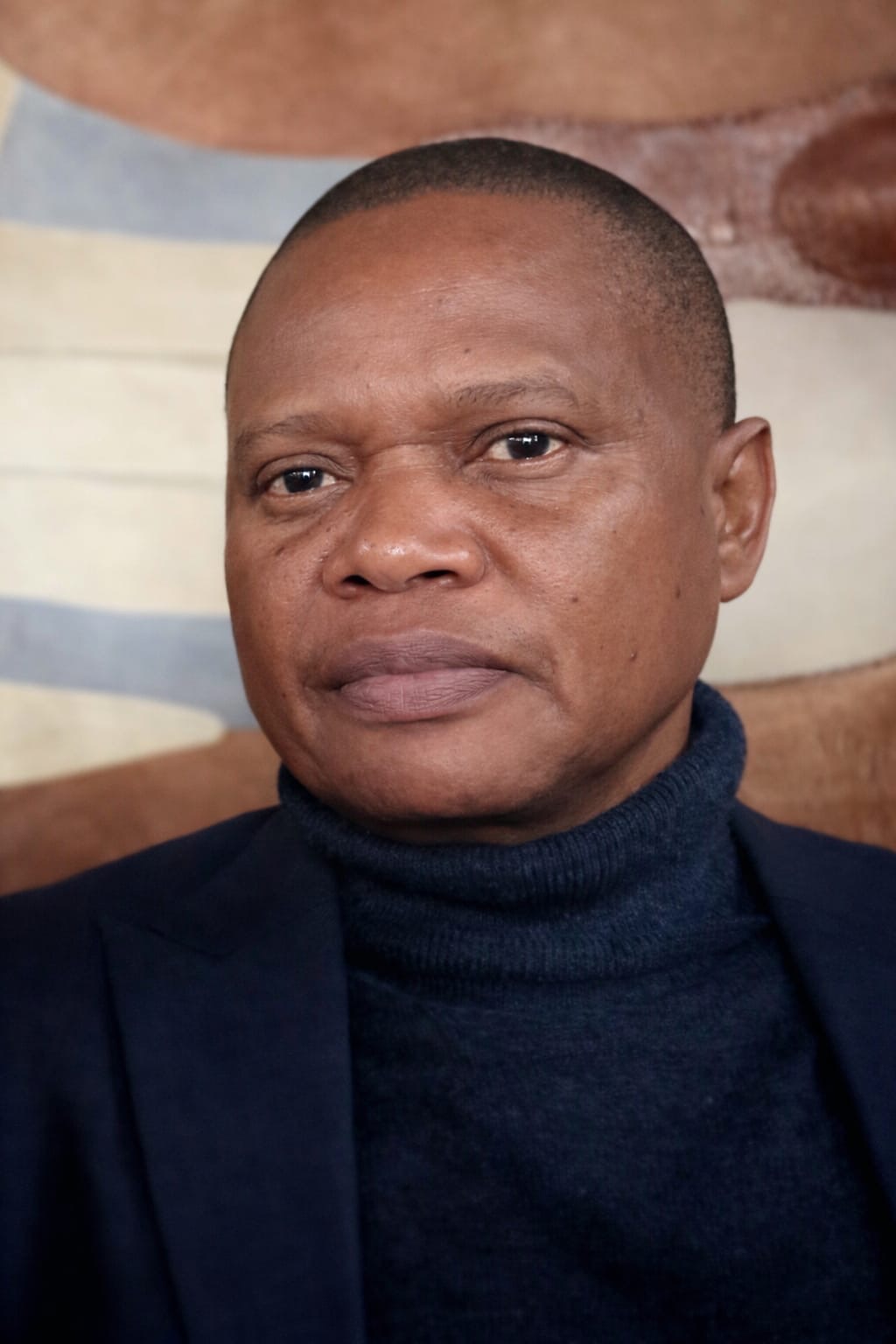
By Saul Molobi
Maponyane Johannes Molobi’s life story is one that intertwines heritage, cultural identity, youth activism and an enduring commitment to education as a tool for liberation and community development. Born in 1970 and having passed on in 2026, this serves as a tribute to him. Having served as Principal of Kgomba Primary School in New Eersterus, Hammanskraal, he represents a generation shaped both by the struggles of apartheid and the responsibilities of building a democratic South Africa through learning.
Ancestral calling and the meaning of a name
At birth, he was named Ramantsane, after his paternal grandfather, in accordance with immediate family custom. Yet his early months were marked by persistent illness. After repeated visits to the local clinic failed to bring relief, his parents sought guidance from ngaka ya setso, a traditional Setswana healer. This consultation carried particular resonance, as his grandfather himself had lived a dual vocation – both an ordained Christian priest and a traditional healer – embodying a synthesis of spirituality and African knowledge systems.
The healer revealed that the child’s paternal great-grandfather’s brother, Maponyane Molobi, was spiritually calling and required that the child bear his name. Once the family honoured this instruction and renamed him Maponyane, his health improved. The renaming was thus understood not simply as a change of identity but as a restoration of ancestral continuity and balance.
As he grew older, Maponyane consciously embraced a Pan-African naming philosophy, choosing to foreground his African name rather than adopt a Eurocentric convention. In another context he might have been known as Johannes Molobi Junior, reflecting his father’s English name, Johannes. Instead, he asserted Maponyane as his primary identity – an early act of cultural self-definition that anticipated his later political and intellectual awakening.
Cultural expression as political awakening
While still at junior secondary school, Maponyane began to encounter the stark injustices of the Bantustan system under Bophuthatswana. His political consciousness developed not initially through formal politics, but through culture. He joined a community drama group inspired by the legendary Gibson Kente, widely regarded as the father of township theatre. These performances were not merely artistic – they were acts of resistance. Theatre became a vehicle to mobilise communities, confront injustice and speak truth under conditions of repression.
In 1984, this cultural collective evolved into the Eersterus Youth Organisation (EYO), the first organisation of its kind within Bophuthatswana to affiliate with the United Democratic Front (UDF). EYO played a critical role in mobilising youth across Hammanskraal, fostering civic awareness and helping establish youth and community organisations in defiance of Lucas Mangope’s regime. Members endured detention, intimidation and torture, yet remained steadfast. Maponyane emerged as a committed activist during this volatile period, demonstrating courage that belied his slight physical stature – affirming the adage that dynamite indeed comes in small packages.
Educational formation and professional calling
Having experienced firsthand the transformative power of knowledge and organisation, Maponyane turned to education as a lifelong vocation. He obtained his University Diploma in Education from Moretele College of Education, laying the pedagogical foundation for his career. Seeking to understand education within broader socio-economic realities, he later completed a Diploma in Development Studies through the University of South Africa.
Recognising the importance of leadership and accountability in schooling, he advanced his studies at the University of Pretoria, earning an Advanced Certificate in Education Management in 2006 and a Bachelor of Education Honours degree in Assessment and Quality Assurance in 2008. These qualifications equipped him with the tools to bridge classroom practice, institutional leadership, and systemic quality assurance.
A career of progressive educational leadership
Maponyane’s professional path at Kgomba Primary School reflects steady growth anchored in service and competence. He began as an educator in 1993, focusing on classroom teaching, learner engagement and curriculum delivery. His effectiveness soon led to his appointment as Head of Department in 2015, where he coordinated subject implementation and mentored fellow educators.
In 2018 he became Deputy Principal, expanding into whole-school management, curriculum oversight and administrative leadership. By June 2020, he assumed the role of Acting Principal, entrusted with guiding the institution’s academic direction, policy implementation, and organisational stability. He was then appointed as a Principal in April 2024.
Central to his leadership is the conviction that assessment is a developmental instrument rather than a punitive one. Drawing on his expertise in Assessment and Quality Assurance, he has strengthened systems for monitoring learner performance, supporting teachers and ensuring compliance with Department of Basic Education standards. He has also prioritised inclusive education, identifying and assisting learners with special educational needs so that no child is left behind.
Service beyond the school
Maponyane’s commitment to public life extends beyond education. He served in an administrative capacity within SADTU, contributing to organisational coordination, and has long supported democratic processes as a Registration Officer for the Independent Electoral Commission. These roles reflect a belief that education, civic participation, and community development are inseparable pillars of nation-building.
Registered with the South African Council for Educators (SACE), he has undertaken continuous professional development in Outcomes-Based Education, the Revised National Curriculum Statement, Guidance Counselling, First Aid, and HIV/AIDS awareness – ensuring that his practice remains responsive to both policy evolution and learner realities.
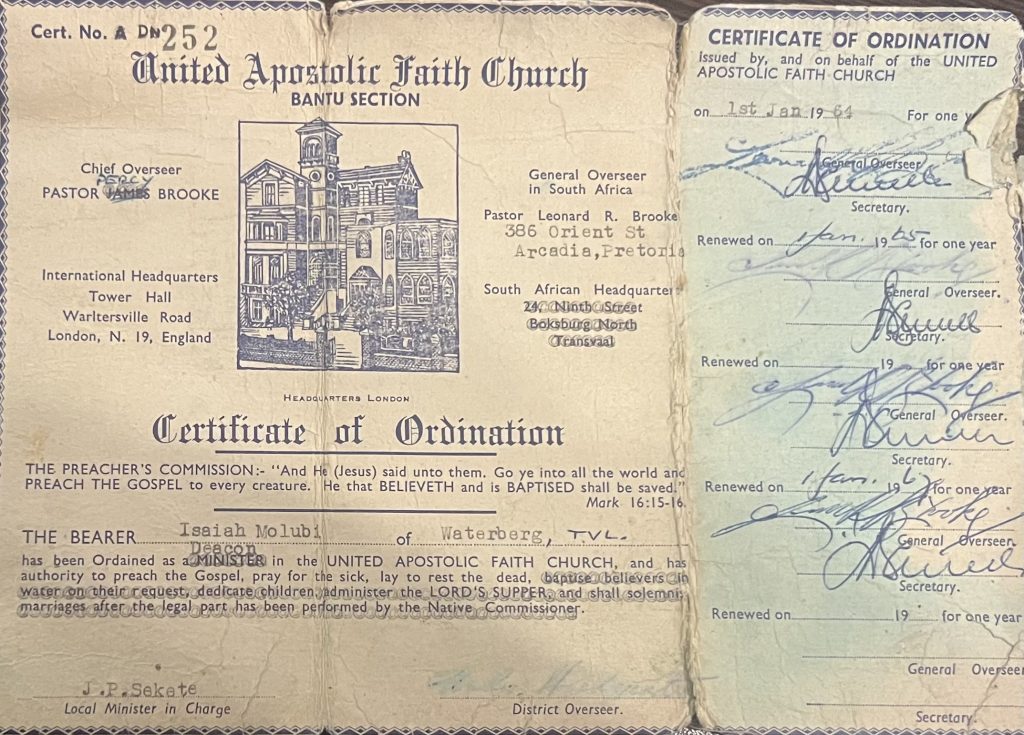
*** The ordination certificate of Jodi’s Ramantsane Molobi, the grandfather to Maponyane Johannes Molobi ***
Philosophy and legacy in the making
Working in his home village of New Eersterus – a community shaped by both historical marginalisation and vibrant resilience – Maponyane viewed schools as centres of hope, discipline and possibility. His leadership blended administrative rigour with mentorship, encouraging educators to see themselves as nation-builders and learners as future custodians of democracy.
His life journey – from an ancestrally guided naming, through cultural resistance and youth activism, to educational leadership – embodies a continuum of service. For Maponyane, education is not merely employment: it is a calling rooted in heritage, forged in struggle and sustained by a vision of empowered communities and transformed futures.

The Molobi genealogy: A Johannes Molobi lineage
The story of the Molobi family unfolds across generations as a tapestry of ancestry, continuity, and evolving identity – each generation carrying forward both name and legacy.
At the apex of this recorded lineage stands Ramathlodi Molobi, the patriarch whose name anchors the family tree. From him emerged a generation of sons who extended the Molobi name into different branches: Samuel Molobi, John Molobi, Malgas Molobi, Maponyane Molobi, Moatshe Molobi and Tshere Molobi. These sons formed the foundational pillars of the Molobi clan’s expansion, each establishing his own household while remaining rooted in the ancestral line of Ramathlodi.
From among them, the branch of Malgas Molobi became particularly significant in the direct lineage traced here. Malgas fathered several children: Sophia Molobi, Onicca Molobi, Catherine Molobi, Ramantsane Molobi, Johannah Mongale and Salaminah Letlape. The daughters carried the family’s influence into new homes – some reflected in their married surnames – while the sons continued the Molobi name in direct descent.
At the centre of this branch stands Ramantsane Molobi (married to Rosinah Mmule Molobi), whose position in the tree is highlighted as a key generational bridge. Ramantsane’s children expanded the lineage further: Leah Tlhabadira, Naomi Masi, Samuel Molobi, Saul Molobi, Bethuel Molobi, Johannes Molobi, and Johannah Maponyane. Through them, the Molobi name and heritage continued to flourish, crossing into new communities and forging new identities while maintaining ancestral continuity.
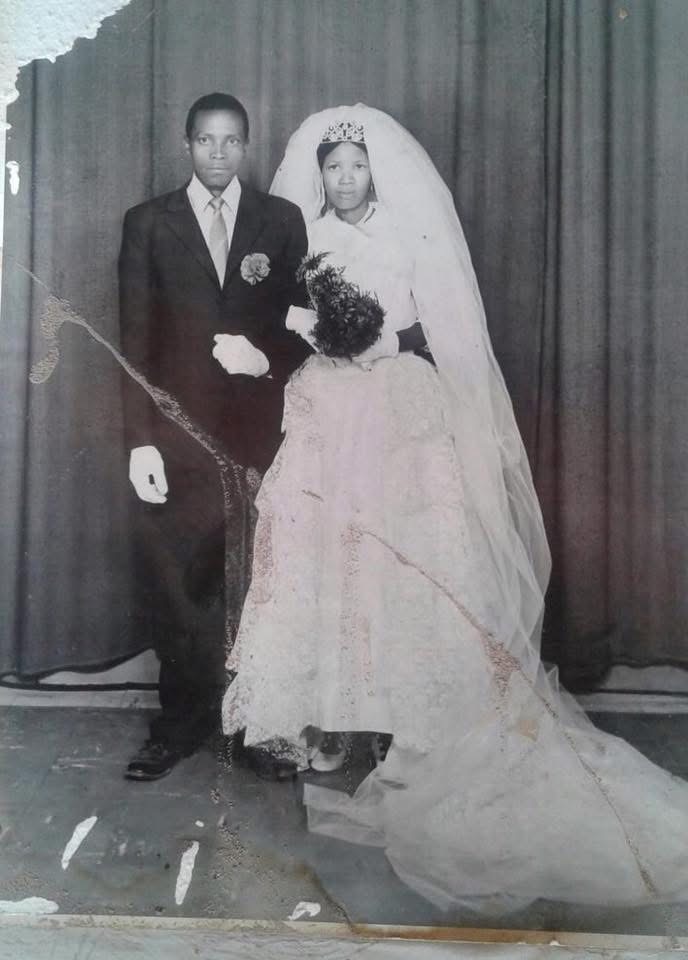
Among Ramantsane’s sons, Johannes Molobi (married to Louisa Moatshe) established a large and vibrant household. His children – Martha Somatse, Mittah Mojela, Lazarus Molobi, Maponyane Molobi, Onicca Seloane, Maisha Ramongane, Sana Matsomela, David Molobi and Ditshego Molobi – represent a generation that carried the Molobi heritage into multiple families and communities. Sons retained the Molobi surname, ensuring the direct continuity of the name; daughters and granddaughters, through marriage, extended the lineage into new relational networks while remaining inseparable from their ancestral roots.
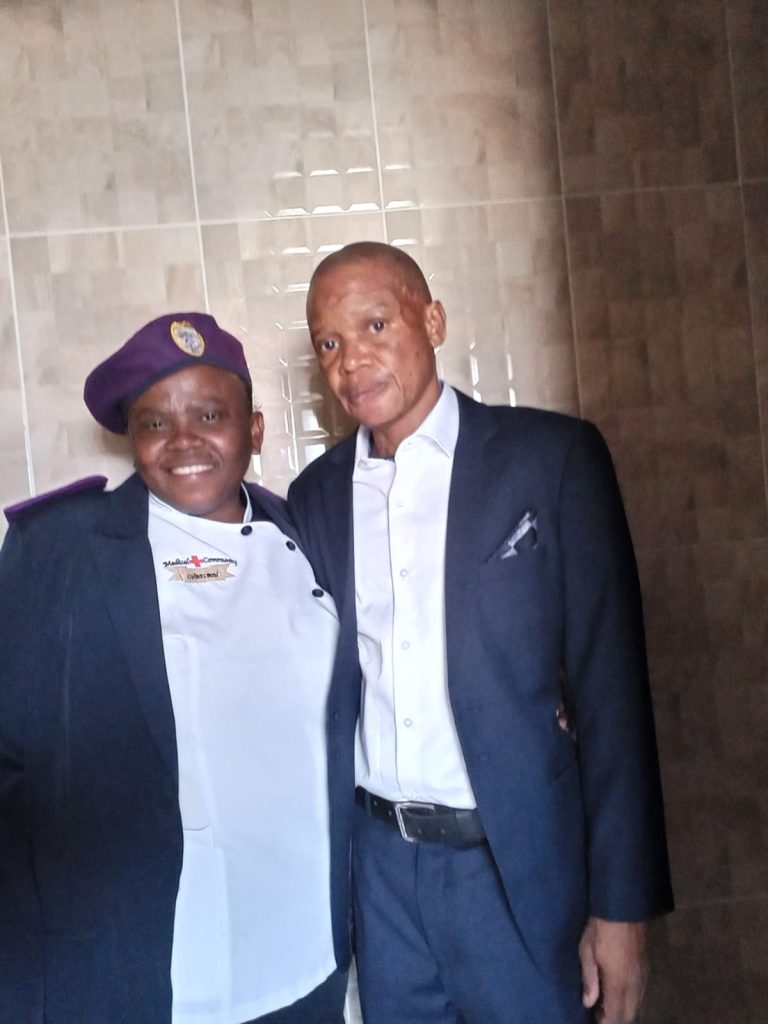
Within this branch, Maponyane Johannes Molobi (married to Sylvia Violet Madigage), son of Johannes, stands as a powerful symbol of generational continuity. His very name reflects the practice of remembrance – an echo of earlier forebears whose identities live on through naming. In African tradition, such repetition is not incidental; it is deliberate, affirming that the past walks alongside the present.
Maponyane has fathered two children: a daughter, Tshegofatso, and a son, Tshiamo Molobi. Through them, the lineage moves confidently into another generation. Tshegofatso (married to Ipeleng Botsi), in turn, gave birth to Boitshepo Botsi, extending the Molobi bloodline further still. With Boitshepo, the family narrative continues to unfold – another branch growing from a deep and enduring trunk.
InIn addition to his two children, Maponyane was also blessed with a daughter, Gosiame, whom he lovingly embraced as an integral and cherished part of his life and legacy. Gosiame, in turn, was blessed with two children, Oteng and Zoe, further extending Maponyane’s lineage and the enduring continuity of his family across generations.
This lineage is more than a sequence of names arranged in order. It is a living testimony to continuity – of heritage passed from one generation to the next, of identity shaped by ancestry, and of resilience carried through time. From Ramathlodi, Malgas to Ramantsane, from Johannes to Maponyane, and onward to Tshegofatso Botsi and Tshiamo; and Tshegofatso to Boitshepo, the Molobi family story remains in motion. Each generation inherits not only a name but a responsibility: to honour those who came before and to prepare the ground for those yet to come.

Vibrant family branches
Beyond Maponyane Johannes Molobi, the other children of Johannes Molobi have also extended the family tree, each adding new branches and fresh life to the lineage.
Mittah Mojela became the mother of Thato and Rorisang, names that speak of blessing and joy, continuing the family’s tradition of meaningful naming. Her lineage continues to flourish through her grandchildren. From Thato come Kemoratile, Oratile and Onalerona, names that reflect love, grace and divine favour, while Rorisang is blessed with Boipelo, a name embodying joy and celebration. Together, these grandchildren represent the growing vitality of Mittah’s branch of the family, affirming the enduring continuity of the Molobi lineage across generations.
Lazarus Molobi welcomed two children, Mmathapelo and Thabang, marking the continuation of the Molobi surname into a new generation. With Thabang’s birth, the lineage affirms that it is not merely a story of the past but a living and unfolding present. In turn, Mmathapelo was blessed with a daughter, Kutlwano, whose name signifies harmony and understanding — further extending the family’s legacy and reinforcing the continuity of the Molobi lineage across generations.
Furthermore, Lazarus Molobi was blessed with another son, Johnny. His birth represents both renewal and continuity, affirming the enduring presence of the Molobi lineage as it extends confidently into the newest generation.
Onicca Seloane bore Koketso, Blessing and Reatlegile, strengthening ties between households while carrying forward shared ancestry. Her lineage has further blossomed through her grandchild, Kananelo, the child of Koketso. The name Kananelo, meaning appreciation or gratitude, reflects the enduring blessings carried forward within this branch of the family, symbolising continuity, thankfulness, and the steady growth of the Molobi lineage across generations.
David Molobi welcomed a child named Itumeleng – a name that carries profound meaning. In Setswana, Itumeleng signifies joy, happiness, and contentment. The name is both a declaration and a blessing, embodying the hope that the child’s life would be marked by fulfilment and positivity.
Maisha Ramongane expanded the lineage through her children: Keamogetswe, Obakeng, Kgopolo, Onthatile, Tebatso and Ofentse – each name reflecting gratitude, faith, wisdom, memory and love, virtues that resonate deeply within the family’s values. Beyond these, her lineage continues through her daughter, Keamogetswe, who was blessed with a child, Peloentle. The name Peloentle, meaning “a beautiful heart,” reflects compassion, kindness, and grace — qualities that symbolise the nurturing spirit carried forward within this branch of the family and the continuing growth of the Molobi lineage.
Sana Matsomela is the mother of Oreneilwe, Lethabo, Rorisang and Onkarabile whose names further extend this generational arc, adding vibrancy and continuity to the Molobi heritage.
Ditshego Molobi was blessed with three children — two daughters and a son: Tshimologo, Keitumetse and Lethabo. Their names, rich in meaning, speak to the family’s enduring values – Tshimologo, symbolising beginnings and new chapters; Keitumetse, expressing joy and gratitude; and Lethabo, reflecting happiness and light. Through them, Ditshego’s branch of the Molobi lineage continues to flourish, adding vitality and promise to the ever-growing family tree.
Through these grandchildren and great-grandchildren, the Molobi lineage continues to flourish. What began with Ramathlodi Molobi now finds expression in new names, new lives and new possibilities. Each child represents both inheritance and promise – a reminder that the family story is not confined to history but is actively being written with every generation.
This genealogy tells more than a list of names. It tells of continuity through shifting historical landscapes – through colonial rule, the bantustan era, apartheid and democratic South Africa. It reflects African naming traditions, where names preserve memory, honour elders and sustain identity. It shows how daughters, though bearing different surnames after marriage, remain integral to the living story of the clan.
Batlase: Lineage, Memory and Continuity
Beyond the narrow Molobi family, let’s expand our family tree to refer to the greater clan of Batlase. According to “The Tribes of Rustenburg and Pilanesberg Districts – a book written by PL Breautz published by the Department of Native Affairs in 1953 – the name Batlase, as used by the Bakwena in Botswana, was historically employed to distinguish those who had settled further south. It was not merely a geographical marker, but an identity — an acknowledgment of kinship, migration, and belonging within a broader Setswana cultural landscape.
The eight core surnames that constituted Batlase were Molobi, Mokoka, Ntsimane, Mafora, Letlape, Moatshe, Molekwa and Ntloedibe. These names formed a constellation of related houses – distinct yet interconnected – bound by shared ancestry and historical experience.
This is how far our research into our lineage has taken us. Before the artificial borders of modern states, before passports and immigration posts, before the lines drawn on European maps, our roots lead us back to Shoshong village in present-day Botswana, under the leadership of Chief Pukwe. That was long before the 1884–1885 Berlin Conference – what history now calls the Scramble for Africa – where European powers partitioned the continent into the 55 nation-states we recognise today.
That conference did more than divide land; it severed communities. It cut the umbilical cord between families who had always moved, married, traded, and lived across what would later become “South Africa” and “Botswana.” Our ancestors did not cross borders – borders crossed them. The Molobi and Bakwena ba ba Batlase people were one long before colonial cartography fragmented their geography.
It is also worth noting that the family trees of the Molobi family and the wider Bakwena ba ba Batlase community are richly interwoven with English names. This is not accidental, nor is it a sign of lost identity. The Batswana were among the earliest Southern African communities to engage deeply with Christian missionaries, becoming some of the first converts in the region. As a result, Christian naming practices took root alongside indigenous ones.
This early encounter with Christianity is historically significant. The first full Bible translation into an indigenous African language in Southern Africa was into Setswana, completed by missionary John Moffat in 1857. That translation marked a pivotal moment in African intellectual history – embedding literacy, scriptural scholarship, and new naming conventions into Setswana-speaking communities. The presence of English or biblical names within our lineage therefore reflects both spiritual transformation and historical encounter, not cultural erasure.
Our genealogy thus tells a layered story: of pre-colonial sovereignty in Shoshong; of colonial disruption through the Berlin Conference; of Christian influence and literacy; and of enduring African identity expressed through both indigenous and adopted names. The Molobi lineage stands at the intersection of these histories – proof that while borders may divide territory, they cannot divide ancestry.
Why This History Matters
It is essential that we include this history in this obituary – not as an academic exercise, but as an act of inheritance. Our children must know who they are and from whom they descend. In parts of the North West Province – particularly around Mahikeng – and across Botswana, families still observe the tradition of “tatolo”. After burial rites, mourners gather at home while elders narrate the lineage of the deceased, locating him or her within the broader ancestral framework. In that sacred space, genealogy becomes memory; memory becomes identity.
Since we do not formally observe the ritual of “tatolo” in this context, we turn to this written medium to perform the same sacred function: to situate those who have transcended into the celestial world within the river of Batlase history, to ensure that their children and their children’s children will know the trunk from which they branch.
A Praise Poem for Batlase
As we lay Maponyane Johannes Molobi’s mortal remains to rest and entrust his spirit to the ancestors, we honour him with this praise poem of Batlase – words that summon heritage, courage, and belonging. I published the transcription of this poem in my 2022 book, “De/constructing brand Africa: A Practitioner’s Perspective”, after it was recited to me by nkoko Miriam Lebudi (née Molobi) – who was a sister to my maternal grandmother, Rosinah Mmule Molobi. It reads as follows:
Ke Molobi, modise wa modisa wa dikgomo tsa bo Mphoreng.
Ke motho wa Mmasephala, wa phalang phala ka borethe.
Ke wa bo Rakoto ‘a Maponyane, sengalla Matebeleng;
Baphalane ba gaabo ba ntse ba le teng.
Ke mokoke mokoloboto ‘a ditlou,
Ke nna kwena sedula metsing
Metsi, botshelo jwa tsotlhe tse di tshelang.
Mpheng letsogo ke tshele, ke ye gae kwa Ramokoka,
Kwa gaabo kwena e ntsho ya bo Modiane ‘a tau!
Pula!
Ke motlase o o matjobo!
O boetse madimeng, kwena ya Molobi.
In these words, we hear the voice of clan and courage. The crocodile that dwells in water – the kwena – symbol of endurance, patience, and quiet strength. Water, the source of life. Rain, the blessing. The return to the deep, the ancestral waters from which all lineage flows.
Maponyane has returned to the source.
The kwena of Molobi rests among the ancestors.
But the river continues.