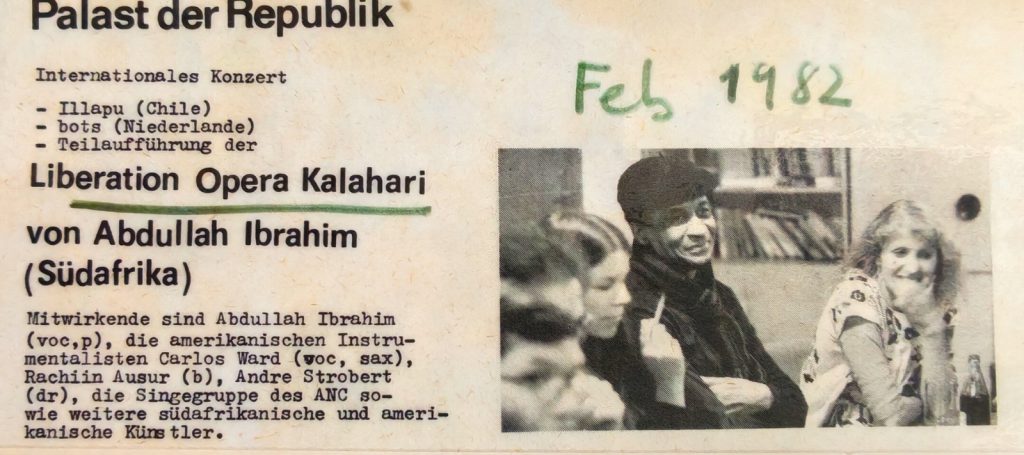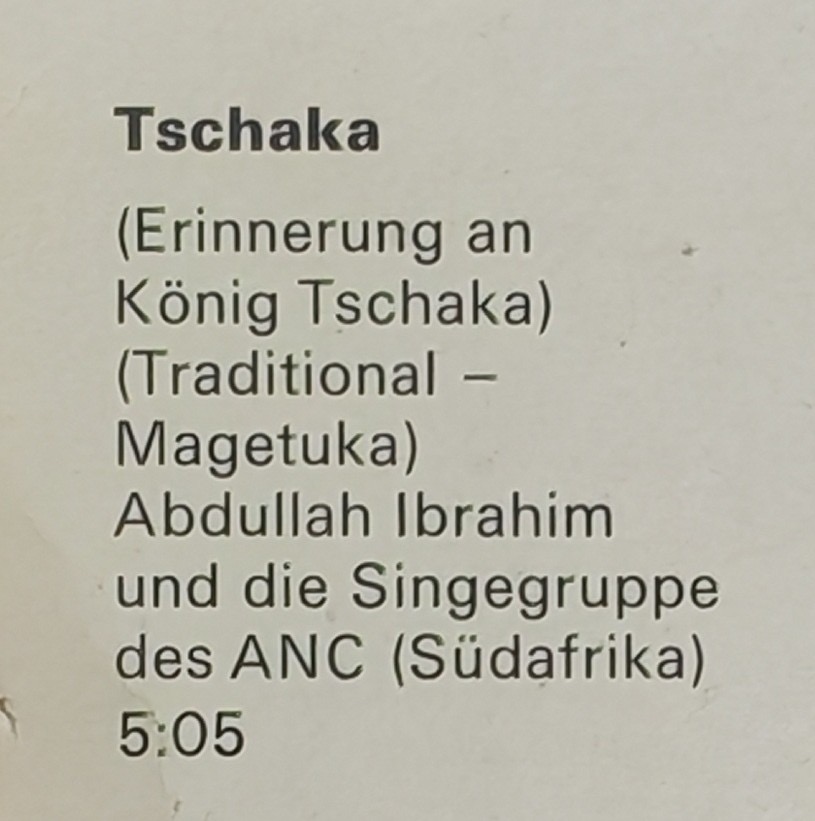
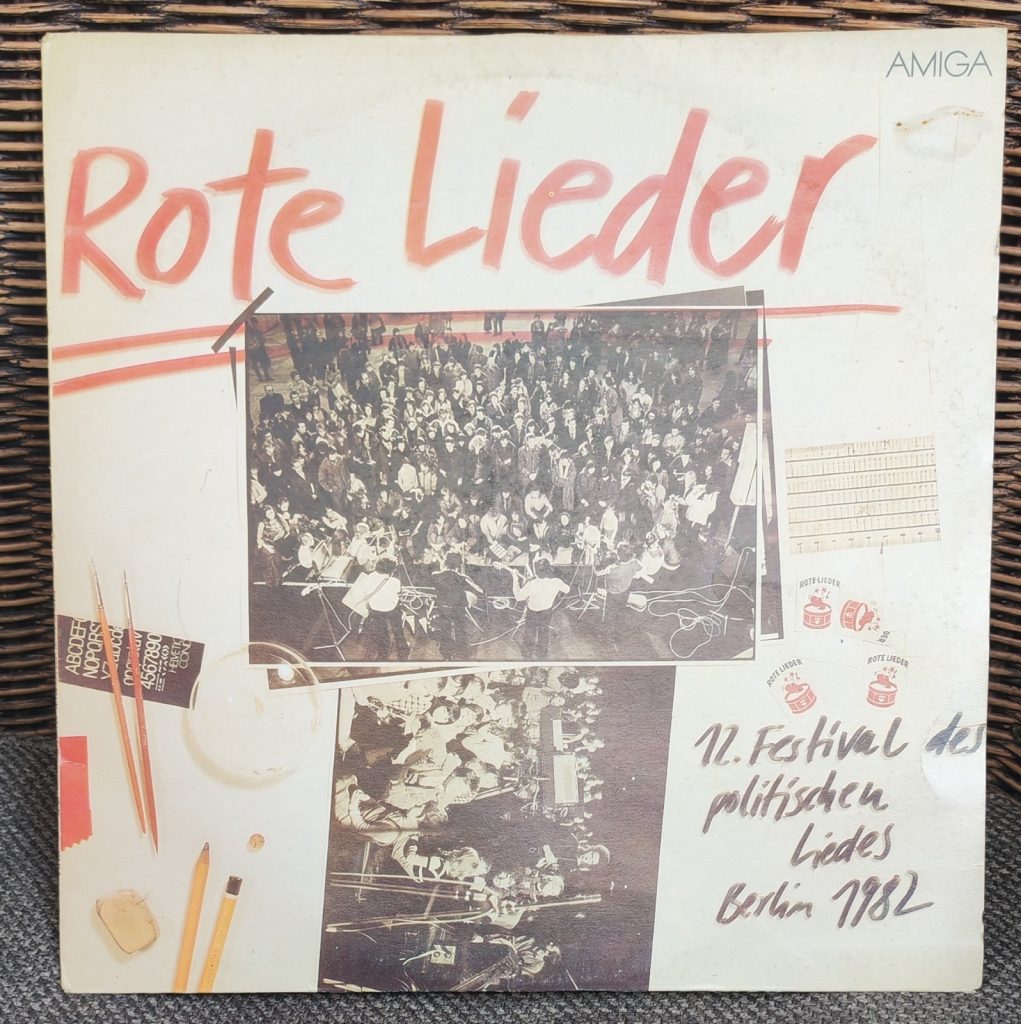
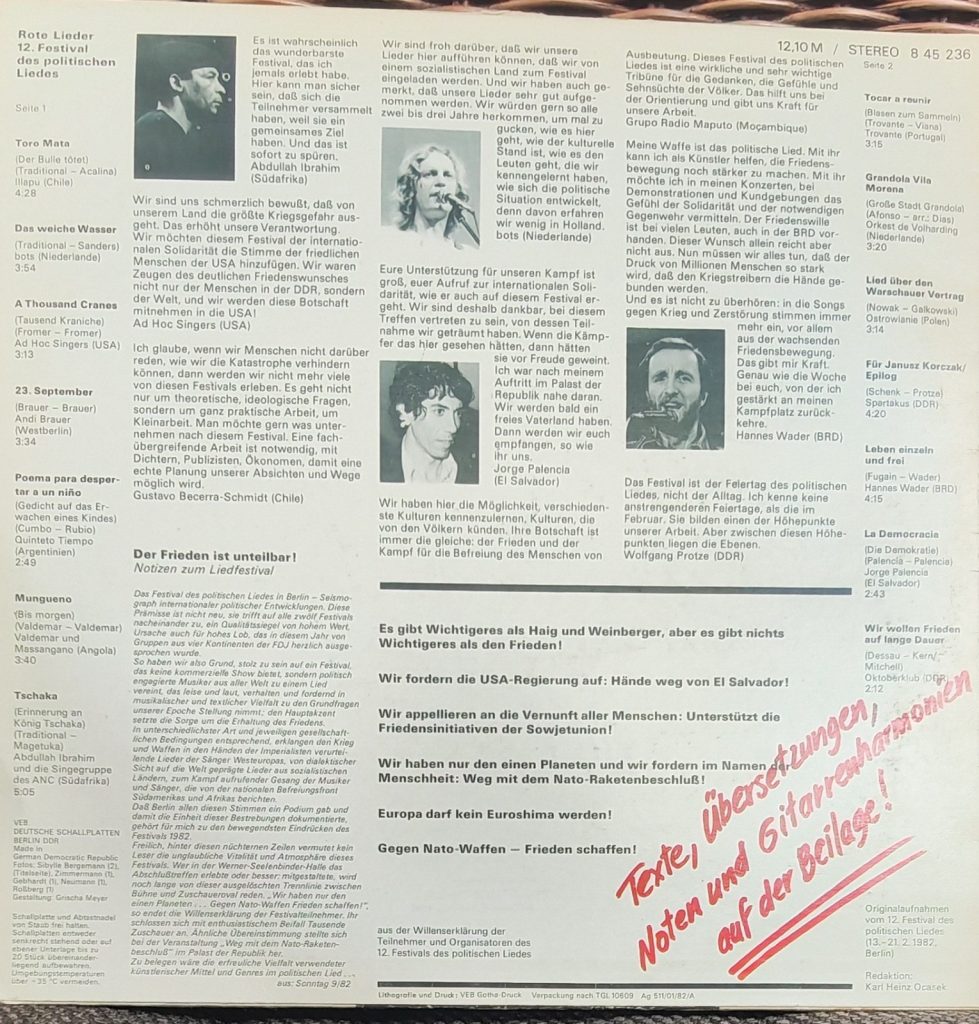
These are Abdullah Ibrahim’s words written on the cover of the album recorded live at the 12th Festival of Political Song in Berlin in 1982. That year the festival opened from 13th to 21st February.
The late editor of the newspaper “Junge Welt” (and later writer for “Neues Deutschland”) during the German Democratic Republic (GDR) days, who died during a wellness trip to Estonia at the age of 73 in 2006, wrote, “Among the groups and soloists who came from 37 countries to the 12th Festival of Political Song in Berlin, unmistakably carrying the worldwide call for peace with their music and songs and reinforcing it… there was also a South African guest: Abdullah Ibrahim, the most important representative of Afro-jazz.”
Abdullah Ibrahim (who was popular as Dollar Brand in the 60s and 70’s) arrived accompanied by the late Carlos Ward, the Panamanian-born American funk and jazz alto saxophonist and flautist who had played with John Coltrane and died recently in January this year at the age of 85. There were two other astounding New York-born artists, Rachiin Ausur (bass) and Andre Strobert (drums). All of them had been part of Ibrahim’s band, known as Ekaya at one stage. This time, arriving in Berlin, they were operating under the brand name Kalahari Liberation Opera, based then in Vienna, Austria.
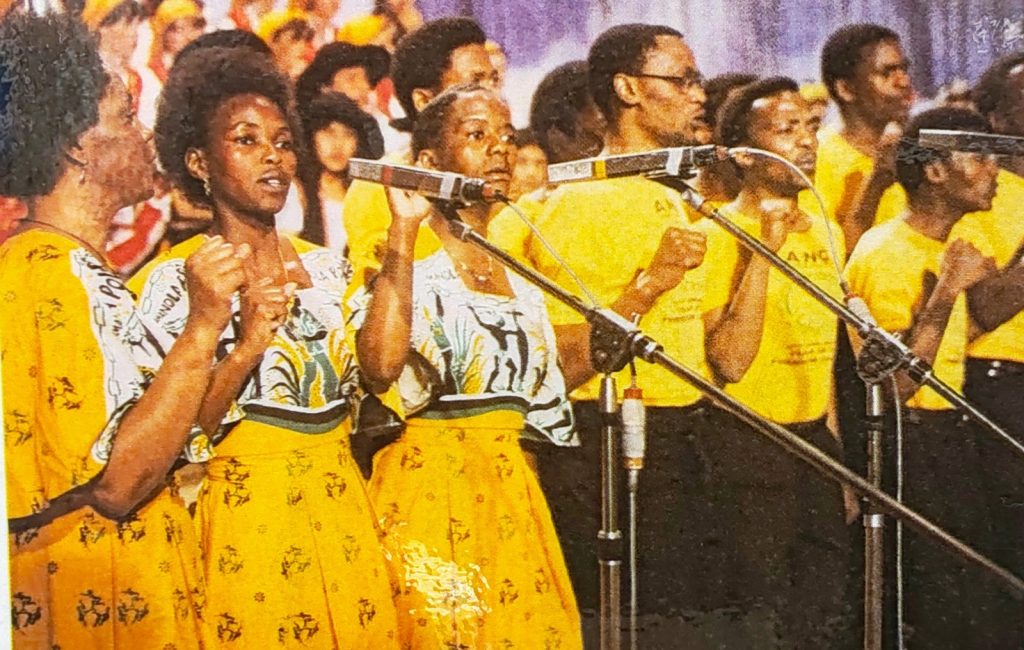
The opera was not complete without the enunciates of the children of Soweto, Gugulethu, KwaMashu and Gaetsewe. Ibrahim found these voices in chilly Berlin in the flesh of the celebrated ANC Choir and Cultural Group (ANC Singegruppe) of the GDR, which at the same festival the past year (1981) had brought the 5000+- crowd at the Palace of the Republic’s main theatre to tears when they rendered ‘There is strife and oppression in South Africa’ song whose lyrics were written by the late Lebo Mathebula, then a student at the Solomon Mahlangu Freedom College (SOMAFCO). The song was highly entrancing and gripping, and the applause was so robust that the choir obliged and returned on stage to render it three times more.
No sooner had Ibrahim listened to the choir at rehearsal than he turned to the piano and beckoned us closer to listen to the music taking shape beneath his hands and to search for lyrics that could carry its spirit. We wasted no time; the choir retreated and got down to business. Inputs came from left to right. Zolile Maqetuka, one of the inventive minds among us, penned a salutary poem on King Shaka’s valour and majesty; Shaka (Tschaka) became Ibrahim’s favourite.
Carlos Ward, Rachiin Ausur, and Andre Strobert joined Ibrahim for our rehearsal on the main stage at the Palace of the Republic — also known as the People’s Palace — across Unter den Linden from Museum Island in the heart of what was then East Berlin, and the instant they began to play, the empty hall seemed to ignite, their instruments ringing out with commanding power, razor-sharp and breathtaking intensity – remarkable energy and flair.
We produced more lyrics for other tunes from which Ibrahim settled for two of the best. We were now more than enthusiastic and aflame, waiting for the moment we were on stage to shine for a full house with one of the best in African rhythm and Jazz. What was more, one of our own!
After the outstanding performance, Ibrahim said, “It is probably the most wonderful festival I have ever experienced. Here you can be sure that the participants have gathered because they have a common goal. And you can feel that immediately.”
As was the tradition with the festival, the prominent songs that captured the imagination of the audience were later brought together in an album, preserving the spirit and mood of the occasion long after the final performance had ended. Each track seemed to carry with it a particular memory: the energy of the crowd, the pride of the performers, the colour and movement of the stage, and the deep sense of celebration that filled the air.
Among these songs, Shaka (Tschaka) stood out as one of the unforgettable highlights of the 12th Festival. For my comrades and me, being in exile and never knowing if we would ever return home, it was more than just a performance; it was an experience that stirred emotion, awakened memory, and reflected the cultural richness of the festival itself and the people of the world.
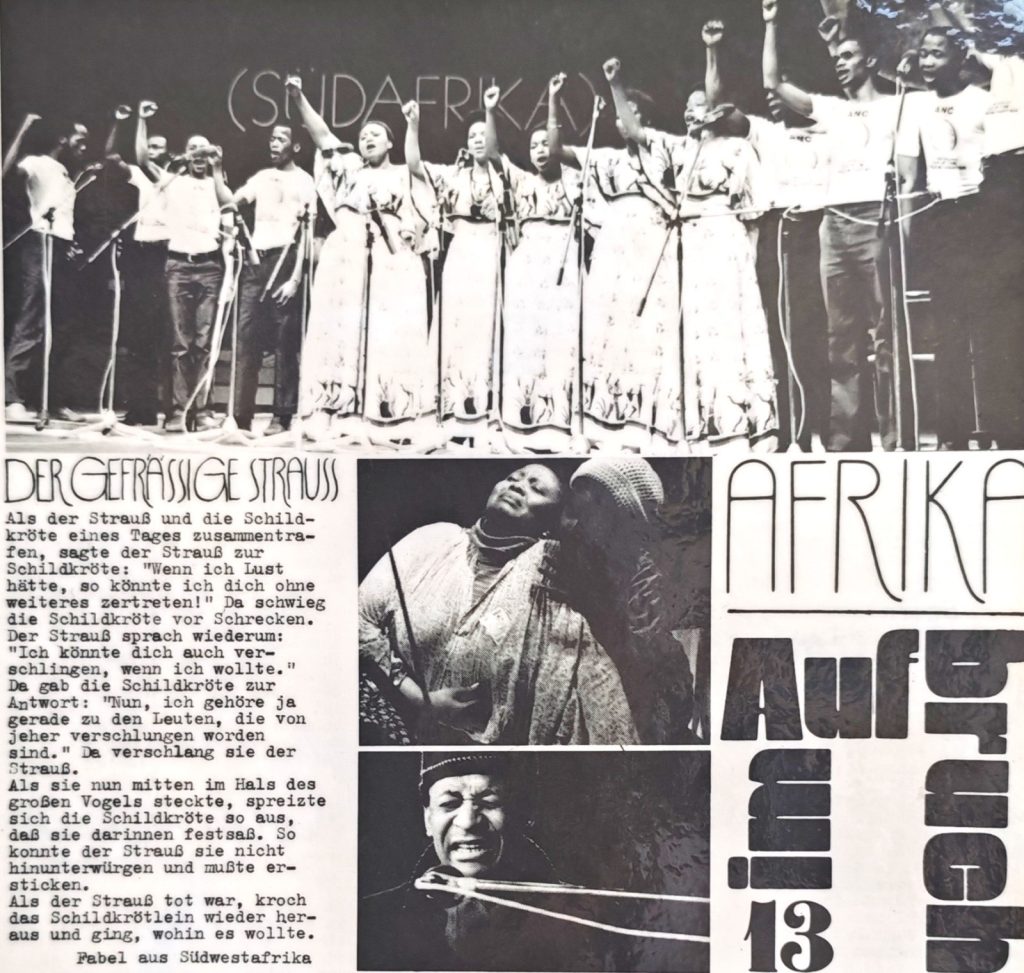
Even now, when I think back to that moment, I can still feel something of its power and beauty. The rhythm, the atmosphere, and the shared excitement of those who were present have remained with me as sweet memories, treasured forever.
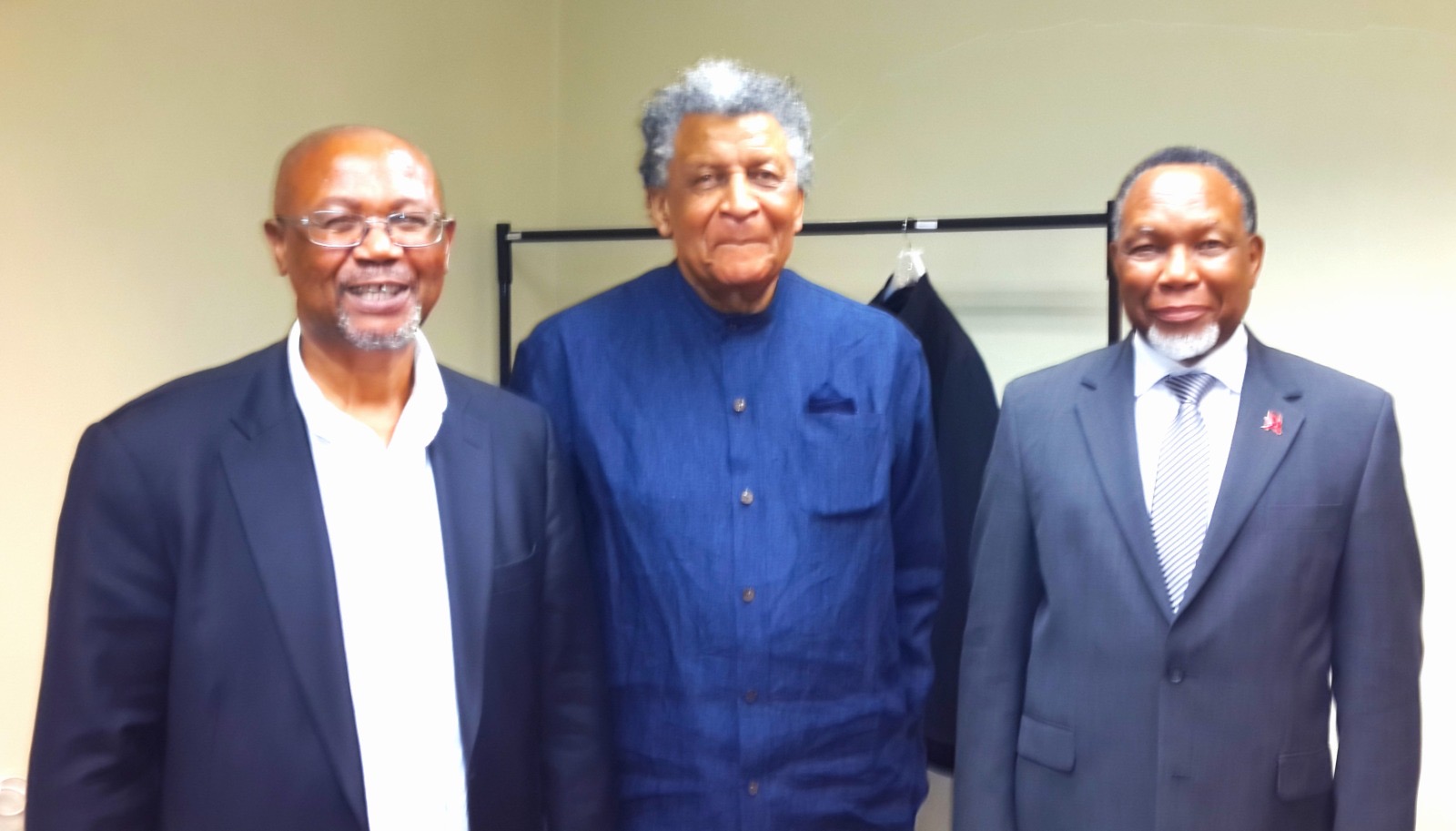
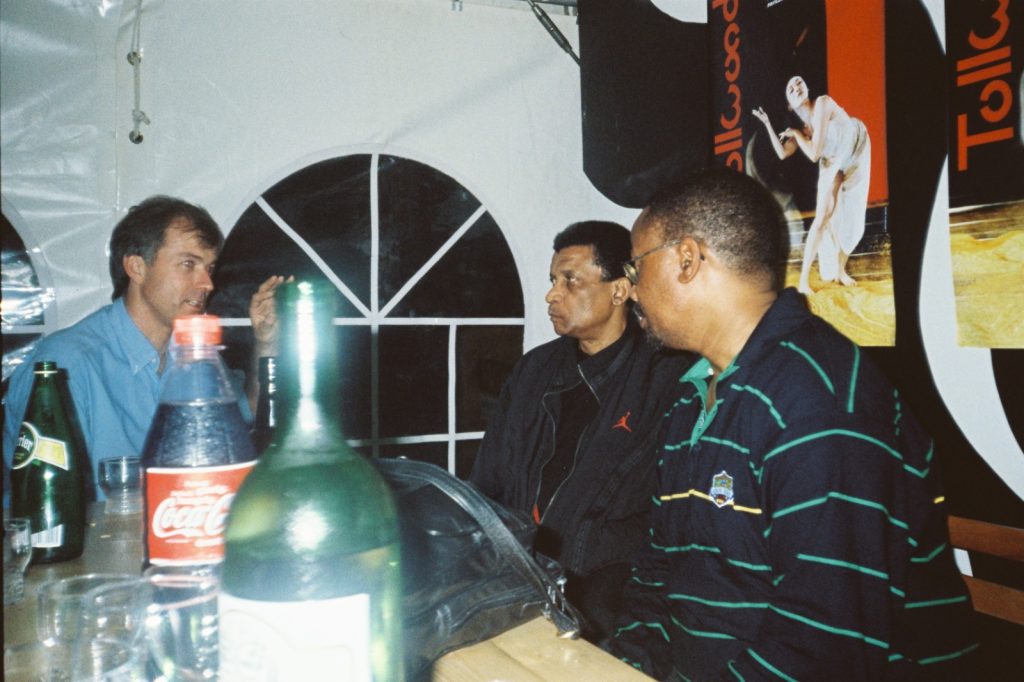
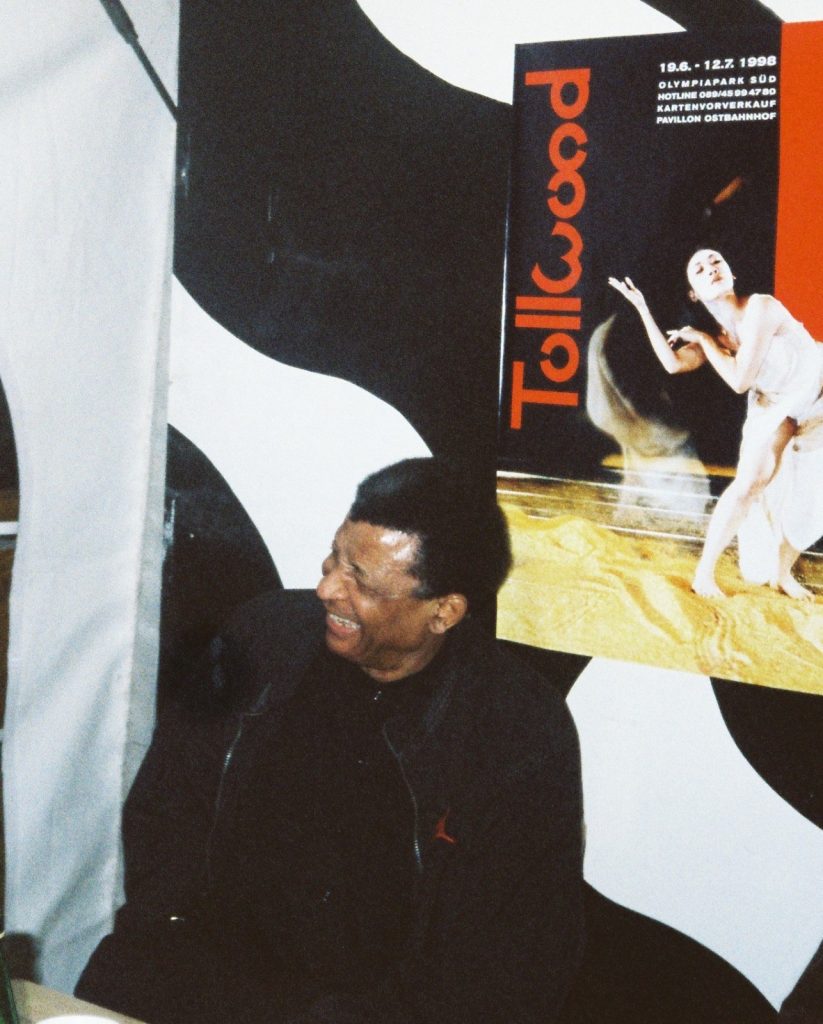
I met Dollar many times thereafter here at home in a free South Africa and abroad. We always reminisced about those days out there. I was in Munich for three years as consul-general, and he was a frequent performer at the Summer Tollwood festival at Olympia Park, which ran from late June to early July every year.
Rest In Peace, The Only One, Dollar!
Greet Ward, Ellington, and the rest!