
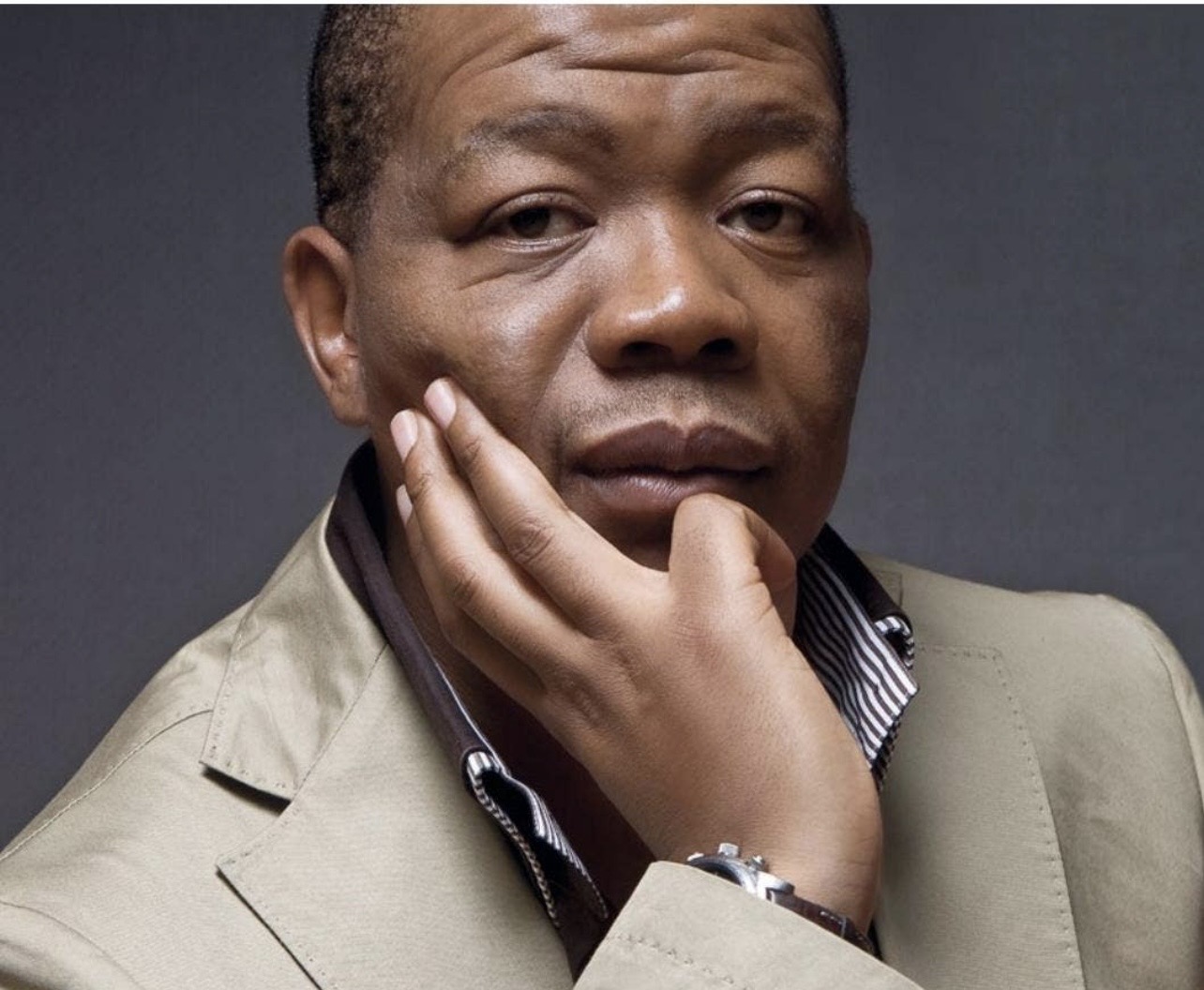
By Advocate Richard Thabo Moloko – Study Group
1. Introduction: 30 June and the Constitutional Moment
As South Africa approaches 30 June 2026, the national conversation has become increasingly polarised, emotional and combustible. What began as a debate about illegal immigration has now evolved into a broader contest over sovereignty, constitutionalism, state legitimacy, public order, African solidarity and the future of South Africa’s democratic project.
The country is no longer debating migration alone. It is debating whether the democratic state still possesses the institutional capacity, moral authority and public legitimacy to govern complex social conflicts before they descend into disorder.
The interventions of former President Thabo Mbeki, Cde Jay Naidoo, Cde Mogomotsi Mogodiri, President Cyril Ramaphosa, Acting Minister Firoz Cachalia, Minister Gwede Mantashe and journalist Qaanitah Hunter reveal the depth of the moment. Each intervention speaks from a different location in the national argument. Each identifies a different danger. Each raises questions that cannot simply be dismissed.
Mbeki warns against the search for a visible enemy and cautions that African migrants must not become scapegoats for South Africa’s structural failures. Jay Naidoo, speaking from the moral memory of the liberation struggle, reminds the country that corruption, inequality and failed governance cannot be redirected into violence against vulnerable people. Mogomotsi Mogodiri gives voice to a sovereignty and national-security anxiety felt by many citizens who believe the state has failed to secure borders, enforce immigration law and protect communities.
President Ramaphosa, Acting Minister Cachalia and Minister Mantashe emphasise the constitutional obligation of the state to maintain public order and prevent private actors from assuming the functions of law enforcement. Hunter adds a further warning: legitimate public anger may itself be captured, redirected and weaponised by criminal, political or ideological forces.
Taken together, these interventions show that South Africa is confronting more than an immigration dispute. It is confronting a crisis of state capability and state legitimacy. When citizens no longer trust the state to regulate borders, administer documentation, police crime, protect communities, manage public services and enforce the law fairly, migration becomes a proxy for a much deeper institutional failure.
The 30 June moment therefore requires more than slogans. It requires constitutional sobriety. It requires a state capable of enforcing immigration laws without violating human dignity; protecting public order without suppressing lawful protest; securing borders without embracing Afrophobia; and addressing legitimate grievances without allowing public anger to be converted into vigilantism, xenophobia or instability.
The central question is no longer whether migration matters. It does. The real question is whether South Africa can build a migration governance system consistent with sovereignty, constitutional democracy and African solidarity.
2. Three Emerging Constitutional Narratives
The increasingly polarised public debate has often been presented as a choice between two irreconcilable positions: one either supports stronger immigration enforcement and is accused of xenophobia, or one defends Pan-Africanism and is accused of ignoring the legitimate concerns of South African citizens. This binary framing is both analytically inadequate and constitutionally misleading.
As the public discourse has matured, a more nuanced picture has emerged. The interventions by former President Thabo Mbeki, Cde Jay Naidoo, Cde Mogomotsi Mogodiri, President Cyril Ramaphosa, Acting Minister Firoz Cachalia, Minister Gwede Mantashe and others demonstrate that the national conversation is not centred on a single question. Rather, it reflects different constitutional concerns about the same underlying problem.
Some are primarily concerned with human dignity, African solidarity and the dangers of scapegoating. Others are concerned with sovereignty, border integrity and national security. Government, for its part, is concerned with preserving constitutional order, the rule of law and the exclusive authority of the state to enforce immigration legislation.
These perspectives should not be understood as mutually exclusive ideological camps. They are better understood as three constitutional narratives, each illuminating an important dimension of South Africa’s migration governance crisis.
The challenge is not to determine which narrative should prevail, but how democratic institutions can reconcile the legitimate concerns reflected in each.
2.1 The Pan-African Constitutional Position
Represented principally by Former President Thabo Mbeki and, in a different but complementary register, Cde Jay Naidoo, this perspective begins from the premise that South Africa’s current political and economic crisis cannot be understood through the presence of African migrants. It argues that unemployment, poverty, corruption, institutional decline and weak economic growth are primarily the consequences of governance failures, state capture, corruption and declining institutional capability rather than immigration.This perspective does not deny the existence of illegal immigration, nor does it argue against the enforcement of immigration law. On the contrary, it accepts that every sovereign state possesses both the right and the constitutional obligation to regulate entry into its territory. Its concern lies elsewhere: that migrants have become convenient scapegoats for structural failures whose origins lie within South Africa’s own political economy.
Former President Mbeki warns against what he describes as the search for a “visible enemy” — a process through which complex structural problems are simplified by locating blame in vulnerable groups rather than confronting deeper institutional failures. Such an approach risks diverting public attention from corruption, state incapacity, economic stagnation and poor governance while simultaneously weakening South Africa’s historic commitment to Pan-African solidarity.
Cde Jay Naidoo reinforces this argument from a constitutional and moral perspective. He cautions that understandable public frustration must never become a licence for vigilantism or violence. The proper response to declining public confidence lies not in hostility towards vulnerable migrants but in rebuilding ethical governance, restoring institutional credibility and confronting corruption wherever it exists. For both Mbeki and Naidoo, migration is therefore not the principal crisis; rather, it has become the prism through which a much deeper crisis of governance is being viewed.
2.2 The Sovereignty and National Security Position
Represented by Cde Mogomotsi Mogodiri and many of the civic formations supporting the 30 June mobilisation, this perspective begins from a different constitutional premise: that sovereignty is meaningful only if the state possesses the practical capacity to control its borders, administer immigration law and protect the territorial integrity of the Republic.From this perspective, illegal immigration is not merely an administrative issue but a manifestation of declining state capability. Weak border management, corruption within Home Affairs, abuse of the asylum system, organised criminal networks and ineffective law enforcement are viewed as evidence that the constitutional state is failing to discharge one of its most fundamental responsibilities.
Supporters of this position argue that unmanaged migration places additional pressure on public services, undermines confidence in government, facilitates criminal activity and weakens social cohesion. They therefore call for stronger border management, institutional reform within Home Affairs, improved deportation mechanisms, more effective policing and greater protection of South Africa’s labour market and informal economy.
Many of these concerns raise legitimate questions about state capability and deserve careful consideration within a constitutional framework. At the same time, broader claims regarding the scale, causes and consequences of illegal migration require careful empirical verification. Public policy should be informed by credible evidence rather than political rhetoric or untested assumptions. Failure to distinguish between legitimate governance concerns and unsupported generalisations risks transforming an institutional challenge into a source of social division.
2.3 The Constitutional Order Position
Government’s position, articulated by President Cyril Ramaphosa and subsequently reinforced by Acting Minister Firoz Cachalia and Minister Gwede Mantashe, begins from a foundational principle of constitutional democracy: however serious the migration challenge may be, only the state possesses the lawful authority to enforce immigration legislation, regulate entry into the Republic and maintain public order.This position recognises the legitimacy of public concern regarding illegal immigration while rejecting attempts by private individuals or organisations to assume the functions of law enforcement. Immigration enforcement, border control, deportation and public security remain constitutional responsibilities of the state and must be exercised through lawful institutions operating within the rule of law.
The constitutional concern extends beyond migration itself. If citizens lose confidence in state institutions and increasingly resort to private enforcement, vigilantism or coercive mobilisation, the erosion of constitutional order becomes a greater danger than the migration challenge that gave rise to it. The state’s monopoly over the legitimate use of public coercive power is therefore not merely a legal principle; it is one of the essential foundations of constitutional democracy.
2.4 Reconciling the Three Narratives
These three perspectives are frequently presented as competing ideological camps.
That is an unfortunate simplification. Properly understood, each highlights a different constitutional imperative.
The Pan-African constitutional perspective reminds us that human dignity, equality and African solidarity remain foundational values of South Africa’s constitutionalorder. The sovereignty and national security perspective reminds us that constitutional rights exist within a sovereign state capable of regulating its borders and enforcing its laws. The constitutional order perspective reminds us that even legitimate public concerns cannot justify the privatisation of law enforcement or the abandonment of the rule of law.
The challenge facing South Africa is therefore not to choose between these competing values. It is to build institutions capable of reconciling them. A capable constitutional state should be able simultaneously to protect human dignity, secure its borders, enforce immigration law fairly, uphold the rule of law, preserve public order and honour South Africa’s historic commitment to African solidarity.
3. From Migration to Migration Governance
The national debate should no longer begin with the question: Is illegal immigration a problem?
In practical terms, that question has already been answered across much of South Africa’s political spectrum. Former President Thabo Mbeki accepts that immigration laws must be observed and enforced. Cde Jay Naidoo recognises the sovereign right and constitutional duty of the South African state to regulate its borders. Cde Mogomotsi Mogodiri and many grassroots formations place illegal immigration at the centre of their mobilisation. Government itself, through President Cyril Ramaphosa and members of the executive, has publicly acknowledged that illegal migration presents challenges for governance, national security, public confidence and the delivery of public services.
The real question confronting South Africa is therefore no longer whether illegal immigration exists. It is this:
Why has South Africa failed to build an effective migration governance system?
This shift in emphasis is more than semantic. It fundamentally changes the focus of the debate. Instead of treating migrants themselves as the primary problem, it directs attention to the institutions responsible for governing migration: border management, identity systems, Home Affairs, asylum administration, labour regulation, policing, intelligence, municipal planning, regional cooperation and theadministration of justice.
Migration, by itself, is neither abnormal nor evidence of institutional failure. Human mobility is one of the oldest features of civilisation. Throughout history, people havecrossed borders in search of security, employment, trade, education and opportunity.
Africa’s own history has been shaped by migration, long before the colonial partition of the continent. Colonial borders frequently divided communities that had lived together for centuries, while South Africa’s industrial development was itself built upon regional systems of migrant labour. Equally, the struggle against apartheid succeeded because African states opened their borders, shared their resources and extended solidarity to the South African liberation movement.
The existence of migration is therefore not the crisis.
The crisis is unmanaged migration within the context of weakening state institutions.
The distinction is critical. Migration becomes politically destabilising not simply because people move across borders, but because institutions responsible for regulating that movement cease to function effectively. Where administrative systems fail, uncertainty replaces certainty; where documentation fails, speculation replaces evidence; where enforcement is inconsistent, public confidence begins to erode.
A capable constitutional state does not govern migration through rhetoric or periodic political campaigns. It governs migration through institutions.
It knows who enters its territory and who departs. It maintains accurate and credible population records. It distinguishes between tourists, students, skilled professionals, seasonal workers, asylum seekers, recognised refugees, permanent residents, overstayers and undocumented entrants. It processes applications within reasonable timeframes. It removes persons who have no lawful basis to remain, but only through transparent procedures and due process. It protects refugees and lawful migrants. It prosecutes document fraud and corruption. It regulates employers who exploit undocumented labour. It secures borders professionally rather than theatrically. Itcooperates with neighbouring states on migration management, intelligence and labour mobility. Above all, it produces reliable administrative data that enables evidence-based public policy instead of political conjecture.
South Africa’s difficulty lies precisely here.
Migration has gradually ceased to function as an administrative system and has instead become a political battlefield. Institutions that should work in concert—
Home Affairs, the Border Management Authority, SAPS, intelligence services, labour inspectors, municipalities, SARS and the asylum system—have not consistently demonstrated the levels of coordination, integrity and administrative capability expected of a modern constitutional state.
Consequently, public frustration has become directed not merely at migrants but at visible institutional failure.
Citizens observe porous borders, allegations of corruption in documentation processes, lengthy asylum backlogs, weak labour inspection, inconsistent immigration enforcement and uncertainty regarding the actual number and status offoreign nationals residing within the country. In the absence of credible institutional performance, public debate becomes increasingly driven by anecdote, speculation and political mobilisation rather than reliable evidence.
This explains why migration has become such an emotionally charged issue.
The public is not responding only to the presence of migrants. It is responding to the perception that fundamental institutions of governance are no longer functioning with sufficient competence, consistency or legitimacy. When the state cannot accurately count, document, regulate, communicate and enforce its own laws, many citizens begin to question whether anyone remains effectively in charge. Such institutional uncertainty creates fertile ground for fear, misinformation, vigilantism, populism and political opportunism.
Seen in this light, migration becomes far more than an immigration issue.
It becomes a measure of state capability.
Migration governance sits at the intersection of constitutional sovereignty, public administration, national security, labour market regulation, municipal planning, regional diplomacy, economic development and the rule of law. It is therefore not a discrete policy domain belonging only to Home Affairs. It is one of the clearest indicators of whether the machinery of the state is functioning coherently across multiple institutions.
The debate must therefore move beyond the language of crisis, accusation and blame towards the language of institutional reconstruction. South Africa does not face a choice between sovereignty and African solidarity, between border security and constitutional rights, or between enforcing immigration law and protecting human dignity. These are not mutually exclusive objectives. They are complementary constitutional responsibilities of a capable democratic state.
The challenge before South Africa is not to choose between them, but to rebuild institutions capable of giving practical effect to all of them simultaneously.
Migration governance is therefore not principally about migrants.
It is about the quality of the South African state.
4. State Capability versus State Legitimacy
The migration debate has exposed two crises unfolding simultaneously within the South African state. The first is a crisis of state capability. The second is a crisis ofstate legitimacy. While analytically distinct, these crises reinforce one another, creating a self-perpetuating cycle of institutional decline.
This distinction is fundamental. States do not derive legitimacy merely because they possess constitutional authority. Their legitimacy is sustained when citizens believe that public institutions are capable of discharging the responsibilities entrusted to them. Conversely, even a constitutionally legitimate state begins to lose public confidence when it repeatedly demonstrates an inability to perform its core functions.
Migration governance provides one of the clearest tests of this relationship.
4.1 A Crisis of State Capability
The first crisis concerns the state’s operational capacity to govern migration effectively.
The issue is not whether South Africa possesses immigration laws. It does. Nor is itwhether constitutional and statutory institutions exist to administer those laws. They do. The question is whether those institutions possess the administrative competence, professional integrity and operational capacity to implement them consistently.
A capable constitutional state should be able to answer a number of basic governance questions with confidence.
Can it secure and monitor its borders effectively?
Can it administer an asylum system that distinguishes genuine refugees from economic migrants within reasonable timeframes?
Can it accurately document those who enter, reside in and depart from the Republic?Can it detect and prosecute immigration fraud, identity fraud and corruption within documentation systems?
Can it regulate labour markets sufficiently to prevent the exploitation of undocumented workers while protecting lawful employment?
Can it coordinate municipalities so that planning for housing, healthcare, education, transport and other public services reflects actual population dynamics?
Can it distinguish between lawful migrants, asylum seekers, refugees, overstayers and
those who have entered or remained unlawfully?
Can it remove persons who have no lawful basis to remain in South Africa through
transparent procedures consistent with constitutional due process?
These are not political questions. They are tests of institutional capability.
Where these functions are performed competently, migration remains an
administrative matter. Where they fail, migration quickly becomes a source of
political conflict, social anxiety and institutional contestation.
The migration debate therefore exposes weaknesses extending far beyond the
Department of Home Affairs. It raises broader questions regarding the effectiveness
of border management, policing, intelligence coordination, labour inspection,
municipal planning, population data systems, fiscal planning and intergovernmental
cooperation.
In this sense, migration governance functions as a diagnostic tool for assessing the
overall health of the South African state.
4.2 A Crisis of State Legitimacy
The second crisis concerns legitimacy.Political philosophers from Max Weber onwards have argued that one of the
defining characteristics of the modern state is its monopoly over the legitimate use
of public coercive power. Citizens accept the authority of the state because they
believe that public institutions possess both the legal authority and practical capacity
to enforce the law fairly, consistently and impartially.
That legitimacy is not static.
It must be continually earned through competent governance.
When citizens increasingly conclude that institutions responsible for border control,
immigratio administration, policing or law enforcement are no longer performing
their constitutional functions effectively, confidence in those institutions begins to
decline.
As confidence declines, legitimacy erodes.
As legitimacy erodes, citizens increasingly seek alternative mechanisms through
which to protect their communities, regulate public spaces or enforce what they
perceive to be neglected laws.
Private security assumes functions traditionally performed by the police.
Community patrols begin exercising quasi-law-enforcement powers.
Vigilante formations emerge.
Political movements begin conducting immigration inspections.
Social media increasingly replaces official communication as the primary source of
public information.
This substitution of public authority by private actors represents one of the most
serious constitutional dangers confronting any democratic state.The issue is not whether citizens’ frustrations are understandable. In many instances
they are.
The constitutional danger arises when private actors begin assuming powers that
belong exclusively to the state.
A constitutional democracy cannot permit immigration enforcement to become
privatised. Once competing centres of coercive authority emerge, the rule of law
gradually gives way to competing claims of political legitimacy.
The migration debate therefore raises a much larger constitutional question:
Can South Africa restore public confidence in the capacity of its institutions before
citizens increasingly cease to regard those institutions as the primary guarantors of
public order?
4.3 Four Distinct Groups: Restoring Analytical Precision
One of the greatest weaknesses of the current public debate is its tendency to
collapse fundamentally different categories of people into the single and imprecise
notion of “foreigners.”
This analytical imprecision produces poor public policy.
Effective migration governance requires distinguishing between four fundamentally
different groups, each requiring a different constitutional and institutional response.
First, there are lawful migrants, recognised refugees and asylum seekers who are
present in South Africa under constitutional or statutory protection. Their rights to dignity, equality, due process and personal security are protected by the Constitution and by South Africa’s international obligations. They are not the proper targets of public hostility or collective suspicion.Second, there are undocumented migrants whose legal status has yet to be regularised or determined. Their presence raises legitimate administrative and legal questions that require lawful resolution through functioning immigration institutions rather than public intimidation or collective punishment.
Third, there are organised criminal networks — whether local, regional or transnational — that deliberately exploit weaknesses in migration governance. These networks engage in document fraud, human trafficking, organised smuggling, corruption, extortion and other forms of organised criminality. They constitute a
national security challenge that should be addressed through intelligence-led policing rather than through indiscriminate hostility towards migrants generally.
Fourth, there are political entrepreneurs, criminal actors and ideological organisations that mobilise migration as a political instrument. Some exploit migration to advance electoral objectives. Others seek to divert attention from governance failures. Still others may deliberately cultivate instability, fear or ethnic mobilisation in pursuit of criminal, factional or political advantage. Their principal interest is often not migration itself but the political opportunities generated by social conflict.
These four categories are frequently conflated in public discourse.
They should not be.
Each presents a fundamentally different policy problem.
Each requires a different constitutional response.
Failure to distinguish among them results in blunt policy instruments that
simultaneously weaken public confidence, undermine constitutional rights and fail to
address the actual sources of institutional dysfunction.The migration debate therefore demands not broader generalisations, but greater
analytical precision.
Only by correctly identifying the actors involved can the state design responses that
are proportionate, lawful and effective.
This distinction prepares the ground for the next and perhaps most important
analytical proposition of this paper: migration should not principally be understood
as the cause of South Africa’s institutional crisis. Rather, it functions as a governance
stress test, revealing weaknesses that already exist within the machinery of the
democratic state.
5. Migration as a Governance Stress Test
One of the central propositions of this paper is that migration has not caused South
Africa’s institutional crisis. Rather, it has exposed it.
Migration should therefore be understood not principally as the source of state
failure, but as one of the clearest indicators of it. Like all effective stress tests, it
reveals strengths and weaknesses that already exist within the system. It does not
create those weaknesses; it makes them visible.
This distinction is critical because it changes the nature of both diagnosis and
remedy.
If migration is assumed to be the primary cause of institutional decline, then
restricting migration becomes the principal policy response. If, however, migration is
understood as exposing weaknesses in the machinery of the state, then the
appropriate response becomes institutional reconstruction.
Modern governance repeatedly demonstrates this phenomenon.The COVID-19 pandemic did not create weaknesses in public health systems. It
exposed disparities in healthcare infrastructure, disease surveillance, emergency
preparedness, supply-chain resilience, public communication and intergovernmental
coordination that had accumulated over many years.
Similarly, South Africa’s electricity crisis did not suddenly emerge with the onset of
load-shedding. Load-shedding merely exposed decades of underinvestment, poor
maintenance, governance failures, procurement weaknesses, leadership instability
and declining technical capability within the electricity sector.
Likewise, the deterioration of freight logistics did not begin when trains stopped
running or ships waited offshore. The logistics crisis revealed much deeper
institutional weaknesses in infrastructure maintenance, operational management,
investment planning, organised crime prevention and executive oversight across the
transport system.
Migration performs precisely the same diagnostic function.
It exposes weaknesses that extend far beyond immigration policy itself.
It reveals shortcomings in the Department of Home Affairs’ capacity to administer
identity systems, visas, permits, asylum applications and population records.
It exposes the operational effectiveness of the Border Management Authority and its
ability to secure borders while facilitating legitimate travel and trade.
It tests the intelligence community’s capacity to identify organised criminal networks
involved in human trafficking, document fraud, smuggling and transnational
organised crime.
It reveals whether the South African Police Service possesses sufficient investigative
capacity to distinguish between ordinary migrants, asylum seekers, refugees andorganised criminal syndicates rather than treating migration as a homogeneous
phenomenon.
It demonstrates whether labour inspectors can regulate employment practices,
prevent the exploitation of undocumented workers and ensure compliance with
labour legislation.
It tests municipalities’ ability to plan accurately for housing, healthcare, education,
water, sanitation, transport and local economic development based on changing
population dynamics.
It reveals the effectiveness of fiscal planning by testing whether national and local
government possess reliable demographic information upon which to allocate
resources and design public services.
Perhaps most importantly, migration exposes the state’s ability to coordinate
multiple institutions simultaneously.
Migration governance cannot succeed through Home Affairs acting alone.
It requires sustained coordination between the Border Management Authority, Home
Affairs, SAPS, intelligence services, SARS, the Department of Employment and Labour,
municipalities, the Department of Health, Basic Education, Social Development,
National Treasury, the National Prosecuting Authority and regional partners within
the Southern African Development Community.
Where coordination fails, migration ceases to be an administrative matter and
becomes a political crisis.
The migration debate therefore serves as a powerful institutional audit.
It asks whether the South African state remains capable of performing one of the oldest and most fundamental functions of sovereign government: knowing whoenters its territory, under what legal authority they remain, what rights and obligations attach to that status, and how those rights and obligations are administered fairly, consistently and constitutionally.
This is why migration governance cannot be viewed in isolation.
It provides a window into the overall condition of the democratic state.
A government that cannot administer migration effectively will often struggle to administer many other complex policy domains requiring interdepartmental coordination, reliable information systems, regulatory enforcement and public trust.
Conversely, reforms that strengthen migration governance frequently strengthen the state more broadly. Improvements in identity management, border administration, digital records, anti-corruption systems, labour inspection, intelligence coordination, municipal planning and intergovernmental cooperation generate benefits well beyond immigration policy. They contribute to a more capable developmental state.
Seen in this way, migration becomes one of the most revealing governance stress tests available to policymakers.
It measures not simply the movement of people across borders, but the ability of public institutions to convert constitutional authority into effective administration.
The lesson is therefore clear.
Migration did not create South Africa’s institutional weaknesses.
It revealed them.
And because it revealed them, it also presents an opportunity.
If South Africa responds by rebuilding institutional capability rather than merely
intensifying political rhetoric, migration governance could become a catalyst forwider state renewal. If, however, the debate remains trapped in cycles of accusation, scapegoating and ideological polarisation, the underlying weaknesses will remain unresolved, only to reappear in different forms across other sectors of governance.
Migration is therefore not merely an immigration issue.
It is a measure of the health of the South African state itself.
6. Competing Narratives of South Africa’s Migration Crisis
One of the defining characteristics of the current migration debate is that participants are often answering different questions while believing they are engaged in the same argument.
Some seek to explain South Africa’s economic decline. Others are concerned with constitutional rights. Some focus on sovereignty and border security. Others concentrate on organised crime, institutional collapse or political manipulation.
Consequently, public debate has become increasingly polarised because competing explanations are frequently presented as though only one can be correct.
The reality is more complex.
South Africa’s migration debate is shaped by several distinct explanatory narratives.
Each captures an important aspect of the current crisis. Each also has limitations if
presented as a complete explanation.
6.1. Narrative One: Illegal Immigration as the Primary Cause of South Africa’s
Crisis
The first narrative argues that illegal immigration lies at the centre of South Africa’s
contemporary social and economic challenges. It maintains that weak border control,
undocumented migration and failures in immigration enforcement have contributedsignificantly to unemployment, pressure on public services, criminality, informal
economic competition and declining public confidence in the state.
This narrative resonates strongly because it reflects genuine public frustration with
visible governance failures. Citizens encounter overcrowded clinics, strained schools,
growing informal settlements, pressure on local labour markets and perceptions of
rising criminality. In the absence of effective migration governance, these experiences
often become associated with undocumented migration.
However, while this narrative identifies legitimate governance concerns, it risks
attributing excessive explanatory power to migration itself. South Africa’s structural
challenges—including slow economic growth, state capture, electricity shortages,
municipal decline, freight collapse, corruption and persistently high unemployment—
developed over many years through processes largely independent of migration. To
present undocumented migration as the principal cause of these structural failures is
to oversimplify a far more complex political economy.
6.2. Narrative Two: Governance Failure as the Primary Cause of South Africa’s
Crisis
A second narrative reverses the causal relationship.
Rather than viewing migration as the principal source of South Africa’s difficulties, it
argues that migration has become an exaggerated political issue because
governance failures have created fertile conditions for social frustration.
This perspective, associated most prominently with former President Thabo Mbeki
and echoed by Cde Jay Naidoo, maintains that corruption, institutional decline, state
capture, weak economic growth, poor service delivery and declining state capability
remain the fundamental causes of South Africa’s crisis. Migration, in this account,becomes a convenient political explanation that diverts public attention away from
failures of governance.
The strength of this narrative lies in its recognition that removing every
undocumented migrant would not restore electricity generation, repair freight
logistics, eliminate corruption, rebuild municipalities or generate sustained economic
growth. These challenges remain fundamentally South African governance
challenges.
Its limitation, however, lies in the danger of understating legitimate concerns
regarding migration governance itself. Weak border management, documentation
failures and corruption within immigration systems remain genuine policy problems
requiring effective institutional responses.
6.3. Narrative Three: Migration as a Symptom of Institutional Collapse
A third narrative, which this paper advances, shifts the analytical focus altogether.
Rather than treating migration either as the principal cause of South Africa’s crisis or
as merely a political distraction, it understands migration principally as evidence of
declining institutional capability.
Migration has not created institutional collapse.
It has revealed institutional collapse.
The migration debate therefore becomes a governance diagnostic rather than a
debate about migrants themselves.
Weak border administration reveals weaknesses in state administration.
Failures in documentation expose weaknesses in identity management.
Asylum backlogs reveal administrative incapacity.Labour-market distortions expose weak regulatory enforcement.
Uncertainty regarding population data reveals deficiencies in public administration.
Migration therefore functions as a stress test of state capability. It reveals the extent
to which institutions responsible for governance continue to perform their
constitutional responsibilities effectively.
This narrative shifts the debate away from assigning blame towards rebuilding
institutional capacity.
6.4. Narrative Four: Migration as Political Instrument
A fourth narrative suggests that migration itself has become politically weaponised.
Here the arguments advanced by former President Thabo Mbeki and journalist
Qaanitah Hunter intersect, although they approach the issue from different
directions.
Mbeki cautions that migrants have become convenient scapegoats for structural
failures rooted in corruption, economic stagnation and declining governance. In his
analysis, the search for a “visible enemy” diverts attention from the deeper causes of
South Africa’s political and economic crisis while simultaneously undermining Pan-
African solidarity.
Hunter introduces an additional dimension. She suggests that anti-immigrant
mobilisation itself may become susceptible to manipulation by political actors,
organised criminal networks or ideological entrepreneurs who seek to transform
legitimate public frustration into instability, intimidation or leverage for unrelated
political and criminal objectives.Although these analyses differ in emphasis, both warn against allowing public anger
to be redirected towards objectives that ultimately do little to resolve the underlying
governance crisis.
Migration thus becomes not only a policy issue but also a political resource capable
of being mobilised, amplified and instrumentalised by competing interests.
6.5. Narrative Five: Constitutional Order and the Rule of Law
The fifth narrative places constitutional order at the centre of the discussion.
This perspective, articulated by President Cyril Ramaphosa and reinforced by Acting
Minister Firoz Cachalia and Minister Gwede Mantashe, accepts that illegal migration
presents serious governance challenges while insisting that immigration enforcement
remains exclusively the responsibility of the constitutional state.
The legitimacy of public concern does not confer authority upon private actors to
perform immigration enforcement, conduct inspections, intimidate communities or
assume policing functions.
The constitutional principle is straightforward.
The state alone possesses the lawful authority to regulate borders, enforce
immigration legislation and exercise the legitimate coercive powers necessary to
maintain public order.
This narrative therefore warns that the erosion of constitutional authority may
ultimately pose a greater danger than unmanaged migration itself. Once competing
centres of coercive authority emerge, the rule of law begins to weaken, public
confidence declines further and democratic institutions become increasingly
vulnerable.6.6. Reconciling the Narratives
These five narratives are frequently presented as though they are mutually exclusive.
They are not.
Each captures an important dimension of a complex national challenge.
Illegal immigration presents genuine governance concerns.
Governance failure remains the principal driver of South Africa’s broader socio-
economic crisis.
Migration has exposed institutional weaknesses that already existed.
Migration may, under certain conditions, become politically weaponised by actors
pursuing objectives unrelated to immigration itself.
And constitutional democracy requires that immigration enforcement remain firmly
within the authority of the state.
The challenge for policymakers is therefore not to determine which narrative must
triumph over the others. It is to recognise that several may simultaneously contain
elements of truth.
The task of public policy is to distinguish among them carefully, identify where they
intersect, reject unsupported generalisations, and design institutional responses that
address the actual sources of the crisis rather than merely its most visible symptoms.
Only then can the migration debate move beyond political polarisation towards
constitutional governance and institutional renewal.7. The Institutional Trap
The preceding analysis suggests that South Africa’s migration debate cannot be
understood simply as a disagreement over immigration policy. It reflects something
deeper: a breakdown in the relationship between state capability, public confidence
and constitutional authority.
This paper argues that South Africa has entered what may be described as an
institutional trap.
An institutional trap arises when weaknesses in governance become self-reinforcing.
Instead of isolated administrative failures that can be corrected through routine
reform, institutional decline begins to generate new forms of institutional decline.
Each failure produces conditions that make subsequent failures more likely, creating
a cycle that becomes progressively more difficult to reverse.
Migration governance illustrates this dynamic with particular clarity.
The cycle begins with weak institutional capability.
When border management is ineffective, documentation systems are compromised,
asylum processes become dysfunctional, labour inspection is inconsistent and
immigration enforcement is uneven, the state gradually loses its capacity to manage
migration in a predictable and transparent manner.
Poor migration governance then produces growing public anxiety.
Citizens become uncertain about who is entering the country, under what legal
authority they remain, whether immigration laws are being enforced consistently,
and whether public institutions retain control over the process. In the absence of
reliable administrative information, rumours, anecdote and political rhetoric
increasingly replace evidence as the basis for public understanding.As uncertainty grows, confidence in public institutions begins to decline.
This represents a crisis not merely of administration but of legitimacy. Citizens no
longer evaluate institutions solely according to their constitutional mandate; they
judge them according to their observable performance. Where institutions appear
unable to discharge their most basic responsibilities, public confidence inevitably
weakens.
Declining confidence has important constitutional consequences.
Communities begin searching for alternative mechanisms through which to restore
order. Private security expands. Community patrols assume quasi-policing functions.
Civic formations increasingly undertake activities ordinarily reserved for state
institutions. Political movements begin organising immigration inspections,
documentation campaigns or public demonstrations intended to compel
enforcement action.
Although these initiatives frequently emerge from genuine frustration, they carry
profound constitutional risks.
The gradual substitution of public authority by private enforcement weakens one of
the defining characteristics of constitutional democracy: the state’s monopoly over
the legitimate exercise of public coercive power.
As vigilantism, private enforcement and competing claims to authority become more visible, institutional legitimacy declines even further.
Public confidence weakens.
Institutional cooperation becomes more difficult.
Officials become increasingly reactive rather than strategic.Policy becomes driven by crisis management instead of long-term planning.
The state’s capacity to govern declines still further.
The cycle then begins again.
The institutional trap may therefore be represented as follows:
Weak institutional capability → Poor migration governance → Growing public anxiety → Declining confidence in state institutions → Private enforcement and vigilantism → Further erosion of institutional legitimacy → Further weakening of state capability.
This cycle helps explain why South Africa’s migration debate has become increasingly polarised despite broad agreement on several basic propositions.
There is broad agreement that immigration laws should be enforced.
There is broad agreement that borders should be effectively managed.
There is broad agreement that constitutional rights must be protected.
There is broad agreement that organised crime should be confronted.
Yet public confidence continues to deteriorate because these objectives are not
consistently translated into institutional performance.
This insight carries an important implication.
The institutional trap cannot be broken through political rhetoric alone.
It cannot be broken by increasingly forceful public statements, nor by blaming
migrants, nor by dismissing public concerns as inherently xenophobic, nor by relyingupon periodic enforcement operations that leave underlying administrative
weaknesses intact.
Neither constitutional idealism nor populist mobilisation can substitute for
institutional capability.
The only durable exit from the trap is institutional reconstruction.
That reconstruction must restore the operational effectiveness of Home Affairs, the
Border Management Authority, SAPS, intelligence services, labour inspection,
municipal planning, identity management systems and intergovernmental
coordination. Equally important, it must rebuild public confidence that these
institutions possess both the capacity and the integrity to perform their
constitutional responsibilities fairly, transparently and consistently.
Breaking the institutional trap therefore requires more than improved migration
policy.
It requires rebuilding the state itself.
Only a capable state can restore legitimacy.
Only a legitimate state can maintain constitutional order.
And only a constitutional state that enjoys both capability and legitimacy can
successfully govern migration while simultaneously protecting sovereignty,
upholding the rule of law and preserving South Africa’s historic commitment to
human dignity and African solidarity.
Migration is therefore not simply exposing the weaknesses of particular institutions.
It is revealing the condition of the constitutional state as a whole.
The challenge before South Africa is not merely to reform migration governance.It is to restore the institutional foundations upon which democratic governance itself
depends.
8. A Migration Governance Reform Programme
If the preceding analysis is correct, then South Africa’s migration challenge cannot be
resolved through periodic enforcement operations, public declarations or
increasingly polarised political rhetoric. Nor can it be addressed through denialism,
vigilantism or the false comfort of scapegoating vulnerable communities.
The central challenge is institutional.
South Africa requires a comprehensive Migration Governance Reform Programme
that restores the capability, credibility and legitimacy of the institutions responsible
for governing migration. Such a programme should not be understood as a narrow
immigration initiative. It is, fundamentally, a programme for rebuilding state
capability.
The objective is not simply to regulate who enters the Republic. It is to ensure that
migration governance becomes an integrated component of constitutional
administration, national security, economic planning, regional cooperation and
democratic accountability.
The Study Group proposes that such a programme should rest upon ten mutually
reinforcing pillars.
8.1. Evidence Before Ideology: Building Credible Migration Data
The starting point for sound public policy is reliable information.
South Africa cannot continue debating migration on the basis of speculation, inflated
estimates, political rhetoric or anecdotal evidence. The state must establish credible,
transparent and regularly updated data that clearly distinguishes between foreign-
born residents, permanent residents, temporary visa holders, recognised refugees,
asylum seekers, documented labour migrants, overstayers and undocumented
entrants.
Only with credible demographic and administrative information can policymakers
accurately assess the fiscal, economic and social implications of migration and designevidence-based interventions. Reliable data is not merely a statistical requirement; it
is the foundation of rational democratic governance.
8.2. Rebuilding Home Affairs as a Core Institution of State Capability
The Department of Home Affairs should be recognised as one of the strategic
institutions of the constitutional state.
Identity management, citizenship, civil registration, visas, permits, asylum
administration and residence determination are not routine bureaucratic functions.
They constitute the administrative foundations upon which sovereignty, national
security, electoral integrity, economic planning and public service delivery depend.
Institutional reform should therefore prioritise professionalisation, digital
modernisation, anti-corruption systems, workforce development, performance
management and organisational integrity within Home Affairs.
8.3. Professionalising Border Management
Border management must evolve beyond episodic enforcement operations into a
permanent, intelligence-driven national capability.
Effective border governance requires modern surveillance technology, properly
trained personnel, integrated information systems, anti-corruption safeguards, risk-
based inspections, infrastructure investment and close operational cooperation with
neighbouring states.
Secure borders and efficient borders are not mutually exclusive. A capable state
facilitates lawful movement while preventing unlawful entry. Border management
should therefore be understood as an exercise in governance rather than political
theatre.
8.4. Repairing the Asylum and Refugee System
A constitutional democracy has both sovereign rights and humanitarian obligations.
South Africa must ensure that genuine refugees receive timely protection consistent
with international and constitutional commitments. Equally, economic migrants
should not remain indefinitely within a dysfunctional asylum system because
administrative incapacity has prevented lawful determination of their status.Reform must therefore address two failures simultaneously: abuse of asylum
processes where it occurs, and the administrative failures that have produced
extensive backlogs, uncertainty and prolonged legal limbo.
A credible asylum system protects refugees, preserves public confidence and
strengthens the legitimacy of immigration governance.
8.5. Strengthening Labour Market Enforcement
Migration governance cannot succeed without labour market governance.
Undocumented employment persists because employers derive economic benefit
from vulnerable workers whose legal status limits their ability to enforce labour
rights. The burden of enforcement should therefore not fall exclusively upon
migrants while employers escape accountability.
Labour inspectors should receive enhanced investigative capacity to identify
exploitation, enforce labour standards and prosecute employers who knowingly
employ undocumented workers in violation of the law.
Protecting labour standards strengthens both migration governance and decent
work.
8.6. Integrating Municipalities into Migration Governance
Migration is ultimately experienced in local communities.
Its effects are reflected in clinics, schools, housing demand, transport systems,
informal settlements, policing precincts, local labour markets, trading spaces and
municipal infrastructure.
Yet municipalities frequently possess neither accurate demographic information nor
adequate fiscal support to plan for changing population dynamics.
Migration governance must therefore become an integral component of municipal
planning, budgeting and service delivery. Local government requires reliable
population data, improved planning tools, strengthened intergovernmental
coordination and appropriate fiscal support if it is to fulfil its constitutional
responsibilities effectively.8.7. Separating Organised Crime from Migration
One of the most damaging features of the current debate is the tendency to conflate
migration with criminality.
This is analytically inaccurate and operationally counterproductive.
Some organised criminal networks involve foreign nationals. Many are entirely
domestic. Others operate across national borders and involve sophisticated
transnational syndicates engaged in human trafficking, document fraud, narcotics,
extortion, illicit financial flows and smuggling.
The appropriate response is not collective suspicion directed at migrants generally,
but intelligence-led policing, financial investigation, cross-border law enforcement
cooperation and the systematic disruption of organised criminal enterprises.
Migration policy should never substitute for organised crime strategy.
8.8. Defending Constitutional Order Against Vigilantism
The constitutional state cannot tolerate the privatisation of law enforcement.
Groups that intimidate communities, conduct unlawful inspections, organise illegal
raids, threaten violence or assume immigration enforcement functions undermine
the rule of law irrespective of the legitimacy of their underlying concerns.
Failure to respond decisively emboldens vigilantism, weakens public confidence in
constitutional institutions and accelerates the erosion of state legitimacy.
The state must therefore enforce the law consistently against all forms of unlawful
coercion while simultaneously demonstrating that legitimate public concerns are
being addressed through constitutional institutions.
8.9. Building a Regional Migration Compact
Migration within Southern Africa is a regional phenomenon requiring regional
solutions.
South Africa should take the lead in developing a Southern African migration
compact centred on documentation, labour mobility, border communities,deportation cooperation, intelligence sharing, skills recognition, anti-trafficking
measures and coordinated economic development.
Migration governance cannot be sustained through unilateral enforcement alone.
Durable solutions require regional partnerships that recognise both the
developmental realities of the region and the sovereign responsibilities of
participating states.
Effective migration governance begins long before individuals reach the border.
8.10. Restoring Public Trust Through Honest Communication
Finally, migration governance requires political honesty.
Government should move beyond oscillating between denial, reactive
communication and populist rhetoric. Public confidence depends upon transparent
communication regarding the scale of migration, the capacity of institutions,
enforcement priorities, administrative reforms and constitutional obligations.
Citizens are more likely to trust institutions that acknowledge challenges honestly,
provide credible evidence, explain policy choices and report consistently on progress.
Truthful communication is itself an instrument of institutional legitimacy.
8.11. Towards Institutional Reconstruction
Taken together, these ten pillars represent more than an immigration policy.
They constitute a programme for rebuilding the institutional architecture through
which a capable constitutional state governs migration.
The emphasis is therefore not on controlling migration alone. It is on restoring the
institutions that make lawful, humane and effective migration governance possible.
This is the framework the Study Group advances.
It rejects denialism because unmanaged migration presents genuine governance
challenges.
It rejects scapegoating because migrants cannot be blamed for South Africa’s
broader structural failures.It rejects vigilantism because immigration enforcement belongs exclusively to the
constitutional state.
Above all, it argues that South Africa’s migration challenge will not be resolved
through ideological polarisation but through institutional intervention.
A capable state does not ask its citizens to choose between sovereignty and human
dignity, between constitutional rights and border security, or between Pan-African
solidarity and the rule of law.
It builds institutions capable of securing all of these objectives simultaneously.
Migration governance is therefore not an end in itself.
It is an essential component of rebuilding a capable, legitimate and developmental
South African state.
9. Conclusion: Three Constitutional Obligations
As South Africa approaches 30 June 2026, it faces a defining constitutional moment.
The intensity of the public debate demonstrates that migration has become far more
than a question of border management or immigration policy. It has become a
referendum on the capability of the democratic state, the resilience of constitutional
institutions and the future of South Africa’s social compact.
Throughout this paper, one central proposition has been advanced: South Africa’s
migration challenge cannot be understood in isolation from the wider crisis of state
capability. Migration did not create the country’s institutional weaknesses. It revealed
them. The increasingly polarised national debate is therefore not merely about
migrants. It is about whether the South African state retains the capacity, legitimacy
and constitutional authority to govern a complex society effectively.
Against this background, South Africa confronts three simultaneous constitutional
obligations.The first is to defend the dignity, equality and fundamental rights of every
person within its borders, irrespective of nationality or immigration status.
This obligation flows directly from the Constitution and from South Africa’s long-
standing commitment to human rights and Pan-African solidarity. Neither citizenship
nor immigration status determines whether a person possesses inherent human
dignity. Constitutional democracy requires that every individual be protected against
violence, intimidation, arbitrary treatment and collective punishment. No frustration
with governance failures can justify abandoning these foundational constitutional
commitments.
The second obligation is to restore the state’s capability to regulate migration
lawfully, effectively, transparently and consistently.
Sovereignty is not expressed through political rhetoric alone. It is demonstrated
through competent institutions. A constitutional state must know who enters its
territory, administer immigration law fairly, secure its borders professionally, process
asylum claims efficiently, combat corruption, distinguish lawful migrants from those
who have no legal basis to remain, and enforce its laws through due process. These
are not merely administrative responsibilities; they are among the defining attributes
of effective statehood.
The third obligation is to prevent legitimate public frustration from being
captured by political, criminal or ideological actors seeking to convert social
grievance into instability, vigilantism, ethnic mobilisation or xenophobia.
South Africans are entitled to demand capable government. They are entitled to
expect secure borders, effective public administration, honest leadership and the
faithful implementation of the law. But democratic societies become vulnerable when
understandable public frustration is redirected away from institutional reform and
towards scapegoating vulnerable communities or normalising private enforcement.Equally, public anger must never become an instrument through which criminal
networks, political entrepreneurs or factional interests pursue objectives unrelated to
migration itself.
These three constitutional obligations are not contradictory.
They are mutually reinforcing.
A capable constitutional state does not have to choose between sovereignty and
human rights, between border security and African solidarity, between enforcing
immigration law and protecting human dignity, or between constitutional order and
democratic accountability.
Its legitimacy depends precisely upon its ability to uphold all of these simultaneously.
This insight also provides a more constructive way of understanding the current
national debate.
Former President Thabo Mbeki and Cde Jay Naidoo remind us that migration must
never become a substitute explanation for South Africa’s deeper crisis of governance,
nor a justification for abandoning the values of Pan-African solidarity and
constitutional human dignity.
Cde Mogomotsi Mogodiri and many grassroots formations remind us that
sovereignty, border integrity, effective immigration administration and public
confidence in the state are legitimate constitutional concerns that cannot simply be dismissed as expressions of xenophobia.
President Ramaphosa, Acting Minister Firoz Cachalia and Minister Gwede Mantashe remind us that however legitimate public concerns may be, the enforcement of immigration law remains the exclusive responsibility of the constitutional state.Qaanitah Hunter introduces an additional caution: that legitimate public frustration may itself become vulnerable to political manipulation, organised criminal interests or campaigns whose objectives extend far beyond migration governance.
Properly understood, these are not necessarily irreconcilable positions. They illuminate different dimensions of the same constitutional challenge.
The task before South Africa is therefore not to decide which narrative should prevail.
It is to build institutions capable of reconciling them.
Ultimately, this paper advances a simple but fundamental proposition.
The future of South Africa’s migration debate will not be determined by louder political rhetoric, stronger ideological positions or increasingly polarised public mobilisation.
It will be determined by the quality of its institutions.
If South Africa succeeds in rebuilding state capability, restoring administrative integrity, strengthening constitutional governance and renewing public trust, migration will once again become what it ought to be: an issue of competent public administration governed by law, evidence and constitutional principle.
If those institutions continue to weaken, migration will remain a recurring site upon which much deeper crises of governance, legitimacy and social cohesion are projected.
Migration governance is therefore not merely an immigration challenge.
It is one of the clearest tests of whether South Africa retains the institutional capacity to govern itself as a capable constitutional democracy.That, ultimately, is the challenge confronting the Republic—not only on 30 June 2026, but in the years that lie ahead.