
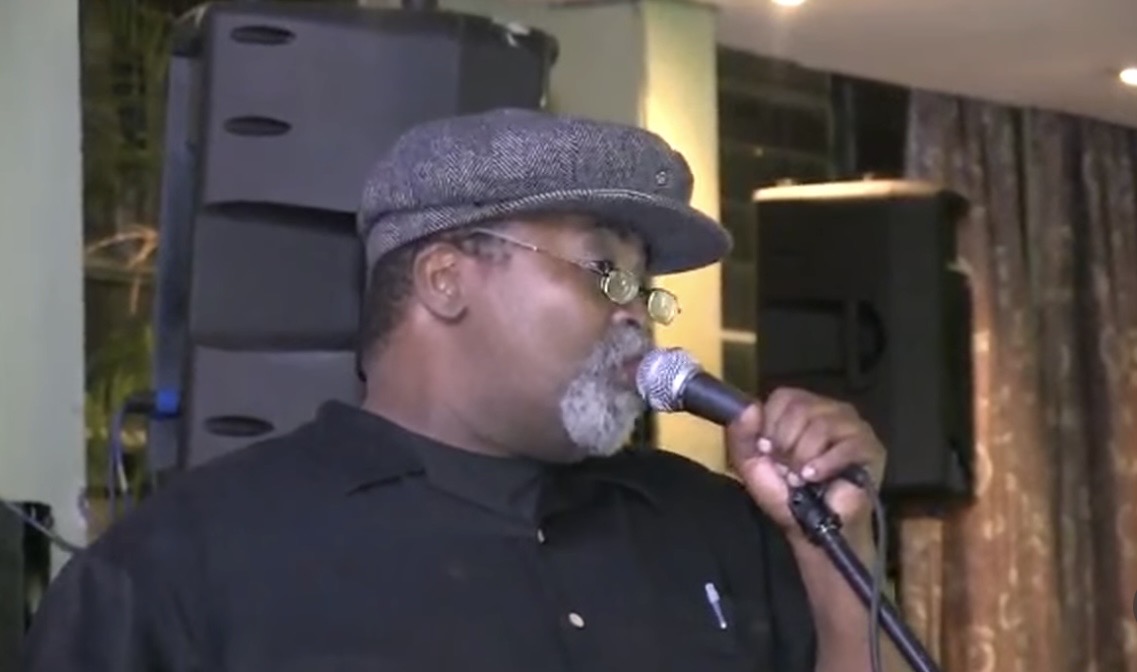
FAMILY BACKGROUND
Fitzroy Nkosomzi Ngcukana was born to Fezile Christopher Colombus “MRA” Ngcukana and Isabel “Hlehle” Ngqulana on the 15th April 1957 at Langa, Cape Town and died in the early hours of the morning of Friday on the 26th June 2026 at his residence in Bazvalley, east of Johannesburg CBD. He was married to Lindiwe Tyamzashe from King Williams Town, Eastern Cape Town. Fitzroy ‘s siblings were Duke, Coleman, Ray, Ezra, Nomantombi, Queenie, Mandisa, Claude, Titita, and Mfanuzile . Fitzroy was the last remaining member of the Ngcukana brothers Jazz band and has transcended to the spiritual realm. Fitzroy was the apple of the eye of his father, an organizer of the family, and he kept the map together.
As a result of his father’s influence, Fitzroy learnt and mastered his musical craft. Fitzroy was also inspired by his aunt, Nyaniso Ngcukana, the first female Jazz musician in Langa, Cape Town. Together with his family, Fitzroy grew the music sector under very difficult circumstances, which points out to the indominate human spirit that they possessed. Fitzroy’s immense contribution to the music industry is truly remarkable.
In the apartheid era creativity of black people was not appreciated and the system tried to stunt and destroy African excellence and innovation. Despite this, the community of Langa produced the iconic Jazz musians such as Duke, Ray, Ezra, Fitzroy, Cyril, Claude. Ngcukana Brothers Jazz Band was formed and bacame a huge musical project in the country and internationally. They were not content to be good but wanted to be the best in their crafts. Through their music and pan Africanist philosophies they also fought apartheid system from within. They shared their knowledge and love of music with others in this way inspiring a breed of musicians and nurturing new audiences and contributing an evolving musical culture. According to Thandiswa Mazwai, a grandchild in the Ngcukana family, her music career all started when her uncle, Fitzroy came to stay with her, brought this massive sound system with him and that’s when the house was filled with music.
“Bra Fitz” as he was affectionately known within the jazz lovers circle was arguably the most versatile of all the Ngcukana brothers, when it comes to playing different roles. Fitzroy started from an early age as a singer in school choirs. He started singing at a very young age and influenced Amampondo in 1976 to perform as a mainstream group instead of playing at the Roman Catholic Catholic. Fitzroy formed the Afro Fusion group Night Cruiser in the eighties with Robert Sithole, Victor Kula and others. Since then he has won many artistic hats which includes, being an Actor, TV producer, music producer, artist liaison, cultural activist, * music administrator and entrepreneur.
FILM INDUSTRY
Fitzroy’s acting skills were tested in 1979 when he performed in two Zakes Mda’s famous plays, “We Shall Sing For The Fatherland And Dark Voices Ringing At The People’s Space Theatre” in Cape Town. As a Founding Member of the Afro-Fusion group, Night Cruiser in 1981 he performed alongside flautist Robert Sithole, saxophonist Victor and pianist brother, Cyril Ngcukana. His love for acting saw him relocating to Johannesburg in the eighties where he worked in the film industry as an actor, dubbing artist and casting director.
In 1987 he acted in one of the TV Productions called Umzi Nezinto Zawe, isiXhosa drama. In the 1990s he worked at the Musicians Union of South Africa (MUSA) as the union administrator, focusing on musicians’ contracts and complaints. In 1997 he joined the Association of South Africa Music Industry (ASAMI) which was later Recording Industry of South Africa (RICA) to co-ordinate the FNB South African Music Awards (SAMA). In 1998 he initiated his own restaurant business specialising in African Cuisine. Fitzroy usually performs with his band around Johannesburg and used to perform with the NGCUKANA brothers.
COMMUNITY ACTIVIST
In 2012 Fitzroy received the Standard Bank Joy of Jazz Life Time Achievement Award for his role in working towards promoting scene in the country. “Fitz” proved to be a great organiser who has resuscitated many musicians who have given up hope. He has organised an event in Langa township that featured many musicians who had hung up their instruments and had given up on their voices. Fitz resuscitated them, took some of them out of drinking dungeons of hopelessness, rekindled their enthusiasm for music, got them to rehearse for the concert. What a memorable occasion! So successful that it earned him some enemies among the envious, jealous and lesser mortals.
POLITICAL ACTIVISM
Fitzroy like most of his family members, was a very staunch supporter of the PAC. He later became an active member of the steering committee of the PAC and was on the cultural desk of that organization.
Fitzroy was the union founder, Secretary of the Arts and Culture in the National Executive Council of the Pan Africanist Congress of Azania from the 1990 until 1994. Fitzroy released an album of freedom songs entitled Isinyikanyika in 1991.
Fitzroy was a well established arts practitioner, having worked with musicians, performing artists, writers, poets in the administration of the culture industry in Johannesburg and in Langa, Cape Town, where he started. Fitzroy’s father, Chris ‘Mra’ Ngcukana was instrumental in the promotion of choirs, jazz music and the involvement of his sons into a formidable contribution to national culture in South Africa.
Fitzroy had dimentia and suffered for more than six years living with loss of memory.
The loss of life cannot be associated with the loss of memory that he suffered. The PAC of Azania has raised his name as a son of Afrika who contributed with his life to the uplifting of the community of arts in the land. Fitzroy served, suffered and sacrificed for the constitutional democracy and freedom in South Africa.
Fitzroy was a veteran South African jazz musician, vocalist, cultural activist and a deep rooted Pan-Africanist,
Fitzroy touched so many lives through his extraordinary talents, wisdom and unwavering commitment to the liberation of African people.
With his passing , South Africa has lost not only a remarkable musician but also a fearless cultural freedom fighter. As the last surviving sibling of the legendary Ngcukana Brothers, his death marks the end of one of the greatest musical dynasties our country has ever produced.
Born and raised in the historic township of Langa, Fitzroy emerged from a family that helped shape the sound and soul of South African jazz. As a gifted arranger and vocalist, he made an immeasurable contribution to the development of Cape Jazz, carrying the rich traditions of African music onto stages across South Africa and the world. His collaborations with giants such as Abdullah Ibrahim and Hugh Masekela placed him among the foremost custodians of our musical heritage.
Fitzroy understood that culture cannot be separated from the struggles of the people. Throughout his life he demonstrated that music is not merely entertainment—it is a weapon against oppression, a vehicle for preserving memory, and a powerful expression of the aspirations of the oppressed.
As the Culture Secretary of the Pan Africanist Congress, he used his art to affirm the African identity, dignity and self-determination. Fitzroy belonged to a generation of artists who refused to separate artistic excellence from the struggle against colonialism, apartheid and exploitation. They understood that the battle for economic and political freedom was inseparable from the struggle to reclaim African culture, history and humanity.
Fitzroy’s contribution was fittingly recognised through a Lifetime Achievement Award at the Standard Bank Joy of Jazz. Yet his greatest achievement lies not in awards, but in the generations of musicians, cultural workers and activists he inspired through his humility, generosity and unwavering commitment to African liberation.
Even during his twilight years , he remained a mentor and source of wisdom to younger artists, reminding them that music carries both beauty and responsibility.
As we mourn his passing, we celebrate a life lived in service of the people. His voice may be no more, but the melodies he created, the culture he defended and the values he embodied will continue to resonate wherever people struggle for justice, dignity and freedom.
Fitzroy’s music gave voice to our people’s joys, sorrows, hopes and struggles.
Fitzroy’s legacy will continue to inspire generations of workers, artists and freedom fighters across our continent.
SHEBEEN KING
Fitzroy was the buzz for the early 1990s renaissance in Johannesburg . Fitzroy ran a speakeasy in Yeoville and made it a go-to club for arts lovers in Johannesburg .
Fitzroy was a vocalist, an arranger, a DJ, a shebeen owner, a teacher, Fitzroy
was charismatic and well loved, but he was also serious. He never separated the joy of music from the responsibility of culture.
Fitzroy also launched a sophisticated and popular shebeen known as Ellingtons Jazz Club, that became a magnet for “who is who” in arts, politics, media, corporate and business. It was not a place to be seen only. It was a platform for ideas exchange.
You could arrive for music and end up in a debate about transformation. You could come to buy a drink and leave with a book recommendation, a contact for a gig, or an invitation to mentor a
young player. If correct, the space had unwritten rules: respect the artists, respect the elders, respect the argument. Above all, know your self and your history.
They say Ideas need special intellectual spaces – A shebeen, a hall, a kitchen table can be a university if the host insists on seriousness and respect. They are places of intellectual discourse. Fitzroy provide such a relaxed platform where intellectuals could network and exchange ideas.
In his heyday, Fitzroy would sit, listen, correct, and send you back to do research, if need be. He leaves behind a rich archive of musical memories, a broken union that no longer speaks for artists, a shebeen culture of ideas that has faded.
To listen to one of his songs, click here.
.
Hamba kahle, Fitzroy Ngcukana., Jwarha, Mtika, Mazaleni, Jotelo, Ndabezitha, Mayarha, Khathithi, Mnangwe, Jiyana!!