
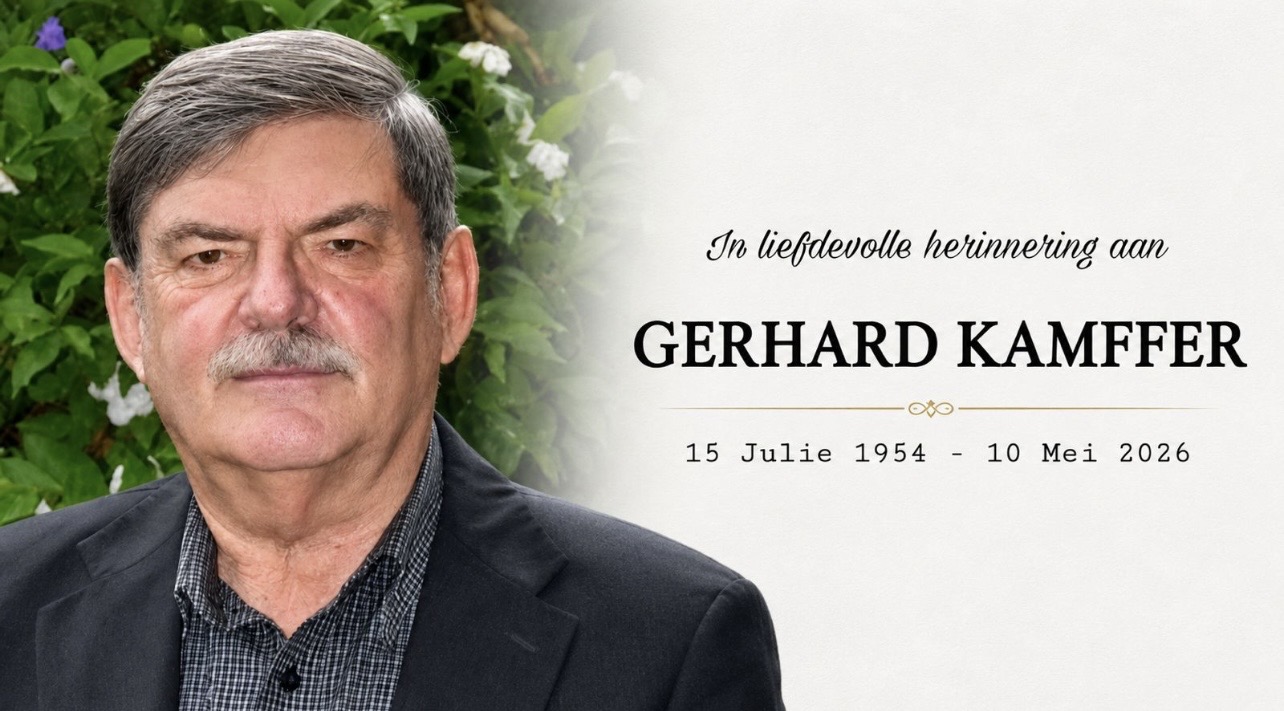
By Lt.Col Siphiwe Ngwenya
In the unfolding story of democratic South Africa, there are individuals whose lives quietly yet profoundly bridge histories, peoples, and futures. Among those patriots stands Brigadier General (Dr) Gerhard Kamffer — soldier, scholar, farmer, nation-builder, and progressive Afrikaner whose lifelong service reflects an enduring commitment to the collective destiny of South Africa.
Born near Balfour in Mpumalanga in 1954 and raised on a farm, Dr Kamffer’s journey mirrors the evolution of the country itself: from the old order into the difficult yet hopeful terrain of democratic transformation. Rooted deeply in Afrikaner heritage, he chose not the path of retreat into nostalgia or isolation, but one of constructive participation in building a united, developmental, democratic, and inclusive South Africa. His life represents an important strand within the Afrikaner tradition — one that recognises that the future of Afrikaners is inseparable from the future of Africa and the broader South African nation.
From an early age, discipline, service, and intellectual curiosity shaped his path. Following his matriculation in 1972 and military service as a platoon commander at 4SAI Middelburg, he pursued higher education at Potchefstroom University, where he obtained a BA Honours degree and later completed a doctorate in history in 1998. His scholarly work on Paul Kruger’s Secret Service 1894–1900 reflected not only rigorous academic engagement with Afrikaner history, but also a deeper commitment to understanding the historical currents that shaped South Africa. His years on the Student Representative Council already hinted at a leadership style grounded in participation, responsibility, and public service.
Following the untimely passing of his father, Dr Kamfferreturned to the family farm near Balfour, where he farmed maize and cattle from 1978 until 2002. Yet even while working the land, his commitment to national service never diminished. Throughout these years, he remained active as a Reserve Force officer, steadily developing into one of the SANDF’s most respected strategic thinkers and leaders.
His military career stands as a testimony to patriotism grounded in service rather than ideology. In 1988 he was appointed Officer Commanding of Heidelberg Commando, continuing a family tradition of military service that stretched back generations. Yet unlike many who remained trapped within the political limitations of the past, Brigadier General Kamffer embraced the democratic transition and dedicated himself to helping transform South Africa’s defence structures into institutions that serve all citizens equally under constitutional democracy.
His leadership in Project Phoenix between 2002 and 2006 was particularly significant. As Project Officer tasked with rejuvenating the Army Conventional Reserve, he understood that the defence and sovereignty of democratic South Africa required professional, disciplined, and unified institutions rooted in constitutional values and national cohesion. His work helped reposition the Reserve Force as an important pillar in the defence architecture of the new South Africa.
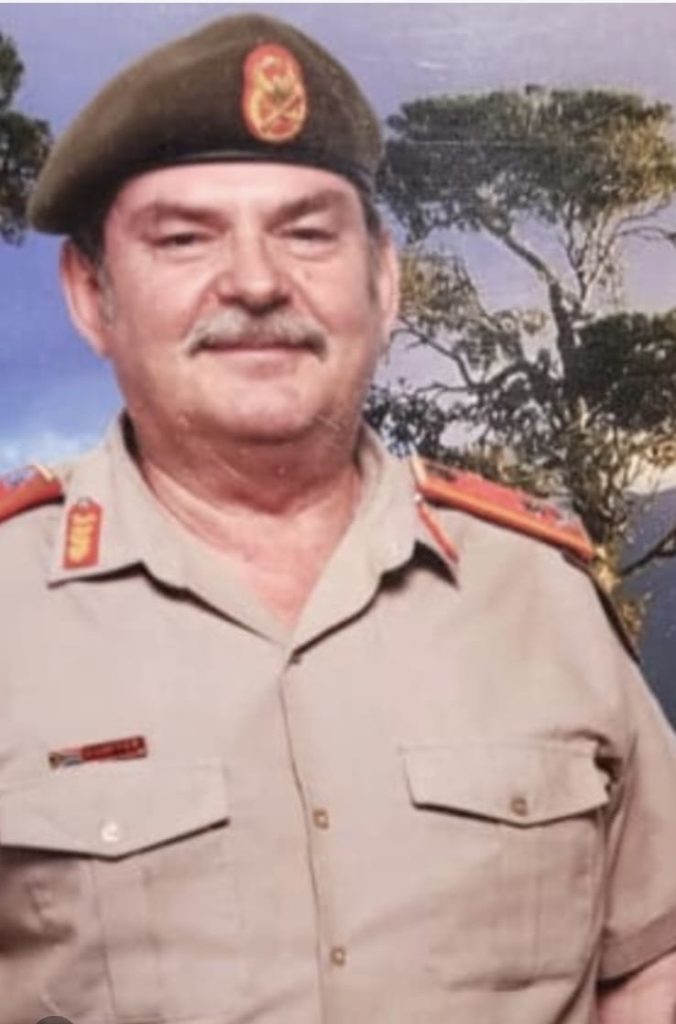
However, Brigadier General Kamffer’s vision extended beyond military preparedness alone. Through Project KOBA-TLALA — meaning “fighting hunger” — he championed a developmental role for the SANDF aligned with the country’s broader socio-economic priorities. This initiative reflected a progressive understanding that national security cannot be separated from human security, food security, and community upliftment. In integrating Project KOBA-TLALA into the Production Brigade to support the sustainment of the SANDF, he demonstrated an enduring belief that state institutions must contribute meaningfully toward improving the lives of ordinary South Africans.
His service on the Army Council since 2013, the highest decision-making body in the SA Army, further reflects the trust placed in his leadership, wisdom, and strategic insight. His distinguished military career, recognised through numerous medals and honours, speaks not only to longevity of service, but to excellence, discipline, and unwavering dedication to the country.
Yet Brigadier General Kamffer is not only a soldier and strategist. He is also an intellectual, cultural historian, and internationally recognised philatelist. His contributions to South African philately reveal a man deeply invested in preserving memory, identity, and the stories that define nations. His award-winning international exhibition, The Road to Democracy in South Africa up to 1994, carried profound symbolic meaning. Through stamps and historical artefacts, he documented the painful yet hopeful journey from apartheid toward democracy — preserving the narrative of struggle, transition, and reconciliation for future generations.
His philatelic excellence earned him international recognition, including gold medals in Melbourne and Bangkok, while his signing of the Roll of Honour of Distinguished Philatelists in 1999 confirmed his standing among South Africa’s foremost cultural historians. Through this work, he demonstrated that history is not merely about the past; it is about understanding how societies heal, evolve, and build shared futures.
Importantly, Brigadier General Kamffer represents a generation of Afrikaners who understood that reconciliation demands courage, humility, and active participation in transformation. His patriotism has never been narrow, exclusionary, or rooted in racial nostalgia. Instead, it has reflected a commitment to a shared South African future grounded in dignity, service, cooperation, and mutual respect among all who call this country home.
At a time when South Africa continues to wrestle with inequality, division, and the unfinished work of nation-building, figures such as Dr Kamffer remind us that patriotism is measured not by rhetoric, but by contribution to the common good. He embodies the principle that one can remain deeply rooted in one’s heritage while wholeheartedly embracing the democratic ideals of non-racialism, reconciliation, and shared humanity.
Today, we honour Brigadier General (Dr) Gerhard Kamffer as more than a decorated officer, accomplished scholar, or respected cultural historian. We honour him as a progressive Afrikaner patriot — a bridge-builder who chose nation-building over division, dialogue over bitterness, and service over self-interest. His life stands as a powerful example of how personal integrity, intellectual depth, and public service can contribute meaningfully toward building a united South Africa.
His legacy belongs not only to the military or the Afrikaner community, but to the entire South African nation. It is a legacy anchored in service, scholarship, reconciliation, discipline, and patriotism rooted in the belief that South Africa’s strength lies in its diversity and shared destiny.
May future generations — black and white, young and old — draw inspiration from his example. May they learn from his commitment to service, his respect for history, and his belief in the possibility of a united, democratic, and prosperous South Africa for all.