
By Dr Lebogang Lance Nawa
The National Writers Association of South Africa (NWASA) expresses its solidarity with the writers, artists, intellectuals and cultural workers of Cuba in the wake of the recent indictment and arrest warrant issued by the United States of America (USA) against former Cuban President Raúl Castro, as well as the intensified economic sanctions and blockade against Cuba; amounting to a genocidal stranglehold against the entire population.
As an organisation dedicated to literature, cultural exchange and the advancement of human dignity, NWASA views this development through the broader prism of cultural diplomacy and the preservation of a rules-based international order. Writers have long served as ambassadors of peace, dialogue and mutual understanding among nations.
Their responsibility extends beyond the written word to the defence of international cooperation, sovereign equality and the peaceful resolution of disputes.
Cultural diplomacy has historically provided bridges where politics has erected walls.
Through literature, scholarship and artistic expression, nations engage with one another not as adversaries but as partners in the shared human project of civilisation. Cuba has made a significant contribution to this global cultural dialogue through its literary traditions, educational achievements and longstanding engagement with writers and intellectuals throughout Africa, Latin America and the wider Global South.
It is therefore deeply concerning when unilateral actions threaten to undermine the principles of multilateralism which have guided international relations since the end of the Second World War. NWASA believes that allegations of international transgressions against anyone, Raul Castro included, should be addressed through internationally recognised legal institutions and established diplomatic channels rather than through 1actions that risk exacerbating geopolitical tensions and weakening confidence in the global system of governance.
NWASA further notes the contradiction inherent in a global system where some nations invoke international law selectively while refusing to subject themselves to full scrutiny by the same institutions they seek to employ against others. We reiterate the longstanding call for the United States to join the Rome Statute and become a full participant in the International Criminal Court (ICC) framework, thereby strengthening universal accountability and reinforcing respect for international justice.
The world today faces multiple crises requiring collective action: armed conflicts, economic instability, climate change, displacement of populations and growing inequalities. These challenges demand stronger multilateral institutions and greater international cooperation, not the selective application of legal and political power by individual states.
NWASA therefore supports the position advanced by many Cuban writers, academics and cultural workers who have raised concerns about the increasing use of unilateral legal and political measures as instruments of foreign policy. Accordingly, on 23–24 May 2026, NWASA held a virtual elective General Assembly under the theme, Pens and Missiles: Towards NWASA 2121. The theme comprises observations of contradictory political euphemism which tyrants use as propaganda to conceal their intentions to commit acts of genocide, amongst others. They do so with the intention to normalise violence and legitimise their dastardly deeds of even capturing heads of state, which in our view, amounts to the capture of state sovereignty itself. And once the state is captured by another state, the society is de-identified as a specific population deserving existence. And writers are not spared the calamity in that constituency.
Against the aforementioned, the NWASA General Assembly adopted a declaration, which, amongst others, raised concerns about the breakdown of multilateralism and global dialogue through war mongering, culminating in the violation of the sovereignty of Venezuela and the blockade of Cuba with impositions of poverty-inducing additional sanctions along with the threat of invasion and regime change.
As writers committed to justice, peace, human dignity and the rule of law, NWASA believes that no nation, regardless of its economic or military power, should arrogate itself powers that belong to the international community – and, worse, anoint itself divine authority to decide who is entitled to life or death! Allegations of international crimes must be pursued through recognised multilateral institutions and established legal mechanisms that enjoy international legitimacy. We affirm that international disputes should be addressed through the institutions created by the global community, including the International Court of Justice (ICJ) and the International Criminal Court (ICC), where appropriate.
The current international environment demonstrates the urgent need to strengthen institutions that safeguard peace and justice. We have witnessed growing concerns regarding conflicts across the world, including the humanitarian catastrophe unfolding in Palestine. Such crises underscore the necessity of a robust multilateral order grounded in international law, human rights and diplomatic engagement.
As writers, we recognise that culture is not peripheral to international relations. On the contrary, it is central to them. Literature creates the moral imagination that allows societies to see themselves in one another. Writers preserve collective memory, challenge injustice and cultivate the empathy necessary for peaceful coexistence.
Throughout history, writers have been among the most consistent defenders of freedom, democracy, human rights and social justice.
Writers understand perhaps better than most that the struggle for justice begins with the struggle over narratives. Throughout history, writers have served as the conscience of humanity. We have documented oppression, exposed injustice, defended the vulnerable and articulated visions of a more humane future. From anti-colonial movements to anti-apartheid struggles, from campaigns against war to the advancement of human rights, writers have stood on the side of peace, truth and human dignity.
Our responsibility, therefore, extends beyond the production of literature. Writers are custodians of memory, defenders of freedom of expression and advocates for a world governed by law rather than force. NWASA rejects attempts to normalise a global order where military power supersedes international law or where geopolitical interests determine who is entitled to justice.
South Africa’s own liberation struggle benefited immeasurably from international cultural solidarity. Writers, poets, musicians and artists across the world mobilised global opinion against apartheid and helped forge a moral consensus in favour of freedom and human dignity. This history imposes upon us a responsibility to defend the same principles wherever they may be challenged.
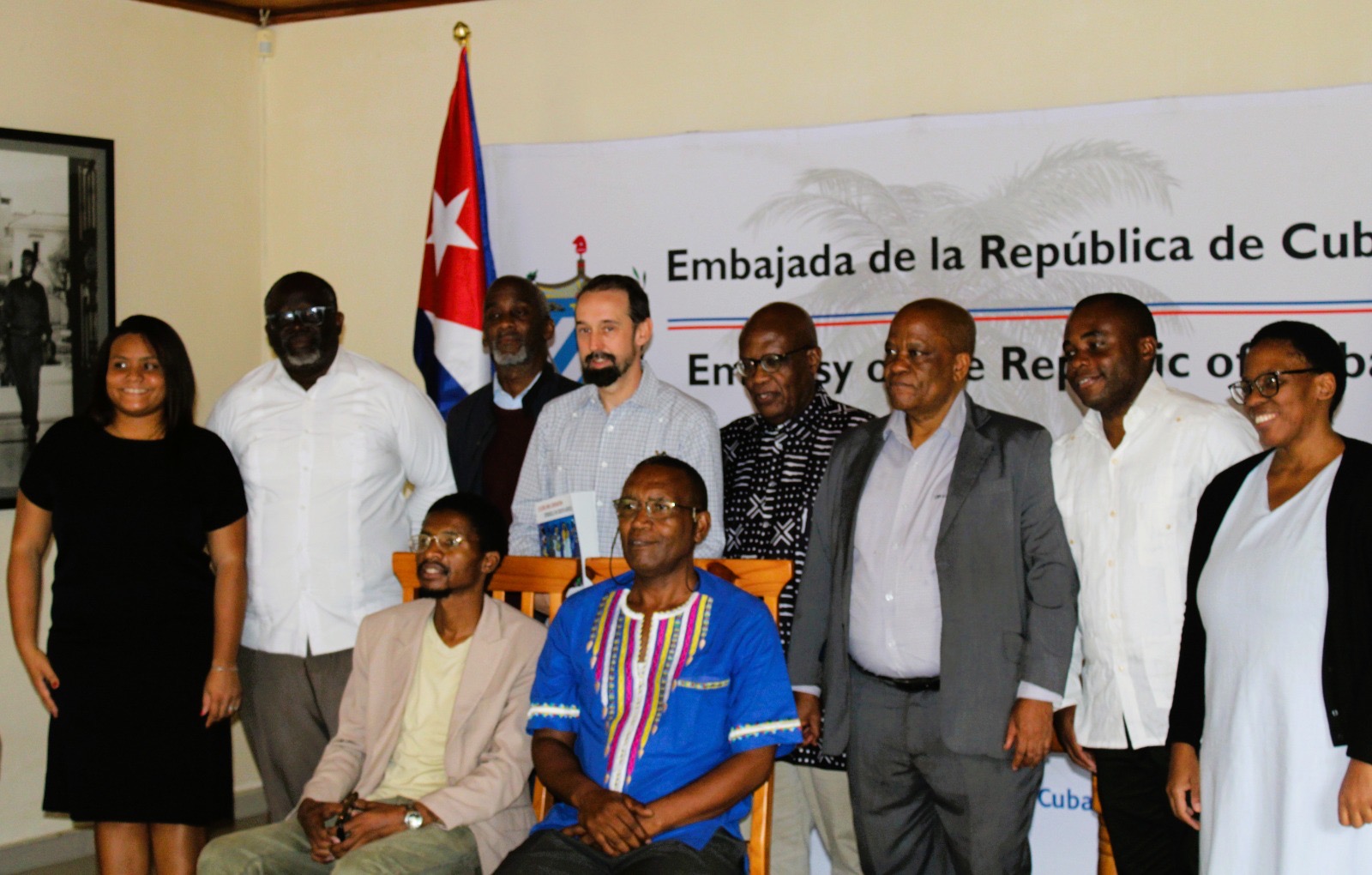
NWASA’s affinity with the writers and people of Cuba is rooted in a deeper historical and political solidarity between South Africa and Cuba, extending between the late 1980s and early 1990s into literary formations such as NWASA’s predecessors, the Congress of South African Writers (COSAW) and African Writers Association (AWA), and expressed through ongoing acts of mutual support within global cultural platforms.
Against this background, the writers from both countries stood side-by-side fighting the terrible twins of imperialism and colonialism and their vestiges. The relationship between the writers of South Africa and Cuba culminated in formalisation through the signing of a cultural partnership between NWASA and the Union of Writers and Artists of Cuba (UNEAC). One of the focus areas of Article 3 of the agreement states: “Both parties will endeavour to protect, defend, and promote the copyright, intellectual property, economic, legal, human, and other rights of writers that affect their members through joint campaigns, among other measures.” Hence, NWASA believes that it has the legitimate right and authority to make this honourable intervention.
NWASA therefore calls upon:
• The United States and Cuba to pursue constructive engagement through diplomatic and internationally recognised legal mechanisms.
• The international community to strengthen multilateral institutions as instruments of peace, justice and conflict resolution.
• Writers, artists and cultural organisations worldwide to champion dialogue, mutual respect and the peaceful settlement of disputes.
• Governments across the world to recognise cultural diplomacy as a strategic pillar in promoting international understanding and preventing conflict.
• All nations to recommit themselves to the principles of the United Nations Charter, international law and the peaceful coexistence of states.
The pen remains one of humanity’s most powerful instruments of peace. Writers understand that the future cannot be built through coercion and confrontation alone. It is built through dialogue, understanding and a shared commitment to justice. Where diplomacy fails, culture opens doors. Where politics divides, literature reminds humanity of its shared destiny.
NWASA stands with Cuban writers and cultural practitioners in affirming the principles of cultural diplomacy, international law and peaceful coexistence. We believe that a just and stable world order can only emerge through respect for sovereignty, adherence to international law and the strengthening of multilateral institutions that serve all humanity.
*****
Dr. Lebogang Lance Nawa is the Secretary-General of the National Writers Association of South Africa (NWASA))…