
By Saul Molobi
The lazy refrain that “jazz is for old people” collapses the moment one steps into the contemporary South African creative ecosystem. Jazz today is not a museum piece; it is a living, breathing language being actively re-written by young musicians who are formally trained, culturally grounded, technologically agile, and intellectually restless. Across universities, independent studios, and community performance spaces, a new generation is composing, arranging, sampling, and improvising in ways that consciously de/construct jazz idioms – folding hip-hop, spoken word, neo-soul, electronic textures, indigenous rhythms, and protest aesthetics into the tradition. This generation does not treat jazz as a sacred relic; they treat it as an open grammar. And in doing so, they reaffirm what jazz has always been: a youth-driven artform born of experimentation, rebellion, and the refusal to be boxed in.
This resurgence is inseparable from the broader democratisation of music-making in the digital age. Young jazz artists today move fluidly between analogue and digital worlds – recording in home studios, collaborating across borders online, releasing independently, and building audiences through streaming platforms and social media. In this ecosystem, jazz is no longer gated by elite institutions alone; it is circulating in townships, inner cities, campuses, and virtual communities, constantly mutating through everyday experimentation. This accessibility has not diluted jazz’s depth; if anything, it has intensified its urgency, allowing more voices, more dialects, and more lived experiences to bend the form in unexpected directions.
There is also a noticeable shift in how young practitioners relate to tradition. Rather than approaching the canon with reverence alone, they approach it with curiosity and conversation. They sample the past, argue with it, quote it, remix it, and sometimes deliberately disrupt it. This is not disrespect – it is continuity. Jazz, after all, has always advanced through rupture. Every so-called golden era was once condemned as heresy by an older generation. Today’s young artists stand firmly in that lineage of productive disobedience, insisting that honouring the ancestors means extending their unfinished experiments.
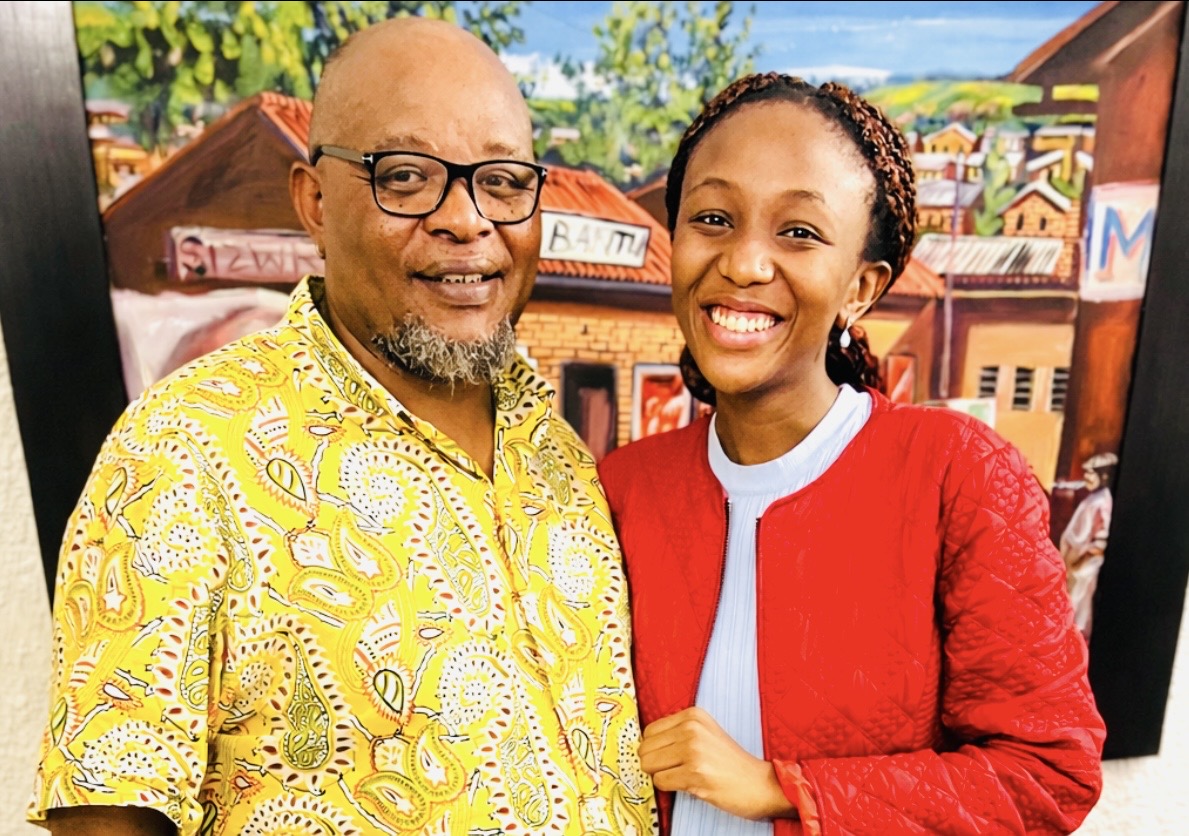
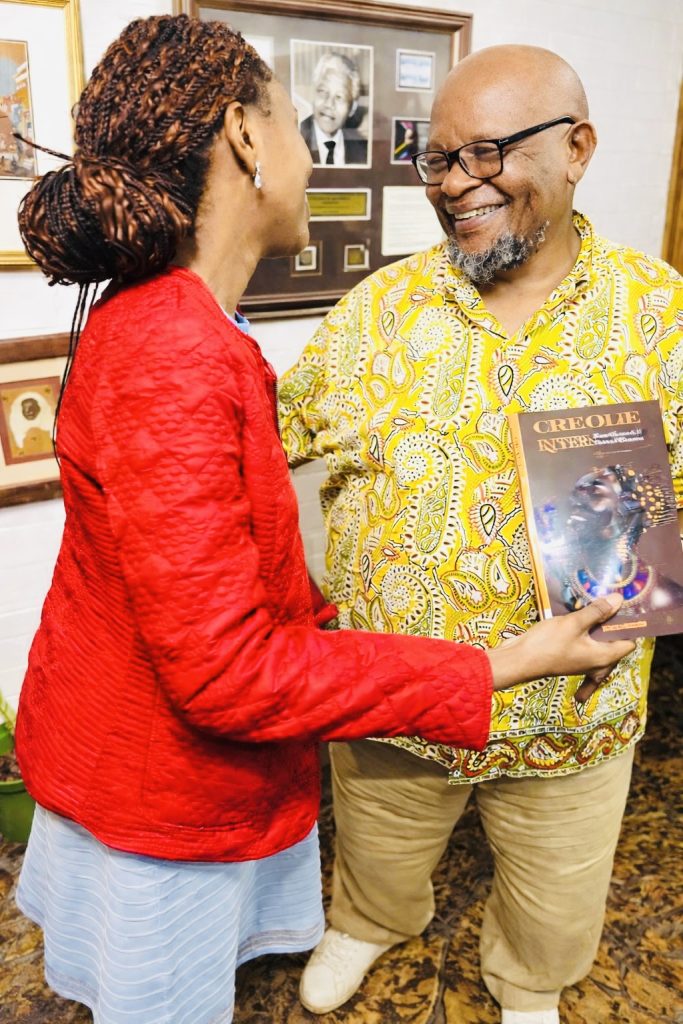
Equally important is the rise of young jazz intellectuals and aficionados – poets, writers, curators, and listeners who may not necessarily play instruments but who embody jazz as a way of seeing the world. Galaletsang Mabeo – affectionately known as Gali Gali – stands firmly within this lineage. A young poet and performer with a formidable stage presence, she occupies that fertile space where poetry, memory, politics, and musicality intersect. Her work pulses with swing, syncopation, call-and-response, and improvisational logic. Like jazz, her poetry oscillates between tenderness and fire, intimacy and indictment. It is therefore no accident that she is a jazz fanatic: she does not merely listen to jazz— she writes jazz with language.
Importantly, this youthful jazz renaissance is not only sonic; it is philosophical. It is concerned with questions of identity, belonging, decolonisation, gender, language, and power. It asks who gets to be heard, who gets to define excellence, and whose stories are considered worthy of improvisation. In this sense, jazz becomes less a genre and more a methodology – a way of thinking, a way of assembling meaning from fragments, a way of surviving complexity without simplifying it. Galaletsang’s poetry operates within this same methodological space, using language as an improvisational tool for sense-making.
In “Paving of Pavements”, Galaletsang constructs a poem that moves like a slow, modal composition – meditative, layered, and haunted by history. The piece is an ode not only to O.R. Tambo’s memorial play, but to the broader archive of Black struggle, sacrifice, and unfinished liberation. Lines such as “each activist, an artist / For their bloodshed became murals / painted in our museums” collapse the distance between politics and aesthetics, echoing a core jazz truth: that resistance and beauty are not opposites, but companions. The poem’s tonal shifts – between gratitude, guilt, rage, and reverence – mirror jazz’s harmonic tensions. Galaletsang recognises her own positionality as a child of constitutional freedom while refusing comfort in historical amnesia. Her confession – “my freedom costs too many lives” – functions like a recurring bassline, grounding the entire composition in moral seriousness. This is jazz consciousness rendered in verse: reflective, self-interrogating, and deeply aware of lineage.
“Comb in Hair”, by contrast, arrives with percussive confidence and playful bravado, much like an uptempo bebop piece. Here, Galaletsang transforms a childhood moment of policing Black hair into a manifesto of Black self-sovereignty. The poem riffs on texture, visibility, and aesthetic autonomy with sharp wit: “Some say 4c looks like mics / So / When I pat twice / It’s sound check.” In this metaphor alone, she fuses Black hair culture and musical performance, turning the body into an instrument. The Afro becomes both crown and microphone – symbol and sound source. This is not accidental symbolism; it is jazz thinking. Jazz has always insisted that the Black body is not a problem to be corrected, but a site of knowledge, rhythm, and power.
Her work also reminds us that jazz does not require a stage or a bandstand to exist. It can live inside a stanza, a metaphor, a pause, a breath. It can live inside the body, the memory, the inherited wound, and the stubborn hope. When Galaletsang writes, she is doing what jazz musicians do: listening deeply, responding honestly, and shaping beauty out of fractured histories.
What makes Galaletsang particularly compelling is her sass – not as attitude for its own sake, but as intellectual swagger. She speaks back to authority, dismantles narrow beauty standards, and refuses to translate herself into palatable forms. Lines such as “You read disorder, / I read design” operate like a philosophical thesis disguised as poetry. Much like young jazz musicians who reject the idea that innovation must sound “respectful” to tradition, Mabeo asserts that Black expression does not require permission to exist. It simply exists – and that is enough.
Taken together, Galaletsang‘s work exemplifies why the idea that jazz belongs to an aging audience is not only false, but dangerously unimaginative. Jazz lives wherever young people are thinking critically, loving fiercely, questioning boldly, and experimenting without fear. It lives in university practice rooms, bedroom studios, open-mic stages, poetry slams, and in the notebooks of young writers like Galaletsang. The future of jazz is not approaching. It is already here – sassy, hybrid, multilingual, politically alert and gloriously alive.
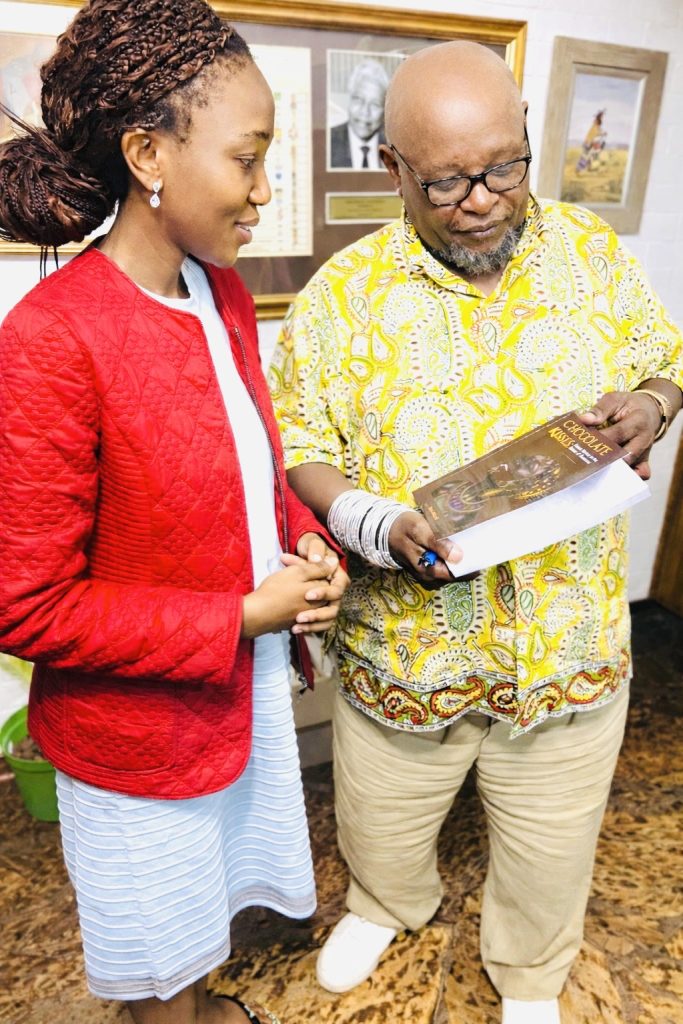
In conclusion, let me shower these young jazz aficionados the kind of respect they deserves through the following tribute to Gali:
Jazz is not old
Who said jazz is for old people?/ Who carved that lie into public memory/ and framed it like a polite truth?
Jazz was born young./ Born restless. / Born disobedient./ Born in backrooms, backstreets, backyards,/ in whispered dreams and shouted freedoms.
Jazz is not a rocking chair./ Jazz is a heartbeat./ Jazz is a fist./ Jazz is a kiss./ Jazz is a question mark that never settles.
We have young hands-on old horns,/ and new spirits inside ancient chords./ University-trained minds/ with township-bred instincts.
Degrees in harmony,/ but diplomas in defiance./ They bend scales until they confess./ They fracture tradition/ just to love it better.
They de/construct idioms/ the way sculptors free statues/ from stubborn stone.
Jazz is not preserved./ Jazz is practiced.
And listening beside them/ are young ears, young eyes, young souls/ who hear jazz/ even when no instrument is present.
Like Galaletsang Mabeo./ Gali Gali./ Poet./ Fire-tongued./ Soft-fisted./ Sharp-minded.
She does not play sax./ She plays syntax./ She does not strike drums./ She strikes memory./ She does not read charts./ She reads history’s pulse.
Her poems swing./ They shuffle./ They moan./ They break into solos.
In “Paving of Pavements”/ she walks on ghosts./ Each activist, an artist./ Each bloodstain, a mural./ Each freedom, a receipt.
She inherits a victory/ she never auditioned for,/ and feels the weight/ of applause she did not earn.
That is jazz guilt./ That is jazz gratitude./ That is jazz honesty.
Her voice carries ancestors/ like vinyl in the chest.
She knows/ her soft hands exist/ because hard hands bled./ That knowledge/ becomes a bassline.
In “Comb in Hair”/ she flips the tempo./ Upbeat./ Playful./ Deadly serious.
Her Afro becomes a microphone./ Her crown becomes a stage light./ When she pats her head twice,/ it is soundcheck.
“Is it on?”/ Yes, Gali./ It is on.
She tells the world:/ You call it disorder./ I call it design.
You fear the wild./ But this forest is mine.
That is improvisation./ That is soloing against shame./ That is a young woman/ turning childhood policing/ into lifelong permission.
And isn’t that jazz?
Taking pain,/ bending it,/ stretching it,/ until it sings.
So no/ jazz is not old.
Jazz is young enough/ to fall in love every day./ Young enough/ to argue with its parents./ Young enough/ to invent itself again.
Jazz is a teenager with history./ A child with memory./ An elder with sneakers.
Jazz is Galaletsang./Jazz is the student in a practice room at midnight./ Jazz is the poet at an open mic./ Jazz is the beat between their sentences./ Jazz is not dying./ Jazz is dating the future.
And the future/ has rhythm.