
The recent exchange of gunfire at an ANC meeting in Musina, the persistent hurling of vulgar insults at elders — including those directed at the late Dr Tshenuwani Farisani — by unsober youth hoisting the flag of the once-glorious movement, gatekeeping at branches for purposes of self-preservation at all costs and for access to power, the posting of individuals on posters and line-ups for leadership ahead of conferences, and contentless assemblies convened merely to nominate friends and funders to attend or to be elected as leaders by ever-singing but shallow-minded and unpoliticised mobs have, unfortunately, become hard truths to swallow.
The singers, as Gwede Mantashe once suggested by inference, have little to offer in terms of solutions to the ailing movement. These sloganeers contribute nothing to influencing policy to accelerate the transformation agenda, let alone to rid the organisation of the misfortunes that have befallen the ruling party. All of this has effectively exiled intellectuals and much of the middle class to unconventional “branches” — stokvels, restaurants, and informal gatherings of no political consequence.
The call for renewal, now tired rhetoric echoed by the same leaders who assemble unconstitutional structures called “cores,” alongside the theft of government resources to appease political backers and practices that the ANC was never meant to embody, has found its way into a movement that was decisively rebuked in the last elections.
The 2022 conference’s acknowledgement of poor-quality membership remains deeply worrisome. Sadly, efforts to reverse this situation are being undermined by both leadership and the rank and file. Intra-organisational violence, coupled with a posture of disrespect towards organisational discipline, continues to accelerate the slide towards total decline. Some of these contradictions stem from members coming from vastly different backgrounds and sectors without a coherent organisational culture to bind them.
All these challenges notwithstanding, there remains a sizeable part of the population that could still be re-energised to rebuild the ANC brick by brick and restore it to life — perhaps even defying the well-known pattern that when liberation movements disappear, they do so permanently. Not all is lost. Willing members can still act to return the ANC to its former glory, but this will require a fundamental mindshift.
If many still believe that rebuilding is possible within the existing structures, then one must also understand those who are already certifying the death of our dear ANC — a loss that would be deeply felt.
Perhaps it has become necessary to reflect more seriously on what it means, in practice, for the ANC to be called a “broad church.” Historically, it has meant — and should still mean — a platform for expression by people of different ideologies, backgrounds, and sectors of society.
In reality, however, the voices of founding sectors such as the clergy and traditional leaders have dwindled almost beyond recognition. Some have been co-opted without being identified by their peers and therefore feel no obligation to report back to their constituencies, having not been elected by them in the first place.
Many members of these sectors — clergy, traditional leaders, businesspeople, academics, and sections of the middle class — cannot thrive in branches characterised by gunfire, insults, and intellectual shallowness. In the absence of meaningful platforms, ANC matters are now debated in restaurants and other spaces that carry no organisational weight. Branch meetings have become war zones where brawn matters more than brains.
For the ANC to recover and reclaim lost ground, its structural arrangement must change radically to create new platforms for participation. One possibility is for the ANC to adopt a federation outlook, in which different sectors organise themselves under the guidance of the main constitution, run their affairs autonomously, and affiliate formally to the ANC.
These sectors could organise from regional level and elect capable individuals to represent them in regional, provincial, and national ANC structures. A small proportion — perhaps 30% or less — could be directly elected through branches, with the remainder drawn from sectoral representation.
Such an approach would allow healthy discussions about the economy, morality, human rights, and politics to flow more meaningfully at all levels. Organisations such as the Congress of Traditional Leaders of South Africa (CONTRALESA), along with religious, business, academic, and civic bodies, could remodel themselves as affiliates rather than mere allies of the ANC.
This model would encourage contestation of ideas within the true spirit of a broad church and create a deeper pool of leadership capable of governing at all levels. Insistence on branch politics in its current form has produced the results we now see — and the consequences are too obvious.
There is no doubt that the African National Congress has changed lives for the better, dismantled an unjust system, and made South Africa a better place for the poor, the vulnerable, and the weak. That journey is not complete, and without fixing the ANC, many of these achievements risk being reversed over time.
****
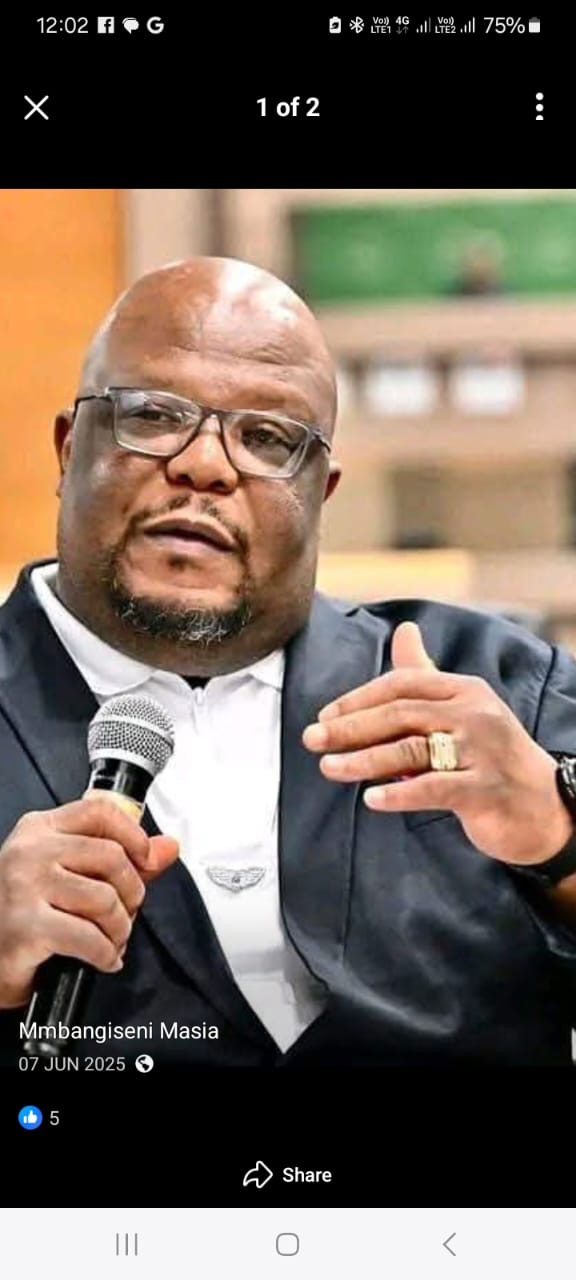
Thovhele Masia is the Deputy Chairperson of CONTRALESA (Vhembe Region), a former Provincial Chairperson of SASCO (Northern Transvaal), and a former Deputy Chairperson of the ANC Branch Tshikali-Murogolwe. He writes in his personal capacity.
The views expressed are those of the author and not necessarily those of this news portal, Jambo Africa Online, or our holding company, Brandhill Africa…