
In early 2024, more than a dozen South African soldiers were killed in eastern Democratic Republic of Congo, serving under a Southern African peacekeeping deployment. Their coffins came home draped in the national flag. Most South Africans could not have told you at the time, or in many cases afterwards, which town the soldiers had been killed near, which armed group was responsible, or what political settlement their presence was meant to protect.
That gap in public knowledge is the subject of this post, and so is the South African seat that exists to help close it.
Continental instability has costs most South Africans, and all Africans, have felt. In the millions of internally displaced people and those who flee through dangerous terrains to seek asylum in foreign lands among strangers who do not know them, and sometimes do not want them, in their countries. In the faces of millions of children and women, vulnerable and terrified, running through the night, through forests and bushes, evading dangerous animals and people, seeking safety. In the queues at Beitbridge and asylum centres when the region destabilises. In the xenophobia that follows when refugees arrive faster than the state can manage. In the trade disruption when Congolese cobalt or Mozambican gas supply lines falter. In the price of food when drought and conflict collide. And, more sharply now, when oil above a hundred dollars a barrel pulls transport and fertiliser costs upward behind it. These are not remote problems. They land in the Shoprite queue and at the local mall.
Instability has perpetrators and victims, but it also has thousands of women and men willing to install and keep the peace, to protect the victims and return unstable countries to stability. It has millions of people willing to offer generosity to those victims, and to host them, often at a cost to themselves and to their countries’ ability to afford services to everyone.
South Africa has, since 1994, been a part of the latter. We have sent our best daughters and sons to help the continent achieve peace and implement post-conflict reconstruction, some of whom have returned in body bags as eternal reminders of the cost of this humane effort on our part. We have also hosted many of Africa’s people seeking asylum, as an act of generosity and of African solidarity.
Though some may have abused our systems and our generosity, claiming undeserved benefits, and though we have experienced some flare-ups of conflict between locals and our guests in certain parts of our country, we have substantially fulfilled President Mandela’s promise to the Extraordinary Summit of the Organisation of African Unity in Tunis in 1994 and President Mbeki’s commitment at the launch of the African Union in Durban in 2002. South Africa seeks not just to contribute to silencing the guns in Africa; we pursue an active regional strategy to achieve a peaceful and developed Africa. Whether the country is still doing that work at the scale its inheritance required is the question the rest of this post takes up.
Africa has an institution that is supposed to help manage these shocks. It is called the African Union Peace and Security Council. It is my sense that many South Africans have never heard of it. I also suspect that many South Africans are not aware that, on 1 April 2026, just over two weeks ago, their country began a two-year term as one of the AUPSC’s fifteen members, and that fewer still can name the other fourteen members. This is partly because the news did not make it into mainstream coverage, at least not in any sustained way. This post explains what the Council is, what it has done, what it cannot do, and why its next two years matter to the life you live in Sandton, Kwamashu, Gqeberha, Cape Flats, Galeshewe, Mafikeng, or Mangaung.
THE ROOM ITSELF
The African Union Peace and Security Council (the PSC) is the body the African Union created to decide when African states will act together on conflict on the continent. It meets, usually monthly, at AU headquarters in Addis Ababa. Fifteen member states hold seats. Ten are elected for two-year terms; five are elected for three-year terms. All seats are elected. None are permanent.
The most useful comparison for a South African reader is the United Nations Security Council. The UN Security Council has fifteen members too. But five of them (the United States, the United Kingdom, France, Russia, and China) hold permanent seats and the power to veto any decision. That veto is why the UN Security Council can be paralysed by single-state opposition, as we have watched on Ukraine, Gaza, and Syria.
The PSC was designed not to repeat that mistake. There is no veto. Decisions are taken by consensus where possible, and by two-thirds majority where consensus cannot be reached. No single member can block an action alone. The five three-year seats function as a slightly more senior class of membership, but they are elected each cycle; they are not inherited. There is no country that permanently and automatically belongs because of the superiority of its economy or its arms.
The Council draws its authority from the African Union’s founding document, the Constitutive Act of 2000, which is a treaty accepted by every one of the Union’s fifty-five member states. It also draws authority from a protocol adopted in 2002 that established the Council specifically. Article 4(h) of the Constitutive Act carries a provision unusual in international organisations: it gives the Union the right to intervene in any member state in cases of genocide, war crimes, and crimes against humanity. By accepting the Constitutive Act, every African state has consented in advance to that intervention. The legal foundation is as strong as treaty law can make it.
Below the Council sits a broader architecture: the Panel of the Wise (senior African figures deployed for preventive diplomacy), the Continental Early Warning System (meant to catch conflicts before they escalate), and the African Standby Force (a planned continental military capability that remains only partially operationalised). All of it is there to support a single task: African states acting together on African security.
HOW SOUTH AFRICA GOT THE SEAT
South Africa has held PSC seats in multiple previous cycles since the Council’s founding in 2004, including terms that began in 2004, 2008, and 2014. The 2026 to 2028 tenure is the country’s latest return to the Council.
Seats on the Council are not granted by the African Union. They are earned by regional grouping. Southern Africa holds two of the fifteen seats. The member states of the region, through the Southern African Development Community (SADC), negotiate internally before each election to decide whose turn it is and who can credibly carry the region’s security interests for the cycle. For 2026 to 2028, the region nominated South Africa and Lesotho. The AU Executive Council, composed of the foreign ministers of all member states, then elected both by two-thirds majority on 11 February 2026, with the Assembly of heads of state endorsing the decision.
The formal criteria for membership, set out in the PSC Protocol, are exacting on paper: commitment to African principles, contribution to peace and security on the continent, capacity to shoulder responsibilities, respect for constitutional governance and human rights, financial contribution to the Union’s budget, sufficient diplomatic presence in Addis Ababa. South Africa meets those criteria by any reasonable measure. The country remains the continent’s largest economy, a historic contributor to African Union missions, and the holder of a diplomatic network that reaches most African capitals.
The seat was earned. It carries a two-year obligation to use it.
WHAT THE ROOM HAS ACTUALLY DONE
A reasonable question, if you are encountering the Peace and Security Council for the first time through this post, is whether the institution has achieved anything at all, or whether it is one more African bureaucratic body that produces communiqués and little else.
The honest answer is that the Council has achieved specific, concrete things. There are not many of them, but they are real, and they are the data that answers the question of whether the room is worth taking seriously.
In March 2008, a disputed election on the Comoros island of Anjouan ended with a renegade colonel, Mohamed Bacar, refusing to leave office in defiance of the federal Union of Comoros government. The Peace and Security Council authorised the first AU-led military intervention in its history: Operation Democracy. Troops from Tanzania, Sudan, and Senegal, with logistical support from Libya, France, and the United States, landed at two points on Anjouan. Bacar’s roughly four-hundred-strong militia collapsed within hours. Constitutional order was restored to the Comoros. The AU envoy to the islands later described the operation as “exemplary.” It remains the clearest single military success in the Council’s history.
In January 2017, when Yahya Jammeh lost the Gambian presidential election to Adama Barrow but refused to leave office, the Peace and Security Council took a different kind of decision. On 12 December 2016, the Council declared that Jammeh would cease to be recognised as president of the Gambia from 19 January 2017. The declaration provided the continental legitimacy for a West African intervention, led by the Economic Community of West African States (ECOWAS), that deployed Senegalese, Ghanaian, Malian, Togolese, and Nigerian forces to the Gambian borders. Jammeh left the country. Barrow was installed. The entire operation achieved its objectives without a shot being fired. It is the most successful recent African intervention to restore constitutional order after an attempted power grab.
Earlier, between April 2003 and May 2004, the African Union Mission in Burundi (AMIB) held the space that allowed the eventual United Nations mission to succeed in ending that country’s civil war. The Darfur hybrid mission UNAMID, operational from 2007 to 2020, was the first peacekeeping operation in history to be jointly mandated by the African Union and the United Nations, an institutional innovation whose legacy remains the template for AU–UN cooperation on complex conflicts.
The Council has also used its authority over what the AU calls “unconstitutional changes of government” (the diplomatic term for coups) to impose real costs on the leaders of coups across the continent. At the time of writing, six member states sit suspended from the African Union: Mali, Sudan, Burkina Faso, Niger, Madagascar, and Guinea-Bissau. Guinea was readmitted in January 2026 after the Council determined that a completed political transition and credible presidential election had restored constitutional governance. Gabon was readmitted in April 2025. The suspensions have not always reversed the coups themselves. They have shaped continental norms, denied coup governments continental legitimacy, and made the business of overthrowing African governments more costly than it used to be.
These are the wins. They are not comprehensive. They justify the Council’s existence. They do not justify complacency about the Council’s limits.
WHY THE CRITIQUE THAT THE AU HAS “NO TEETH” IS HALF RIGHT
When South Africans who follow these things argue that the African Union has no teeth, they are often saying something true and something false at the same time.
What is true: the Union’s collective machinery has consistently struggled to act on the hardest security dossiers. The Council has spent three years deliberating on Sudan’s civil war without being able to stop it. It has watched the M23 insurgency in eastern Congo consolidate territorial control with Rwandan backing. It has ceded most of the Libya file to the United Nations. When external patrons with deeper pockets and bigger weapons decide the outcome of an African conflict, the Peace and Security Council is routinely not the body that shapes the settlement.
What is false: the claim that the African Union has no teeth as a matter of law. The legal foundation is there and it is binding. The Constitutive Act is a treaty, not an aspiration. Article 4(h) allows the Union to intervene in any member state for genocide, war crimes, and crimes against humanity. Every African state, by accepting the Constitutive Act, has consented in advance to that intervention. The Council has the authority. What it frequently lacks is something else.
What it lacks is a chain of three conditions that must work together before authority becomes action: political will in enough member-state capitals to support action; regional consensus to avoid blockage by single states; and non-interference by external powers whose interests run counter to a settlement. When all three align, as they did on the Comoros in 2008 and in the Gambia in 2017, the Council can move decisively. When any of the three is missing, the Council becomes the talking shop its critics describe.
That is a different diagnosis from “no teeth,” and it matters because it points to what can be changed. Political will, consensus, and external-pressure-resistance are diplomatic and institutional variables. They are not structural features of African politics. They are the work that the fifteen member states, including the ones holding the seats for the next two years, can actually do.
A further fact, which the Council cannot choose, deepens the challenge in 2026. The conditions that produced the 2008 Comoros win and the 2017 Gambia win were assembled against a world less actively hostile to African-led settlements than the one in which this Council now sits. Since 28 February 2026, a war between Iran, Israel, and the United States has driven oil above a hundred dollars a barrel, placed the Strait of Hormuz under a US naval blockade, and left the International Monetary Fund warning of global recession. The Red Sea corridor, through which African food imports and Sudanese aid deliveries have to move, remains insecure even with the Gaza ceasefire of October 2025 nominally in force. South Africa is itself a visible participant in the global argument over the Middle East. It is the party that brought the genocide case against Israel at the International Court of Justice, where written proceedings continued through March 2026. Namibia filed its own intervention on South Africa’s side on 12 March 2026.
The challenge has a second face. External non-interference is not always defeated from outside the continent. It is sometimes invited from within it. On 25 December 2025, the United States conducted airstrikes in Sokoto state, northern Nigeria, against Islamic State positions, with the explicit approval of the Nigerian government and in coordination with the Nigerian armed forces. A US military advisory team arrived in Nigeria on 3 February 2026 under a Joint Working Group inaugurated two weeks earlier. Whatever view is taken of the tactical necessity of those strikes, their effect on the continent’s capacity to hold a unified position on external intervention is unambiguous. When any African state invites the kind of foreign military action the Peace and Security Council would otherwise resist as a continental matter, the Council’s leverage on that dossier drops. Not primarily because of the external power, but because of the African capital that issued the invitation.
None of this is the Peace and Security Council’s file in the strict sense. All of it is the context in which the Council sits. The body that would prefer to concentrate on African security cannot, in April 2026, separate African security from a world in upheaval. The external-non-interference condition, the third of the three that have produced the Council’s wins, is harder to hold when the external actors whose interference must be managed are themselves distracted, strained, or empowered by crises beyond any African capital’s ability to shape. The same Administration in Washington that coordinated the Nigerian strikes boycotted the G20 summit South Africa hosted in November 2025, and has announced that South Africa will not be invited to the G20 meeting the United States will host in Miami in December 2026. Whether that is read as pressure, pattern, or coincidence, it is the environment in which the seat must now be held.
THE DOSSIERS ON SOUTH AFRICA’S DESK: WHY THEY MATTER TO A SOUTH AFRICAN READER
When South Africa’s Permanent Representative to the African Union, Ambassador Nonceba Losi, takes her seat in the Peace and Security Council chamber each month for the next two years, she will sit in front of a list of files that matter to South Africans in ways that are not always obvious, and, increasingly, that cannot be cleanly separated from crises well beyond the continent’s borders.
Sudan. The civil war between the Sudanese Armed Forces and the Rapid Support Forces has killed tens of thousands of people, displaced roughly eleven million, and produced the single largest humanitarian crisis on the continent. External actors, with Saudi Arabia backing one side and the United Arab Emirates backing the other, have sustained the conflict past the point where regional mediation alone could stop it. Sudan’s destabilisation pushes refugees into Egypt, Chad, and Ethiopia; it threatens Red Sea shipping lanes through which South African cargo moves; it sets a precedent that a civil war sustained by external sponsors can be allowed to run without continental action. If the Council cannot move Sudan in the next two years, the precedent will outlast this crisis.
The Democratic Republic of Congo. The eastern DRC is one of the most persistent security failures in Africa’s post-colonial history. It affects both the SADC region and the East African Community region. Since the overthrow of the Mobutu Sese Seko dictatorship, the DRC has not known peace, and has struggled to maintain stability and extend democratic governance across its territory, particularly into the east. The DRC’s neighbours and the international community have not made that easier. The Southern African contingent of SAMIDRC (the SADC Mission in the DRC, in which South Africa was a major contributor) withdrew in March 2025 after fifteen months of deployment that cost more than a dozen South African soldiers their lives and did not produce a durable political settlement. Instability in the eastern DRC affects South Africa directly through the cobalt and critical-minerals supply chains that run through the region, through refugee pressure, and through the reputational cost carried by a South African security commitment that could not hold.
Mozambique. Cabo Delgado province in northern Mozambique has been under an insurgency linked to the Islamic State since 2017. The SADC mission to Mozambique, SAMIM, withdrew in May 2024 after thirty-two months. Rwanda now provides the primary counter-insurgency force in the province, funded in part by the European Union. The Mozambique LNG project at Palma (a major upstream investment relevant to South African gas supply) was halted after a March 2021 insurgent attack and has only recently signalled a restart. If Rwandan forces are withdrawn over a current European Union funding dispute, the Council will face pressure to authorise an African Union-led replacement mission. South Africa will be at that table.
The Sahel. Burkina Faso, Mali, and Niger have all experienced military coups, expelled Western forces, formed an alliance of their own outside ECOWAS, and turned to Russian security providers. The Peace and Security Council’s leverage in the Sahel is thinner than it has been anywhere since the Council’s founding. South Africa has no direct military presence in the Sahel and limited direct stake. But the regional question matters. The challenge in the Sahel is political rather than principally military, and the AU’s existing instruments have not produced engagement with governments that withdrew from ECOWAS and rejected the continental framework. A different kind of African-led political engagement with the region has not yet been built, one that does not reproduce the externally-paced electoral timetables that fractured the relationship in the first place. That is one of the tasks the Peace and Security Council will have to take up.
These are the files. Each asks, in its own way, a version of the same question: can the fifteen countries around the Addis Ababa table, South Africa now included, assemble the political will, the regional consensus, and the external-pressure-resistance that turns the Council’s legal authority into action?
WHAT THE SEAT IS ACTUALLY FOR
The seat on the Peace and Security Council is a working post with specific obligations and specific opportunities.
The opportunities are real. South Africa simultaneously holds the G20 presidency through late 2026, the SADC chair through the Summit in August 2026, and now the PSC seat. No other African state sits at those three tables at the same time in this cycle. The combination gives South African foreign policy an unusual amount of leverage. If it is used.
The seat also rebuilds some of what recent years had eroded. SAMIDRC’s withdrawal and SAMIM’s drawdown had left South Africa looking overstretched and hesitant on regional security. The PSC seat is the counter-signal. The country still holds the standing to sit at the continental security table. In a global system where South Africa has been cultivating a mediator’s brand, on the Gaza case at the International Court of Justice, on Ukraine, on the expanded BRICS, the PSC seat consolidates that brand on the African file specifically.
The obligations are less flattering. If the Council under-performs on Sudan, on the Democratic Republic of Congo, on Mozambique, or on the Sahel in the next two years, the political cost will land partly on South Africa. The country cannot hold a seat at the table of African security and then claim that continental failure is someone else’s responsibility. Failure, should it be allowed, will be a South African reputational failure as much as a continental one.
Therefore, failure on these missions is not an option.
And the capacity to deliver is thinner than the ambition requires. The Department of International Relations and Cooperation operates under a reduced budget. The South African National Defence Force is stretched thin across domestic and regional commitments, and faces significant challenges of its own, including a constrained budget, gaps in equipment, and insufficient staffing. SADC has drifted toward procedural coordination rather than strategic purpose. These are not reasons to decline the seat. They are reasons to be honest about what the seat will require of the country if it is to be held well.
As Co-Chair of Parliament’s Joint Standing Committee on Defence, I can say with some specificity that the Department of International Relations and the Defence Force will need more support, not less, if South Africa’s two years on the Peace and Security Council are to count for anything. That is the domestic policy question the seat puts to the government it answers to.
WHAT THE SEAT ANSWERS TO
Ultimately, African peace and security cannot be secured by any institution alone. They depend on the agency of African people electing leaders who serve their best interests, not despots who serve their own and demand to be served by the masses. Institutions, continental or regional, can protect the space within which that agency is exercised; they cannot substitute for it. What the history of this continent teaches, and what South Africa’s own negotiated transition showed, is that lasting peace comes from political solutions pursued by the people who must live with them. There will be peace, security, and development on the continent when we have the right leadership across the political spectrum, pursuing power through the right channels and for the right reasons: to serve the people.
South Africa sits on the Peace and Security Council because of regional solidarity architecture built by an earlier generation. That architecture included African partners, the non-aligned movement, the Frontline States, the OAU Liberation Committee, and the long work of exile diplomacy. It was not automatic. It was built with deliberation, across decades, by people who understood that African security could not be outsourced.
The country that takes a Peace and Security Council seat in April 2026 is being asked, in a modest and practical way, whether the architecture will be kept up by those of us who inherited it. That is not an abstract question. It is measured in whether the SANDF soldiers whose coffins came home in 2024 died for a regional security order that can be made to work, or for one that is allowed to fail. It is measured in whether the small traders at Beitbridge will be able to move through the region with confidence. It is measured in whether the eleven million people displaced by Sudan’s war find an African Union that can move the dial on their futures.
There is a room in Addis Ababa where African security is decided. South Africa is now sitting in it. Over the next two years, what the country does in that room will show the answer.
***
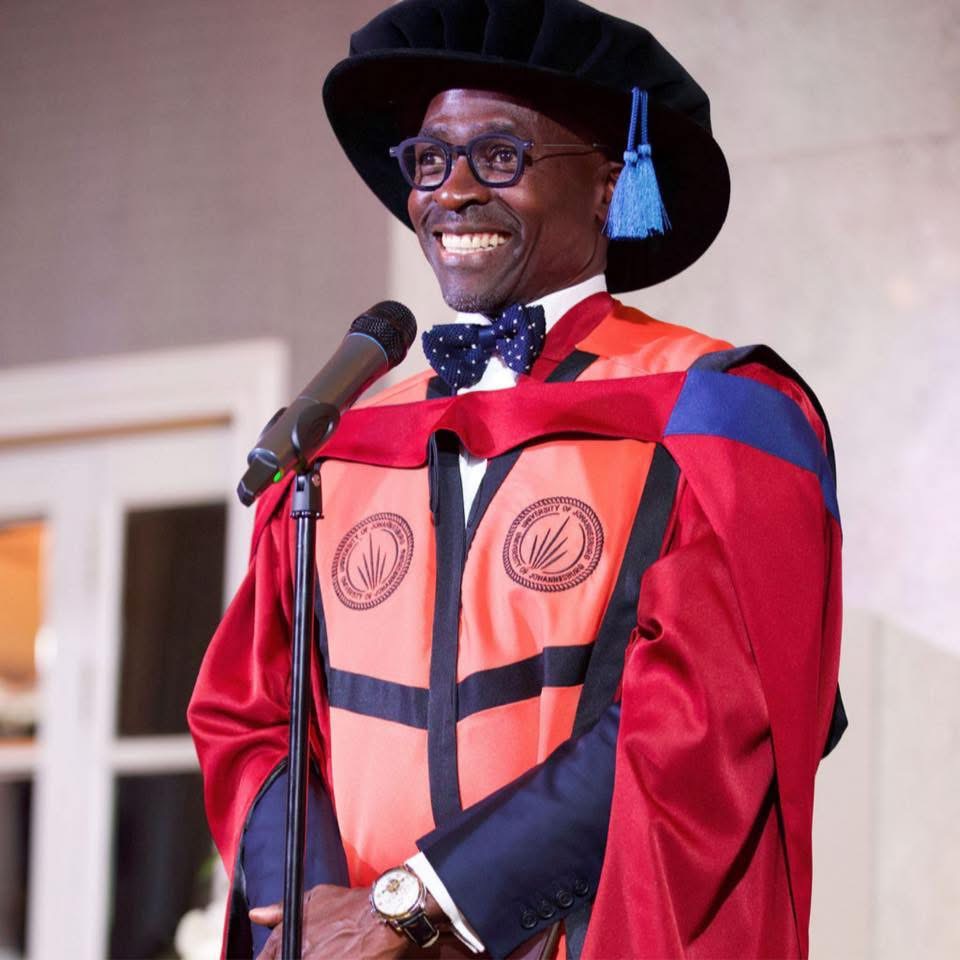
Dr Malusi Gigaba is a Scholar-Statesman, Co-Chair of the Joint Standing Committee on Defence and former Cabinet Minister of the Republic of South Africa.