
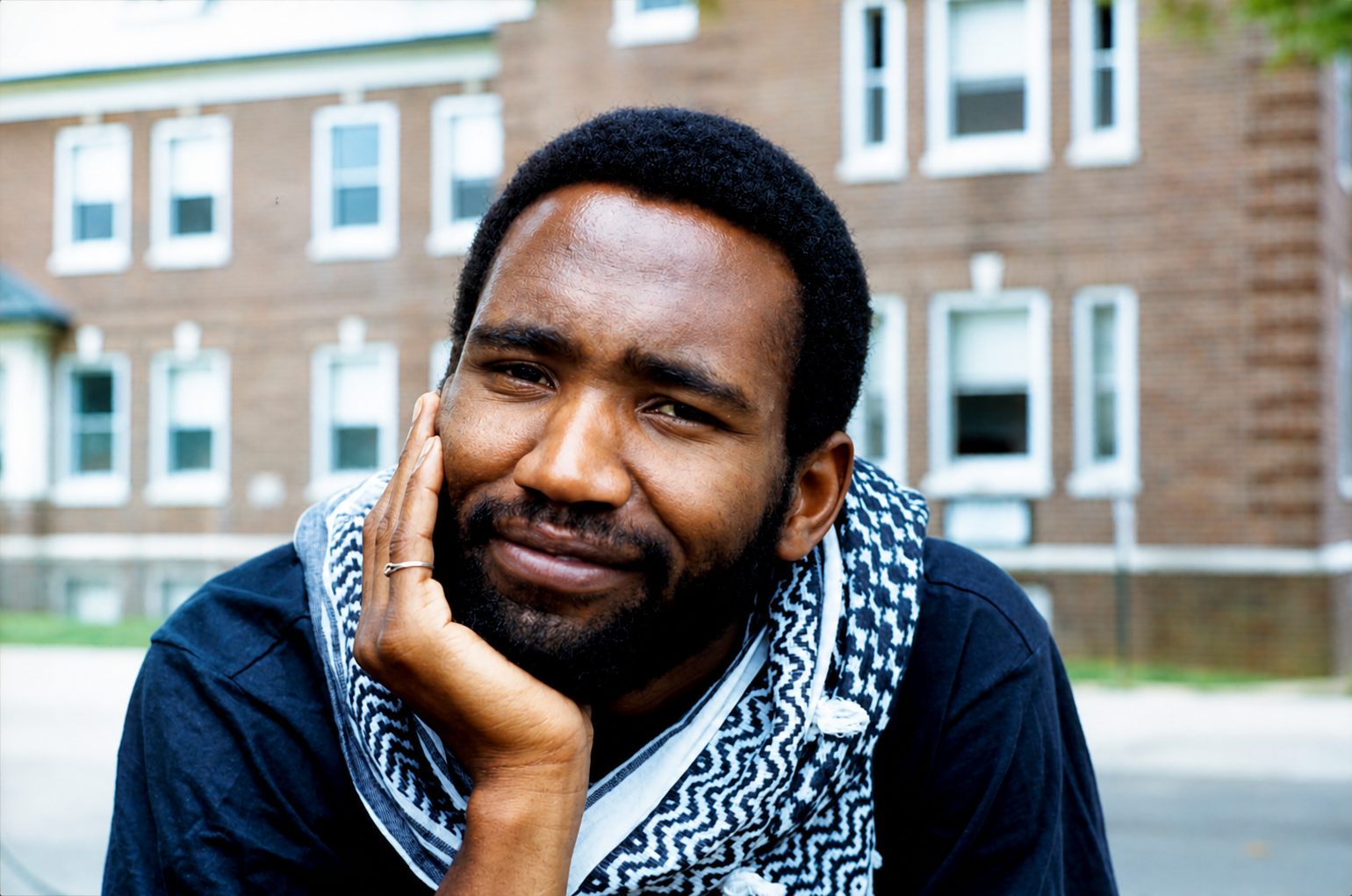
The National Writers’ Association of South Africa (NWASA) welcomes the principled, thoughtful and fruitful engagement recent held through letters with the internationally celebrated South African novelist and Nobel Laureate, Dr JM Coetzee, following the Association’s public expression of solidarity with his decision to decline participation in the Jerusalem Writers Festival scheduled for May 2026.
The engagement between NWASA and Coetzee unfolded within a spirit of comradeship, intellectual honesty and ethical reflection at a moment of profound global concern regarding the humanitarian catastrophe unfolding in Gaza. The conversation reaffirmed the enduring responsibility of writers, artists, scholars and cultural workers to engage critically with questions of justice, morality, state violence and human dignity.
In his detailed communication via an email of 16 May 2026 to NWASA Secretary-General
(SG) Dr Lebogang Nawa, Dr Coetzee clarified the circumstances surrounding his decision after sections of the international media and festival organisers, characterised his refusal to attend the festival as a boycott. Coetzee explained that he had initially received an invitation from the Jerusalem Festival organisers in November 2025 and had respectfully declined the invitation, citing his deep moral opposition to the actions of the
Israeli government in Gaza over the preceding two years.
According to Coetzee, his response to the organisers reflected not only his concern over
the devastating human toll of the war, but also his disappointment that sections of the
Israeli artistic and intellectual community had not, in his view, spoken out strongly enough
against the actions of the Israeli state and military. He therefore regarded certain sectors
of that community as becoming “to a degree complicit” through silence or insufficient
condemnation.
Coetzee further indicated that, after declining the invitation, he considered the matter closed. However, six months later, the festival organisers elected to publicise selected extracts from the correspondence while omitting broader contextual elements contained in the invitation itself. In particular, Coetzee noted that the festival invitation framed the event around the return of the last Israeli hostage but made no reference to the tens of thousands of Palestinian civilians killed in Gaza during the conflict.
NWASA believes that Coetzee’s intervention raises important ethical and philosophical questions regarding the role of literature, cultural institutions and intellectual communities during periods of war, occupation and humanitarian crisis. The Association further notes the significance of his insistence on contextual honesty, moral accountability and the
necessity of confronting selective narratives that often dominate global discourse.
Importantly, Coetzee also clarified that his individual decision to decline the invitation
should not automatically be conflated with participation in a formal boycott campaign.
Drawing on legal and dictionary definitions, he argued that a boycott is generally understood as a coordinated collective action rather than a singular personal refusal based on conscience and moral conviction. This distinction, while nuanced, contributes meaningfully to broader discussions around artistic freedom, political dissent and the ethics of cultural participation in contested geopolitical contexts.
NWASA respects and appreciates the clarity and depth with which Coetzee articulated his position. The Association equally acknowledges his principled defense of intellectual autonomy and his refusal to allow complex moral questions to be reduced to simplistic binaries or politically expedient labels.
As a progressive literary formation grounded in Pan-African humanism, social justice and emancipatory cultural thought, NWASA reiterates its unwavering solidarity with oppressed peoples across the world, including the people of Palestine, whose ongoing suffering continues to evoke global concern among progressive movements, civil society organisations, artists, academics and human rights defenders.
Meanwhile, the General Union for Palestine Writers (GUPW), with whom NWASA has signed a partnership agreement in March 2021, has noted with appreciation the discourse around the Jerusalem festival controversy. In their admiration for Coetzee’s courageous and noble stance, the GUPW, through its Secretary-General, Murad Al-Sudani, has requested from NWASA direct link with Dr JM Coetzee for an invitation to him to visit Palestine, with accompaniment by NWASA SG. The matter has since been escalated to Dr. Coetzee, and a direct link was subsequently established between him and GUPW.
NWASA maintains that writers and cultural practitioners have historically occupied an prominent role in confronting injustice, exposing systems of domination and amplifying the voices of the marginalised. From anti-colonial struggles across Africa to the anti-apartheid movement in South Africa, literature and the arts have consistently functioned as instruments of resistance, memory, conscience and liberation.
NWASA therefore views the engagement with Coetzee not merely as an isolated discussion around a literary festival, but as part of a broader international conversation concerning the ethical obligations of intellectuals in times of crisis. The Association believes that silence in the face of mass suffering risks normalising injustice and eroding the moral authority historically associated with artistic and scholarly communities.
The Association further welcomes Coetzee’s commendation of NWASA’s stance against what he described as the genocide in Gaza, as well as his expressed hope that those responsible for atrocities committed against civilians will ultimately be held accountable before international legal institutions, including the International Court of Justice. Coetzee states in the letter: “I commend NWASA and its members for taking a stand against the genocide in Gaza and look forward to the day when the architects of the genocide are brought before the International Court of Justice to answer for their crimes.”
NWASA remains committed to advancing a literary culture rooted in freedom of expression, ethical engagement, critical thought and international solidarity. The Association equally calls upon writers, publishers, academics, artists and cultural institutions across the African continent and the broader Global South to continue fostering dialogue around peace, justice, decolonisation and the protection of human dignity.
At a time when the world is increasingly polarised and when truth itself is often a contested terrain, NWASA believes that literature must continue to serve as a moral archive of
humanity’s struggles, aspirations and collective conscience. Writers must remain fearless in confronting oppression wherever it manifests and steadfast in defending the universal values of justice, compassion and freedom.