
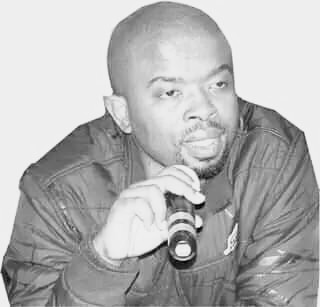
The question of Griffiths Mxenge is not a question of one death. It is a question of method.
Post-independence African states, including apartheid South Africa, claimed the monopoly of law while practicing the monopoly of night. The courtroom was public. The assassination was administrative.
Between 1960 and 1994, the South African state killed in uniform and out of it: in cells, at roadblocks, and in driveways after midnight. Griffiths Mxenge, a South African HumanRights lawyer, was found stabbed and beaten to death near Umlazi outside Durban on 20 November 1981. His wife, Victoria Mxenge, also a lawyer, was shot at her home four years later in 1985. Both were banned by the apartheid government, both were watched by the apartheid government and both were buried by communities that the state called enemies.
To examine Mxenge is therefore to examine how a government writes law by day and unwrites them after dark. The answer is not a list of martyrs. It is an audit of the file, the knife, and the terms on which a state decides a citizen cannot be tried because he must be erased. To examine Mxenge’sbrutal murder is also to realise that South Africa was once run by rascals whose motivation was to maintain the survival of one race by eliminating the other races. The status Quo was unjustifiable and inhuman and remain thoroughly difficult to make sense of how a people that claim to be running a government worth respect could condone or engage on such conducts. It’s thoroughly disappointing.
THE LAWYER AS A TARGET
The Courtroom and Its Limits
Griffiths Mxenge did not carry a gun. He carried what many antagonists of progress fear – files.
After serving some time on Robben Island for political activism (related to the then banned African National Congress), he returned to Durban and opened a practice that defended political detainees, trade unionists, and students. The law was his weapon.
He cross-examined police, exposed torture, and forced the state to produce its warrants in public. The security branch called this “legal terrorism.” The judiciary called it procedure. The conflict was clear: the apartheid state needed courts to claim legitimacy, but it could not afford lawyers who made the court work.
Mxenge won cases. He secured acquittals. He taught young black lawyers that the state was a player in the administration of the law and that they, representing an opposing party were equally players who deserved nothing less than respect from the system. He also proved that the law could be used against those who try to use it to perpetuate illegal stances. The state answered with banning orders that confined him to his magisterial district, with surveillance that logged his visitors, and finally with a death that left forty wounds on his defenceless body and no witnesses. The file was closed. The practice was not.
The Body as Evidence
The assassination of Mxenge was not random. It was authored.
The Truth and Reconciliation Commission, post-1994, later heard testimony from one Dirk Coetzee, a commander of the Vlakplaas death squad, who said that Griffiths Mxenge was killed on orders from security police Generals.
The method was intimate:
A. They abducted him
B. They then went on to stab him.
C. He was then mutilated.
The state produced a narrative of robbery.
The community produced a funeral of 10,000. The body became the exhibit that the court would never see.
Assassination in apartheid South Africa was not the failure of law. It was the shadow system of law, activated when the verdict was uncertain. Steve Biko using comparable methods was eliminated in 1977, Rick Turner in 1978, Neil Aggett in 1982, the Cradock Four in 1985, David Webster in 1989 are some of the long list of many freedom fighters whose lives were cut short by the oppressive apartheid nationalist party regime. My view and feeling is that we need to talk more about these heroes because the system silenced them in order to derail what they stood for.
Each death said the same thing: the state will hear you in court, and if it loses, it will meet you in the driveway. The constitution was public. The sentence was private.
THE STATE AS CONSPIRACY
Vlakplaas and the Bureaucracy of Murder
The apartheid government built institutions for killing with the same care it built departments of water.
Vlakplaas was a farm. It was also a unit. It recruited askaris, trained operatives, and ran cross-border raids.
The Civil Cooperation Bureau (CCB) hired civilians to poison, bomb, and shoot. The work was paid, vouchered, and filed.
Logic From The State
At the Truth and Reconciliation Commission, Generals and operatives testified that these actions were necessary counter-insurgency. They argued that the African National Congress and United Democratic Front were not political opponents but terrorist organizations backed by the Soviet Union.
In their framing, lawyers like Griffiths Mxenge were not independent officers of the court but accomplices and legal cover for a revolutionary war. The goal, they said, was to prevent communism and preserve order.
The justification fails on its own stated terms. If the aim was to preserve a lawful state, then murdering defence lawyers, torturing detainees, and fabricating “robbery” narratives undermined that aim.
The Apartheid State Failed
A state that cannot win its case in court without killing the opposing counsel has conceded that its law is not legitimate. Counter-insurgency that depends on extrajudicial killing does not defeat insurgency – it replaces law with force and makes the state indistinguishable from the irregular actors it claimed to oppose.
The Geography of Impunity
Assassination requires space. The bantustans provided it. The border zones provided it. The suburbs provided it after 10 p.m.
Victoria Mxenge, wife to Griffiths, was killed in her yard while her children slept inside, four years later. The killers were never convicted in court. The Truth and Reconciliation Commission (TRC) granted amnesty to one applicant who confessed.
The pattern was continental, not just South African. Post-independence states from Zaire to Kenya used assassination as policy when the prison was too public. The difference in South Africa was documentation. The security state kept records, because bureaucracies cannot help it. Those records became the archive that convicted the system after the system changed. The knife that killed Mxenge was private. The file that ordered it was official. That is the definition of state crime: the stamp and the denial on the same page.
THE ARCHIVE AND THE USES OF THE DEAD
TRC, Amnesty, and the Economy of Truth
The Truth and Reconciliation Commission (TRC) offered amnesty for full disclosure. Some killers spoke. Most did not.
The State’s Argument for Amnesty
The post-1994 government and many in the security establishment argued that peace required a conditional trade: full disclosure in exchange for immunity from prosecution. The rationale was pragmatic.
Prosecuting thousands of state and liberation movement actors would have collapsed the negotiated settlement, overloaded a fragile judiciary, and likely triggered renewed violence. By making the record public, the state claimed it would substitute narrative truth and moral accounting for retributive justice, and allow the country to move forward on the basis of a shared factual foundation.
The Mxenge Family’s Objection
The Mxenge family opposed amnesty for Dirk Coetzee and others.
Their position was that truth without consequence is a second killing. If the state acknowledges who ordered and executed the murder, but imposes no penalty, it preserves the practical impunity that made the murder possible in the first place. On this view, justice that ends at disclosure leaves the structure of power untouched and tells future office-holders that murder can be explained away once the regime changes.
Why the Trade Off Remains Contested
The result was a ledger with two columns: names of the dead, and names of the forgiven. The courtroom could not produce convictions because evidence was burned, witnesses were dead, or the law at the time defined the act as legal. The TRC produced narrative instead. It put the knife into the record. It did not put the hand into the cell.
This is the core tension: a society cannot function if every past crime is prosecuted immediately after a transition, but it also cannot claim to have restored the rule of law if the most deliberate political killings carry no legal consequence. Disclosure without punishment resolves the immediate problem of social collapse, but it leaves the gap between law and justice open.
The lawyers, Mxenge among them, believed in the court. The court, after 1994, believed in the commission. The gap between them is where justice lives, and it remains unfixed. That gap is not an abstract problem. It determines whether the post-apartheid state can credibly claim that a lawyer can lose a case without losing his life.
The Afterlife of the Lawyer
Griffiths and Victoria Mxenge left behind children and precedents.
The precedents are procedural: that a banned person can still file, that a Black lawyer can challenge the state in open court, that a political killing can become syllabus material.
Law schools teach on the Mxenges. Streets and institutions are named after them. The assassinations did not stop legal resistance. They forced the law to admit it was contested.
The Constitutional Response
The post-1994 Constitution writes the right to life, to dignity, and to legal representation directly into the founding law. Each clause answers a specific grave.
The Constitutional Court, established in 1995, has repeatedly ruled against the state when executive action violated these rights. Legal aid was expanded through Legal Aid South Africa, and public interest law firms like the Legal Resources Centre and SECTION27 operate openly. On this measure, the post-apartheid state created institutions that would have been illegal under apartheid.
The State’s Account of Current Problems
The government’s position is that current failures in the justice system stem from resource constraints, case backlogs, and capacity gaps, not from policy to eliminate lawyers. It points to the expansion of lower courts, the rollout of specialized commercial and sexual offenses courts, and ongoing efforts to digitize dockets as evidence of attempted reform. Prosecutors and police officials argue that docket losses and slow responses are operational failures in a system under strain, not a return to the “night system.”
The Gap Against the Standard
That account does not completely resolve the impact.
Reports of disappearing dockets, underfunded legal aid, and non-response by law enforcement mean that the right to legal representation exists on paper but fails in practice for those affected. The Constitution sets a standard of equal protection and effective access. If a lawyer or a litigant cannot fully relyon the state to preserve evidence, prosecute cases, or respond to distress calls, then the formal right does not function as a real constraint on power.
Lawyers who oppose the government are not killed in the current dispensation, and that is a material change. The Constitution and the institutions built after 1994 are the direct legacy of the Mxenges’ work. But the standard they fought for was not only the absence of murder. It was a system where losing a case does not depend on the capacity or will of the state to process it. Until that standard is ordinary, the Mxenges’ precedents remain active law, not history.
CONCLUSION
Political assassination in South Africa was not an excess of the system. It was a function of it. The apartheid state could not rule by law alone because its law was not legitimate. It therefore ruled by night as well as by statute.
Griffiths Mxenge was killed because he made the day system work, and the night system could not tolerate the contradiction. His death, and the deaths of Biko, Turner, the Cradock Four, and hundreds of others, prove that a state that must murder its lawyers has already lost the argument.
The murder of Griffiths Mxenge and his wife are sad episodes in the history of South Africa. What makes the pain worse is the pain the his relatives and children now know who killed them but also have to accept that they will never serve sentence for violently stealing the life of their patriotic contributor to the fight to liberate the African majority that was made unwelcome in the land of their birth.
Post-1994 South Africa inherited the constitution and the graves. The constitution is the promise. The graves are the price. The struggle for freedom was not only in the bush or the township. It was in the files that Mxenge carried to court, and in the decision by the state that the files must not be opened again.
Independence, or liberation, means a country where a lawyer can lose a case without losing his life. Until that is ordinary, June 16 and November 20 are not history. They are instructions. The shovel is not for vengeance. It is for uncovering the memo, reading it aloud, and then closing the office that wrote it. The page is still being written. The courtroom is still the battleground.