
By Zipporah Maubane
AUDA-NEPAD marks a quarter-century of connecting communities, strengthening economies and improving lives across Africa
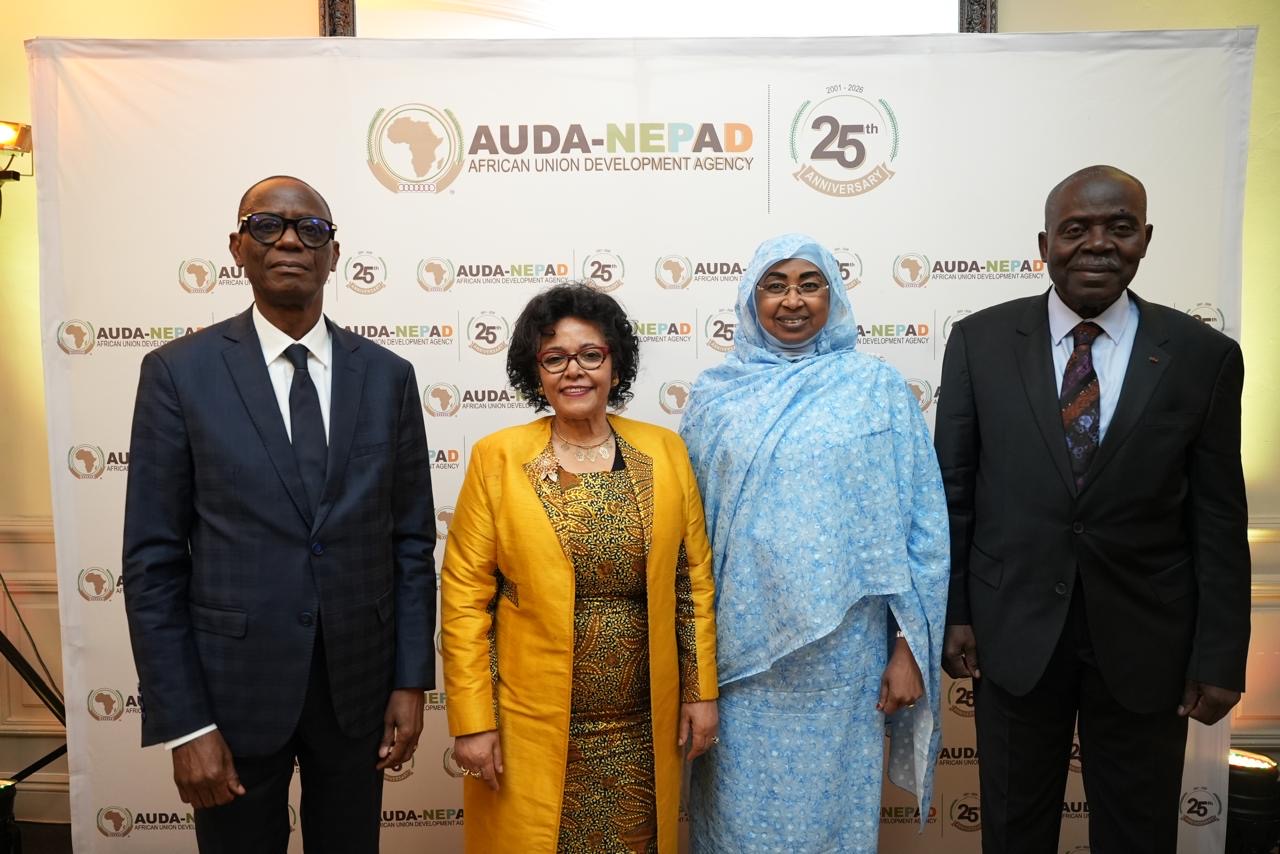
The African Union Development Agency – NEPAD (AUDA-NEPAD) officially launched its Silver Jubilee celebrations this Thursday, 14 May 2026, with a Gala Dinner in Johannesburg, followed by a Business Breakfast with the Thabo Mbeki Foundation in Cape Town on 21 May 2026, marking the start of a year-long continent-wide commemoration of Africa’s foremost development agency.
The celebration comes after 25 years since, President Thabo Mbeki of South Africa, and his peers; President Olusegun Obasanjo of Nigeria, President Abdelaziz Bouteflika of Algeria, and President Hosni Mubarak of Egypt, launched NEPAD as Africa’s answer to its own development challenge.
What is today known as AUDA-NEPAD emerged from Africa’s determination to shape its own development trajectory at the turn of the century. The Millennium Africa Recovery Plan and the Omega Plan, two ambitious African visions for renewal and transformation, were brought together to form the New African Initiative, which evolved into the New Partnership for Africa’s Development (NEPAD) in 2001. With the establishment of the African Union in 2002, from Organisation of African Unity (OAU), African leaders positioned NEPAD at the centre of the continent’s development agenda and created the NEPAD Secretariat to drive implementation and continental coordination.
As Africa’s ambitions grew more demanding, the African Union in 2010 established the NEPAD Planning and Coordinating Agency, strengthening the institution’s operational capacity and embedding it more firmly within the AU system. In July 2018, the AU Assembly went further, transforming the NEPAD Agency into the African Union Development Agency, AUDA-NEPAD: the continent’s first dedicated development agency, built to turn Agenda 2063 from a continental vision into measurable reality.
“We gather to honour a choice made in 2001, a deliberate, political and intellectual choice by a generation of African leaders who believed that Africa could no longer be spoken for, planned for, or developed from the outside,” said Mrs Nardos Bekele-Thomas, Chief Executive Officer of AUDA-NEPAD.
25 Years of Decisive Action: Key Milestones
The agency’s record spans the full breadth of what African development requires. Over the 25 years, what began as a declaration of shared intent has become an institution with a measurable record across infrastructure, agriculture, health, climate resilience, gender equality and youth empowerment across all five regions of the continent.
In Rwanda, The Comprehensive Africa Agriculture Development Programme (CAADP)’s Crop Intensification Programme helped smallholder farmers grow maize yields from around 780 kg per hectare to over 2,500 kg, a rise of 228%, while wheat yields grew by 173% over the same period. In Ghana, establishing a Private Sector Liaison Office within the Ministry of Food and Agriculture gave farmer associations and agribusinesses formal access to budget planning for the first time. By 2009, Ghana’s agricultural sector was growing at 6.2%, with rice production up 30%.
On trade and connectivity, AUDA-NEPAD’s One-Stop Border Post programme has grown from a single crossing at Chirundu between Zambia and Zimbabwe in 2009 to 32 operational posts today, with 85 more in preparation. Average border waiting times have fallen by 42%, and in some cases by as much as 98%. As part of the Programme for Infrastructure Development in Africa, a 510-kilometre power line announced in January 2025 now links the electricity grids of Kenya, Tanzania, Uganda, Rwanda, Burundi and the DRC, connecting 21 previously off-grid villages, reaching 198,000 people, and creating over 400 jobs.
On health, the African Medicines Regulatory Harmonisation(AMRH) programme has cut medicine registration timelines in the East African Community from an average of two to three years to under twelve months, ensuring faster access to treatments for HIV, malaria and tuberculosis. In Zambia, the SATBHSS programme supported the country in reaching 198,201 tuberculosis patients between 2017 and 2023, reducing incidence by 26% and lifting treatment success rates from 81% to 98%. The World Health Organization recognised Zambia among the small number of countries globally to have reduced TB incidence by more than 20% and mortality by over 35%.
On skills and empowerment, the NEPAD Spanish Fund for African Women’s Empowerment supported 79 projects across 38 countries over 15 years, with more than 1.2 million women directly benefiting. That work has since evolved into the Creating Opportunities for Youth and Women in Africa (COYWA) programme. Through SIFA, 210 women in northeastern Ethiopia were organised into cooperatives covering poultry, dairy and vegetable production. By January 2026, all 210 had passed national competency assessments and their enterprises were generating regular income. In Lagos, Nigeria, 100 young Nigerians, 75% of them women, have received practical animation training through Basement Animation’s Capacity Building Programme, with graduates already securing employment in the creative industry.
Groundbreaking Milestones
• African Union Development Agency Transformation: Transitioned NEPAD into AUDA-NEPAD, decisively strengthening its mandate as the technical arm of the African Union and sharpening its role in implementing Agenda 2063.
• African Peer Review Mechanism (APRM): Facilitated the establishment of Africa’s home-grown governance accountability framework, now embraced by 44 Member States, as a model of African-led democratic self-assessment.
• Programme for Infrastructure Development in Africa (PIDA): Established PIDA to unlock transformative cross-border connectivity in energy, transport, water, and ICT, providing the continental blueprint for closing Africa’s infrastructure deficit.
• Comprehensive Africa Agriculture Development Programme (CAADP): Drove agriculture-led growth, food security, and rural livelihoods transformation for millions of Africans, making CAADP a cornerstone of the continent’s sustainable development architecture.
• Skills Initiative for Africa (SIFA): Promoted demand-driven skills development and vocational training, empowering African youth, improving employability, and aligning human capital investment with labour market realities.
• African Continental Free Trade Area (AfCFTA): Support Provided technical expertise to accelerate AfCFTA implementation, boosting intra-African trade, deepening industrialisation, and advancing Africa’s economic self-sufficiency.
• Alliance of African Multilateral Financial Institutions (AAMFI): Mobilised innovative financing solutions, including blended finance and public-private partnerships, to close Africa’s infrastructure gap and attract long-term development capital.
• Regional Economic Communities (RECs) Partnership: Strengthened strategic collaboration with RECs across the continent, ensuring alignment of continental priorities with regional and national development agendas for coherent, integrated delivery.
Anniversary Events
The Gala Dinner on 14 May 2026 is held on the sidelines of the 74th Ordinary Session of the AUDA-NEPAD Steering Committee, convening in Johannesburg from 14 to 15 May 2026. The Session convenes under the leadership of Angola, following the election of H.E. President João Manuel Gonçalves Lourenço as Chairperson of the AUDA-NEPAD Heads of State and Government Orientation Committee in February 2026. It is co-chaired by H.E. Ambassador TéteAntónio, Minister of External Relations of Angola, and H.E. François Nibizi, Senior Official of the Government of Burundi. The Gala Dinner will bring together African Union officials, development partners, the private sector and civil society to mark what has been achieved and to look seriously at what comes next.
On 21 May 2026, AUDA-NEPAD and the Thabo Mbeki Foundation co-host a Business Breakfast in Cape Town, bringing together thought leaders, policymakers, business figures and development practitioners. The conversation will centre on private sector investment, continental governance, and what it means for Africa’s growth to be financed, led and owned by Africans.
These two events mark the opening of a year-long programme of forums, policy dialogues, youth and women’s summits, private sector convenings, and regional showcases of AUDA-NEPAD’s work across infrastructure, digital transformation, agricultural value chains and climate adaptation.
“Twenty-five years is not merely a measure of time. It is a measure of resolve and a testament to what becomes possible when Africa dares to lead. We invite every Member State, every partner, and every African citizen to walk with us through this milestone year. Together, we will build the Africa we want,” concluded Mrs Bekele-Thomas.