
By Tshepo J Molobi
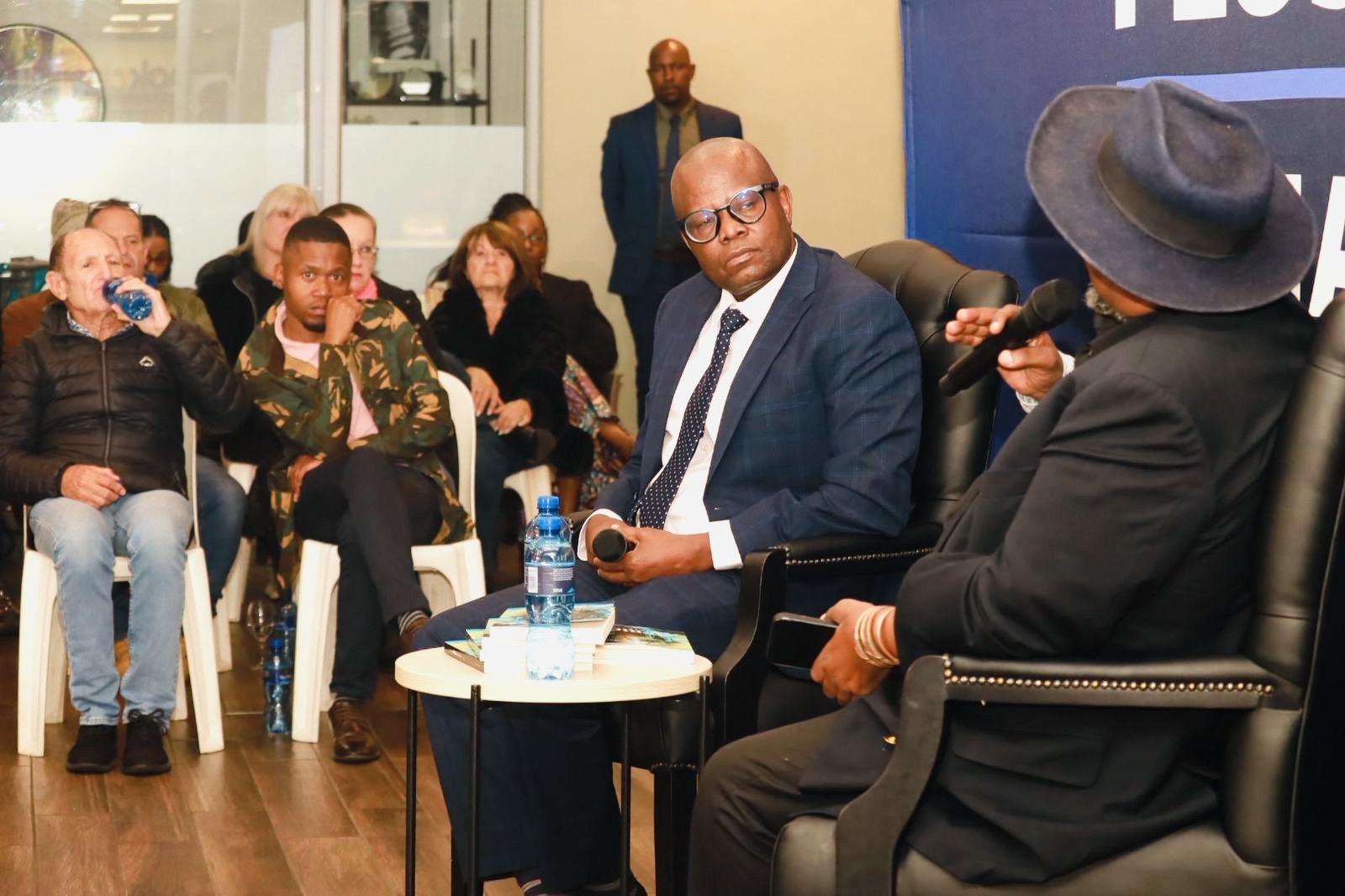
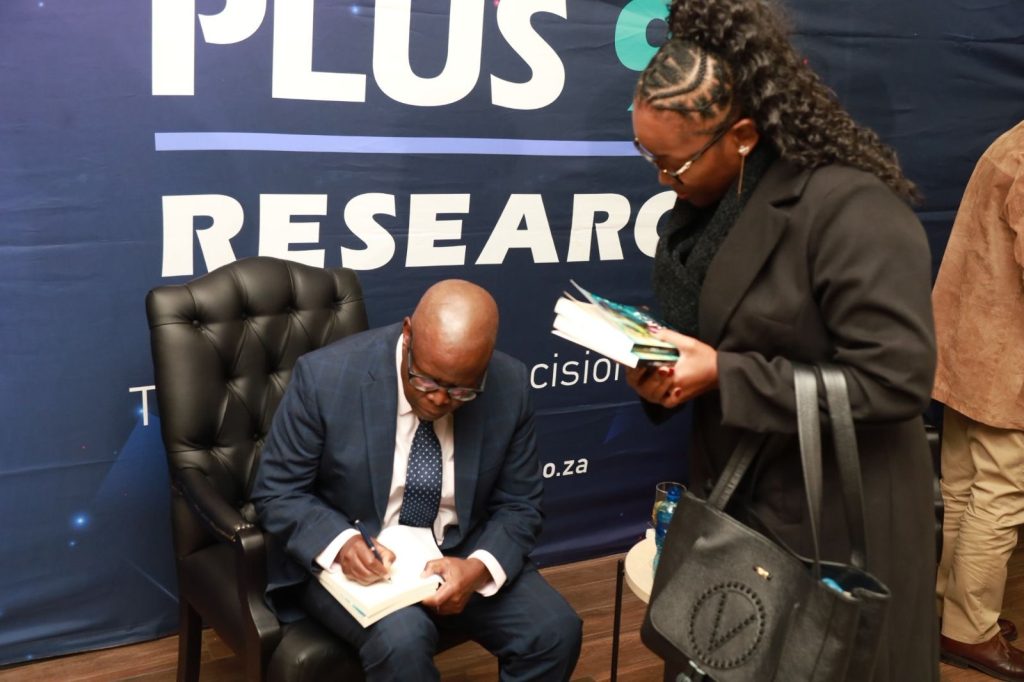
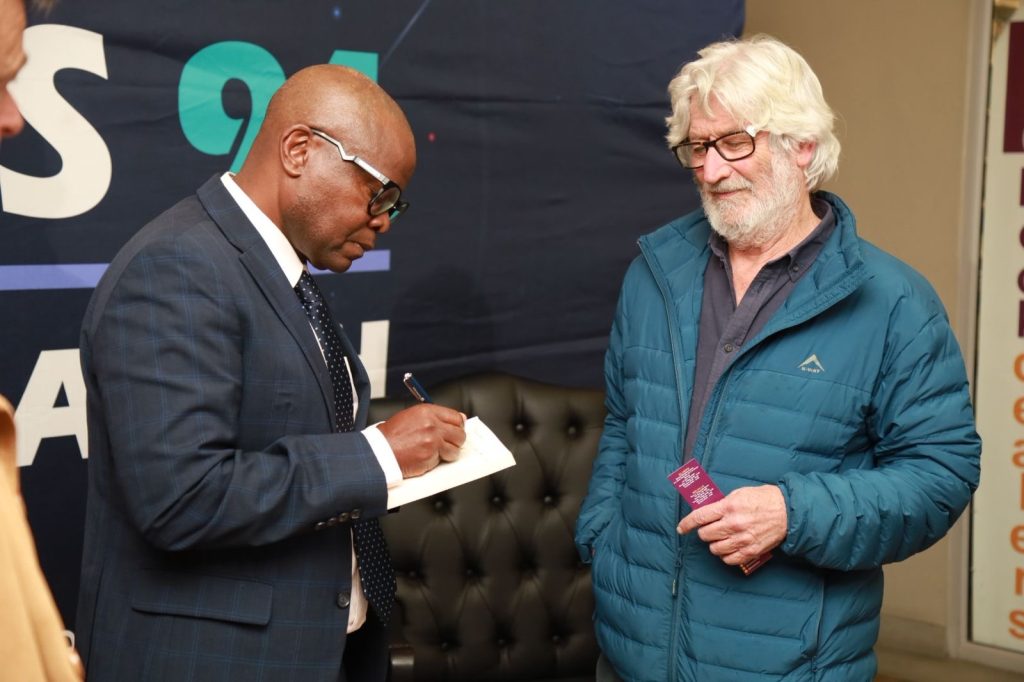
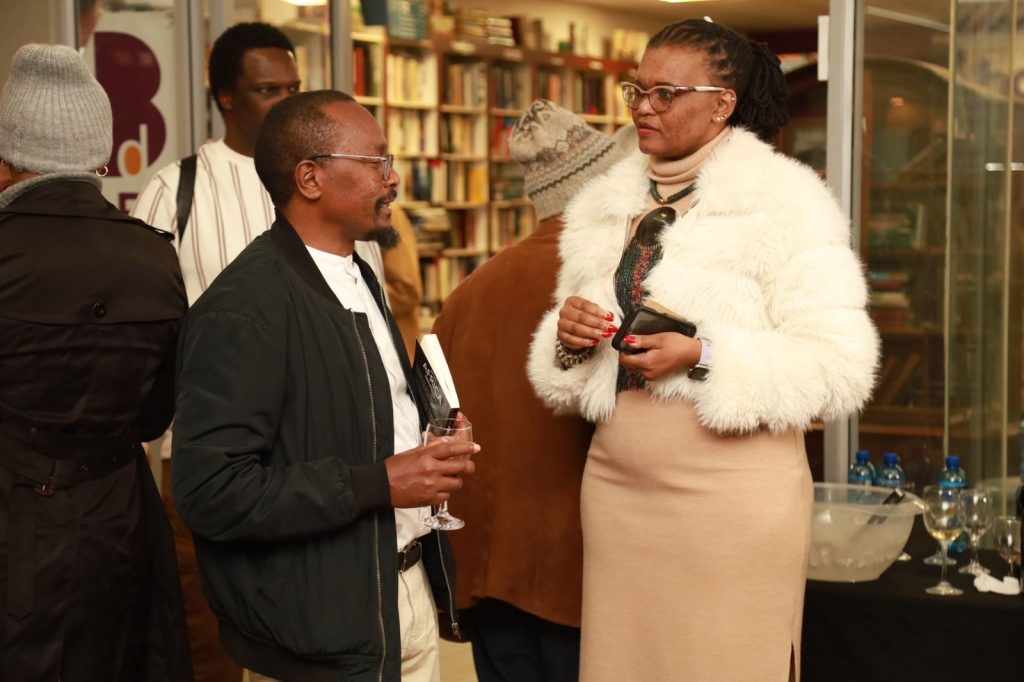
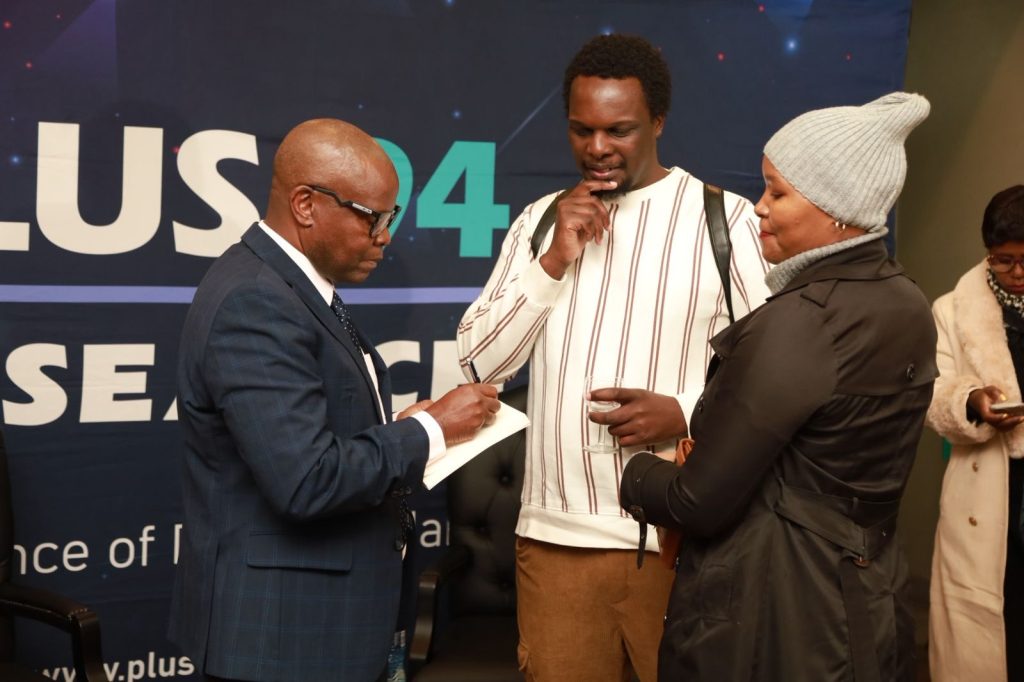
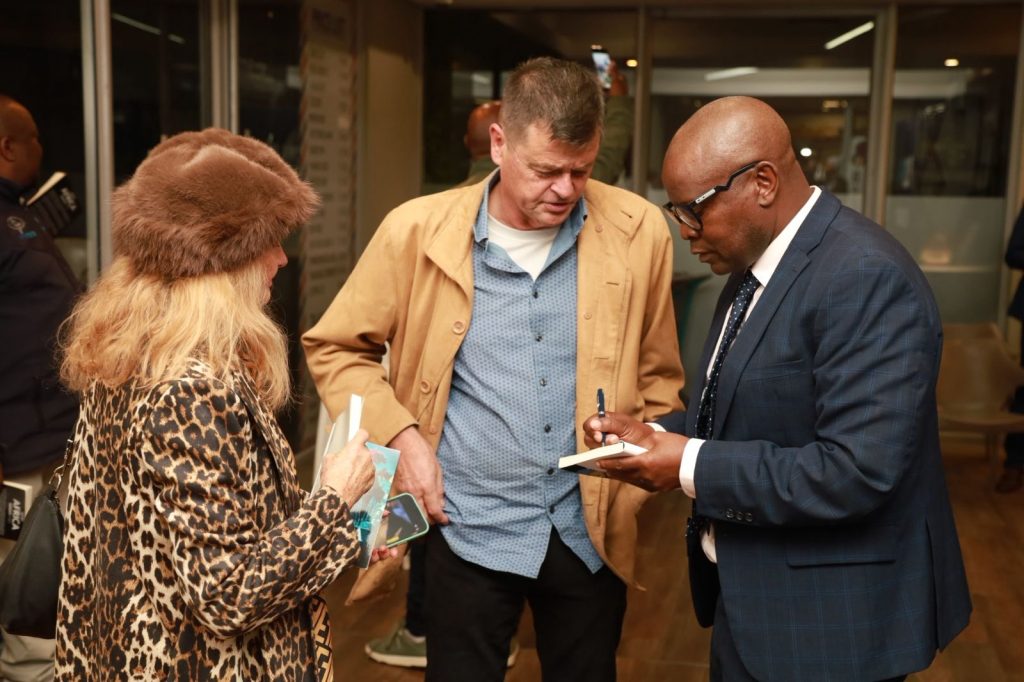
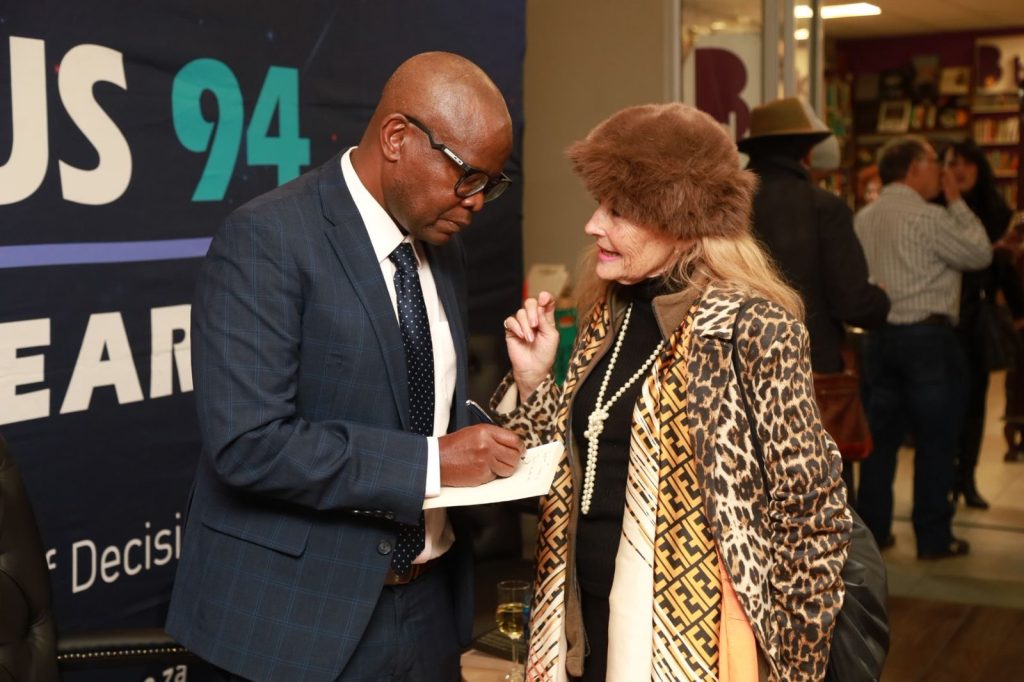
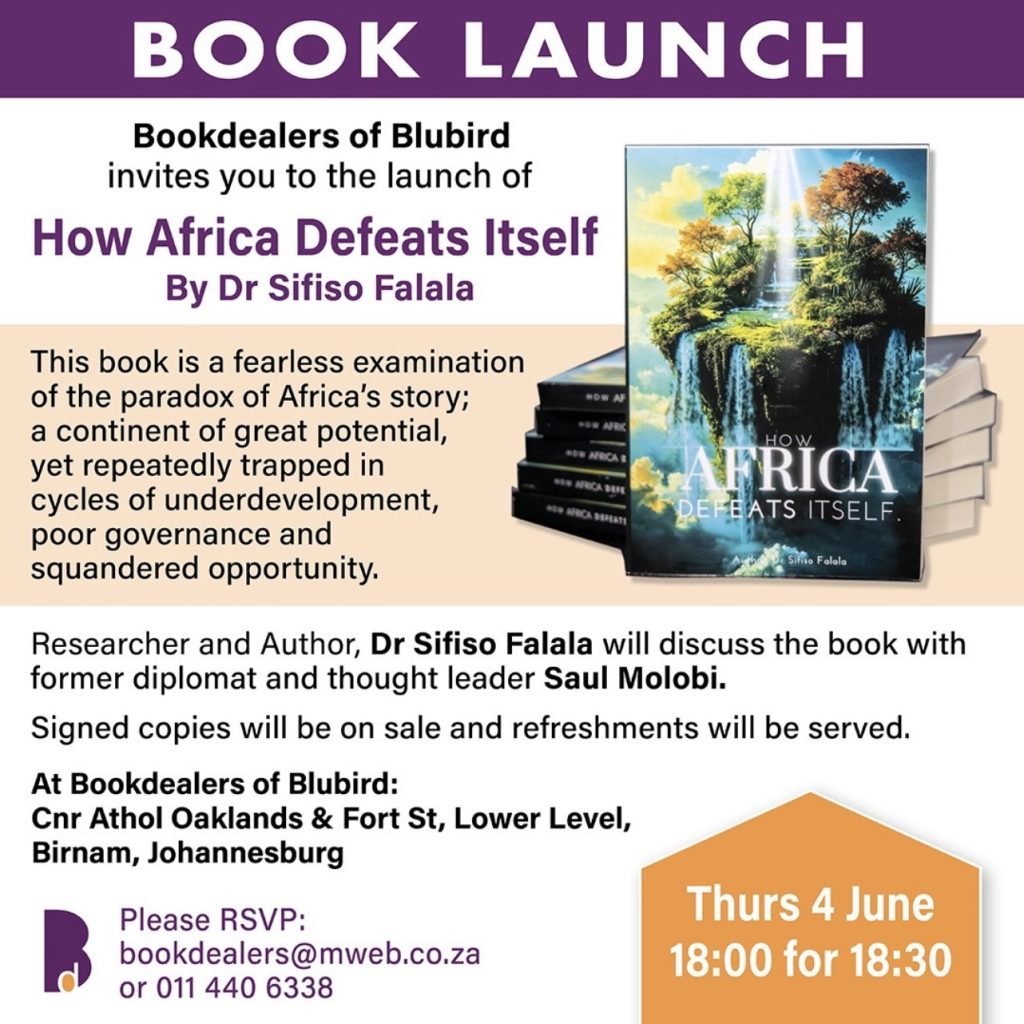
A packed audience gathered at Book Dealers at the Blue Bird Shopping Mall in Birnam, Johannesburg, for the launch of Dr Sifiso Falala’s thought-provoking new book, How Africa Defeats Itself. The event drew academics, business leaders, writers, policymakers, students and members of the public eager to engage with one of the most provocative contributions to contemporary African discourse.
The launch was marked by a stimulating and wide-ranging conversation between the author and brand architect, author and broadcaster Saul Molobi, whose role extended beyond that of a moderator. Molobi opened the discussion by providing a historical and philosophical framework within which the evening’s conversation could be understood, introducing what he termed the “inside-out versus outside-in” equation in the de/constructing of Africa.
According to Molobi, the African story has historically been shaped by two competing forces. The “outside-in” perspective represents the narratives imposed on the continent by external actors, while the “inside-out” perspective speaks to Africa’s own agency in defining itself and determining its future. It was within this tension that he situated Dr Falala’s central thesis.
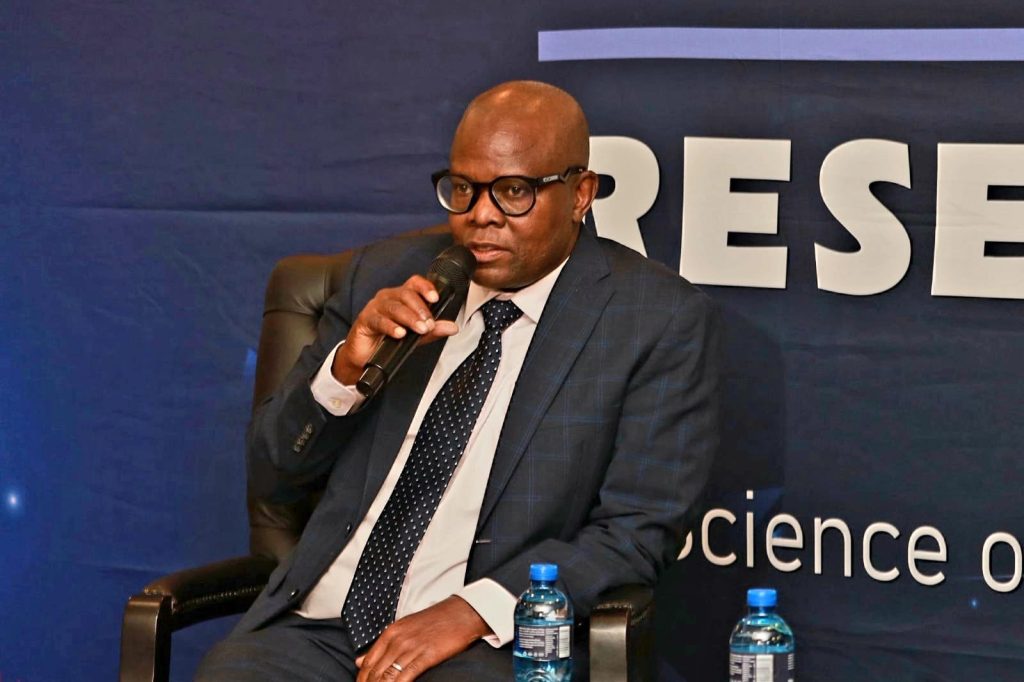
To illustrate the evolution of Africa’s global image, Molobi referenced the Roman scholar Pliny the Elder’s famous observation, “Ex Africa semper aliquid novi” (“Out of Africa, always something new”), an acknowledgement of the continent’s enduring capacity for innovation and discovery. He contrasted this with the devastating legacy of the 1884-1885 Berlin Conference, where European powers partitioned Africa with little regard for its peoples and civilisations.
Molobi further reflected on how Africa’s image was shaped by colonial literature, citing Joseph Conrad’s The Heart of Darkness, which portrayed Africa as a “dark continent” requiring external intervention and civilisation. He juxtaposed this with the literary intervention of Nigerian novelist Chinua Achebe, whose seminal novel Things Fall Apart challenged colonial representations of Africa by presenting African societies as complex, dynamic and fully human.
Bringing the discussion into the modern era, Molobi highlighted the establishment of the Organisation of African Unity, later transformed into the African Union, as important milestones in Africa’s collective journey towards political and economic self-determination. He also pointed to the African Continental Free Trade Area (AfCFTA) as one of the most significant contemporary expressions of Africa’s determination to shape its own developmental future.
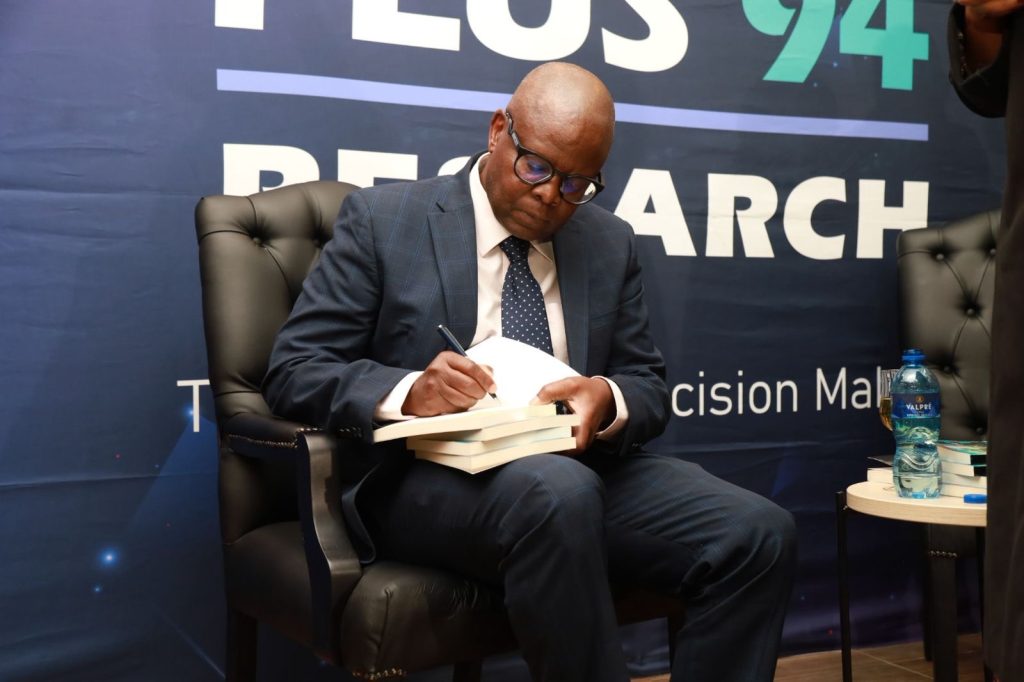
It was against this backdrop that Molobi invited Dr Falala to explain why he believed Africa’s greatest obstacles today were increasingly internal rather than external.
From the outset, the event distinguished itself through its professionalism and discipline. In a refreshing departure from a culture of delayed starts that often characterises public events, proceedings commenced exactly on time. This seemingly simple act reflected the professionalism, planning and work ethic of the organisers.
Particular commendation was due to Funeka Sobantu, Communications Director of Plus 94 Research, who served as Programme Director. Her meticulous coordination, attention to detail and seamless management of proceedings ensured that the event unfolded with precision and purpose.
A Voice Challenging Conventional Narratives
Dr Sifiso Falala is one of South Africa’s leading market research and development practitioners. He is the founder and Chief Executive Officer of Plus 94 Research, one of the country’s foremost independent market research companies, established in 1998. Over the years, he has built a distinguished career spanning market research, development strategy, innovation and African thought leadership.
He is also the founder of Sovereign Africa Ratings, a company providing sovereign and sub-sovereign rating services, and currently serves as President of the Pan African Media Research Organisation (PAMRO). His leadership credentials include serving as Chairperson of the Southern African Marketing Research Association (SAMRA), while internationally he is a member of the European Society for Opinion and Marketing Research (ESOMAR).
Beyond research, Dr Falala established Priority Performance Projects (PPP) in 2020, an organisation dedicated to advancing development and economic growth across the developing world. PPP focuses on identifying and implementing strategic projects that optimise resources and maximise developmental impact through stakeholder engagement, financing innovation, process design and rigorous monitoring.
He is also the founder of the African Genius Awards (AGA), an initiative dedicated to celebrating African excellence and reshaping global perceptions of the continent by recognising outstanding African achievement.
Academically, Dr Falala holds a PhD in Management of Technology and Innovation from the Da Vinci Institute, a Master of Science in Population Studies and a Bachelor of Business Studies with Honours. His work is characterised by a commitment to actionable insights, performance-driven solutions and practical approaches to African development.
His book, How Africa Defeats Itself, continues this intellectual trajectory by challenging narratives that position Africa primarily as a victim of history. Instead, the book interrogates the cultural, institutional and governance factors that continue to constrain the continent’s progress while advocating for introspection, reform, accountability and performance-based identity.
Confronting unanswerable questions
Drawing from the book’s nine chapters, Dr Falala unpacked themes such as the culture of victimhood, the tyranny of relative success, identity politics, the elevation of struggle credentials above competence, and the role of elites in perpetuating systems that sustain underperformance.
Throughout the evening, Molobi skilfully interrogated the author’s arguments, inviting him to elaborate on some of the book’s most controversial propositions. The discussion explored whether victimhood narratives have become deeply entrenched in African political discourse, whether excellence is sometimes sacrificed in the pursuit of equity, and whether contemporary African societies sufficiently reward merit, innovation and competence.
Particularly engaging was the discussion around the chapter When Struggle Credentials Trump Competence, where Dr Falala examined the developmental consequences of rewarding historical legitimacy over contemporary capability. The conversation also explored the dangers of identity politics becoming an end in itself rather than a vehicle for genuine social and economic transformation.
Equally compelling was the discussion around the book’s concluding chapter, Breaking Free: Towards a Philosophy of Self-Determination. Here, Dr Falala articulated a vision of an Africa grounded in responsibility, entrepreneurship, innovation, excellence and accountability.
An audience fully engaged
If the dialogue between Molobi and Falala was illuminating, the Question-and-Answer session elevated the evening even further.
Audience members enthusiastically engaged with the themes raised in the book, posing probing questions and offering thoughtful reflections. The level of participation reflected both the relevance of the issues under discussion and a growing appetite for honest conversations about Africa’s developmental challenges and opportunities.
The Q&A evolved into a vibrant forum where questions of governance, leadership, economic transformation, education, social justice and youth empowerment were robustly debated. Participants challenged, affirmed and expanded upon the ideas presented by the author, creating an atmosphere of genuine intellectual engagement.
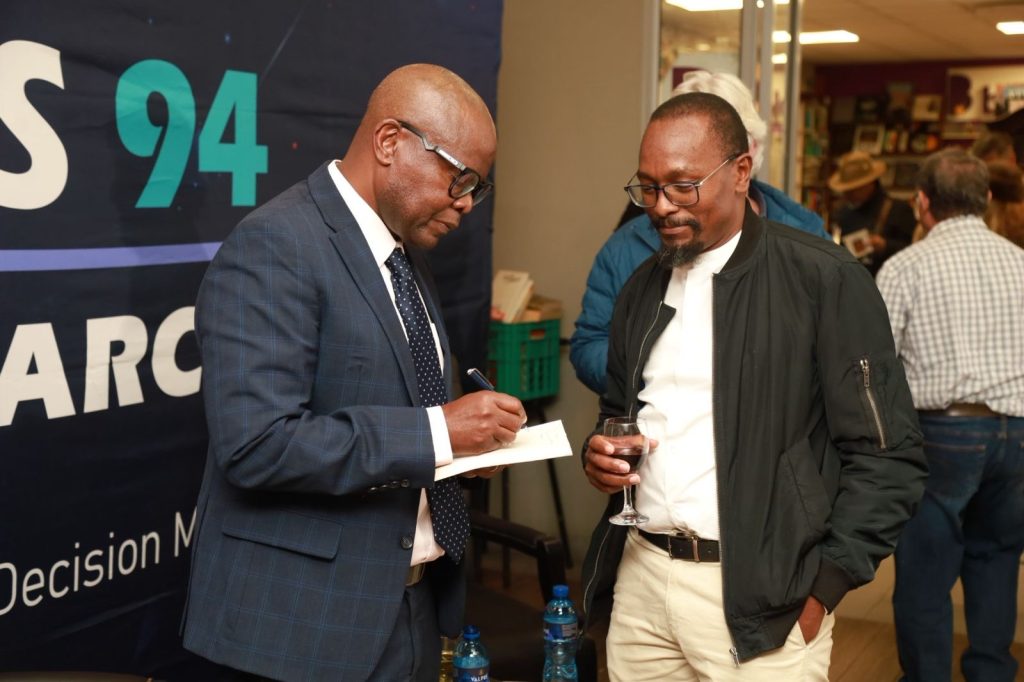
The success of the event was evident not only in the full-house attendance but also in the energy that lingered long after the formal programme had concluded. Small groups remained in conversation, continuing debates sparked by the book and reflecting on its implications for Africa’s future.
Towards an Africa defined from within
Whether one agrees with all of Dr Falala’s conclusions or not, How Africa Defeats Itself succeeds in provoking critical reflection on some of the most pressing questions confronting the continent today.
The launch itself embodied the spirit of rigorous engagement that the book advocates. Through Molobi’s framing of Africa’s historical journey – from Pliny the Elder’s celebration of Africa’s promise, through the distortions of colonial narratives, to contemporary efforts at continental integration through the African Union and AfCFTA – the discussion challenged participants to think deeply about the relationship between historical circumstance and present responsibility.
Ultimately, the evening underscored a powerful message: while Africa’s history cannot be ignored, neither can it be allowed to become a permanent explanation for underperformance. The continent’s future will be determined not only by what has happened to Africa, but increasingly by what Africans choose to do for themselves.
In that regard, Dr Sifiso Falala’s How Africa Defeats Itself has made an important and timely contribution to one of the defining conversations of our age.