
By Saul Molobi
South Africa’s migration debate must move beyond xenophobia, populism and vigilantism towards a new politics of inclusion anchored in economic growth, capable governance and African integration.
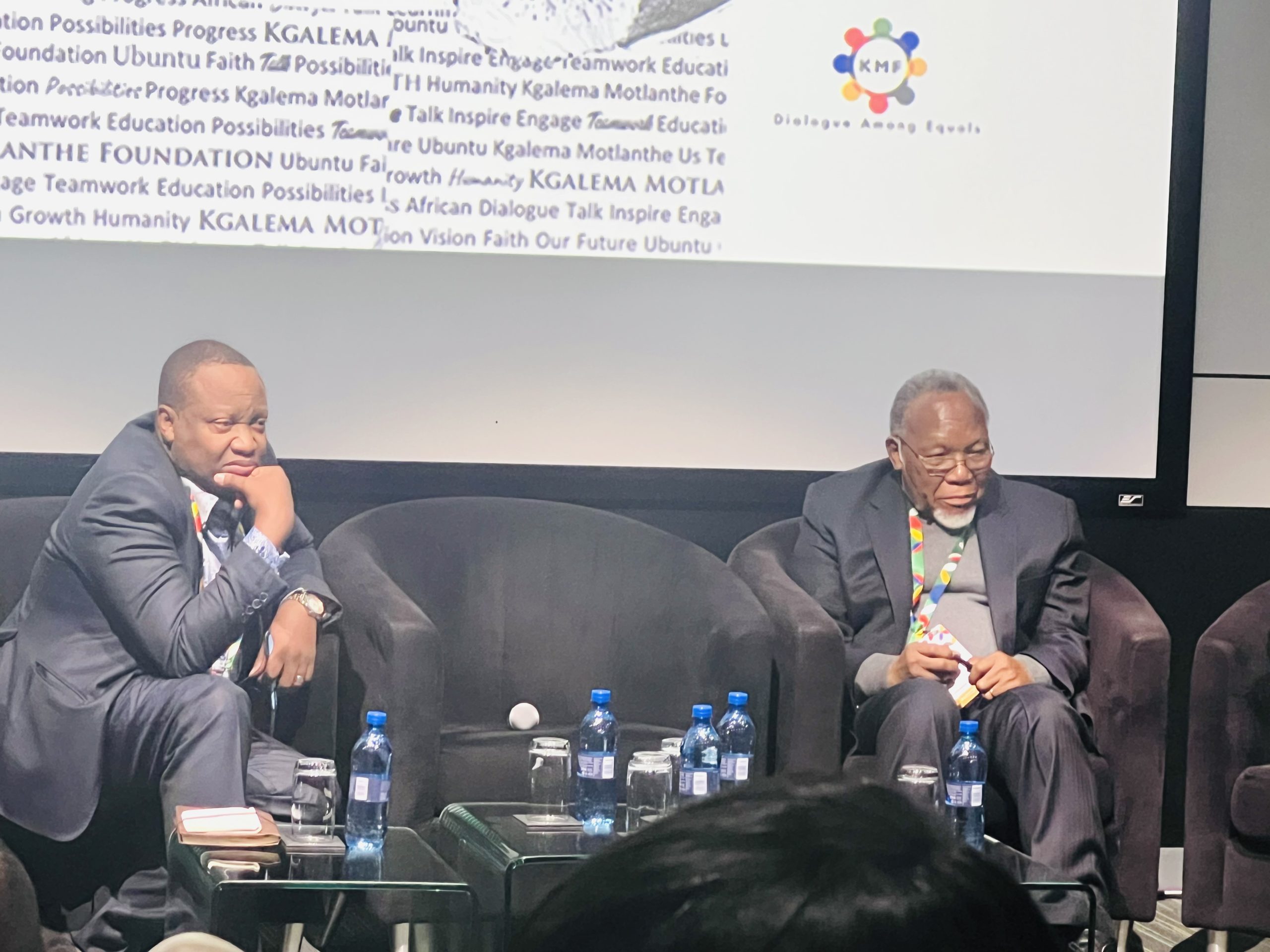
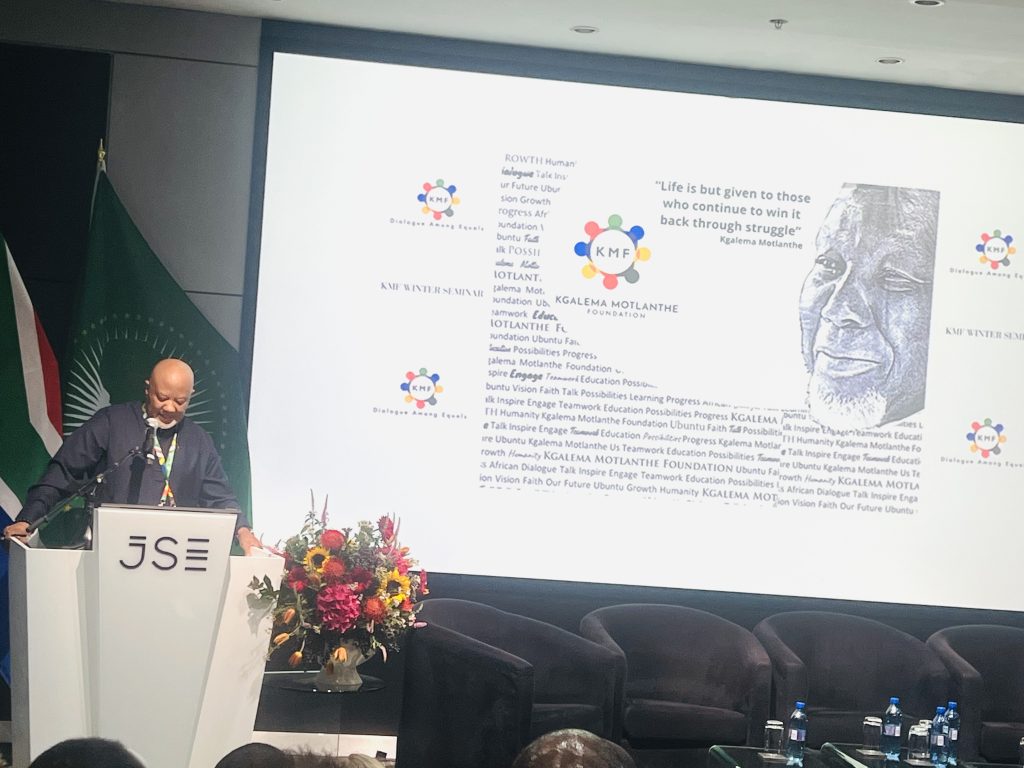
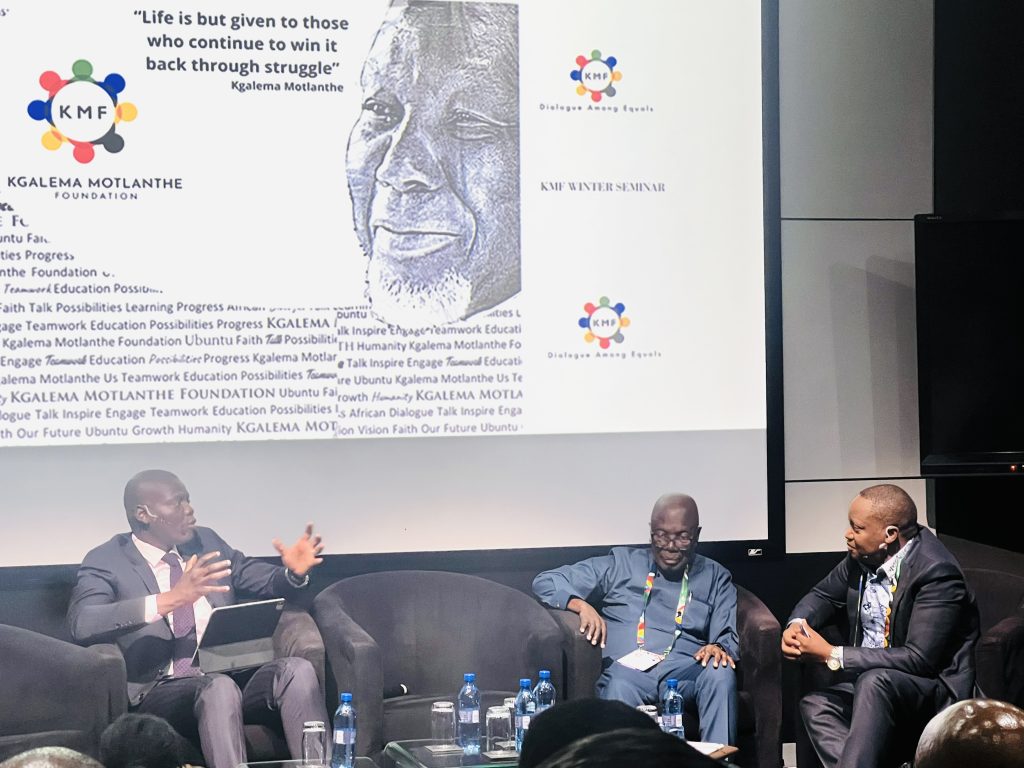
This was the resounding message from the Kgalema Motlanthe Foundation Winter Seminar, held at the Johannesburg Stock Exchange (JSE) on Wednesday, where political leaders, senior government officials, business executives, academics and policymakers gathered to examine one of the continent’s most pressing challenges.
Hosted under the theme “Strategic perspectives on the continent and migration”, the seminar’s “Setting the scene” session brought together former President Kgalema Motlanthe; Minister of International Relations and Cooperation Ronald Lamola; MTN Group Independent Chairman, Mcebisi Jonas; Minister for Finance of Ghana, Dr Cassiel Ato Baah Forson; and other thought leaders in an honest and wide-ranging discussion on migration, governance, economic development and the future of African integration.
Rather than treating migration as merely a border security issue, speaker after speaker argued that the movement of people is ultimately a consequence of governance failures, economic stagnation, conflict and inequality across the continent.
Migration is a symptom, not the disease
Opening the discussion, Mcebisi Jonas cautioned against simplistic explanations that blame migrants for South Africa’s social and economic challenges.
He described the recent attacks on foreign nationals as deeply disturbing, recalling scenes of immigrant families being hunted in their homes, spaza shops being looted and burnt, and African governments having to organise buses and charter flights to evacuate their citizens from South Africa.
“Men and women who share our continent, our history and, in many cases, our struggle for freedom have been made to feel like strangers, intruders and outcasts,” he said.
While acknowledging legitimate public concerns about border management, overcrowded public services and failures within the immigration system, Jonas argued that South Africa’s unemployment crisis, deteriorating public services, weak economic growth and rising inequality were not caused by migrants.
“They are the result of policy failures accumulated over many years,” he said.
“If every foreign national left the country tomorrow, those problems would remain. In many respects, they would become even worse.”
Jonas warned that South Africa was entering dangerous territory where identity politics increasingly determines who belongs and who does not.
He said the protests had become far more than spontaneous public demonstrations.
According to Jonas, they had been fuelled by opportunistic politicians seeking electoral advantage, criminal syndicates exploiting vulnerable communities, and sophisticated misinformation campaigns that amplified anger and division through organised social media networks.
“When the state loses its monopoly over the legitimate use of force,” he warned, “it loses more than control of the streets. It loses the authority to determine who is protected by the law.”
Democracy must defeat politics of exclusion
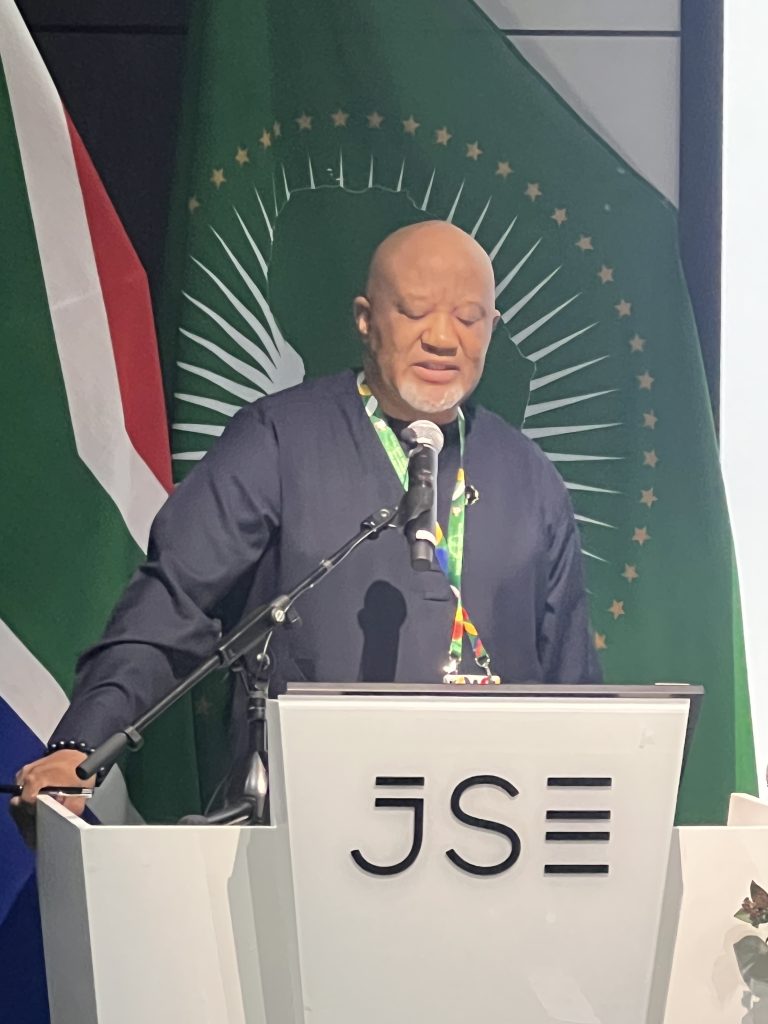
Jonas rejected the growing tendency to portray migrants as the source of South Africa’s challenges.
Instead, he argued that South Africa’s real crisis lay in weak governance, poor economic performance, inadequate education, failing infrastructure and institutional decline.
He also challenged the assumption that migration is purely a security threat.
Drawing on historical examples from across Africa, he reminded delegates that trade, migration and entrepreneurship have always moved together.
Migration, he argued, has historically strengthened economies rather than weakened them.
He pointed to the commercial networks created by Somali, Ethiopian and West African traders as evidence that human mobility has long driven African prosperity.
“South Africa’s challenge is not too many migrants,” he observed.
“It is too little growth – and far too much exclusion.”
Looking ahead, Jonas argued that South Africa’s future prosperity is inseparable from that of the African continent.
“Our markets are in Africa. Our opportunities are in Africa. Our future is in Africa.”
He concluded by urging South Africans to build not only an economy of inclusion but also a politics of inclusion capable of resisting fear, anger and division.
Government calls for alance between security and human rights
Speaking on behalf of Deputy President Paul Mashatile, International Relations and Cooperation Minister Ronald Lamola acknowledged that migration has become one of South Africa’s most difficult policy debates.
He said migration has accompanied human civilisation throughout history and should never be viewed in isolation from broader developmental challenges.
“People move in search of safety, opportunity, family reunification and a better future,” Lamola said.
While rejecting simplistic narratives that blame migrants for every social problem, he equally recognised legitimate public concerns about border security, labour market regulation and the capacity of public institutions.
“The challenge before us is not whether to choose between security and humanity, or national interests and human rights,” he said.
“The challenge is to implement policies that advance all of these objectives simultaneously.”
Lamola stressed that effective migration management depends upon capable institutions, evidence-based policymaking and stronger regional cooperation.
He also condemned vigilantism, insisting that immigration enforcement remains exclusively the responsibility of the state.
“No concern about irregular migration gives private citizens the authority to enforce immigration laws,” he said.
Responding to concerns raised elsewhere on the continent, Lamola outlined a series of arrests made in Limpopo, Mpumalanga and the Eastern Cape involving suspects accused of intimidation, extortion, looting and attacks on foreign-owned businesses.
He said South Africa would ultimately resolve migration challenges not through walls or exclusion, but through stronger regional integration under the African Continental Free Trade Area.
Africa’s history demonstrates the power of human mobility
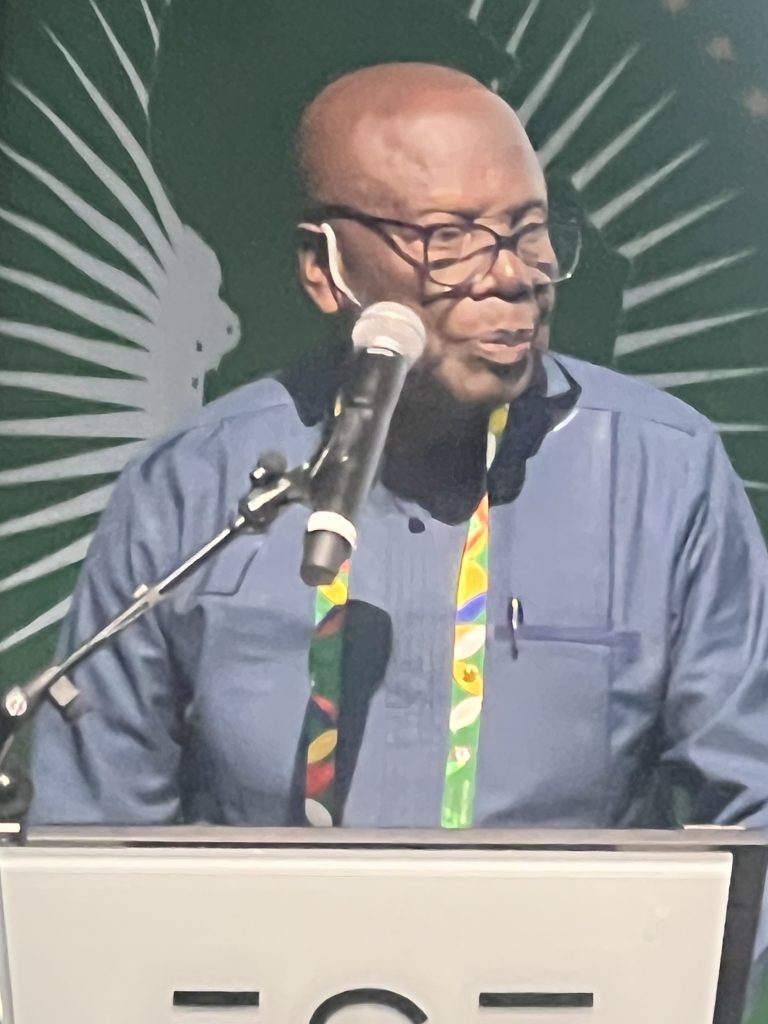
Providing a continental perspective, Ghana’s Finance Minister Dr Cassiel Ato Baah Forson reminded delegates that migration has always been one of Africa’s greatest economic strengths.
For centuries, he said, Africans moved freely across the continent to trade, establish businesses and build communities long before colonial borders existed.
Using the historic commercial networks linking Ghana and Nigeria, he illustrated how entrepreneurs crossed borders without passports or visas, building thriving markets based on trust, innovation and enterprise.
“They did not bring scarcity,” he said. “They brought markets.”
He argued that Africa’s challenge is not migration itself but the inability of many economies to create sufficient opportunities for their citizens.
“Our task is therefore not to stop people from moving,” he said. “Our task is to ensure that Africa creates enough opportunity for its people wherever they choose to live and work.”
Reflecting on Ghana’s own experience, he recalled the expulsion of migrants in 1969 and the subsequent expulsion of approximately two million Ghanaians from Nigeria years later.
Those painful experiences demonstrated that migrants often become political scapegoats whenever governments fail to meet citizens’ expectations.
Instead, he called for greater investment in education, entrepreneurship, digital transformation, skills development and regional economic integration.
He argued that Africa’s demographic dividend could become one of the world’s greatest economic advantages if governments successfully prepared young people for the digital economy.
Motlanthe: South Africa was built by Africa
Former President Kgalema Motlanthe delivered what many regarded as the seminar’s defining historical reflection.
Tracing the evolution of labour migration from the nineteenth-century mining economy to the present day, Motlanthe reminded delegates that South Africa’s prosperity was built on migrant labour drawn from across Southern Africa.
“Our economy was not built beside Africa,” he observed. “It was built out of Africa.”
He explained how labour migration from Mozambique, Lesotho, Botswana, Malawi and Eswatini helped create South Africa’s mining economy while simultaneously integrating the economies of the entire region.
That interconnectedness, he argued, continues today through investment, trade, banking, telecommunications, tourism and the African Continental Free Trade Area.
“No immigration system,” he said, “can disentangle an economy whose prosperity has always been continental.”
Motlanthe nevertheless acknowledged the genuine frustrations experienced by millions of South Africans facing unemployment, poverty and declining public services.
He cautioned that governments which fail to respond decisively create conditions in which populism, vigilantism and lawlessness flourish.
“Failure by the state to maintain its authority invites lawlessness and anarchy, with devastating consequences,” he warned.
Political leaders, he added, carry responsibility not only for their own conduct but also for the behaviour of those they lead.
Drawing attention to the economic consequences of instability, Motlanthe warned that sectors such as agriculture and tourism were already experiencing significant disruptions.
When businesses close, he said, jobs disappear, poverty deepens and social tensions inevitably increase.
He concluded with a simple but powerful reminder:
“Political stability is a precondition for economic development.”
Africa must choose inclusion over division
The discussion that followed the first session, “Setting the scene”, reinforced a common conclusion.
Participants agreed that while migration presents legitimate governance challenges, the continent cannot afford to retreat into nationalism or exclusion.
Instead, African countries must strengthen democratic institutions, improve governance, create employment, deepen regional cooperation and fully implement existing African Union and SADC migration frameworks.
Several speakers argued that migration pressures will only diminish when African economies generate inclusive growth, political stability and opportunities for young people.
Throughout the session, delegates repeatedly returned to one overarching message: migration is not the cause of Africa’s challenges; it is a reflection of them.
The solution therefore lies not in blaming migrants but in building stronger states, stronger economies and a more integrated continent.
As the seminar drew to a close, one message echoed across every presentation.
Africa’s future will not be secured by building higher walls.
It will be secured by building stronger institutions, stronger economies and stronger partnerships among African nations.