
By Saul Molobi
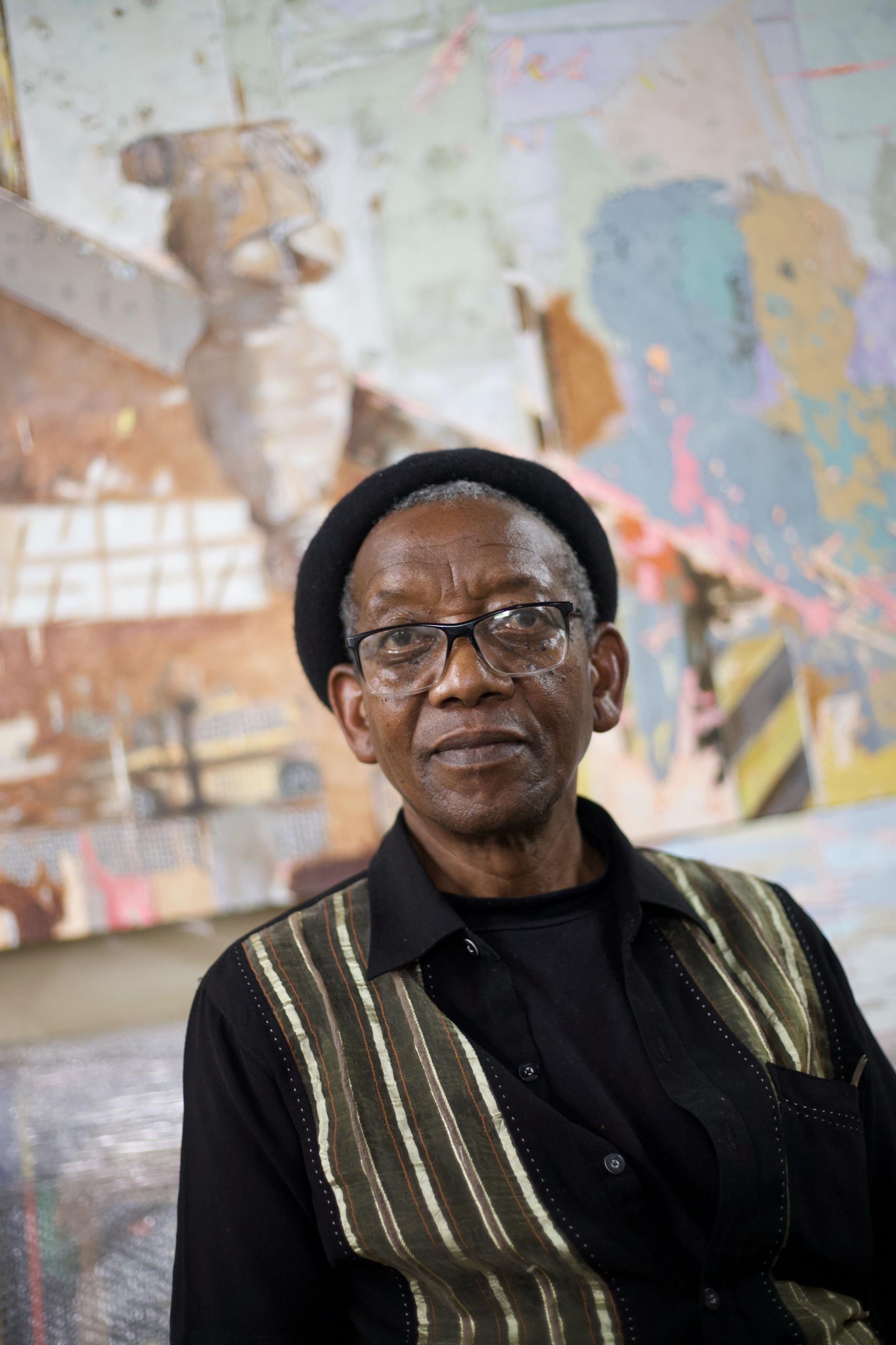
There are artists who depict a city, artists who interpret a city, and then there are artists who seem to inhabit the city so completely that the distinction between the artist, the studio and the urban landscape begins to disappear. Kagiso Patrick Mautloa belongs firmly to the latter category.
As the Bag Factory Artists’ Studios celebrates 35 remarkable years of nurturing contemporary artistic practice in Johannesburg, it is fitting that it should honour one of the institution’s most enduring figures with a solo exhibition that is, in many respects, a portrait of the city itself. Face(t)s of the City brings into focus Mautloa’s expansive artistic practice and his extraordinary relationship with Johannesburg – a relationship cultivated over more than seven decades of observation, participation, memory and creative interrogation.
Mautloa is not merely the longest-standing artist associated with the Bag Factory. He is part of its institutional DNA. His presence is woven into the history of a place that has, since its establishment in 1991, become one of South Africa’s important spaces for artistic experimentation, cultural dialogue and the development of generations of visual artists.
His contribution, however, extends well beyond institutional longevity. Mautloa represents something increasingly rare in contemporary cultural life: an artist whose practice has evolved alongside the city he inhabits, allowing his work to become an archive of Johannesburg’s changing social, physical and psychological landscape.
An artist and a city growing together
Mautloa has lived in Johannesburg since infancy. For more than seven decades, he has watched the city transform from one historical moment to another: from the apartheid metropolis of controlled movement and racial segregation, through the turbulence of political transition, to the democratic city of extraordinary possibility, inequality, migration, entrepreneurship, decay, renewal and reinvention.
Few artists can claim such an intimate longitudinal relationship with a city.
Johannesburg has changed dramatically during Mautloa’s lifetime, but the artist has remained attentive to the everyday life taking place beneath the grand narratives of urban development. His Johannesburg is not simply the skyline, the mines, the highways, the towers or the iconic architecture. It is the woman roasting mielies over a coal-fired brazier. It is the hawker arranging imported goods on a makeshift display. It is the trader negotiating for space on a pavement. It is the commuter, the mechanic, the street vendor, the informal worker and the ordinary citizen navigating a complicated urban existence.
His city is found in the textures of everyday life.
This is perhaps what makes Mautloa’s work so compelling. He does not approach Johannesburg from the outside as an observer looking in. He works from within it. He notices its discarded objects, worn surfaces, sounds, colours, gestures and rhythms. He absorbs these seemingly insignificant fragments and returns them to us transformed.
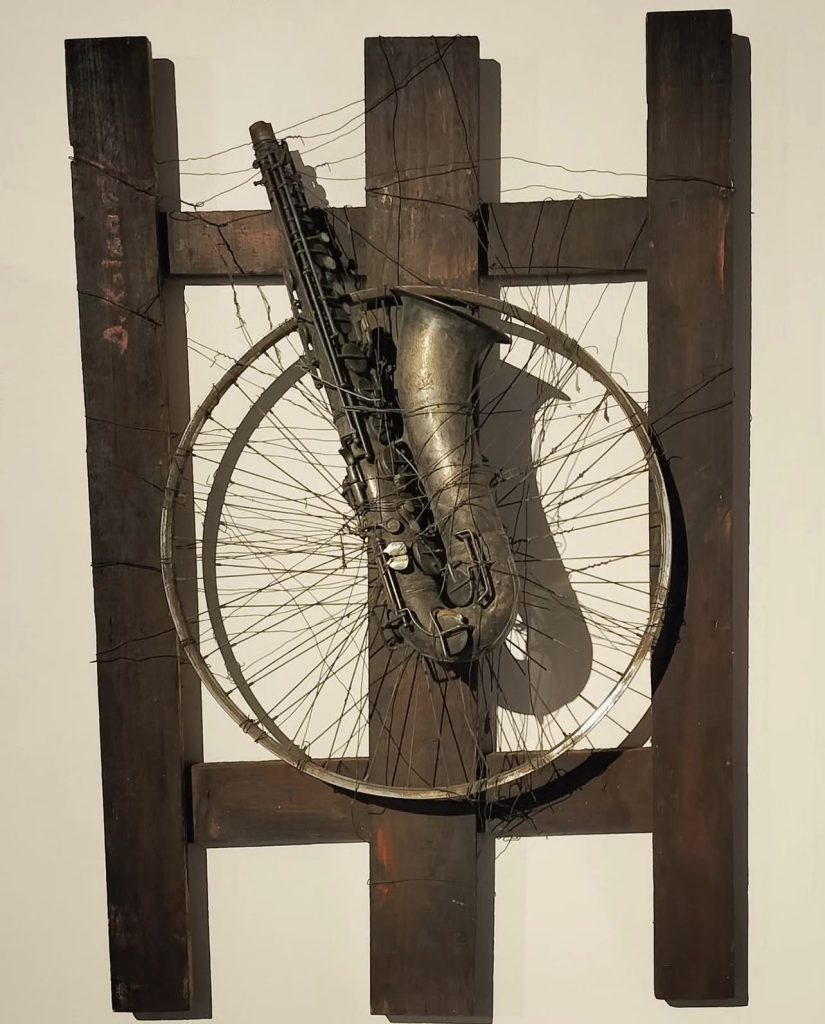
As he puts it: “I find inspiration from the inner city of Johannesburg where found objects are collected both consciously and unconsciously. In the studio, they are given new life through the transformative process of art-making.”
That statement provides an important key to understanding his practice.
For Mautloa, nothing is necessarily insignificant. A discarded object can carry memory. A damaged surface can become a record of use. A piece of fabric can evoke an entire social world. A street scene can contain the accumulated tensions of economics, politics, migration, survival and aspiration.
The artist’s task is not simply to reproduce these realities, but to reassemble them into something that asks us to look again.
Where Johannesburg ends and the studio begins
Perhaps the most revealing aspect of Face(t)s of the City is its deliberate blurring of the boundary between Mautloa’s studio and the city outside.
It is difficult to determine where one ends and the other begins.
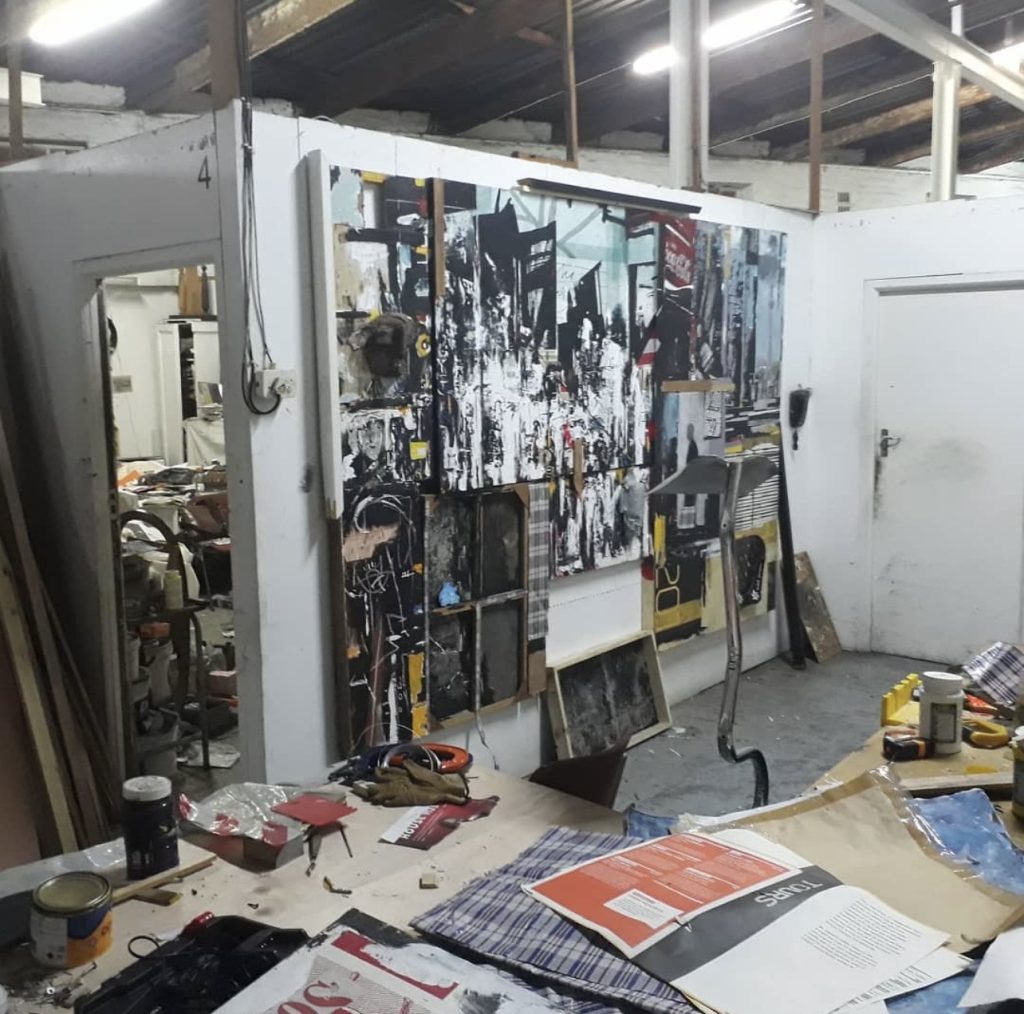
Mautloa moves between these two spaces almost instinctively, carrying observations, memories, materials and found objects across an undefined threshold. The city enters the studio, while the studio becomes a place where the city is dissected, reimagined and reconstructed.
His studio is therefore much more than a workplace. It is an archive.
Works and fragments occupy virtually every available space. Objects that might appear inconsequential to an outsider become part of an expanding vocabulary of artistic expression. The accumulated materiality of the studio mirrors the accumulated experience of Johannesburg itself.
There is something profoundly Johannesburg about this process.
The city is itself a collage. It is constructed from histories that overlap rather than disappear; from buildings that survive alongside new developments; from formal economies existing alongside informal economies; from memories of displacement alongside new patterns of migration; from prosperity and deprivation occupying the same geographical spaces.
Mautloa’s practice reflects this complexity. His works resist neat categorisation because Johannesburg itself resists neat categorisation.
The city as material
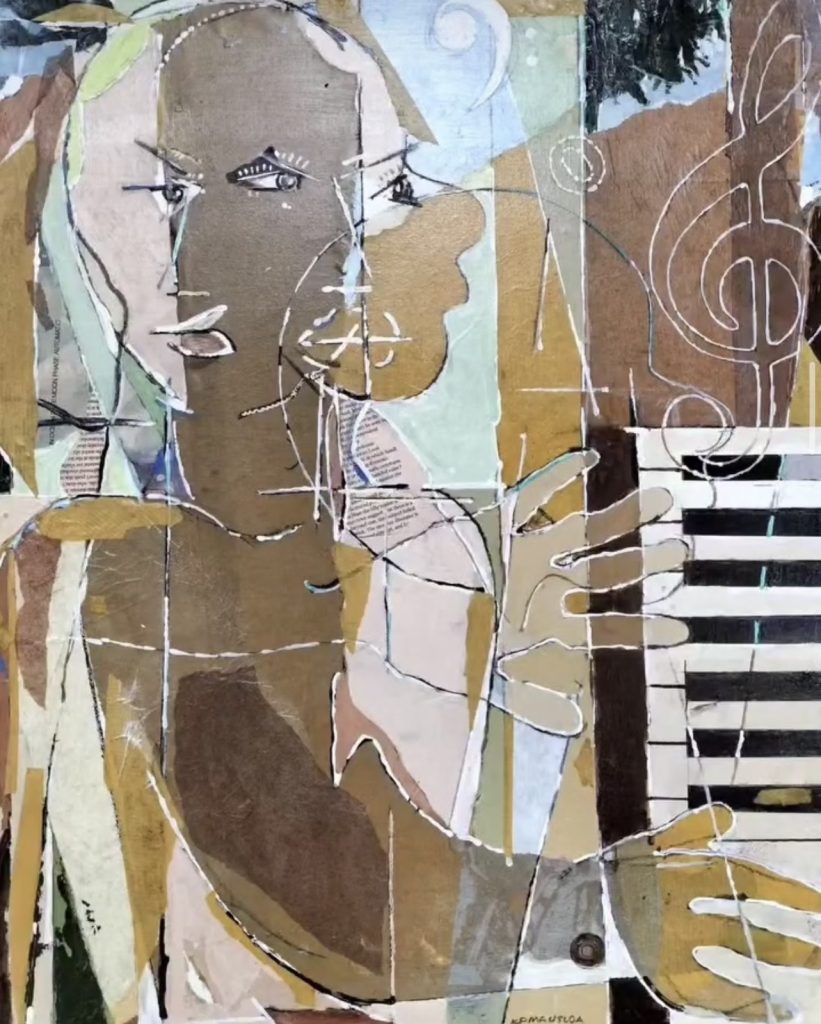
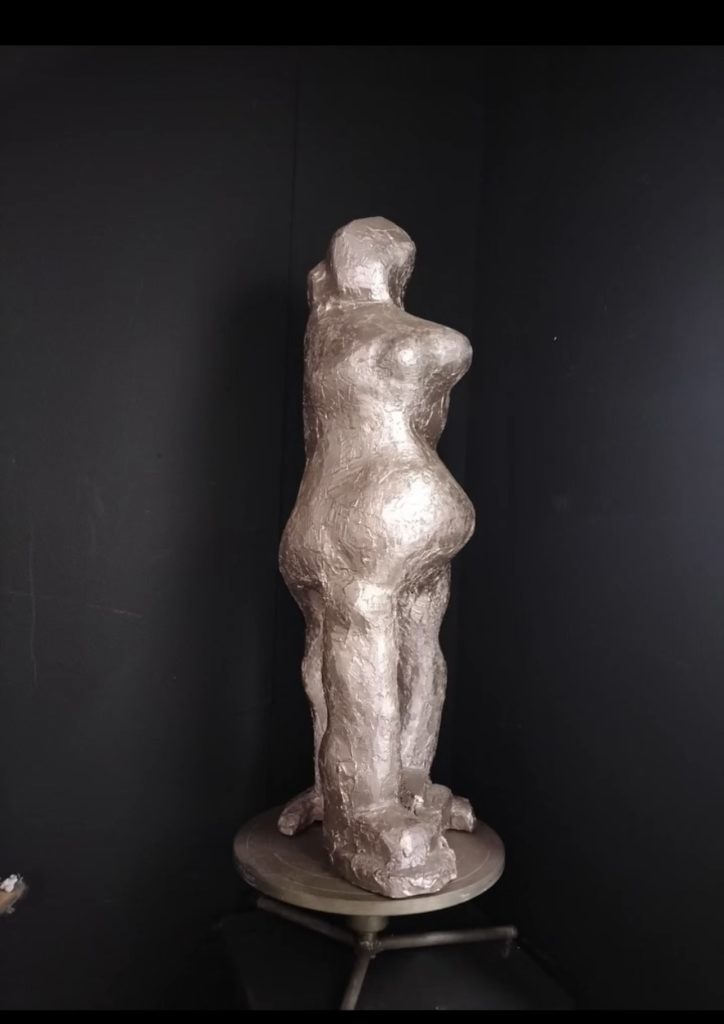
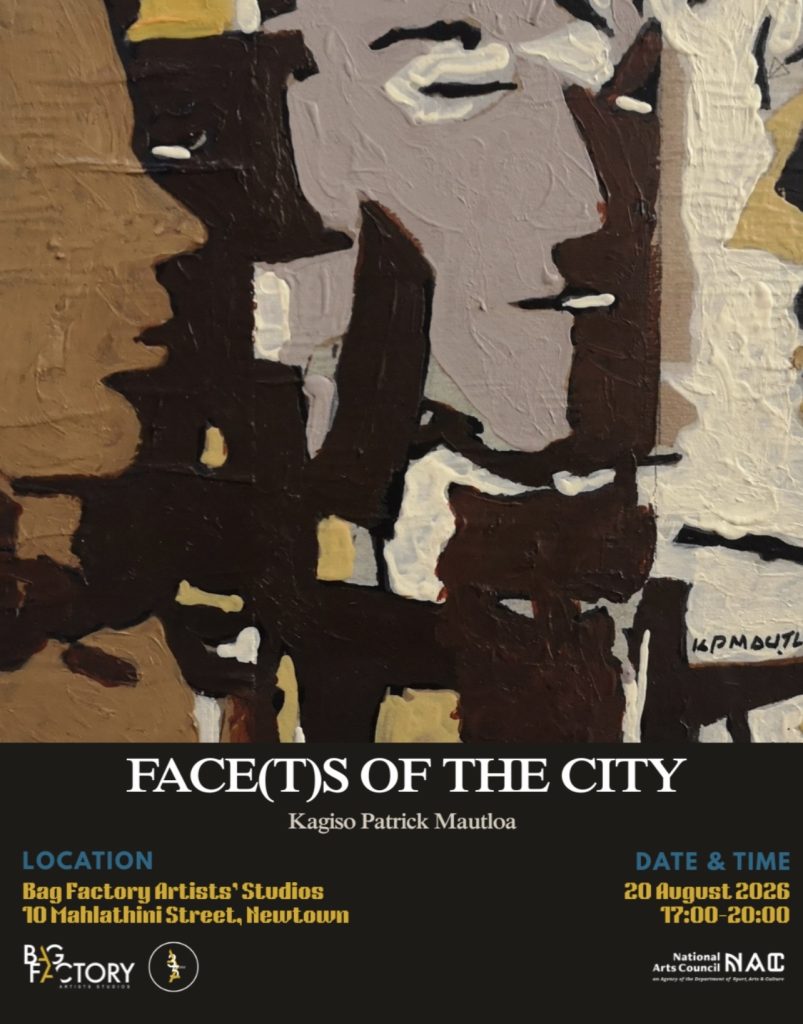
Mautloa’s artistic language encompasses drawing, painting, collage, photography, installation, sculpture and the incorporation of found objects. He is equally comfortable moving between abstraction and figuration.
This refusal to be confined to a single medium or visual vocabulary is significant.
The city itself is constantly changing form, and Mautloa’s practice responds accordingly. Oils and acrylics provide one language; found objects provide another. Collage allows fragments to coexist. Drawing captures gesture and movement. Sculpture gives discarded materials another physical life.
Texture is particularly important.
The surfaces that surround him – the roughness of a well-used cutting board, the worn fibres of an old cotton rag, weathered walls, battered objects and the accumulated marks of everyday use—can become sources of visual fascination.
Where others might see deterioration, Mautloa can see beauty. Where others might see waste, he can see potential. Where others might see an ordinary object, he can see evidence of a life lived.
This transformation is at the heart of his artistic practice. It is also a powerful metaphor for Johannesburg itself: a city that has repeatedly been declared broken, divided, dangerous or in decline, yet continually demonstrates an extraordinary capacity for reinvention.
Beyond the narrative of decline
Johannesburg is often represented through competing narratives of promise and crisis.
On one side is the city as economic powerhouse, cultural capital and engine of opportunity. On the other is the city of inequality, infrastructure challenges, crime, urban decay, unemployment and spatial exclusion.
Both narratives contain truths, but neither is sufficient. Mautloa’s work offers a more nuanced reading.
He is acutely conscious of the labour that built Johannesburg. He recognises the historical restrictions on movement and the ways in which urban space has been used to include some people and exclude others. He understands the precariousness of earning a living in an environment where survival often depends upon improvisation.
But he does not reduce Johannesburg to hardship. His work recognises something equally important: the stubborn determination of its residents to live fully.
People do not simply survive in Johannesburg. They create. They trade. They dance. They make music. They dress with style. They fall in love. They build businesses. They occupy public space. They invent new ways of making a living. They create communities.
This vitality finds expression in Mautloa’s colour palette, his gestures and his sensitivity to music.
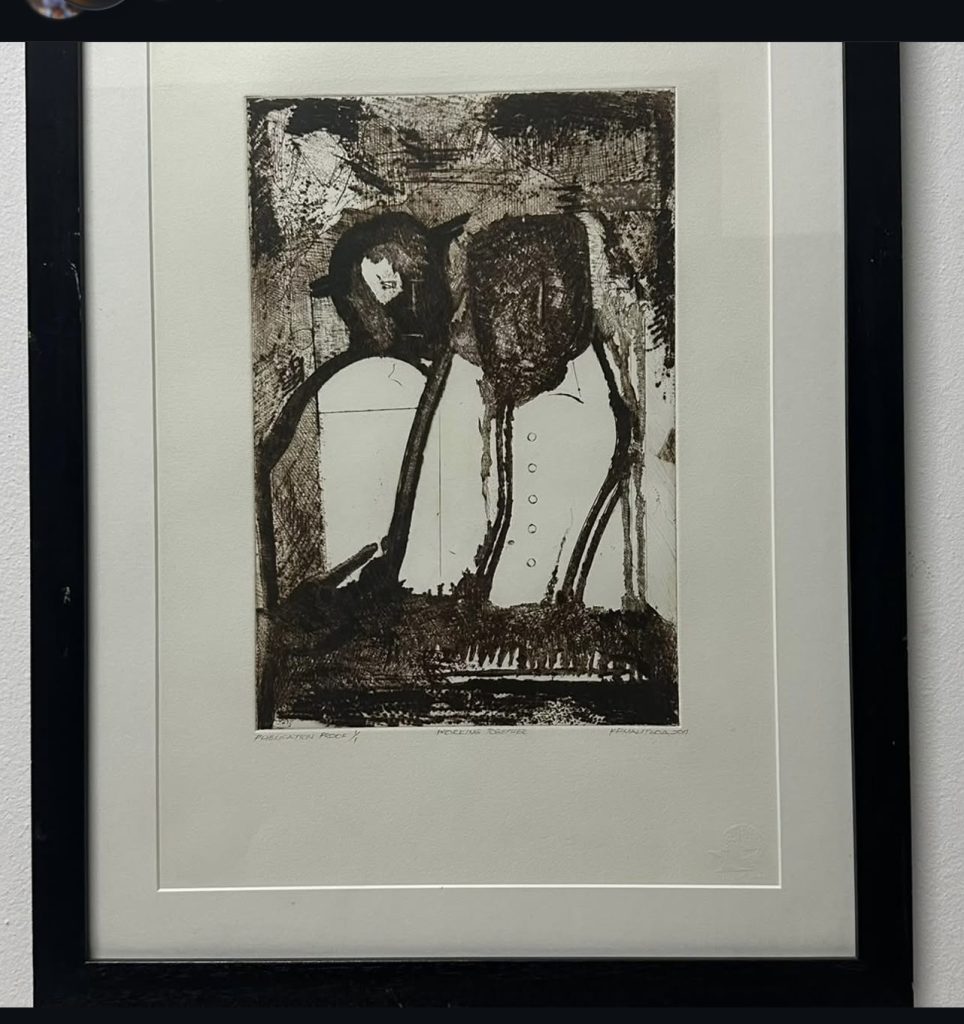
Music is not merely an influence on his work; it appears to operate almost as an underlying rhythm. His marks can suggest movement. His colours can carry the emotional charge of sound. His compositions can feel improvised while remaining carefully considered.
In this sense, his work does not simply show Johannesburg. It listens to Johannesburg.
The Johannesburg of the street
Mautloa’s attention to street life is particularly important because the street is one of the places where the contradictions of the city become most visible.
The street is simultaneously workplace, marketplace, meeting place, transport corridor and theatre.
It is where formal and informal economies intersect. It is where people from different backgrounds encounter one another. It is where goods circulate, languages collide and identities are performed.
The women roasting mielies over coal-fired braziers embody one dimension of this economy of survival. The wholesalers and hawkers selling inexpensive goods represent another. The informal traders with a handful of products displayed on a board speak to an entrepreneurial spirit that often receives insufficient recognition.
These are not peripheral figures in Mautloa’s Johannesburg. They are central characters.
His art restores visibility to people and practices that can easily become part of the urban background. In doing so, it asks a fundamental question: Who gets to define a city?
Is Johannesburg defined by its corporate headquarters and shopping malls, its investment statistics and property developments, its museums and galleries? Or is it equally defined by the people who wake before dawn to prepare food, set up stalls and make a living in its streets?
Mautloa’s answer appears unequivocal. The city belongs to those who live it.
The city as a collection of fragments
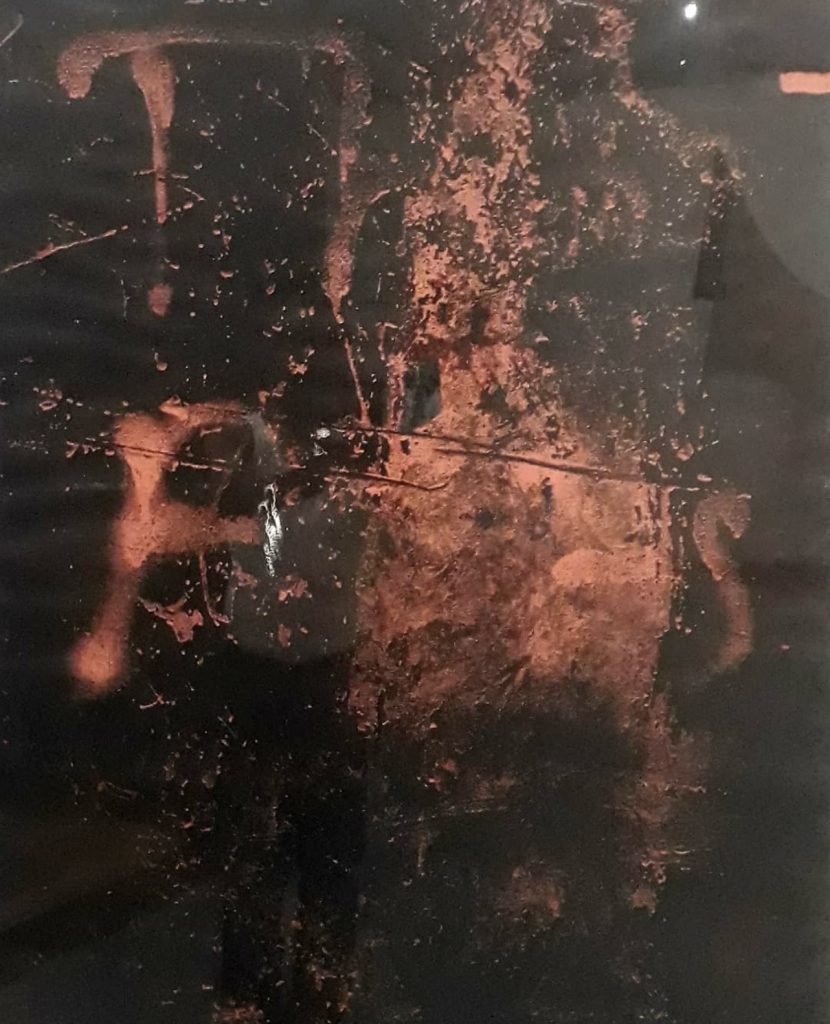
There is a fascinating relationship between Mautloa’s use of found objects and the nature of memory.
Memory is rarely linear. It is fragmented. A smell can recall a place. A sound can resurrect a moment. An object can suddenly transport us decades into the past.
Mautloa’s practice works in much the same way.
A fragment of material can become a trigger for a broader narrative. A surface can evoke an entire environment. A discarded object can acquire another identity through artistic intervention.
His collages and layered paintings therefore operate almost like urban memory maps.
They do not tell a single, linear story. They invite us to assemble meaning from fragments.
This is also why his work rewards close looking.
Like facets of a gemstone catching light from different angles, his works reveal different stories depending on how closely and from what perspective they are viewed. What appears abstract from a distance may reveal recognisable forms upon closer inspection. What initially seems random may contain carefully considered relationships between colour, texture, object and gesture.
The viewer is consequently not a passive spectator. We become participants in the act of seeing.
Face(t)s of the City: turning process into exhibition
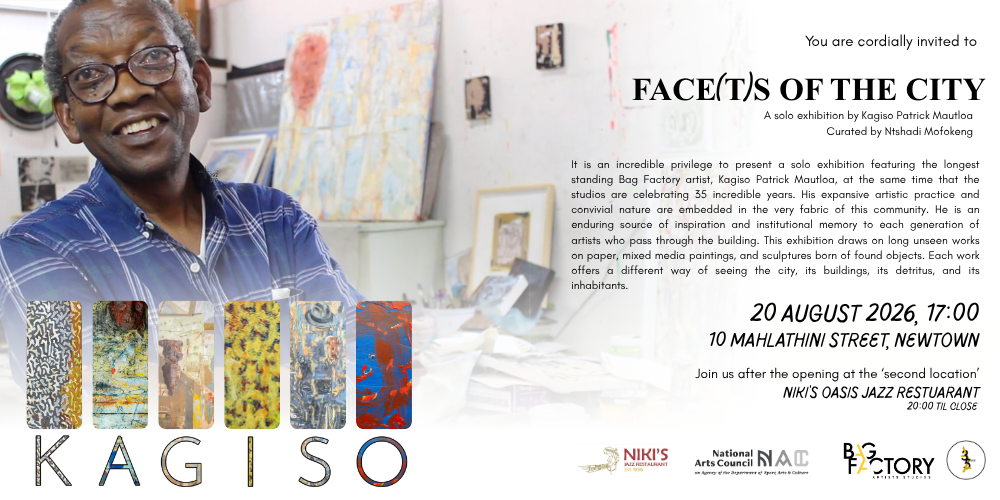
The most exciting dimension of Face(t)s of the City is that it does not merely present Mautloa’s completed works. It presents the process.
The exhibition brings part of his studio into the gallery, creating an environment in which visitors can encounter both finished works and works in progress. Mautloa will actively work on ambitious large-scale paintings within the exhibition space.
This is a significant curatorial decision.
Art exhibitions often present the artist as if creativity happens somewhere else – in an inaccessible studio, behind closed doors, before the work arrives on the pristine white walls of a gallery.
Face(t)s of the City disrupts that convention.
Here, the public can witness the making. They can observe the gestures, decisions, revisions and experiments that form part of Mautloa’s practice. They can engage with the artist while he works and gain insight into how he observes and interprets Johannesburg.
The gallery becomes, temporarily, an extension of the studio. And the studio, in turn, becomes an extension of Johannesburg.
The exhibition therefore becomes more than an encounter with objects. It becomes an encounter with a way of seeing.
An institution and an artist bound together
The timing of this exhibition is particularly meaningful because it coincides with the Bag Factory’s 35th anniversary.
Established in 1991 as the Fordsburg Artists’ Studios, the organisation emerged from the initiative of cultural workers Koloane, Loder and Burnett, supported by a pioneering group of artists that included Mautloa, Sam Nhlengethwa, Thomas Nkuna, Joachim Schoenfeldt, Sophia Ainslie, Mark Attwood, Deborah Bell and Penny Siopis, among others.
Three and a half decades later, the Bag Factory has become an important part of Johannesburg’s contemporary art ecosystem.
More than 120 resident artists have passed through its studios, while more than 320 visiting artists from South Africa, the continent and elsewhere in the world have participated in its programmes.
The institution has provided something that artists require but often struggle to find: space.
Not simply physical space, but intellectual and creative space.
A space to experiment, fail, encounter other artists, debate culture and to develop a practice without having to immediately conform to commercial expectations.
Its contribution to Johannesburg’s cultural landscape is therefore measured not only in exhibitions but in relationships, conversations, mentorships and artistic careers.
The Bag Factory has become an ecosystem of creative exchange.
And Mautloa is one of its foundational inhabitants.
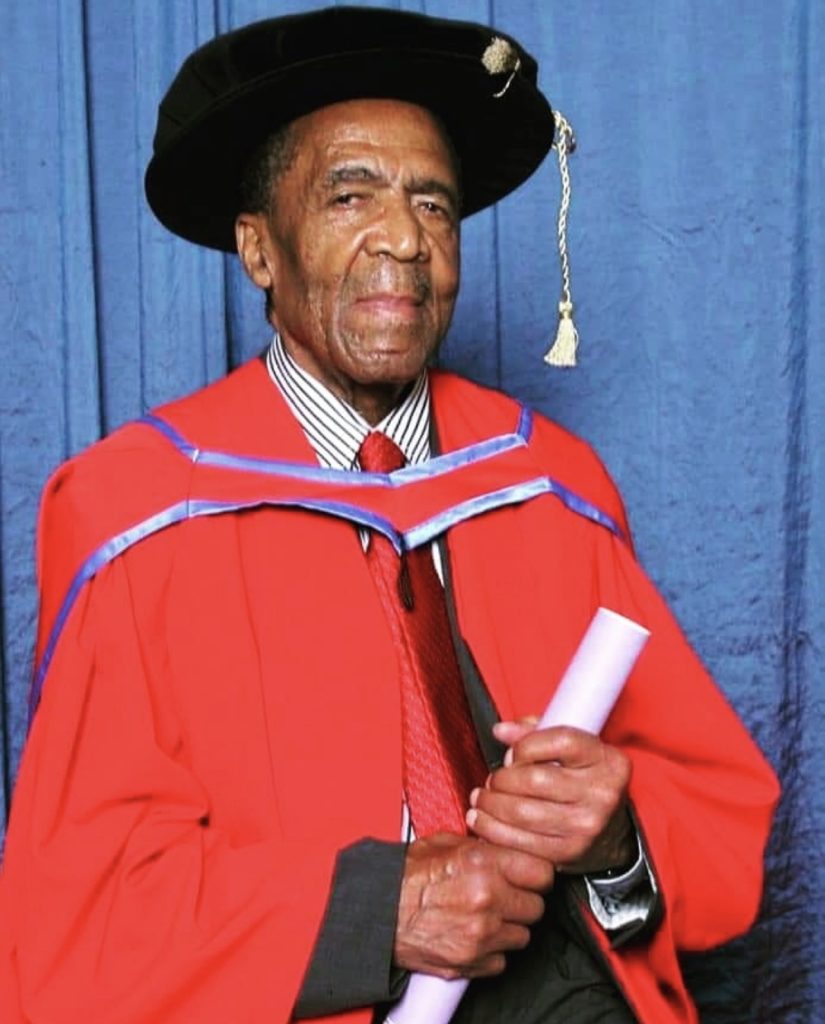
His longevity gives him a unique position within this community. He has witnessed generations of artists enter the building, develop their practices and eventually move into new phases of their careers. He has remained.
In doing so, he has become an informal custodian of institutional memory.
The importance of artistic memory
There is a broader lesson here about cultural institutions.
Institutions often preserve their histories through documents, photographs, catalogues and official records. But institutional memory also resides in people.
It resides in those who were present when decisions were made, when arguments were had, when exhibitions were mounted and when artists were still finding their voices.
Mautloa embodies this living memory. His continued presence connects the Bag Factory of 1991 to the Bag Factory of today. That continuity matters.
South Africa’s cultural institutions have experienced enormous change over the past 35 years. The political landscape has transformed. Funding models have shifted. Technology has revolutionised artistic production and dissemination. New generations have emerged with different questions and different aesthetic languages.
Yet the fundamental need for spaces where artists can create, think and challenge society remains.
The Bag Factory’s 35th anniversary is therefore not simply a celebration of longevity. It is a reminder of the importance of sustaining cultural infrastructure.
A city that refuses to stand still
Johannesburg itself is undergoing another transformation.
The city continues to wrestle with the legacies of apartheid spatial planning while confronting contemporary challenges of urbanisation, inequality, migration, infrastructure and governance. At the same time, new creative economies, cultural movements, neighbourhoods and forms of urban entrepreneurship continue to emerge.
Mautloa’s work reminds us that cities cannot be understood solely through policy documents or development plans. They must also be understood through lived experience. The city is what happens between buildings. It is what happens on pavements, in taxis, at markets, in workshops, studios, street corners, cafés and public spaces. It is the sounds, smells, colours, textures and gestures that collectively create a sense of place.
For an artist such as Mautloa, these everyday experiences become material.
His Johannesburg is therefore neither nostalgic nor purely celebratory. It is critical without becoming cynical, observant without becoming detached, and deeply affectionate without becoming sentimental.
He sees the contradictions. But he also sees the life.
The artist as urban witness
There is a particular responsibility that comes with being a long-term witness to a city.
To witness is not merely to observe. It is to remember.
Mautloa’s work performs this function by preserving fragments of Johannesburg that might otherwise disappear from the official record.
The street trader, the worn surface, the discarded object, the informal market, the urban gesture—all become part of a visual archive.
In this respect, Mautloa is not only an artist. He is an urban historian working through colour, texture, form, material and memory.
His archive is not chronological. It does not seek to provide an authoritative account of Johannesburg. Instead, it offers something perhaps more valuable: an intimate, subjective and continuously evolving record of what the city feels like to someone who has spent a lifetime paying attention.
Looking at Johannesburg again
Face(t)s of the City ultimately challenges audiences to reconsider what they think they know about Johannesburg.
It asks us to slow down. To look at the objects we normally overlook. To notice surfaces. To recognise labour. To see the people who occupy the margins of official narratives. To understand that beauty can exist alongside difficulty, and that decline and renewal can coexist within the same urban landscape. Most importantly, it asks us to understand the city as something alive.
Johannesburg is not a finished object. It is continually being made.
And perhaps that is why Mautloa’s practice remains so relevant. His own artistic process mirrors the city’s condition. He gathers fragments, reworks them, layers them, disrupts them, combines them and gives them another life.
He takes what the city has discarded and asks what it might become. That is a profoundly Johannesburg sensibility.
Thirty-five years, and still making
The Bag Factory’s 35th anniversary provides an appropriate moment to celebrate not only an institution but the people who have given it meaning.
Kagiso Patrick Mautloa is one of those people.
For seven decades, he has lived with Johannesburg, observed it, argued with it, absorbed it and transformed it through his art. For 35 years, he has also helped make the Bag Factory what it is: a community in which artistic practice, cultural debate and human relationships intersect.
Face(t)s of the City is consequently more than a solo exhibition.
It is a meeting between an artist and the city that has shaped him. It is a meeting between memory and the present. It is a meeting between the studio and the street.
And it is a meeting between three and a half decades of institutional history and the continuing urgency of artistic creation.
To enter the exhibition is therefore to enter a conversation with Johannesburg itself.
A conversation conducted through colour and texture, objects and fragments, abstraction and figuration, music and gesture.
A conversation led by an artist who has spent a lifetime listening to the city.
And perhaps the greatest invitation of Face(t)s of the City is simply this:
Look again.
Look beyond the familiar skyline. Look beyond the headlines about decline and disorder. Look beyond the official histories.
Look at the faces, surfaces, objects, movements and stories that make Johannesburg what it is.
For in the hands of Kagiso Patrick Mautloa, the city does not merely become a subject of art. The city becomes the art.
Face(t)s of the City is presented as part of the Bag Factory Artists’ Studios’ 35th anniversary celebrations, with the support of the National Arts Council. The Bag Factory is a non-profit contemporary visual art organisation based in Newtown, Johannesburg, committed to providing infrastructure for artistic experimentation, cultural dialogue, professional development and exchange between South African, African and international artists.
***
The photos are lifted from Kagiso Patrick Mautloa’s Instagram page.
Catch my tribute to bro Pat Mautloa in “Sunset Serenade” – my jazz show on 101.9 Chaim FM – on Sunday, 6 September 2026, from 17:00 to 19:00. Tune into 101.9 FM or stream live from www.chaifm.com
.