
Relations between South Africa and the United States have entered a difficult period. There are disagreements about international affairs, trade, land reform, transformation and the interpretation of events inside South Africa. Some of these disagreements are serious and will not disappear simply because officials on either side would prefer a warmer relationship. That is precisely why the two countries need to see each other clearly.
For those of us who have spent time representing South Africa abroad, diplomacy is partly about ensuring that countries encounter each other as they actually are, rather than as caricatures created by political disagreement. The United States does not have to agree with every South African policy, and South Africa should not expect it to. But disagreement becomes much harder to manage when the starting point is an incomplete picture of the other country.
South Africa has something useful to draw on when thinking about this moment. Our own democracy emerged not because people with opposing histories suddenly developed a common interpretation of the past. It emerged because they eventually accepted that they had a common future. The negotiations of the early 1990s involved people who disagreed profoundly about race, power, land, security and the structure of the state. They did not resolve those differences by deciding that one community had no place in the country. They ultimately produced a constitutional settlement based on the opposite idea: South Africa belongs to all who live in it.
More than three decades later, that principle remains fundamental. It means that an Afrikaner family that has lived and worked in this country for generations belongs here. It means that a farmworker whose family carries the consequences of historical dispossession also belongs here. It means that the young Black graduate frustrated by unemployment belongs here, just as the business owner worried about the direction of public policy belongs here. No one should have to surrender their identity or legitimate concerns to qualify as South African.
This does not remove the need for redress. South Africa cannot wish away the economic consequences of apartheid, nor should it abandon the constitutional task of building a more equal society. Land reform, employment equity and economic transformation will continue to be debated, challenged and refined. Some policies will succeed and others will require reconsideration. That is what happens in a functioning democracy. What we should resist is the tendency to turn every disagreement about these policies into evidence of racial persecution. Policies should be judged on what the law actually says, how they are implemented, whether they achieve their objectives and whether they withstand constitutional scrutiny.
South Africa also has a responsibility to communicate this complexity better. We sometimes assume that our history and the reasons behind our policy choices are self-evident to the rest of the world. They are not. When government does not explain difficult policies clearly, others will explain them for us. When institutions are slow to provide credible information, speculation fills the space. When people with genuine concerns feel dismissed, they naturally look for audiences elsewhere.
This is particularly important in the United States, where debates about South Africa have increasingly included questions about race, land, transformation and the treatment of Afrikaners. Those questions should not simply be dismissed because South Africans disagree with the conclusions being drawn from them. They should be answered. The answer, however, cannot be propaganda. South Africa does not need a campaign telling Americans that ours is a perfect country. It plainly is not. We have serious problems with crime, unemployment, inequality and the performance of parts of the state. As much as the international audience can see these difficulties for itself, they also experience similar challenges.
Credibility comes from being prepared to acknowledge what is wrong while explaining what is often missing from the picture. The same responsibility applies to Washington. The experiences of one South African community cannot reasonably be presented as the total experience of the country. Afrikaners should be heard, but so should the millions of other South Africans whose experiences of crime, inequality, economic exclusion and democratic change form part of the same national story.
This is where Ambassador Roelf Meyer’s recent intervention is particularly interesting. His Afrikaner identity gives him a personal connection to one of the most contentious issues in the current relationship, but he has also been clear that he does not represent one community in Washington. He represents South Africa. That principle offers a useful foundation for rebuilding the relationship.
Washington and Pretoria will not always see the world in the same way. Democracies disagree, sometimes strongly. A durable relationship is not one in which disagreement disappears, but one strong enough to survive it. The alternative is an increasingly transactional relationship in which every disagreement becomes evidence that the other country is acting in bad faith. That would be a loss for both sides because there are practical areas where cooperation remains valuable, from trade and investment to health, education, technology and public safety.
South Africa’s own history offers a reminder that dialogue is most necessary when agreement appears furthest away. The people who negotiated our democratic settlement did not wait until they trusted one another completely before they started talking. Trust was partly created through the process of engagement itself. There is no reason why South Africa and the United States cannot approach their present disagreements with the same maturity. South Africa should be open to scrutiny and prepared to listen. The United States should be willing to engage South Africa in its full complexity rather than through a single political narrative. Neither country has to surrender its principles to achieve this. What is required is something much more practical: a willingness to work from facts, to distinguish disagreement from hostility and to keep talking.
South Africa’s democratic journey remains unfinished. We continue to wrestle with inequality, crime, unemployment and the difficult work of building a society in which the constitutional promise of equal citizenship can be experienced in people’s everyday lives. These shortcomings deserve scrutiny, including from our international partners. They should not, however, become the basis for reducing South Africa to a racial caricature.
If Pretoria and Washington are serious about rebuilding trust, they should begin by dealing with the countries that actually exist rather than the countries constructed in political argument. That means accepting complexity, listening carefully and recognising that mature relationships are tested not by how countries behave when they agree, but by how they manage the moments when they do not.
*** This article first appeared here ***
****
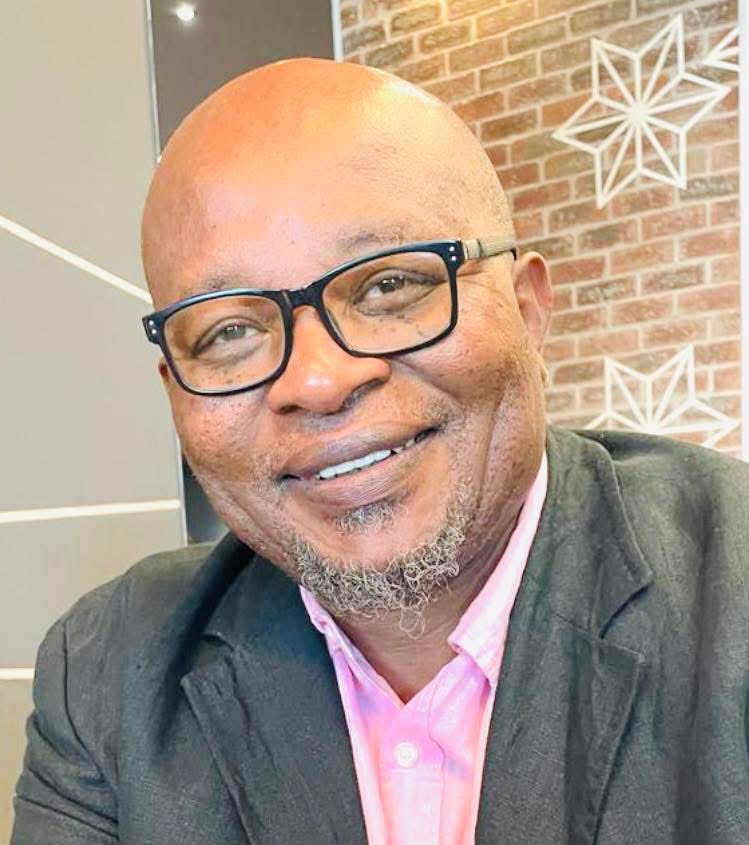
Saul Molobi is a former diplomat, having served as South Africa’s Consul-General in Milan. He is the founding Chairman and Chief Executive Officer of Brandhill Africa.