International Literacy Day, observed annually on 8 September, has a history that goes beyond celebrating the ability to read and write. UNESCO proclaimed the day in 1966, and it was first celebrated internationally in 1967. Since then, it has served as a reminder of the importance of literacy as a fundamental human right and as a foundation for participation in society.
For many of us in South Africa, however, literacy was once much more than an international observance. Before 1994, it formed an important part of our national liberation struggle.
We understood illiteracy and the denial of quality education as part of the broader system of apartheid exclusion. The apartheid education system was deeply unequal, with African children receiving substantially fewer educational resources than white children. Education therefore became one of the key sites of resistance and mobilisation. Organisations such as the South African Committee for Higher Education (SACHED) developed alternative educational opportunities for people who had been excluded from the formal system. SACHED later expanded its work into adult education, community education, educational publishing and programmes linked to the democratic struggle.
This was the context in which literacy interventions such as Learn & Teach Adult Literacy, Learn & Teach Publications (which I worked for from 1988 to 1994), the National Literacy Cooperation and SACHED became part of a broader culture of popular education. Literacy was not regarded merely as the ability to decode words on a page. It was about empowering people to understand their circumstances, participate in society, claim their rights and contribute to the transformation of the country.
In that sense, literacy was political in the broadest meaning of the word: it was about giving people the tools to participate fully in the body politic.
International Literacy Day as a day of reflection
Today, more than three decades into our democracy, International Literacy Day should therefore be more than another date on the education calendar. It should be a day of reflection.
South Africa is confronting a serious reading crisis.
The 2021 Progress in International Reading Literacy Study (PIRLS) found that 81% of South African Grade 4 learners could not read for meaning in any language. The Department of Basic Education has consequently described foundational reading as one of the country’s major developmental challenges, noting that failure to acquire reading skills in the first three grades has consequences for learners’ ability to learn across the rest of their schooling careers.
The crisis is therefore not simply about whether a child can pronounce the words on a page. It is about whether the child understands what those words mean.
This should concern all of us. As parents, we cannot simply blame the rise of social media, smartphones, online entertainment or the digital environment for the decline in reading. These technologies have undoubtedly changed the way children consume information, but we also have to accept responsibility for the culture we create in our homes.
How many of us actually buy books for our children?How many of us have home libraries? We live in increasingly large homes – some of us in double-storey houses – yet our bookshelves are often smaller than our television screens.
How many of us encourage our children to join the municipal or community library in the neighbourhood?How many of us actually sit down with our children and read? And how many of us read ourselves? These are uncomfortable questions, but International Literacy Day gives us an opportunity to ask them.
As cultural activists, we also have to examine our own contribution. During the anti-apartheid struggle, community activists understood the importance of creating spaces where people could meet, learn, read, debate and organise. Community resource centres, libraries, educational projects and cultural spaces were part of the infrastructure of popular education.
Why can we not revive that spirit? Today, democratic South Africa has developed mechanisms through which community organisations can seek support for worthwhile initiatives, including funding opportunities through the National Lotteries Commission. Yet it often appears that the sporting community is far more effective than the cultural community in developing projects and accessing available funding opportunities.
The challenge is not simply to complain about the reading crisis. We must develop bankable interventions to address it.
The role of broadcasting
It is therefore commendable that our broadcasters continue to feature children’s reading and educational programming, particularly in the mornings.
But another question must be asked: how many parents actually encourage their children to watch these programmes?
This is not a new idea for me.
I remember having a similar experience in 1998 when e-TV became aware of the children’s reading project I was running on Saturdays at the Maitisong Art Gallery, which I owned in Yeoville.
That project subsequently developed into a television programme, “Crazy e”. Through the television exposure, the Maitisong reading project was invited to a number of schools in the Johannesburg suburbs. Unfortunately, most of these were what were then referred to as former Model C schools. Nevertheless, it demonstrated what could happen when reading, television, schools and community initiatives were brought together.
The project eventually folded when I closed the art gallery in 2000 and moved to Midrand.
I did not undertake another community literacy initiative of that scale afterwards. I donated copies of my children’s reader, “Thulani’s Magic Water”, to schools attended by my children, and occasionally accepted invitations to read to learners.
At home, I read books to my own children every night.But, looking back, I have to admit that this was not enough.
Returning to the classroom – as a reader
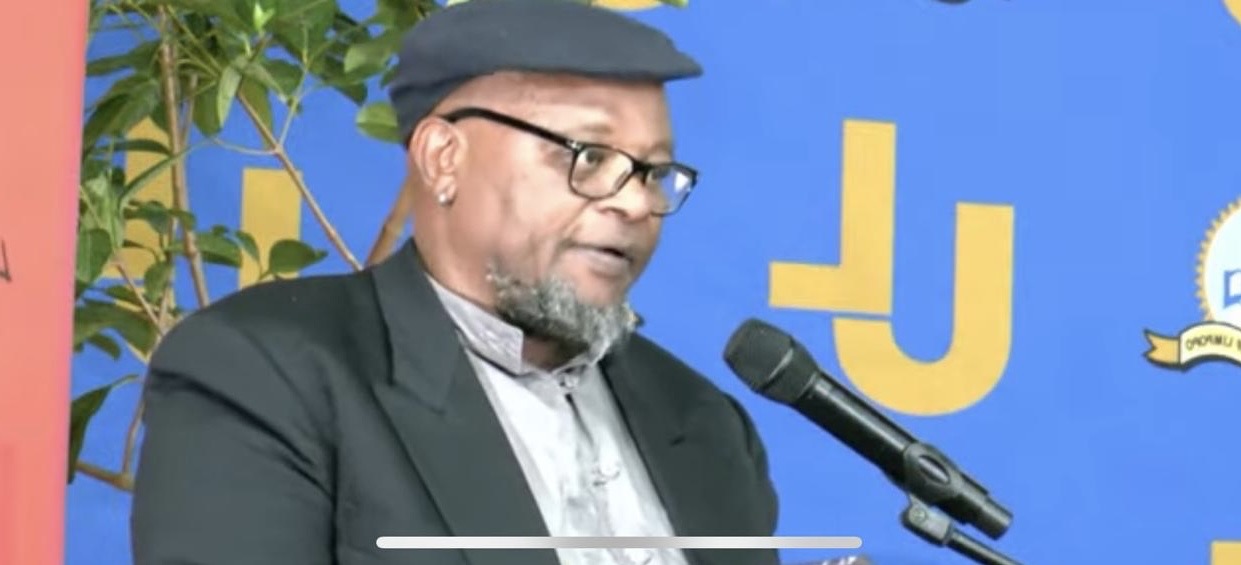
More than 20 years later, last year I received an invitation to read to learners at Henley Preparatory School as part of their International Literacy Day programme.
Of all the invitations I receive during the year, this was among the most meaningful.
I went to read “Thulani’s Magic Water” to the Grade 3 learners. What followed was a lively discussion as the learners engaged with me about the story, its characters and its meaning.
This year, the teacher, Annalisa Daencarnacao, reminded me that they still needed me for International Literacy Day on 8 September.
What humbled me most was that when last year’s Grade 3 learners heard that I was returning, they asked their teacher whether they could join us.
That, for me, is the meaning of literacy.
It is not simply about reading a book. It is about creating a relationship between the reader, the story and the community.
This year I celebrated International Literacy Day with the Grade 2 and Grade 3 learners at Henley Preparatory School in Henley on Klip, under the Midvaal Local Municipality. I read “Malume’s Painting: Reliving the June 16 Legacy”, by Sandile Memela.
Once again, I was struck by the learners’ enthusiasm.
They engaged emphatically with a narrative that connected storytelling with cultural identity and our heroic history. It reminded me that children’s literature can become a bridge between generations — connecting young people with stories about where they come from, who they are and the people who shaped their country.
I encouraged the learners to ask their parents to take them to the Hector Pieterson Memorial during weekends or school holidays.
Because heritage should not live only in textbooks. It must be experienced.
From reading campaigns to reading infrastructure
The continuing literacy crisis means that every cultural activist should be asking what they can do. We need reading campaigns, yes.
But we need more than campaigns. My challenge to NWASA is therefore not merely to launch another national reading campaign. I challenge the organisation to develop a bankable business proposition that can approach the National Lotteries Commission and other potential partners for support.
Imagine establishing a properly equipped community resource centre in one of the under-resourced villages from which one of our legendary writers or cultural figures originates.
The centre could carry the name of that writer. And it could include a children’s library and reading room, bookshelves stocked with African literature, computers and audio-visual equipment, internet connectivity, and spaces for storytelling, writing workshops, cultural programmes and community education.
The proposal should provide for the employment of at least three professional staff members, together with three onsite security guards, so that the centre becomes a sustainable community institution rather than another short-lived project.
This is the kind of intervention that can turn International Literacy Day from an annual commemoration into a year-round programme of action.
Tujenge Afrika Pamoja! Let’s Build Africa Together!
Enjoy your weekend.
Saul Molobi (FCIM)
PUBLISHER: JAMBO AFRICA ONLINE
and
Group Chief Executive Officer and Chairman
Brandhill Africa™
Tel: +27 11 759 4297
Mobile: +27 83 635 7773
Physical Address: 1st Floor, Cradock Square Offices; 169 Oxford Road; Rosebank; JOHANNESBURG; 2196.