
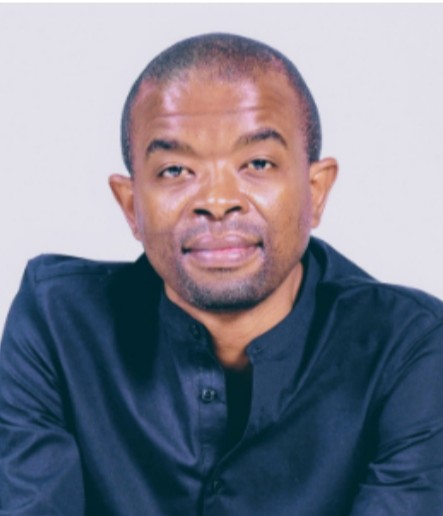
In a recent post I made on social media I stated the following: “We are a people whose bank was cattle, whose calendar was the moon, whose university was the kraal, and whose MBA was learning to protect the village. Our heritage is not behind us – it is the code we forgot that we knew. The tribe of AmaTolo is one of many who are not very visible in South African history and it is our responsibility to re-narrate the story”.
That obviously stirred one reader’s discontented viewpoint. Martin, the concerned reader, argued to the contrary suggesting that promoting heritage and tribes was equivalent to tribalism and had counter development as an outcome. While I respect this perspective, I must differ fundamentally.
As the marketing adage goes, perception tends to become reality, and therefore it becomes necessary to systematically address Martin’s misperception. I thank JamboAfricaonlinefor the invitation to have a constructive discussion that may create an understanding between us in respect of our viewpoints.
At the heart of our discord is a fundamental reading or interpretation of what holds South Africa together or drives it apart.
I am of the view that the proposition that diversity intrinsically drives people apart is empirically false. It confuses demographic heterogeneity as a political conditionfor destructive existence between population groups and a step ladder to Apartheid. The opposite is true.
Diversity does not have to produce fracture. It is unmanaged diversity under conditions of inequality, segregation and instrumentalisation that does. The sociological record demonstrates a consistent pattern wherein contact without common purpose produces withdrawal, while sustained, equal-status contact within a shared institutional framework produces cohesion that is more resilient than that found in homogeneous settings. What fragments a polity is not the existence of distinct tribes, languages, or cultural archives, but three mediating pathologies. These are–
• Competition for scarce resources without a unifying national project that distributes both opportunity and meaning,
• Co-presence without interaction just like the Bantustan model of diversity as administrative separation rather than trialogue and
• The ideological perversion of identity into supremacy.
Here Toyin Falola is decisive. The Nigerian historian, Jacob and Sanger Mossiker Chair in the Humanities at the University of Texas at Austin and recently awarded his 26thhonorary doctorate by the University of Free State in South Africa states: “To fight racism, xenophobia and tribalism, Africa must take a strong unified stance, and greater efforts must be made to enforce human rights laws on the continent.” For Falola, tribalism is not culture. It is a human rights violation on the same continuum as racism and xenophobia. He writes that Africans face “racial discrimination outside their continent, and within it, xenophobic attacks in countries where they are perceived as foreigners, and tribalism from their fellow countrymen.” The mediating pathologies are exactly what Falola calls the weaponisation of identity. I concur with this view and pride on being a member of a tribe is meant to discourage the weaponisation of identity.
THE THREEFOLD IDENTITY OF A SOUTH AFRICAN
Categorising The Trialogue
South Africa’s identity cannot be reduced to a single, monolithic plane, I contend.
South Africa exists, and must be understood, as a trialogue between three distinct yet interdependent levels of belonging. This trialogue is not merely a sociological observation – it is enshrined in the country’s constitution.
• First level is the Tribe, which constitutes our primary locus of identity. This represents our roots, kinship, language, totem, and cultural heritage. It is the first school of belonging, where name, value system and worldview are conferred. The South African Constitution affirms this through Section 30 which guarantees the right to participate in the cultural life of one’s choice, and Section 31 which protects the rights of persons belonging to cultural, religious and linguistic communities to enjoy their culture and maintain their cultural associations.
• Second level is the Nation, which denotes our broader collective identity forged through shared historical experience and cultural consolidation. Whether it is the AmaZulu nation, the AmaXhosa nation, the BaPedination, the BaSotho nation, nation of VhaVenda and others this is a very important ingredient of the South African society. It transcends immediate kinship while retaining cultural distinctiveness and historical continuity. This is given institutional expression in Section 6 of the country’s Constitution, which elevates a minimum of 11 official languages as a recognition of our distinct nations, and in Sections 185 and 186, which establish the Commission for the Promotion and Protection of the Rights of Cultural, Religious and Linguistic Communities to safeguard this plurality.
• Third level is the Country, which is the constitutional state, the Republic of South Africa, that institutionalises our common citizenship, our equal rights under law, and our shared destiny as declared in the preamble to the constitution that South Africa belongs to all who live in it, united in our diversity.
These 3 are constitutionally reconciled in Chapter 12, Sections 211 and 212, which explicitly recognise the institution, status and role of traditional leadership and customary law within the framework of the Republic.
As South Africans, our loyalty is therefore not divisible as itbelongs to all three in unison, as the country’s Constitution itself envisages. It is precisely this diversity in unity that defines the richness and quality of our nationhood. To demand that one be sacrificed as a precondition for the other is to fundamentally misunderstand both nation-building and the constitutional design itself.
Falola And The Trialogue
Falola’s views give this trialogue its anthem. He deliberately quotes Nigeria’s founding creed:
“Nigeria we hail thee,
Our own dear native land,
Though tribe and tongue may differ,
In brotherhood we stand.”
For Falola, this line proves that the post-colonial intention was never to erase tribe and tongue, but to make brotherhood stand because of, not despite, difference. This is unity in diversity in African words, identical to South African Constitution’s preamble’s united in our diversity.
THE CENTRAL FALLACY: TRIBE IS NOT TRIBALISM
Martin’s argument misinterprets the very foundation of nation-building by committing a fundamental category error. Martin conflates tribe with tribalism. This must be corrected if any honest analysis is to proceed.
A Tribe Is Not Tribalism
A Tribe is not tribalism. The distinction is not semantic – it is substantive. Truth is that a tribe is a community whilst Tribalism is a corruption of a community.
A tribe is identity, who you are, where you come from, what you speak, who raised you, who you bury and who buries you. It is the archive of our values, our names, blood, language, land and memory. It is natural anda human. Every person has one. To have a tribe is to belong to something older and larger than yourself. It is the cultural community contemplated and protected by Section 30 and Section 31(1)(a) of the South African Constitution, which affirm the right to enjoy and practice one’s culture without interference. A tribe builds. It is an anthropological and spiritual fact as well as a pre-political reality. It creates obligation, discipline, identity andcontinuity. It says – these are our ways, our people and our standards – live up to them.
Tribalism is not belonging. As Falola crisply puts it, it is the political weaponisation of identity to exclude others, to hoard resources, and to assert superiority. It is bigotry pretending to be identity. It says – our people can do no wrong and their people can do no right. It replaces principle with loyalty. It replaces truth with side-taking. It replaces morality with – is he one of us? It is precisely the form of discrimination that Section 9 of the SA Constitution, the Equality Clause, and Section 31(2), which prohibits the exercise of cultural rights in a manner inconsistent with the Bill of Rights, seek to prohibit.
That is not a play on words. It is a difference in substance.
A man who loves his tribe will hold his own accountable because he wants his tribe to be worthy of love. A tribalist will excuse anything done by his own because accountability feels like betrayal.
A tribe is rooted. Tribalism is rootless – it can attach itself to anything – a party, a race, a hashtag, etc. It needs an enemy more than it needs a culture. Confusing the two is how people are made to feel ashamed of belonging itself. They are told that to love your own is to hate the other. This is absolutely not true. Loving myself does not mean I hate my neighbour.
Truth of the matter is that tribe is not tribalism. To equate the two is to repeat the very intellectual error upon which apartheid was built. The architects of apartheid could not, or would not, distinguish between cultural rootedness and political chauvinism. Consequently, they sought to destroy authentic cultural rootedness in order to control and pervert it for political ends. Any analysis that repeats this conflation, however well-intentioned, falls into the same theoretical trap and inadvertently echoes the logic it claims to oppose.
“Tribe Is Developmental” Falola
Falola reinforces this exact distinction from the Nigerian experience.
At the presentation of his book -Understanding Modern Nigeria-, the communique on his work stated: “Ethnicity always surfaced in all spheres of Nigeria’s operations, saying this was not inherently bad, especially if it could be channelled towards the development of the country.”
And further: “Development-focused initiatives and projects should be carried out in ethnic groups. If we ensure that each ethnic group is effectively developed, Nigeria will eventually be developed. Through ethnic development, there will arise an all-round development of the country.”
In Falola’s view, tribe is developmental whilst Tribalism is anti-developmental. Martin confuses the two – I opine.
THE DISTORTION OF HISTORY: BANTUSTANS WERE NOT TRIBALISM, THEY WERE ANTI-TRIBAL
The contention that an affirmation of tribe inevitably leads us back to Bantustans is historically inaccurate and conceptually flawed.
Bantustans Were Not Created To Protect Tribes
Apartheid did not nurture tribal loyalty – it perverted and instrumentalised it. The Bantustan system was never an expression of authentic tribal self-determination. Let us be precise about what it was in law and in fact.
The Bantustans set up was a state-imposed architecture, enacted through a raft of legislation culminating in the Bantu Homelands Citizenship Act of 1970, designed with a single objective – to strip Black South Africans of their South African citizenship and deny them of any legitimate claim toSouth Africa the Country, while confining us to 13% of the land. That was the antithesis of the trialogue. It was the destruction of the trialogue or ensuring that it never surfaces.
Far from empowering genuine traditional authority, it destroyed that authority. It corralled disparate clans and historically distinct polities into artificial, ethnically-defined administrative units, and made chiefs accountable to Pretoria rather than to their people.
The Trialogue Is Attempting To Revive The Institutions Of Identity
Through that they were inverting the very institutionsrecognised today in the SA constitution’s Chapter 12, Section 211(1) of the Constitution. The current Constitution affirms that the institution, status and role of traditional leadership, are recognised, subject to the same Constitution.
Authentic tribal institutions – such as the Balobedu under Queen Modjadji with its centuries-old rain-making heritage and spiritual custodianship, or the BaPedi under King Sekhukhune with his storied history of anti-colonial resistance – were not empowered by Bantustans. They were systematically undermined. Apartheid feared the real tribe, with its organic legitimacy and capacity for resistance. What it created was the fake, bureaucratised tribalism of the Bantustan.
Paton Called Bantustans a Dangerous Comfort
Alan Paton, the Author of Cry The Beloved Country never supported the Bantustans. He called the policy a “myth, comforting and dangerous.”
In the 1950s, Hendrik Verwoerd’s government promised that black urbanisation would reverse — that by 1976 to 1978, Africans would flow back from the cities to their homelands where they could exercise full political rights. Paton argued this was fantasy. It did not happen and would not happen, because the economic pull of the cities was irreversible and because most urban Africans had never even seen the “homeland” assigned to them. Verwoerd and his policy of apartness were living in Dreamland. It is also a fantasy to suggest that a contrary non-racial trialogue would lead to Bantustanism.
For Paton, the deeper fraud was constitutional. Paton seemed to believe in a common South Africa where all cultural groups shared power under one citizenship. The Bantustan system did the opposite. They excluded Africans from Parliament in Cape Town and Pretoria on the pretext that they had been given self-government elsewhere. Who has been excluded in the current trialogue? Please raise your hand? As he put it in his 1984 analysis, the notable flaw of Botha’s constitution was that it treated African political aspirations as solvable somewhere else, in territories where “almost everything is possible” — while in reality those territories had no economic base, no consent from credible black leaders, and no legitimacy. When I juxtapose this with Falola’s view on development of tribes you can tell that both of them are saying you cannot expect progress if your Modus operandi is based on devaluing tribes or any level of citizenry. South Africa belongs to all citizens. All citizens are comprised of a trialogue of tribes, nations and South African countrymen/women.
Paton distinguished so sharply between legitimate cultural rights and territorial apartheid. Protecting a language, schoolsand community life was legitimate. Carving the country into ethnic reserves to deny majority citizenship was not. It was partition without consent, designed to preserve white supremacy. In fact Paton bluntly puts a definition of apartheid and Bantustans as a policy of “white man’s fear of the Black majority”. The Trialogue is not based on fearing anyone but on inviting everyone to seat around the table and discuss how the country ought to swim going forward.
The Consequences Of The Collapse Of The Trialogue
Similarly, the tragic violence of the late 1980s and early 1990s was not caused by an excess of respect for tribe, nation and country in unison. It was caused by the collapse of the trialogue – when one loyalty was pathologically elevated to override the others, when political actors cynically mobilised nation against country, or tribe against nation, thereby violating what became the unifying imperative of the preamble to the South African Constitution which calls upon all citizens to be “united in our diversity.”
COEXISTENCE, NOT COMPETITION
The profound beauty of the South African reality is that identities co-exist without the necessity of cancelling each other. This is the essence of unity in diversity, a principle constitutionally entrenched.
Examples Of This Co-Existence
Let me make a few that point to South Africa’s ability to balance Co-Existence with Diversity in a Trialogue –
• The existence and legitimacy of the Balobedu under Her Majesty Queen Modjadji does not dismiss, diminish or displace the relevance of the BaPedi under King Sekhukhune in Limpopo. Both are legitimate, both are ancient, both are inherently and equally South African. The one does not exist at the expense of the other.
• Nelson Mandela remained Thembu – a Kingdom in its own right with its own kingship, customs, law and pride as recognised under the Constitution – and that Thembu identity took nothing away from neighbouring polities such as AmaXhosa or AmaZulu. His Thembu rootedness did not make him less of a national icon. Actually it is precisely what rendered his national leadership authentic, grounded and credible. Oliver Tambo and Winnie Madikizela-Mandela remained AmaMpondo of King Faku and that fact should cause no discomfort to anyone who understands our constitutional order. Minister Thulas Nxesi remains iTolo, and he must remain proud of it for his service to the Country is not diminished by his tribal root. It is enriched and deepened by it, for it is in accordance with Section 31(1) which affirms that no person should be denied the right to enjoy their culture.
• One can be Tswana and still be South African. One can be Afrikaans, Venda, Swati, Bomvana, Tsonga, Indian or white and still be South African. Being part of your tribe does not stop you from being part of the country.
• In Scotland, for example, a kilt shows you belong to a Scottish clan. In South Africa, our different clothes(ibheshu, xibelane, umbhaco, seanamarena, leteisi, Miwenda, ijuba, seshweshwe, etc), languages and cultures show which tribe we belong to, but we all still sit together as one country.
• Living together does not mean we must all be the same. South Africa does not try to make everyone identical. It allows each group to keep its own identity while respecting others.
That is what South Africa shows the world. To demand that these leaders abandon their tribal roots as a precondition for national service is to demand that they become rootless. And a rootless leader, stripped of the archive of values and ethic that tribe confers, cannot build a grounded nation.
A CATEGORY ERROR: CULTURAL BELONGING VS. SECESSION
This brings us to another fallacy that pervades Martin’s viewpoint – the conflation of a deep sense of cultural belonging with secessionist projects.
There exists a fundamental, constitutional distinction between living one’s full identity within the South African constitutional project, and attempting to withdraw from that project entirely.
Cultural Belonging
A person celebrating their isiZulu heritage, observing lobola, or honouring their ancestral lineage is practicing identity within the Constitution. Such practice is not only permitted but expressly protected under Section 30 and Section 31(1) of the Bill of Rights, and is consistent with Section 211 which recognises customary law. It is an affirmation of the trialogue, an exercise of belonging that strengthens the Country.
Secession
A project that seeks a KwaZulu-Natal breakaway, or the expansion of Orania and demands for exclusive Afrikaner enclaves with their own currency, flag and discriminatory labour practices, is of an entirely different juridical nature. It is a project of secession. It is a rejection of the founding provisions of Section 1 and Section 3, which establish a single, sovereign, non-racial citizenship and a common destiny, and a direct negation of the preamble which commits us to South Africa belonging to all who live in it.
Why Orania Is Impossible And Approaching Washington For It Is a Perversion?
For former South African President Thabo Mbeki, a tribe is legitimate and Afrikaners are one.
In his African Renaissance view, Africa is made of distinct cultural communities — Zulu, Xhosa, Pedi, Afrikaner and more— each with language, memory and graves, all part of “I am an African.” He defends Afrikaners as Africans, not “pieds-noirs” to be expelled, with a right to Afrikaans, to Afrikaans schools, and to their history as part of African history.
Tribalism is when that identity is perverted into a political weapon. Orania is therefore perversion made geography.
The wish for Orania is impossible in South Africa. You cannot claim to be an African tribe rooted in this soil with graves and language here, and simultaneously demand a piece of that soil where no other African can live. That is not tribe, that is tribalism — an attempt to carve out a volkstaat, a whites-only enclave in a country that has already rejected Bantustans and separate development. No National Trialogue can accommodate a tribe that wants to secede from citizenry.
The trip to Washington by AfriForum/Solidarity in 2025 is the second perversion. When a tribe believes its cultural rights — Afrikaans education, farm safety — are under threat, the legitimate place to raise it is inside the country, in the Trialogue, with evidence, to be solved by South Africans. To run to Washington to invite a foreign power to punish South Africa is to bargain against the country, not to build it. It turns a domestic cultural question into a foreign policy weapon, and confirms that it is not about survival but about privilege seeking external protection.
In Mbeki’s formula, Orania and Washington are the same failure:
• One seeks impossibility on the land – separate state that will never be granted.
• The other seeks impossibility from outside, an American rescue that will never make Afrikaners secure in Africa.
Latest Efforts By The Thabo Mbeki Foundation
This week, the Thabo Mbeki Foundation issued a firm statement on the growing alliance between sections of the Afrikaner lobby and the United States. The Foundation made 3 principled positions clear:
• First, on redress, it stated that the project of historical redress cannot be abandoned. Transformation remains a constitutional imperative and a condition for national reconciliation. No external pressure can nullify South Africa’s obligation to address the legacy of dispossession and inequality.
• Secondly, on truth as the basis for diplomacy, the Foundation insisted that diplomatic relations cannot be founded on falsehoods (bluntly stated as lies). There is no white genocide in South Africa. To suggest otherwise is a fabrication that distorts the country’s reality and seeks to delegitimise its constitutional order. South Africa’s foreign relations must be grounded in verifiable fact, not in lobby-driven myth.
• Thirdly, on historical introspection, the Foundation announced that it will, within the next fortnight, present an introspective monologue on the history of the United States and how America itself has confronted — and continues to confront — the legacy of slavery. This will place the current discourse in proper historical context.
In essence, the Foundation is reaffirming Mbeki’s long-standing position that South Africa’s challenges must be solved by South Africans through dialogue, not through external intervention sought on the basis of disinformation.
So, the Trialogue only works if all tribes come to it — Afrikaners included — but leave tribalism at the door.
Exit Tribalism
The former seeks trialogue – the harmonious coexistence of Tribe, Nation and Country in unison. The latter seeks divorce – the amputation of Country from Tribe and Nation.
To treat them as the same is not analysis – it is obfuscation that obscures rather than clarifies our national debate.
THE PAN-AFRICAN LESSON – NKRUMAH AND NYERERE MISREAD
Finally, the invocation of the Nkrumah-Nyerere debate in contemporary South African discourse is often superficial. It is reduced to a slogan. Understood properly, it is the most instructive lesson we have for our own nation-building dilemma, and it proves the opposite of the point that Martin intended for it to support.
The contending positions were purely a debate on sequencing and legitimacy and was not about whether Africa should unite. The great African leaders were unanimous that Africa must unite but the debate was on how.
Kwame Nkrumah argued for immediate and absolute continental unity. His position was one of revolutionary urgency. For Nkrumah, Africa’s inherited colonial borders were artificial, economically unviable, and designed to perpetuate neo-colonial control. To accept them as permanent building blocks was to legitimise colonialism itself. Therefore, Africa had to unite then under a Union Government, with sovereign power vested at the continental level. To build regional federations first, in his view, was to create a new set of vested interests that would make continental unity permanently impossible.
Julius Nyerere argued, with prescient realism, that Africa required strong, legitimate, cohesive nation-states first, before any meaningful and durable continental unity could be constructed. His position was one of pragmatic legitimacy. Nyerere did not disagree that the colonial borders were artificial. He disagreed on what could be built upon them. For Nyerere, political legitimacy could not be imported from the top down. It had to be organic, rooted in peoples who knew and governed themselves. A continental roof placed on walls that had not been built would collapse. According to Nyerere Africa needed to first consolidate strong, legitimate nation-states, then integrate them into viable regions like an East African Federation, and only then fuse those regions into a United States of Africa. As he famously told Nkrumah, when you set out to build a house, you do not begin by putting on the roof – first you start by laying the foundations. Kindly note that this should not be conflated with Ujaama.
The Organisation of African Unity (OAU) sided with Nyerere at the Cairo Summit in 1964.
The formal opinion is what South Africa must learn from this.
In my considered view, both leaders were right in diagnosis but Nyerere was correct in method. Nyerere correctly understood a sociological law that countries including South Africa may ignore at their own peril – people do not surrender identity to abstraction. They surrender it to a larger identity that respects the smaller one. A person who is told his or her identity of AbaThembu, Balobedu, Indian, AmaZulu or AmaTolo is an obstacle to being African will choose his tribal identity. A person who is told his tribal identity is the very foundation of his South African-ness and his African-ness will proudly be all three.
This is the trialogue applied to the continent. Nyerere did not argue that strong regional identities rendered continental unity impossible. He argued the opposite – that without strong, rooted and legitimate constituent units, any larger unity would be inherently hollow, artificial and destined to collapse.
That is precisely the South African lesson, and it is constitutionally codified. You cannot build a durable Country by demanding that people abandon their Tribe and Nation. You cannot build Africa by asking its people to suffer cultural amnesia and abandon their tribal roots.
When Tribe, Nation and Country sit at the same constitutional table as equals, the Country ceases to be an imposition and becomes a home. That is how you build a house that stands.We must cease apologizing for who we are. We must build with it.
Falola’s final warning for this pan-African lesson is instructive: “The exigency of the independence movement of the post-1945 period compelled the diverse peoples of Nigeria to temporarily eschew their ethnic differences and confront the common enemy, the colonial master.” For South Africa, the common enemy today is not just the colonial master, but inequality and division itself. We cannot eschew our differences. We must, as Falola argues, channel ethnic identity towards development, so that through ethnic development, there will arise an all-round development of the country.
CONCLUSION – THE HOUSE THAT WILL STAND
The question before South Africa is not whether we have tribes. We do – and many. The question is whether we have the maturity to govern them.
The South African Constitution already answers this. Itprotects culture, language and it recognises traditional leadership — all under one sovereign citizenship. It does not ask us to choose between rootedness and common citizenship. It instructs us to hold both.
History has proven what happens when we fail that instruction. Apartheid did not preserve tribe – it destroyed it, replacing living institutions with bureaucratic Bantustans designed to strip citizenship. We must not repeat that error with new actors.
A community that asks to live its language, keep its schools, and honour its dead within South Africa is exercising a constitutional right. A project that demands territory cleansed of other South Africans, its own flag and currency, is not. That cannot be accommodated. It is legally impossible and morally incoherent.
A community that brings grievances to the Trialogue to be tested with evidence is nation-building. A community that bypasses that Trialogue and seeks coercion from elsewhere is not. It outsources a constitutional dispute and converts a cultural concern into an assault on sovereignty.
The path forward is clear. Let the Trialogue sit –
• Tribe as our archive of meaning,
• Nation as our historical consolidation,
• Country as our shared legal destiny.
Being part of Bafana does not make you less of a Kaizer Chiefs or Orlando Pirates supporter, and it is the same with the Trialogue of being Xhosa or Afrikaner and still being South African. The house that will stand in South Africa, whether in the village or on the football pitch, will not be built by asking people to become rootless. It is precisely that root that makes each person capable of belonging to something larger than himself.
So Martin, whilst I respect that we may be holding different views on this, I invite you to
• Convince me and many that it is wrong to opine that we cannot build South Africa by becoming rootless as the Trialogue prescribes
• Expose to me why knowing your heritage or membership to your tribe is an apparatus for Bantustanism instead of a strong pillar to a Trialogue,
• Convince me and many that by belonging and promoting my roots as part of vhaVenda or Tsonga or Tolo or San or English or Zulu I would be betraying the Trialogue of a non racial South Africa.
• Show me why we cannot build South Africa by coming rooted to one table, as equal members of the trialogue, under one Constitution, to solve South African problems as South Africans.