
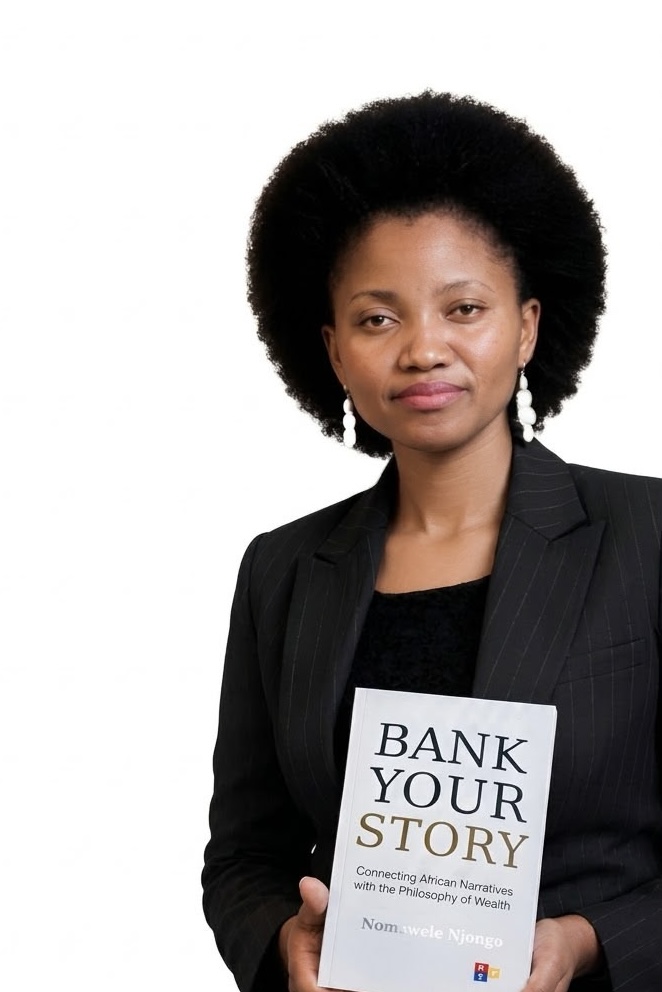
This is a conversation between SAUL MOLOBI, Publisher of Jambo Africa Online, and NOMAWELE NJONGO for his jazz show, “Sunset Serenade”, on 101.9 Chai FM…
Saul Molobi: I am joined by Nomawele Njongo, a seasoned author, storyteller, book publisher and cultural activist. She is here with us in the studio to tell us about herself, how she got into the cultural sector, and her exciting new project, Bank Your Story.
Hello, Nomawele, and welcome.
Nomawele Njongo: Hello, Mr Molobi. Thank you so much for this opportunity.
My name is Nomawele. As you know, Africans traditionally name their children after events. Back in the day, I used to think that my mother was too lazy to name me Nomawele because they chose the name next door!
I am a writer and a publisher. However, my writing journey began long before I started writing my first book. When I was growing up, I think I was about four years old, I was called Umatalana at home, which means “the one who writes”. I used to write even with my forefinger, even when there was no pen.
At home, I was called Umatalana simply because people in the area were not familiar with book writers. They were more familiar with secretaries and administrators working in offices. Hence, they called me Umatalana, and eventually, I became one. I worked as Umatalana, but ultimately I realised that writing was what God had called me to do. I regard writing as a calling.
As I progressed and began initiating various projects inspired by my journey of writing my first book, I learned many things. I realised that we Africans, by nature, were socialised to tell stories, but nobody taught us to recognise their value.
You can’t recognise the value of your story without ownership. The ownership aspect has been left aside, which is why anyone can come along and extract value from the work of creatives in Africa.
Basically, writing my first book inspired many things in my life. It made me realise the importance of telling African stories, and I have since been advocating for Africa to tell her own stories. That has been my philosophy.
Saul Molobi: Just to chip in there, they say that until the lions learn how to write, all the stories of hunting will always glorify the hunters.
Nomawele Njongo: Absolutely! That is something I have also come to realise more deeply.
There was a time when I was in Italy and I encountered a young girl. When she saw me, an African person who looked like her, she was so happy that she could not contain herself. She was walking with a group of other people, but she came straight to me and hugged me.
I then thought about what happens when our children see themselves represented in storybooks. They begin developing a deeper love for reading because they see people like themselves in the stories. They will also be excited to read stories that speak about places they know.
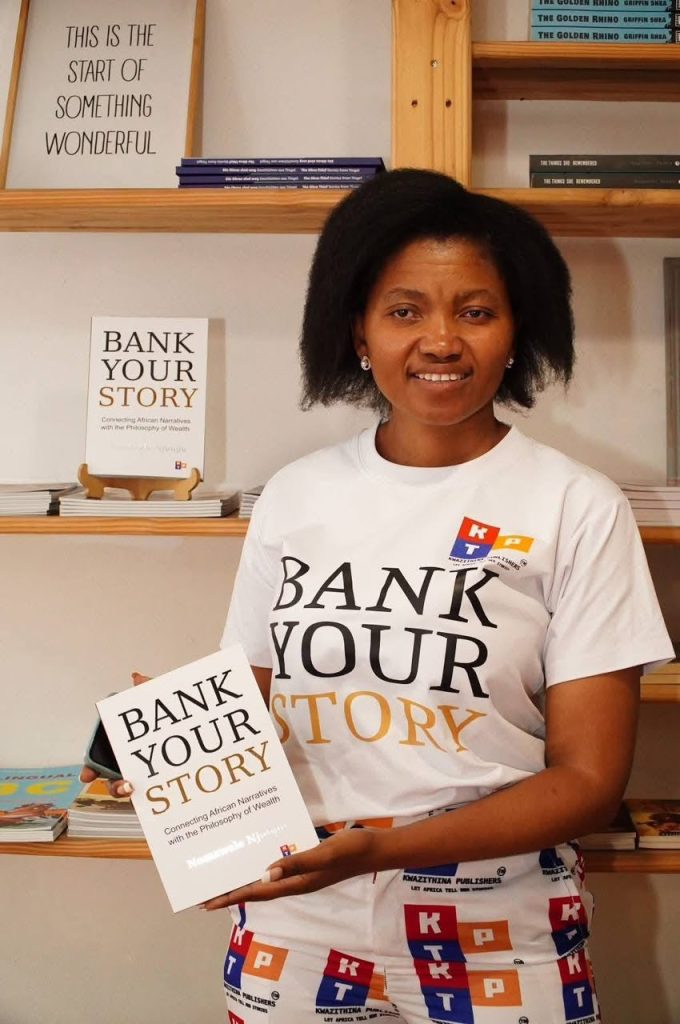
Saul Molobi: By the way, you are in Johannesburg. You arrived this week. Tell us about your programme. Perhaps I should also say that it is such an honour for us that you made time to join us here at 101.9 Chai FM.
Nomawele Njongo: Yes, Johannesburg!
My publisher, Kwanza Tina Publishers, was given two projects by ANFASA: a Siswati book and an isiXhosa children’s book. These books are among the 20 books launching tomorrow under the DSAC Publishing Hub in Pretoria. That is one of the reasons I came to Johannesburg.
However, whenever I come to Johannesburg, I usually have a lot to do. I would say I am killing many birds with one stone!
Saul Molobi: Yes, you are killing many birds with one stone!
Nomawele Njongo: Yes. During the week, I also attended the Poemskop event, which featured poetry, storytelling and comedy.
Saul Molobi: Okay. You just mentioned attending the launch of two books published in indigenous African languages. I also know that you write in English.
How do you reconcile your Pan-African identity, which I admire so much, with your creative output in an indigenous language? Do you also foresee taking the Ngũgĩ wa Thiong’o route in the future, where you translate all your books into indigenous African languages?
Nomawele Njongo: Absolutely! I also advocate writing in African languages, especially Mpondo. My language is not one of the officially recognised languages. It is one of the marginalised languages in my country, but also one of the heritage languages of this nation. I advocate for its preservation so that it does not become erased.
Basically, I have a children’s version of the Dengue story coming out in 2027. However, I will start with the English version. I already have translations, though, because the story was translated before the children’s version was published. It has been translated into isiNdebele, Sesotho and Xitsonga.
Saul Molobi: Wow! Wow!
Nomawele Njongo: All those translations have not yet been published, but we will publish them because I want our children to realise, from a tender age, that their stories, their voices and their treasures must be protected.
Saul Molobi: Your title is quite provocative. It says, Bank Your Story. For me, as a global marketer and brand architect, I also see you saying that telling your story is an investment.
Absolutely! And there is going to be a return on that investment.
Nomawele Njongo: Absolutely! I want to challenge us to move away from seeing stories merely as entertainment or something we tell casually.
I feel that a story is only half done when it is told. A story needs to be owned. Once owned, we must recognise its value. We must acknowledge its value.
Once you understand that it has value, you safeguard it. After safeguarding it, what do you do? You also decide whether to preserve it or commercialise it so you can earn something from it.
Then you pass it on to the next generation. That is how you create a legacy.
Saul Molobi: I know you are not just a cultural activist; you are also a gender activist. Let us look at the themes covered in your stories.
Nomawele Njongo: Basically, my first book was about my life. I regard what I went through as a story shared by many young and older women in our society who experience gender-based abuse, which is a pandemic in our country.
Even now, we are in the 16 Days of Activism, during which we have to promote the message that gender-based violence must stop.
However, I no longer see what I went through as an isolated incident. I see it as a situation in which society is dealing with a problem rooted in men’s socialisation. Men are socialised to use their gender against another gender.
I feel a lot needs to be done, especially by men, because our children need mentoring while they are still young so they can change their behaviour and start seeing things differently.
When children grow up in a society that is socialised to see women differently, often as objects, that attitude becomes entrenched. It also starts in our homes.
If we want to change the situation, we must also change how we parent our children. We cannot expect only the girl child to wash dishes or be told that she belongs in the kitchen, while the boy child is allowed to do whatever he pleases simply because he is a boy.
If we want gender equality, we need to introduce it in our homes. We must not genderise our children when teaching them. When we give them responsibilities or chores, we must give all children responsibilities without attaching gender to those duties. That way, they will carry those values into workplaces and society at large.
Saul Molobi: Yes, I’m sorry. Go on.
Nomawele Njongo: I see that this problem is deeply entrenched because many people believe these behaviours are part of the natural order, whereas they are not. We have accepted them as norms, and everybody thinks this is how things are supposed to be done.
We even think they are traditions. People sometimes use culture to disadvantage another gender.
I am not saying that men do not experience gender-based violence. They do. However, I think part of the problem is that some men are also socialised to believe that a man cannot cry or express certain emotions. As a result, they cannot speak out about these experiences.
I therefore believe society as a whole must join hands to mentor children while they are still young and change the behavioural attitudes in our communities.
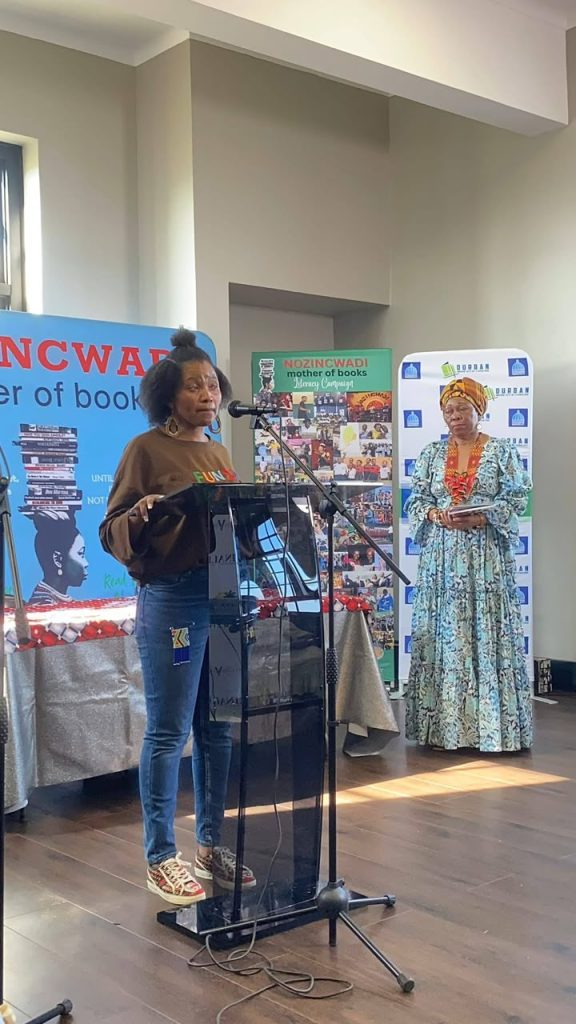
Saul Molobi: I am a student of dialectics, and I believe that culture is very dynamic. Our creative outputs must celebrate who we used to be and who we have become.
We are not simply preaching about going back to our roots. This tree was born, it grew, and we must celebrate that journey. We must acknowledge where we are today, while recognising that, through engagement with other cultures and traditions, we have become different from our forebears.
Our creative outputs must celebrate that evolution.
You are not just an author; you are a cultural activist, and you are very busy. You travel all over the continent. I see you participating in workshops and sharing your activities on social media. Where do you get all this energy?
Nomawele Njongo: I think it comes from realising your passion.
I usually tell people you first have to discover who you are as a person. Once you discover who you are, you need to discover what you are passionate about.
Through my work and my life, I have realised that passion can lead you to your purpose, and your purpose can take you to places you never even imagined. It can also introduce you to people you never thought you would ever cross paths with.
So, I would say it is inspired by self-discovery.
There was a moment in my life when I was working, and then I got retrenched. I was very sad when I lost my job because it happened long before I had discovered exactly what I wanted to do.
I knew I wouldn’t stay employed forever, and I knew that one day I would be a friend. I used to call myself a “future friend” as a young adult in my late teens. I wanted to make an impact.
I remember a poem I wrote as a teenager. It says:
“I am me. The way I live my life can make a difference to the people I know and to the people I may never know.”
I now regard that poem as a prophecy about my life because I am making an impact. I have made an impact on the lives of people I may never even meet.
I also receive calls from people telling me that I inspired them to develop something. These are not only people from my hometown; they are from different places.
Someone from Mpumalanga once asked me, “Are you aware that even when you post something, you have an influence? You can influence us through the way you live your life. You can inspire someone to do something about their own life.”
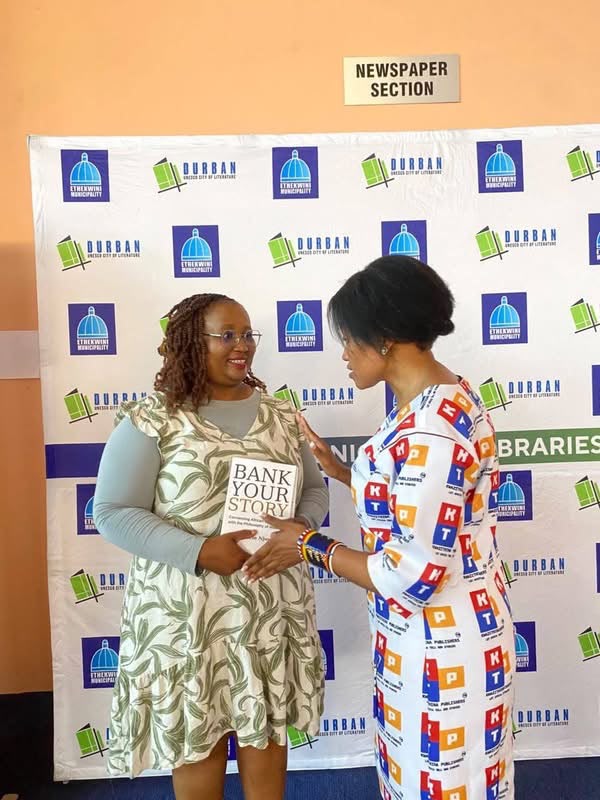
Saul Molobi: One person whose life you have positively impacted is Sis Nomfanelo Kota.
I remember that three or four years ago, she messaged me and told me to meet you. She said, “Saul, there is this young lady you have to meet.” She gave me your number, so I reached out to you and ordered your book.
It was your autobiography, and I thoroughly enjoyed it. It impacted my life. I think I will go back to it because I am still following her instructions!
Nomawele Njongo: She is my sister now, you know.
Saul Molobi: Wow! No, that’s wonderful.
Nomawele Njongo: She is my big sister. But I only met her after I had written my book. We had started speaking before that, though.
Can I tell you a secret?
Saul Molobi: Yes.
Nomawele Njongo: When I was working on my book project, remember that I was unemployed. I sold some shares that I owned to pay for the editing fees and everything else.
After that, I approached some businesspeople I had known since I was young and asked them to contribute towards my book. I wanted to do a large print run because I knew that printing a small number of copies would make each book more expensive.
I approached ten people, but none of them came through. They all made promises, but nothing materialised.
I even met some of them during that period. Eventually, I said to myself, “You know what? I have already completed the project. Anyway, it is already viable because I have paid for everything. The only thing left is printing.”
While I was going through that process, I contacted sisi through her inbox because I knew she loved reading. I told her, “Sisi, next month I am releasing my book.”
When I wrote my book, I kept it quiet. I did not tell people. Even the editor who worked on my book had to sign a non-disclosure agreement. He was shocked that someone would ask him to sign one.
I wanted my story to be known only when I was ready to release it.
You will notice that no editor is credited in my book. The editor was afraid of my story and did not want to be credited as the person who edited it.
Saul Molobi: Wow! Yes, it is quite brave. It is a very brave story to tell.
Nomawele Njongo: I didn’t want anything to be known.
Saul Molobi: Wow!
Nomawele Njongo: That was hilarious. It is so funny. My book does not have an editor credited.
Saul Molobi: You were…
Nomawele Njongo: Because I didn’t want my identity to be known, and I didn’t want my book to be known before its release. That is why I also needed him to sign the non-disclosure agreement.
He told me it was the first time he had encountered such a request in his work because nobody had ever asked him to sign one before.
Saul Molobi: Well, well!
Nomawele Njongo: I understood my story, and I wanted it to be presented simply as art.
About a month before I released the book, I told her I would release it the following month. She congratulated me and said, “Oh, congratulations, sisi wami (my sister)!”
Guess what happened? Shortly afterward, she asked me to send her my bank account details. Within three minutes, I saw that she had sent me some money.
Saul Molobi: Wow! Wow! This is so nice!
Nomawele Njongo: And she was not employed at the time. She had been unemployed for six months.
It was interesting because I had previously approached people who had promised to support me, but none of them came through. I had not even approached her for financial assistance. Then, the next minute, my printing costs were covered, just like that.
Saul Molobi: I am glad you have shared that secret with our listeners.
Let me say your biography is very brave and highly inspirational. I wish every young professional woman could read it so that when they enter the workplace, they do so feeling empowered. Your book will help them do exactly that.
Nomawele Njongo: I was also happy that many men bought and read my book. That made me very happy.
Saul Molobi: Anyway…
Nomawele Njongo: However, I never did enough justice to the book in terms of continuing to promote it over a long period.
The reason is that after writing that book, I received a lot of inspiration, and my vision became very clear. I then found myself unable to promote only one book.
I ended up promoting my initiatives because I started publishing books for other people and doing various things for many people. I felt I wouldn’t be doing enough if I focused only on one book.
So, I shifted my attention towards helping other people.
If I may tell you, the last time I released my own book was in 2021, with Bank Your Story being released this year. I have been busy working on other people’s projects more than my own.
Saul Molobi: Wow! Yes, yes.
Nomawele Njongo: But it was through that process that I learned many things. I then told myself that with Bank Your Story, I was going to make some adjustments.
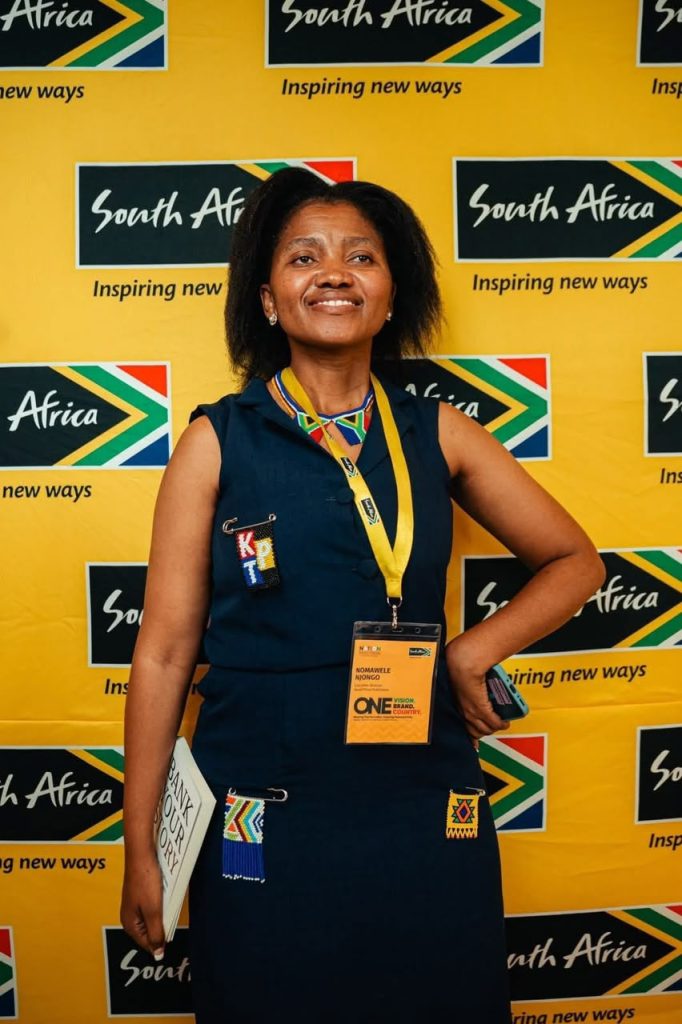
Saul Molobi: I worked with Nomfanelo in the Public Diplomacy Division of the Department of International Relations and Cooperation before she was posted to our United Nations Mission in New York.
At the time, I also went on a diplomatic posting to Italy.
Can you give a message to our listeners and tell them how they can reach you?
Nomawele Njongo: Okay. I want our listeners to know that your story is more than your past. It can become an asset for your future.
If you do not understand the value of what you create, you may never fully benefit from it.
You must move from simply telling African stories to owning their intellectual and economic value.
You can reach out to me on Facebook and TikTok as Nomawele Njongo. Everywhere, I am simply Nomawele. I don’t have other names.
We have also just created our own website for Bank Your Story. It is called www.BankYourStory.africa.
Saul Molobi: Okay.
Nomawele Njongo: Because we are not just selling a book. It is a philosophy.
When you buy the book, you are joining a movement.
We will also have an accompanying book and a corporate edition. The corporate edition will create opportunities for dialogue around interview stories, round-table discussions, lectures, and many other activities.
The book has inspired a much bigger initiative.
People can visit our website. Although we are still developing it, it is already live. My son is the one helping me with the website.
You can already visit it and begin to understand the philosophy we are trying to introduce through this book.
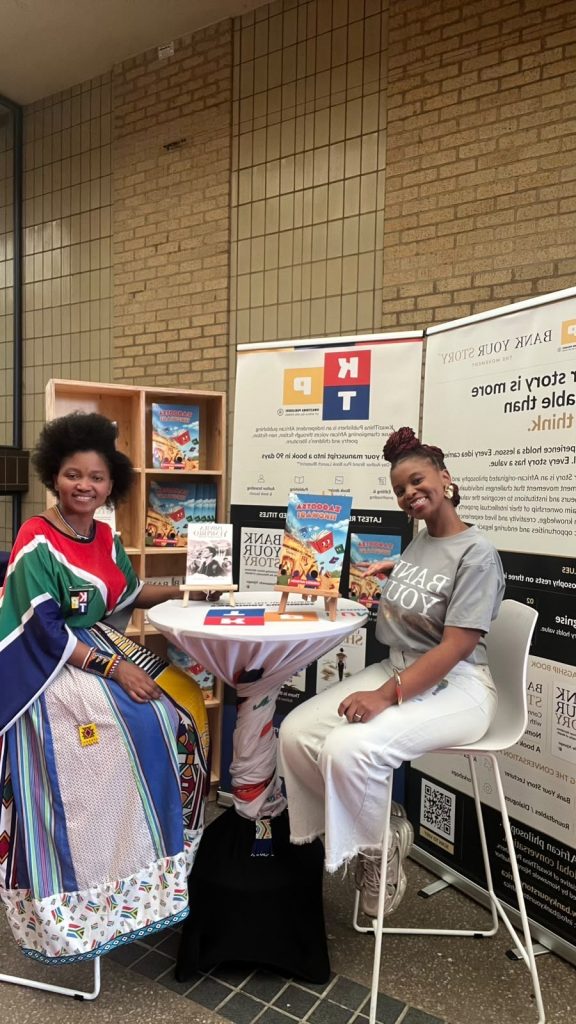
Saul Molobi: That’s wonderful, my dear listener. You can visit her website at www.BankYourStory.africa.
Nomawele Njongo: We also have www.kwazithina.co.za for our publishing activities. However, we decided to create something separate for this project because it is an entire brand on its own.
Saul Molobi: Okay.
Nomawele Njongo: Yes.
Saul Molobi: Can you recommend a song by your favourite musician for me to play? Tell us who the musician is and the name of the song.
Nomawele Njongo: My favourite musician is Jimmy Dludlu. The song is Echoes from the Past. That is the song by him.
Saul Molobi: Wow! What does it do to you? I am putting you on the spot!
Nomawele Njongo: I once attended an event where he was performing. I think it was during the Cape Town International Jazz Festival, when I was working in Parliament in Cape Town.
Saul Molobi: My dear listener, that is indeed a beautiful choice.
Here is a piece by Jimmy Dludlu. Let’s enjoy it, as recommended by our guest, Nomawele Njongo.
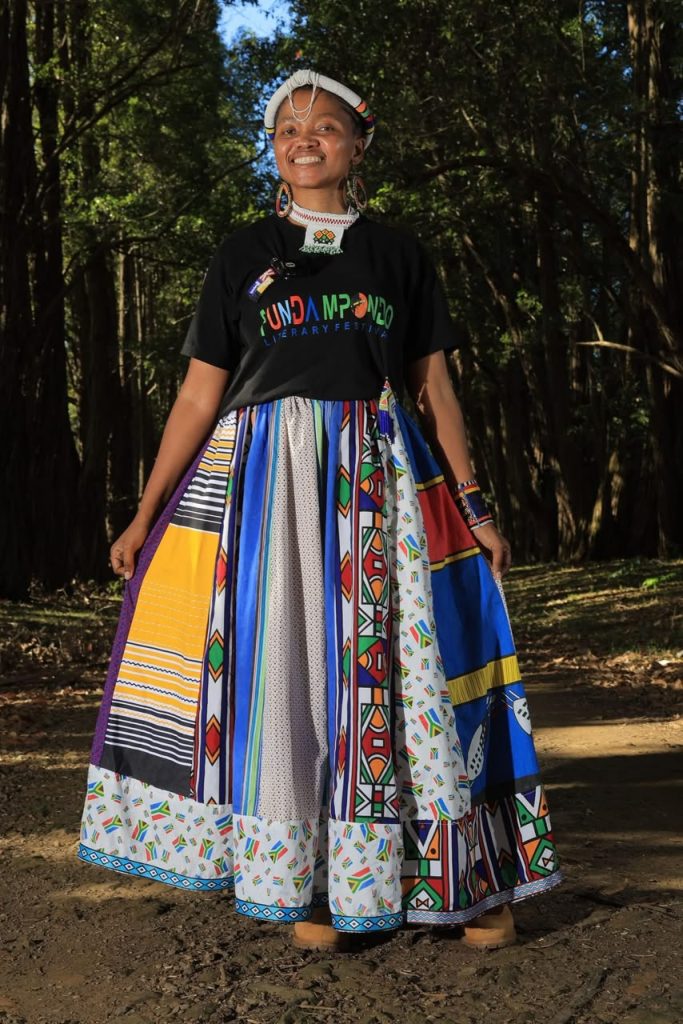
Thank you so much for joining us. By the way, your dress, made from the South African flag, is brilliant. I love it!
Nomawele Njongo: Thank you so much, Saul. I truly appreciate it. Thank you.
Saul Molobi: Okay, thank you so much. Here we go. Let’s enjoy the song.
********
Catch an extract of this interview this Sunday on 101.9 Chai FM by tuning into 101.9 FM or stream live from www.chaifm.com from 17:00 to 19:00