
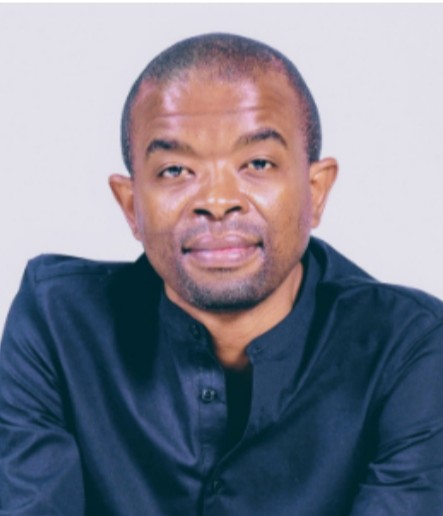
Birthday (Birth Weekend): Ambassador Saul Molobi. We value you.
Africa is not short of men. Africa is likely to run short of fathers.
There is a contradiction at the heart of the modern African township. Walk through Umlazi in Durban, Eastlands in Nairobi, or Parcelles in Dakar and you will observe it in plain sight.
We have boys who can recite, verbatim, the discography of an American rapper, yet cannot recite their grandfather’s clan name. Boys who can navigate three social media platforms simultaneously, yet cannot repair a leaking tap. Boys who have learned how to fight, but have never been taught how to endure.
This is not a failure of youth. It is a failure of transmission.
We have confused biological maturity with manhood. We have assumed that age, a beard, and the ability to produce a child constitutes a man. It does not. What we have produced, in alarming numbers, is a generation of unfathered children.
A boy who has never been fathered cannot become a father. He can only improvise. He borrows his identity from music videos, his conflict resolution from the street, his understanding of work from hustle culture, and his understanding of women from pornography. He is forced to become his own ancestor.
And improvised manhood is dangerous manhood. It is performative. It is fragile. It cannot sustain a household, lead a community, or build a nation, because it has no root.
This is the central crisis of our continent, politely hidden behind the statistics we prefer to discuss: youth unemployment, crime rates, substance abuse, and school dropout rates. These are not root causes. They are symptoms.
The real question is not: What is wrong with our boys?
The real question is: Where are the Bra Sauls?
Where are the elder brothers, the uncles, the fathers, the grandfathers who are supposed to sit a boy down and show him, through daily example, how a man wakes before his household, how he works when there is no applause, how he controls his appetites, how he keeps his word, and how he kneels to pray when his own strength fails?
A nation cannot outsource fatherhood to the state, to schools, or to social media and expect to survive. The initiation school taught us this: a boy becomes a man not by declaration, but by apprenticeship under men.
Africa does not need more programs for boys. Africa needs the return of fathers.
LET US BE UNEQUIVOCAL
Let us be unequivocal, lest this be misread as an indictment of women or an erasure of their labour: Africa stands because African women have refused to let it fall.
When fathers left for the mines, for the cities, for the war, for another household, it was mothers and grandmothers and aunts who stayed. They tilled the field, paid the school fees from a market stall, disciplined with one hand and comforted with the other, prayed all night, and held the roof from collapsing. No honest account of the survival of the African child in the last fifty years can be written without naming the African mother as its central hero. We honour her, and any man who has been raised by a strong mother knows the debt is unpayable.
But honouring women does not absolve men. To praise the mother who stayed cannot become an excuse for the father who left. And this is precisely what we have done — we have celebrated female resilience so loudly that we have allowed male abdication to become normal. We have applauded women for carrying double burdens while quietly permitting men to carry none.
This piece, therefore, chooses deliberately to focus on men, not because women are peripheral, but because men are absent from the very place where they are most needed. We are not arguing that women have failed. We are arguing that women cannot father boys into manhood alone, and they were never meant to. A mother can teach a boy how to respect a woman, but only a present man can show him how a man is supposed to do it. To focus on men here is not chauvinism. It is accountability.
THE DEBT: WHAT AN AFRICAN PARENT OWES A CHILD
In the Western liberal tradition, fatherhood has been reduced to a single metric: provision. Did he pay? Did he provide? If the answer is yes, the duty is considered discharged.
Our ancestors demanded more, because they understood more. An African father did not simply owe his child support. He owed him three sacred debts. And until these debts were paid, the child was not considered raised.
The First Debt: Identity
The foundational question every African child was entitled to have answered was not “What do you want to be?” but “Who are you, and whose are you?”
Who is your clan? What is your totem? What does your surname forbid you from doing? What mountain does your family come from? What cow did your grandfather slaughter when you were born?
A child who cannot answer these questions is spiritually homeless. And a homeless child will accept any identity the street offers him. If you do not give him a name, the gang will. If you do not give him a clan, the tribe of drugs will. If you do not give him a totem, he will tattoo a foreign symbol on his arm and call it belonging.
Identity is not a luxury. It is immunisation.
The Second Debt: Formation
The second debt was not instruction, but formation. “Let me show you how a man lives.”
In our tradition, manhood was never an age. It was a curriculum. It was a daily apprenticeship in the mundane disciplines that forge character:
How to control your anger when you have the power to destroy.
How to work diligently when no one is watching.
How to keep a promise even when it costs you.
How to sit with elders and listen more than you speak.
We did not tell boys to be men. We showed them, consistently, over years. Today we have inverted this. We tell boys to “behave” while they watch men misbehave. We have outsourced formation to TikTok and to peers equally unfathered.
The Third Debt: Inheritance
And this inheritance was not primarily money. Before we inherited houses and cars, we inherited a code.
A code that taught that a man’s word is his bond, and when his bond breaks, he breaks. A code that taught that every woman in your village is your sister and deserves your protection. A code that taught that land is not owned, but borrowed from your grandchildren, and therefore cannot be sold for short-term pleasure.
We have defaulted on all three debts. This is not anecdotal.
Statistics South Africa’s General Household Survey reports that over 60% of South African children grow up without their biological father in the home.
In urban centres across Kenya and Uganda, the figure hovers around 50%.
Across the continent, the pattern repeats — driven by economic migration that forces a man to live 600 kilometres from his children to feed them, by conflict, and by a new culture of absentee provider-fathers who believe a monthly transfer can replace a daily presence.
We have not just lost fathers from homes. We have lost identity, formation, and code from a generation.
THE BLUEPRINTS WE IGNORED: GREAT AFRICAN FATHERS
We do not need to invent African fatherhood. The West does not need to teach us. We just need to remember it. The archive of this continent is full of Bra Sauls — men who understood that to father a child is to father a nation.
Nelson Mandela, South Africa — The Father Who Wrote From Prison
The world knows Madiba the statesman, the icon of reconciliation. His children knew a different Madiba: the teacher.m
From Robben Island, with censored paper and a warder watching his pen, he did not write to his daughters about politics or strategy. He wrote about character. He instructed them to study diligently, to respect and protect their mother, to understand that courage is not the absence of fear but the conquest of it.
He was absent by force, but present by intention. He fathered through letters when he could not father through presence. It is the inverse of our modern tragedy, where many fathers are absent by choice and present only by monthly transfer.
Julius Nyerere, Tanzania — Mwalimu, The Teacher-Father
Julius Kambarage Nyerere is remembered by history as the father of a nation, but his more difficult and more deliberate fatherhood was exercised at home.
As President, he had access to the levers of wealth that have made the children of many African leaders oligarchs. He refused them. He left his children no estates, no companies, no tenders, no offshore accounts in their names. In a continent where political power has been routinely converted into familial capital, this was not naivety. It was philosophy.
What he left them instead was Ujamaa — his principle that a person is a person only through other people. That wealth is not what you accumulate, but what you share. That service is not a path to leadership, but leadership itself.
To ensure this was not an abstract slogan, he enforced it as curriculum. He insisted that his own children farm with their hands in the same soil as their neighbours. He insisted that they speak Kiswahili correctly, without shame and without the colonial affectation that equates eloquence with English. He insisted that they serve first, and that any authority they might one day hold would have to be earned through that service.
He understood the distinction our generation has completely lost: Any man, through luck or corruption or diligence, can leave his son money. It takes a father to leave him a worldview. Capital can be spent, stolen, or mismanaged in one generation. Conscience, once formed, becomes an inheritance that no economy can devalue.
Thomas Sankara, Burkina Faso — The Captain Who Fathered With Discipline
Thomas Sankara was assassinated at 37. At the time of his death, he was a father to two young sons and a father to a revolution. He held both forms of fatherhood to the same standard.
He understood a truth that eludes most liberation movements: that a revolution without masculine discipline is not a revolution at all. It is simply violence changing hands. If the men who take power continue to dominate their wives, exploit their juniors, and live extravagantly while preaching austerity, then nothing has been liberated except their own appetites.
Therefore, he legislated private virtue as public policy. He banned ostentatious weddings and funerals for government officials, understanding that a state that cannot restrain its own celebrations cannot restrain its own theft. He sold the presidential Mercedes fleet and drove a modest Renault 5, not as a populist stunt, but as a fatherly lesson to a nation of young men that leadership is not consumption.
And he spoke to Burkinabe men directly and without apology. He told them plainly: “You cannot be a revolutionary and beat your wife. You cannot be a comrade and humiliate your sister.”
In that single sentence, he was correcting a millennia-old lie about manhood. He was modelling the most endangered truth about masculinity in our time: that true manhood is not measured by conquest, but by restraint.
Chinua Achebe, Nigeria — The Father Who Gave His Children Their Story
Chinua Achebe wrote Things Fall Apart for a reason that was profoundly fatherly, not merely literary.
His children were sitting in colonial classrooms, and the curriculum was doing what colonial curricula were designed to do. It was teaching them that their village had no history before the District Commissioner arrived. That their language was a dialect, their religion was superstition, and that they came from darkness until Europe brought light.
Achebe understood that this is not simply miseducation. It is spiritual orphaning. A child who believes his people began in darkness will believe he must escape his people to find light.
He therefore understood a paternal duty that we, as modern African fathers, have completely abandoned: If you do not give your son his own story, he will live inside someone else’s story. If you do not name him, with his clan name, his totem, his lineage, his moral obligations, the world will misname him, and he will answer to that false name.
He wrote the novel to give his children, and all our children, an archive. To say: We had law before the courts came. We had poetry before your books came. We had a fatherhood before your anthropology came to study us.
Today, the colonial schoolmaster has been replaced by a more efficient colonizer. TikTok now tells our sons who they are. Instagram tells them what a man looks like. Pornography tells them what a woman is for.
This did not happen because the algorithm is so powerful. It happened because the fireside went quiet. We abandoned the evening story, the clan history, the proverb, the correction, the naming ceremony. And when the father stopped speaking, the algorithm replaced him.
Sam Nujoma and Kenneth Kaunda — The Founders Who Went Home
Consider their trajectory against our current understanding of success. Sam Nujoma led Namibia from exile to independence. Kenneth Kaunda led Zambia for twenty-seven years. They commanded armies, addressed the United Nations, hosted and buried presidents.
They knew State House. They knew the motorcade, the salute, the red carpet.
And yet, after all of it, both men did something that is almost incomprehensible to the modern politician.
They went home. Literally.
They returned to their villages and herded cattle.
In an era where a councillor builds a high wall in the city and never goes back, this act is revolutionary. It was not a loss of ambition. It was the final clarification of ambition.
They were teaching their sons, and all sons who would claim their legacy, a final lesson that cannot be taught in a manifesto.
They were teaching that leadership is a detour, not a destination. That you leave the village to serve the nation, but you do not become bigger than the village. You remain a son of the soil. And at the end, if you have not stolen from your people and alienated your ancestors, you will have a home to return to.
The modern African elite teaches his son, by example, that success means escape — escape from the village, from the mother tongue, from communal obligation. Kaunda and Nujoma taught the opposite: that success means you are free enough to return. That you can stand among your people, with no title except old man, with no staff except a herding stick, and still be a man in full.
A son who watches his father herd cattle after presiding over a nation learns that dignity was never in the office. It was always in the soil.
Strive Masiyiwa and Patrice Motsepe — The Modern Bra Sauls
Among Africa’s most successful men, their most counter-cultural act is not the billions they have built. Anyone, with luck and leverage, can build billions.
Their most counter-cultural act is their presence.m
In an ecosystem where wealth has become synonymous with absence — absent from the home, absent from the village, present only in boardrooms on different continents and on private jets between them — these men have made the radical decision to stay home.
Strive Masiyiwa speaks openly, without apology to a secular age, of mandatory family prayers. Of daily devotion as non-negotiable house law. He insists that his children work, that they be corrected and disciplined, that privilege does not exempt them from chores, from accountability, from humility. He has understood that if you do not intentionally father children of privilege, privilege will father them.
Patrice Motsepe, despite mining conglomerates and football clubs, still takes his children to the village. Still insists they know the clan, the totem, the praise name, the burial ground. He knows that a boy with a bank account but no clan name is a rich orphan.
In an age that equates fatherhood with provision — I bought you a house, I paid your fees, I have done my part — they prove the ancient truth: the most radical, most disruptive, most revolutionary thing a powerful African father can do in 2026 is to be present at the kitchen table.
The thread that connects all these men — Nyerere and Kaunda, Nujoma and Sankara, Achebe and Masiyiwa and Motsepe — across ideology, across generation, across country and creed, is simple and uncompromising:
They were present. They were principled. And they had the courage to correct.
THE USURPERS: WHO IS FATHERING OUR BOYS NOW?
Nature abhors a vacuum. Fatherhood abhors it more.
When the likes of Bra Saul leave the gate, the gate does not remain empty. Someone else stands there. Something else enters the house and begins to raise our sons in our absence. If we will not father our boys, they will find fathers.
We must name the usurpers honestly.
The Street Commander
The gang leader is the most consistent, available and effective father figure in many of our communities. We must admit why.
He offers what the absent father did not: belonging. He offers hierarchy, where the boy knows his rank. He offers quick income, where the economy offers none. He offers a clear, albeit brutal, code of loyalty: they never betray each other.
He is a brilliant, destructive mentor. He wakes his boys early, he disciplines them, he teaches them to endure pain and to be loyal unto death. He does everything a father should do, but for the wrong kingdom. And because nature prefers even a destructive order to a vacuum, our boys submit to him.
A boy would rather be fathered by a criminal than not be fathered at all.
The Algorithm
The phone is now the father. And it is the most present father in African history.
It never leaves. It never tires. It is in the boy’s pocket at 2 a.m., raising him while his real father sleeps in another city.
And what does it teach?
On pornography sites, it teaches him that love is performance, that women are bodies to be consumed, not sisters to be protected. On gambling apps like Aviator, it teaches him that wealth is not the result of work but of luck and a lucky spin. On drill music and social media feeds, it teaches him that conflict is not resolved through elders and words, but through violence and revenge.
We have given our sons a father who has no conscience, no elders, and no memory. It raises them without restraint, and then we are shocked when they live without restraint.
The Wallet Father
This is the most socially acceptable usurper, and therefore the most dangerous.
He is the man who believes his fatherhood is discharged by a monthly deposit. He sends school fees, groceries, and data, and considers himself a good man. He is in Johannesburg, his son is in Gqeberha. He is in London, his son is in Accra. His presence is a notification: “You have received funds.”
He is not a father. He is a sponsor.
And his son learns three devastating lessons:
• That love is transactional,
• Tgat responsibility can be outsourced, and
• That presence is optional.
He learns to become exactly like him — a man who will one day pay for his own children from a distance and call it love.
We must say it plainly: Money can never do what presence was designed to do. A transfer cannot teach restraint. A transfer cannot correct. A transfer cannot look a boy in the eyes when he is lying.
WHAT WE OWE — AN UNCOMPROMISING LIST
If we are serious about reclaiming our sons, sentimentality will not be enough. We do not need another indaba, another campaign, or another slogan. We need to return to non-negotiables. These are ancient, they are difficult, and they are not negotiable.
We Owe Them Time, Not Things
A boy does not need your money. He needs your eyes on him.
He needs to know that a man he respects takes him seriously enough to stop, to sit, and to look him in the eye. No phone, no television, no distraction. Just presence.
One hour a week, every week, protected and uninterrupted for a year, will alter the trajectory of a boy’s life more than a new pair of sneakers or a new phone ever will. Things are a poor substitute for time, and our sons know it. We buy them things because we feel guilty about not giving them time. They would rather have the time.
We Owe Them Correction
African culture never confused correction with abuse. It understood the opposite truth: to not correct a boy is to abandon him.
The world is a harsh corrector. If a father does not correct his son in private with love, the magistrate will correct him in public without love. If the uncle does not rebuke him at home, the prison warder will rebuke him later.
Correction is not hatred. Correction is inheritance. It says: I care enough about your future to risk your temporary anger. A boy who is never corrected is a boy who has been told, silently, that he is not worth the trouble.
We Owe Them Work
Every son must work alongside his father. This is non-negotiable.
Whether you are a lawyer or a plumber, a farmer or a CEO, your son must see you sweat and serve. He must see you wake early, keep time, honour a client, finish a task even when you are tired.
Work is how dignity is transferred. A boy who has never worked with his father will seek dignity in the wrong places — in clothes, in girls, in gang affiliation. Work teaches him that manhood is not about consumption, but about production and contribution.
Bring him to the site. Let him hold the tools. Let him fail and try again.
We Owe Them The Story of Who They Are
Tell them their clan name. Tell them what it means and what it forbids. Tell them where your family comes from. Tell them what your grandfather did when he was scared, and what your grandmother prayed when there was no food.
This is not nostalgia. This is navigation.
A boy without roots will be blown by every wind. The street, the algorithm, the gang — all offer him a story. If you do not give him his own story first, he will accept theirs. Identity must be given before the world misgives it.
We Owe Them An Example of How To Treat Women
Your son will never respect women more than he watched you respect his mother.
This is the uncompromising truth we avoid. Gender-based violence does not start in the street. It starts at the kitchen table. It starts when a boy watches his father dismiss, insult, or strike his mother and then offer money as an apology.
If you want to raise a man who protects women, show him how a man speaks to a woman when he is angry. Show him how a man apologises. Show him how a man honours the mother of his children even when the relationship is difficult.
Your son is watching. He is not listening to your lecture about respect. He is watching your hands, your tone, your restraint.
CONCLUSION: THE RETURN
Africa does not need another conference on youth empowerment. We have had enough conferences, enough communiques, enough panels where unfathered men discuss unfathered boys.
What Africa needs is a return. A physical, moral, and spiritual return of fathers to their gates.
The solution to this crisis will not be national. Governments cannot legislate presence. NGOs cannot programme formation. The solution is painfully personal. It is every man, in his own street, making a single, uncompromising decision: I will be there for two boys on my street. Not ten. Two. Mine and one more.
We have been paralysed by the myth of perfection. We tell ourselves we cannot father because we were not fathered well, because we do not have enough money, because we have failed before.
We do not need perfect men. History has never given us perfect men. All our blueprints — Mandela, Nyerere, Sankara, Achebe, Kaunda — were flawed, inconsistent men who chose, despite their flaws, to be present.
• We need present men.
• Men who stay when it is easier to leave.
• Men who teach when it is easier to buy.
• Men who correct when it is easier to ignore.
• Men who work when it is easier to complain.
The boys are still there. They are waiting at the gate of manhood, as boys have always waited.
They are not waiting for an influencer from America to tell them how to be men. They are not waiting for a new government programme.
They are waiting for a man from their own village, with their own surname, speaking their own language, to open the gate and say:
“Wozani, my son. Come. Walk with me. Let me show you how a man holds his temper, holds his job, and holds his word.”
The Bra Sauls are not extinct. They are not a myth of a bygone era.
We could be the Bra Sauls — if we decide to return.
For Bra Saul Molobi, on his birth weekend. A father who stayed at the gate. We value you.