

By Nthambeleni Mufuniwa Gabara
The African Peer Review Mechanism (APRM) newly launched strategic plan 2025-2028 is designed to translate the African Union’s (AU) specialised agency’s mandate into meaningful reforms at both national and continental levels, says APRM CEO, Ambassador Marie-Antoinette Rose-Quatre.
The APRM Continental Secretariat recently convened its second launch of its strategic plan 2025-2028 in Midrand, central Gauteng in South Africa.
This second launch of the 2025-2028 strategic plan marked a renewed commitment to African-driven governance reforms and regional integration in line with the AU’s Agenda 2063.
Ambassador Marie-Antoinette Rose-Quatre reaffirmed the APRM’s core mission to promote inclusive, participatory, and accountable governance across Africa.
CEO Rose-Quatre, described the strategic plan as a forward-looking and results-oriented framework designed to translate the APRM’s mandate into meaningful reforms at the national and continental levels.
“This vision anchors the Plan’s four strategic interventions, which will guide the APRM’s work in the years ahead. Expanding on the significance of these interventions, civil society, particularly youth, women, academia, trade unions, and the private sector, must be central in building transparent and accountable governance ecosystems. This collaborative spirit reflects the AU’s principle of African solutions to African problems,” she said.
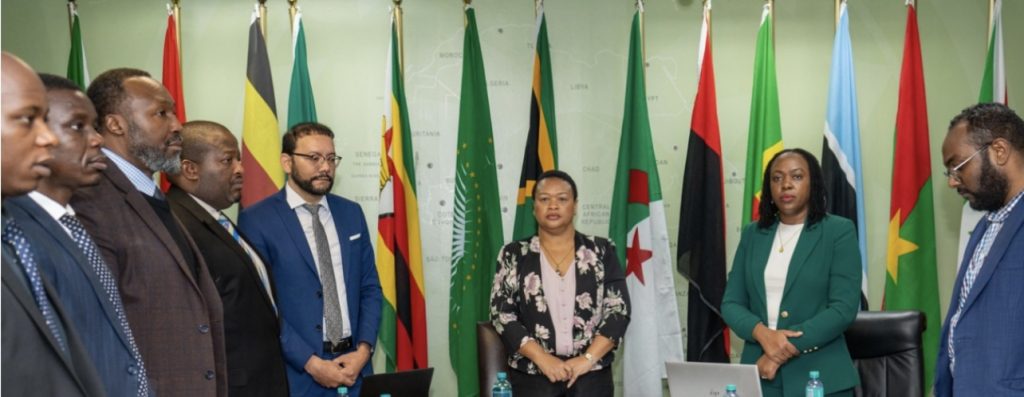
Her sentiments were echoed by Mr Damien Thesee, Chief of Staff and Acting Director of Operations, who explained that APRM’s new leadership is geared towards revitalising dormant structures, strengthening internal systems, and securing the ‘Universal Accession’ of AU member states.
Echoing the emphasis on institutional coordination, Ms. Diana Demba-Mutondo from the Country Reviews and Assessments Directorate added her voice with emphasis on institutional coordination and further highlighted plans to conduct five country reviews in 2025.
She stressed that National Governing Councils (NGCs) are indispensable for ensuring transparency, implementation, and public accountability.
Acting Director of Governance and Specialised Reporting, Dr McBride Nkhalamba, underscored the importance of knowledge production and strategic communication, using tools such as the African Governance Atlas, policy briefs, and thematic studies.
He also pointed out his directorate’s contribution through evidence-based insights to inform policymaking and ensure alignment with Agenda 2063 and the African Continental Free Trade Area (AfCFTA).
Representing the Monitoring and Evaluation Directorate, Mr Peter Katwesige, detailed the development of [good] governance early warning tools, updated assessment methodologies, and the Africa Governance Index.
These instruments, according to Mr Katwesige, will help track progress, inform strategic decision-making, and align National Programmes of Action (NPOAs) with both Agenda 2063 and the United Nation’s Sustainable Development Goals (UN SDGs). Mr Katwesige’s Directorate’s inclusive monitoring strategy includes youth engagement and knowledge-sharing platforms as core components to advance accountability and learning.
Mr Constantin Lebogo powerfully articulated the role of communication in linking technical outputs with citizen engagement.
To bridge the gap between technical reforms and public understanding, Mr Lebogo said the APRM will popularise its findings through citizen-friendly formats, interactive platforms, and national dialogues, he indicated.
He also used the platform to announce the launch of the APRM Communicators’ Network, which will standardise messaging across the continent through storytelling, advocacy, and digital campaigns, ultimately increasing visibility and public trust.
To further advance the APRM’s forward-looking vision, Mr Jibril Ibrahim-Kano, Head of the ICT Unit, addressed the urgent need to integrate e-governance across the continent.
He said that while digital transformation presents immense opportunities, significant gaps in infrastructure, legal frameworks, and digital inclusion risk leaving many behind.
Mr Ibrahim-Kano appealed for harmonised legal policies and the responsible adoption of emerging technologies to ensure a digitally empowered and inclusive Africa.
The strategic plan launch, which held virtually was attended by key stakeholders, including representatives from the African Union and its organs, the Regional Economic Communities (RECs), esteemed members from Civil Society Organisations (CSOs), and development partners from across the continent.