
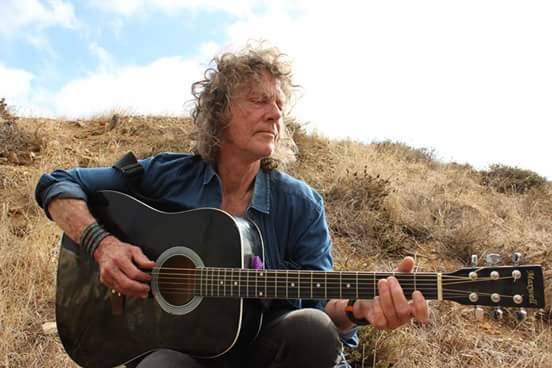
This week Jambo Africa Online’s Publisher and Chai 101.9FM’s “Sunset Serenade” jazz music promoter, SAUL MOLOBI, puts together a collage of his interview with, notes on and podcasts on Bill Knight, a prolific Cape Town’s veteran musician who uses his craft to tell stories which uncovers and shares the truths…
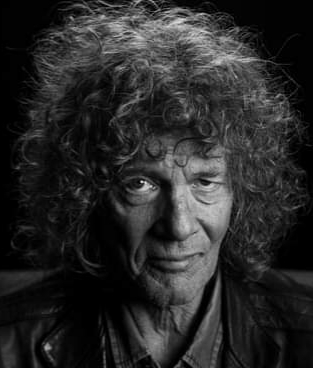
Bill Knight is a South African poet, singer-songwriter, storyteller, weaver of tall tales and short truths, layers his authentic contemporary Cape-Folk music with poetic lyrics of depth and intensity.
He is a Purveyor of Dreams, a “Smous of Songs”.
His “Kaapse Mengsel” Style, written in a characteristic “Bredie” of English and the Afrikaans Vernacular of the Western Cape, provides a personal but universal insight into the not-so-ordinary lives of everyday people, drawing strongly on myth, mystery, legend and folklore.
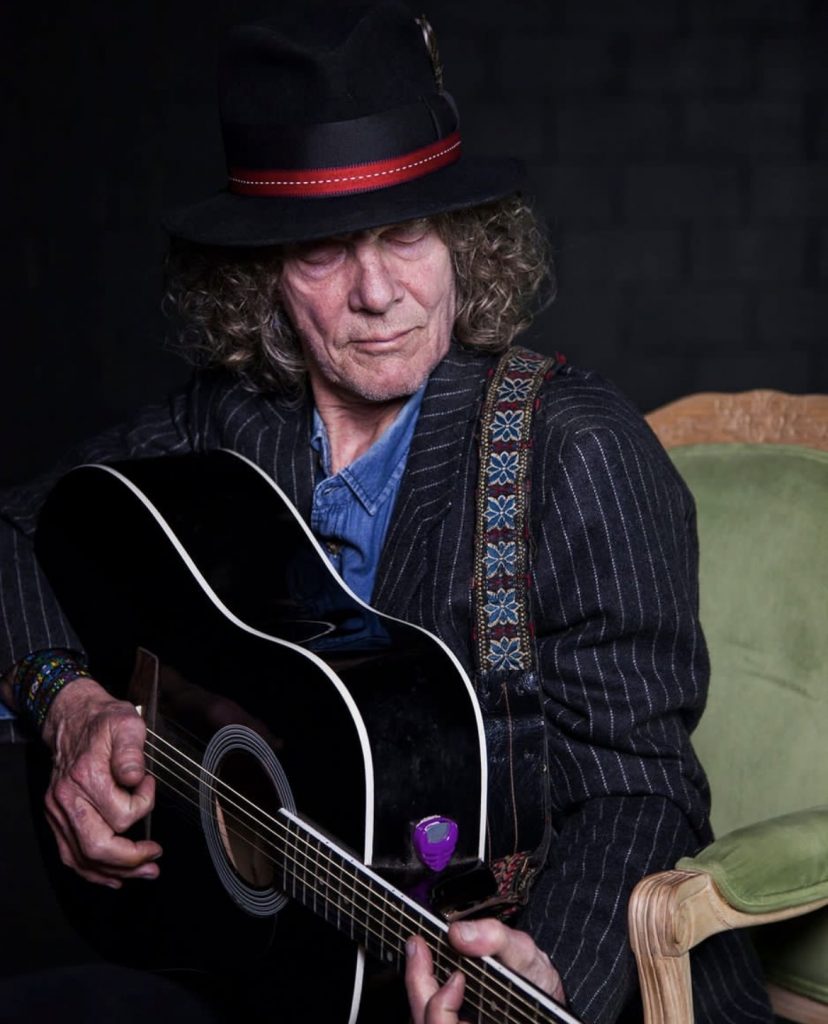
He subscribes strongly to the ethics and traditions of the Troubadours – Minstrels and Social Commentators – ranging from the Myths and Legends in the Fireside Tales of Early Man, to the Welsh Bardic Tales, Scandinavian Sagas, and the Political Activists of the Middle Ages.
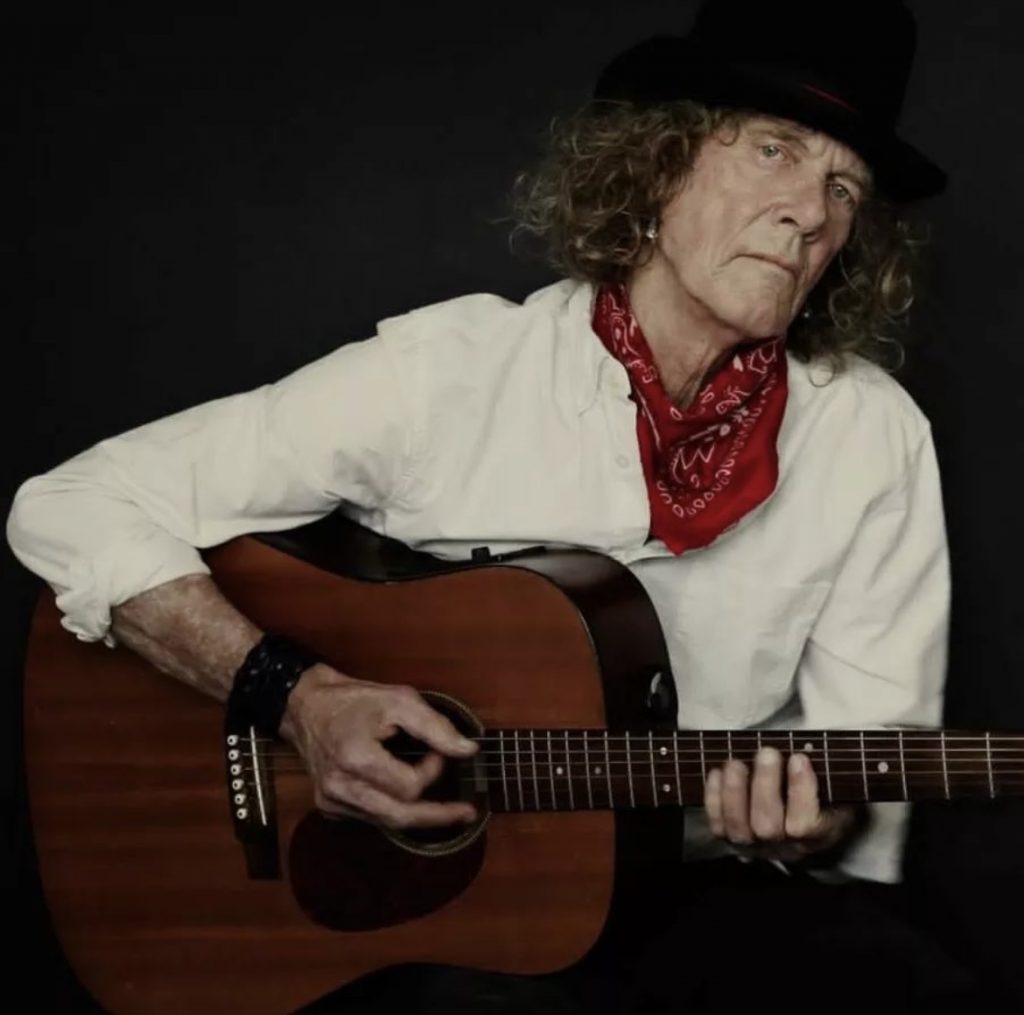
Bill calls himself a “KhakieBoer”- half Brit, half Boer – with all the tensions and paradoxes that such a blend suggests, but his fireside and ballads and torch-songs are more universal than any divisions that might be expected.
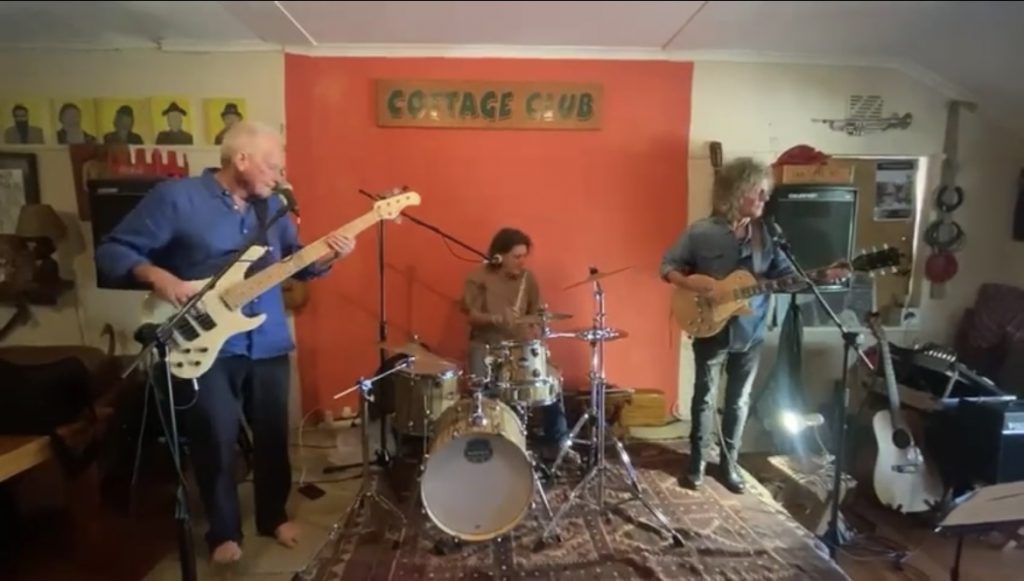
Bill’s most recent Project is his exciting newly-formed “Old Dogs” band, comprising Derek Craig: Drums & Vocals; and Jeremy Stephenson: Bass Guitar & Vocals.
This is his the interview went:
SAUL MOLOBI: My name is Saul Molobi of Chai 101.9FM. This is an interview with Bill Knight, one of our legendary musicians. He is going to take us through his journey into music, but he will also unpack and deconstruct various jazz idioms and how they impacted on him producing such unique sounds that our listeners and music revelers in general enjoy. Thank you so much Bill for joining us from Cape Town. Our listeners have listened to his music over the past few weeks and past few months on Chai 101.9 FM, so he’s a regular on our show. Let’s welcome Bill to give us a bit about himself, but also about his music. Hello, Bill.
BILL KNIGHT: Hello. Saul.
SAUL MOLOBI: How are you?
BILL KNIGHT: Really, really good. Thank you. It’s very early here in Cape Town, but it’s good to be meeting you at last.
SAUL MOLOBI: Yes, same here. Yeah. We’ve been talking over the phone and through text messages for many, many months, and finally I get to see your face – courtesy of virtual communications. Okay. Just tell us a little bit about yourself and your music.
BILL KNIGHT: Okay. Uh, I was born in Botswana. I’m 65 years old now, um, and I’ve been listening to African music, uh, ever since I can remember. I listened to musicians there. They have a particular style of guitar playing in Botswana, uh, that’s obviously very closely-linked to the blues. So I grew up listening to that. I grew up listening to Maria, Eva and Huma. And then I got into mbaqanga music listening to Mahlathini and the Mahotella Queens, and Makgonatsotlhe Band. I have since followed African music all my life.
SAUL MOLOBI: And then you decided to become a musician? Yes. Tell us about that journey.
BILL KNIGHT: I must have been about 16. And I was given a guitar as a birthday present and I slowly started working my way around it. Yes, that’s where it started. And then I must have been about 18 or so, I came across lyrical writers such as Bob Dylan and Leonard Cohen, and I realised that music and lyric were very closely connected, and that the musicians that I enjoyed were storytellers, which takes us back to our very, very early roots of mankind. Uh, you know, when people would sit around the fire and tell stories, explain why things were the way they were, and develop a community and an understanding of humanity and life.
SAUL MOLOBI: How many albums do you have in the market and what inspires you to write a song?
BILL KNIGHT: I have 10 albums out now. Some are solo. Two of them are a collaboration with another writer. More recently, I have a three piece band called “The Old Dogs”. We produced our first album two years ago and we are very, very close now to going into the studio to record our second album.
SAUL MOLOBI: Our listeners are dying to hear the song that you have in store for them. I’ve already worked up their appetite telling them that you have a very special song to play for them. Introduce the song to us.
BILL KNIGHT: Uh, the song is called “Harbour”. It’s written about a small harbour, uh, very close to where I live called Kalk Bay. Uh, and it was written after my first wife and I separated. Uh, and it’s basically about coming to terms with the breakup of a relationship, but also a relationship that I have with the sea. I’m not really a water person. Uh, they call me a land level or shore party. But I have an enormous respect for the sea and for people who go out on the sea, people who make their living out of fishing. So basically that’s what the song is about, and it’s a mix of my own perspective. You know, I think we are complex beings. We have all kinds of influences. So, you know, my influences come from my Celtic roots, from my experience in Africa, from African people from the Khoisan people, from the so-called Cape Coloured people. Uh, all of that comes into the mix because that’s all part of who I am.
SAUL MOLOBI: Yes, indeed. I always tell people that writing is very therapeutic. I spent a year in, in hospital, seven months of those fully paralysed, but as soon as I regained my mobility, I started writing about my experience in hospital. So I spent the extra five months writing about my experiences and my life. And that was a way for me to escape from my reality, but at the same time, to also accept my reality. And I’m glad that you also had to deal with your separation through writing. But I also love the title of this song, “the Habour”, because the harbour basically means you are taking off into the sea on a voyage, you are visiting other destinations. So, I may be naughty to say that perhaps breaking up with her, this song basically meant that you were undertaking a new journey of life, both figuratively and literally.
BILL KNIGHT: Absolutely.
SAUL MOLOBI: Thank you. Your journey in and through music has been phenomenal.
BILL KNIGHT: Saul, music has been a part of my life from ever since I could remember. I remember sitting in the kitchen in my parents’ home in Botswana listening to Mahlathini and the Mahotella Queens. And then in 1966 I was sent down to boarding school in Cape Town started broadening my scope. When I got to about 16 I discovered the guitar and discovered creative writing and the importance of words. I came across a writer called Mervin Peak who wrote a book called Gorman Gas, that woke me completely to the power of words. And then from then on, I discovered the Welsh poet, Dylan Thomas, and then the American folk singer Bob Dylan. Uh, and from them I learned again a deepening fascination with the power of words, with the power of poetry, with the power of storytelling.
SAUL MOLOBI: The marriage between words and instrumentation is quite explosive and yet soothing.
BILL KNIGHT: After my schooling, I went on to Rhodes University, and I became involved in social activism, in protest music and we were very, very spoiled there as far as being exposed to some of the most wonderful music that still lives with me today – Phillip Tabane, the Malopoets, Spirits Rejoice, Joy, just the most wonderful, wonderful music that stirs me up and inspires me. And as I mentioned earlier, storytelling and folk music take us back to our very earlier earliest roots of mankind sitting around the fireside, exchanging stories, the elders passing their wisdom on to the younger members, and, celebrating a sense of community which is why I decided to take the music further, not just to be a musician but to be a musical activist. And what I mean by that is to promote other musicians. We are all connected to one another. We have, I believe, a common purpose and that’s what inspired me to start my little club that I run from my home called The Cottage Club where I feature singer songwriters, musicians of various genres but just out of a belief that if I didn’t do it, nobody else was gonna do it.
BILL KNIGHT: So, I believe it’s important to keep promoting local music. South Africans for many, many years have had a chip on their shoulder about their own music. Uh, you know, we make a great big song and dance about overseas musicians, you know, and they’ll come out here and they’ll play to packed houses and packed stadia. But we tend to neglect our own musicians. And I think that’s a tragedy. And I think it’s a hangover from the shame of the Apartheid era. But you know, we have a new dispensation, we have new hope, and we have something to share with the world. And we had become so isolated from ourselves, from the rest of the world, and most importantly from the rest of Africa. And Africa itself has a wealth of music.
SAUL MOLOBI: You’re right, Bill. Miriam Makeba also used to complain about our broadcasting industry giving preference to foreign musicians.
BILL KNIGHT: You know, the blues itself, came from Africa with a slave trade developed in America, and then being returned and retransported back to the world, back to Africa. And I think that’s tremendously exciting. I went to see a concert last weekend by a friend of mine, Derek Gripper who is a fantastic guitarist who grew up as a classical guitarist. But he has developed an interest in traditional African music, especially kora music. And he transposes a great deal of that onto guitar. And it was a wonderful, wonderful experience to hear him play, to hear him explain where the music came from, and why it’s so important for him to be following it.
SAUL MOLOBI: Thank you so much Bill for this empowering input. And, and by the way, I will also be playing him this Sunday also. And in fact, I have a big surprise for him because, I have been singing the same song that he will be doing the cover vision of “Rabaji”. So, I’m going to play Toumani Diabate first, and then after I’ll also immediately play him. Uh, and thanks to Amanda Risi for introducing me to his music, it’s excellent.
BILL KNIGHT: Yes, yes,
SAUL MOLOBI: Yes. No, thank you so much for this interview. And play it live and it will also go into our archives so that in future, we’ll keep on borrowing snippets from it and then play them in our programme. Yeah, thank you. And I’m just going to make Uncle Frank Horley, who introduced me to Amanda, very envious that I spoke to you and because I didn’t tell him that I’ll be interviewing you, so I want to surprise him to say: “Hey, I saw Bill, you know, and I interviewed him.”
BILL KNIGHT: Wonderful. Please send him my warm regards.
SAUL MOLOBI: Okay. Thank you so much.
BILL KNIGHT: Thank you so much, Saul. And, and I just wanted to say at this point thank you so much for all that you’re doing to promote jazz music, to promote African music, to develop awareness of the wealth of culture that we have inherited from our forebears.
Bill’s music delicacies in brief:
Their Album: “In Full Cry” is now available on Bandcamp:
Bandcamp
https://billknight.bandcamp.com/
Influences:
Bob Dylan, Leonard Cohen, Tom Waits, Patti Smith.
Mahlathini & Mahotella Queens, Amaswazi Emvelo, Marks Mankwane, David Kramer, Jonny Clegg, Tony Bird and Bright Blue.
Bands:
Although most of his work has been performed Solo, Bill has, over the years worked in a number of bands:
1976: Head Office, with Carl Raubenheimer, Eugene Van Heerden & Tony Wood.
1982: Cape Smoke, with Richard Tait.
1983: Earthen Vessel, with Richard Tait, James Kibbey & Nick Krone.
1994: the Skollierock Band, with Roger Lucey, Caroline Blundell, Dave Ledbetter & Terrence Scarr.
1995: the Harbour Band, with Seymour Howe, Hilton Vermaas,& Dan Darlow, with guest, Caroline Blundell.
2016: Scarecrows in a Field, with Chris Davidson.
2018: Cape Smoke, with Richard Tait, Jono Tait, Matt Catto, Jeremy Stephenson,
2020. Old Dogs Band, with Derek Craig & Jeremy Stephenson.
Over and above the Bands, Bill has performed with numerous Local Music Legends, including Roger Lucey, Robin Auld, RayelleGoodman, Lesley Rae Dowling, Valiant Swart, Terrence Scarr, Tim Parr, Hatchetman, to name but a few.
FACEBOOK:
https://www.facebook.com/Billknightmusic/
https://www.instagram.com/billknight500/?hl=en
Old Dogs bandhttps://www.facebook.com/OldDogsbandza/
https://www.instagram.com/olddogsbandza/
WEBPAGE;:https://billknightmusic.wordpress.com/
YOUTUBE: https://www.youtube.com/playlist?list=PL9LTzj8sdZ7iuc8Jyo-NIp5Eg2DnzVXSF
SOUNDCLOUD: https://soundcloud.com/bill-knight-7
REVERBNATION; https://www.reverbnation.com/billknightsongwriter
PATREON: https://www.patreon.com/billknightmusic
“In the Blink of an Eye”. Album Download on Spotify: https://open.spotify.com/album/6KrLQPoV8GXa3FeMVgx9Sl
“Birds of a Feather” by “Scarecrows in a Field” Download on Apple Music: https://music.apple.com/za/album/birds-of-a-feather/1273990057
“The Edge Project”. Photos by James Eickman: https://youtu.be/_B3rIzUWtd4
Reviews
Read Bill’s “Rolling Stone” Magazine’s interview with Alice Inggs:
http://billknight.co.za/gigs/bill-knight-in-rolling-stone
“It is one thing to be clever and oblique and another thing entirely to create such emotionally honest visceral songs that become easily anthemic to the everyman and never sound formulaic or contrived. He is a true storyteller. He has a unique, distinct sound that is a great canvas on which to paint his words. That he is not yet rich and famous is unfathomable…” – Glen Wilken
Watch Bill Knight’s interview with Saul Molobi of Chai 101.9 FM:
Discography:
Through your window. (June 1996).
After the Rinderpest. (August 2002).
Back against the Wall (Dec 2004).
The “Sout en Sand” Trilogy:
Sout. (Aug 2007).
Dorsland. (April 2008).
Brakwater. (Feb 2009).
Old Dogs, New Tricks. (2012)
Collaboration with Chris Davidson:
Scarecrows in a Field (2016)
Birds of a Feather. (2017).
‘In the Blink of an Eye” (Compilation 2019). Released by Shoreline Songs.
“In full Cry”, with the Old Dogs band. (2020). Released by Shoreline Songs.
****
Tune into Chai 101.9 FM (or stream live by clicking here) this Sunday from 17h00 to 19h00 to listen to Bill’s “Sunset Serenade” interview and his music.