
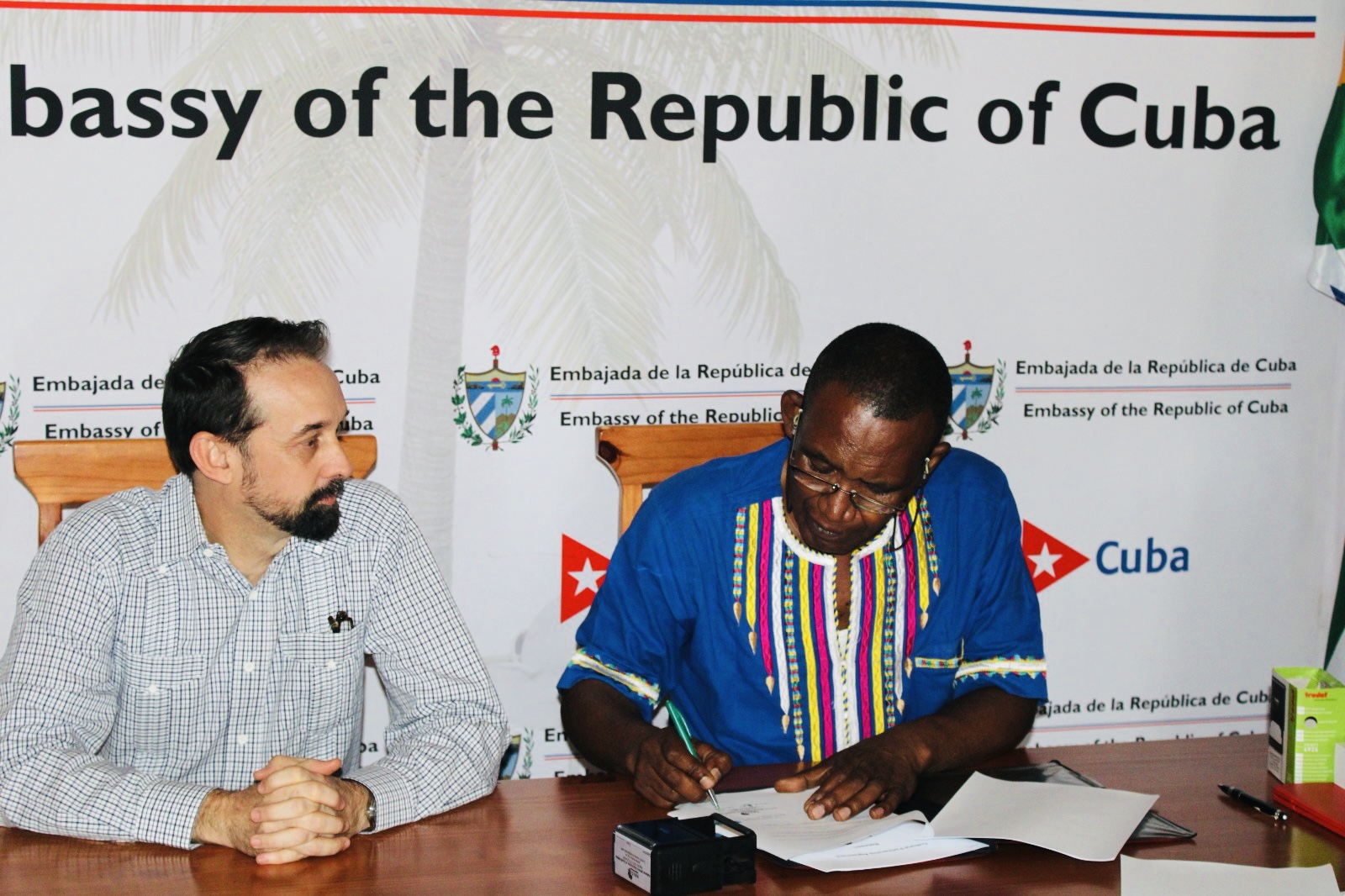
– Reflections by DR. LEBOGANG LANCE NAWA, Secretary-General: National Writers Association of South Africa (NWASA) –
“The quality of life lies in knowledge, in culture. Values are what constitute true quality of life, the supreme quality of life, even above food, shelter and clothing…” – Fidel Castro, “My Life: A Spoken Autobiography”
The above reflection by the Cuban commandant Fidel Castro offers more than a philosophical musing; it provides an ethical foundation for understanding the enduring relationship between South Africa and Cuba. It reminds us that the struggle for human dignity has never been confinedto material conditions alone. While food, shelter, and clothing remain essential, it is culture – expressed through language, memory, art, and ideas – that gives meaning to existence and shapes the moral architecture of societies.
This insight is particularly resonant when situated within the shared histories of resistance that bind South Africa and Cuba. Both nations have confronted systems that sought not only to dominate territory and labour, but to suppress identity, silence voices, and erode the cultural confidence of their people. In this context, culture became a site of defiance. Literature, music, and artistic expression were not luxuries; they were instruments of survival and liberation – repositories of truth in times when truth itself was under siege.
To foreground culture, then, is to recognise it as a strategic resource in the ongoing pursuit of justice and international solidarity. It is to affirm that the battles of our time – whether against inequality, marginalisation, or geopolitical coercion – are foughtas much in the realm of ideas as they are in the material world. This is where cultural diplomacy assumes critical importance: as a practice that elevates knowledge, values, and creative expression to the level of international engagement, fostering connections that transcend political boundaries.
For writers and cultural workers, this quotation serves as both a provocation and a mandate. It calls for a reimagining of their role – not merely as observers of society, but as active participants in shaping its ethical and intellectual direction. Within the framework of South Africa–Cuba relations, it challenges the literary community to deepen a tradition of solidarity by transforming shared history into shared cultural production, and by ensuring that the values forged in struggle continue to inform the narratives of the present.
Furthermore, as South African writers, we pay homage to one of Cuba’s most profound revolutionary voices, José Martí – whose intellectual and moral courage inspired generations of liberation movements, including many among us during our own struggle for national freedom. Martí, Cuba’s foremost political and literary figure, laid down his life in the fight against Spanish colonial rule during the Battle of Dos Ríos, sealing his legacy not only in words, but in sacrifice.
Martí’s brilliance was as expansive as it was influential. He was an exceptional author, poet, philosopher, essayist, journalist, translator, professor, and publisher – a rare synthesis of intellectual depth and revolutionary commitment. His writings articulated a vision of freedom rooted in dignity, cultural identity, and anti-imperialism, earning him recognition not only as Cuba’s premier national hero but also as a foundational thinker in Latin American literature and philosophy.
Even beyond the attainment of political freedom, Martí’s spirit has continued to resonate across borders and generations. His legacy helped shape Cuba into a magnet for global literary and artistic expression, drawing figures such as Ernest Hemingway and Federico García Lorca, who found in Cuba a fertile ground for creativity during turbulent periods of world history. Their presence and work on the island stand as a testament to the enduring power of Martí’s vision – a vision that transcends geography and time, and continues to inspire writers committed to justice, beauty, and the transformative power of the written word.
In invoking this vision based on Castro’s reflection, the National Writers Association of South Africa (NWASA) situates its commitments within a broader understanding of human development – one that places culture at the centre of public life. It is a call to action: to write, to translate, to collaborate, and to engage the world through the power of ideas. For in the final analysis, as this insight suggests, the true measure of a society is not only how it sustains life, but how it enriches it – through knowledge, through culture, and through the values that define our collective humanity.
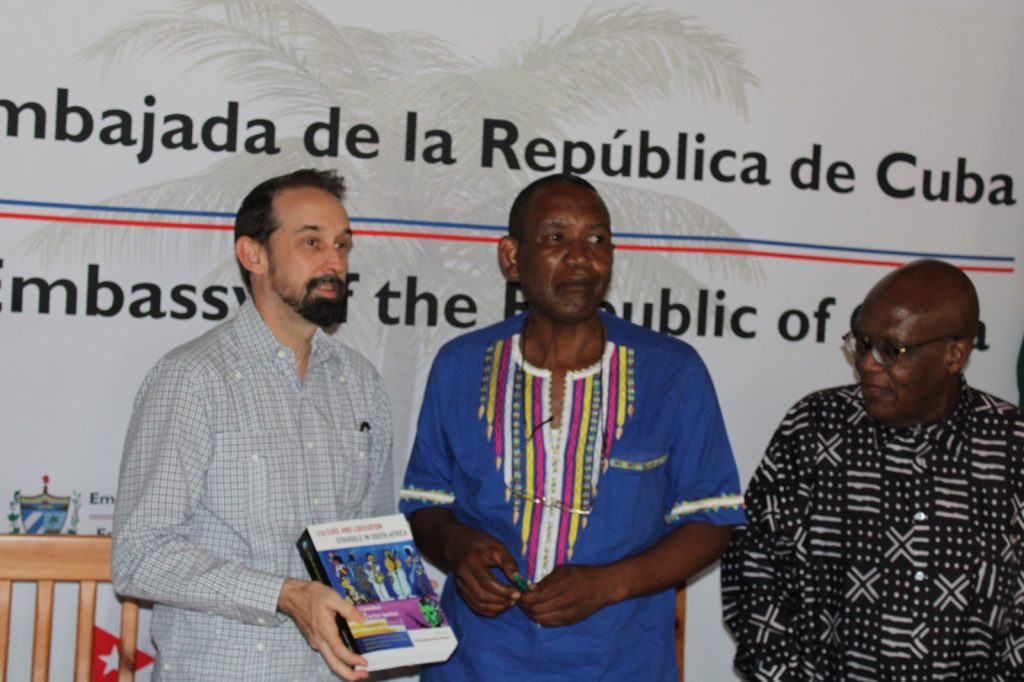
A historic relationship steeped in red inkrepresenting blood
The historical relationship between South Africa and Cuba is not merely a matter of diplomatic protocol; it is a story forged in struggle, sacrifice, and shared ideological conviction. During the darkest days of apartheid, when much of the world hesitated or acted symbolically, Cuba committed material, military, and moral support to the liberation of Southern Africa. The decisive moment came during the Battle of Cuito Cuanavale, where Cuban forces, alongside Angolan and Namibian fighters, confronted the apartheid military machine. This is an epic battle from which the Cuban soldiers did not return home with the spoils or loot of war.
On the contrary, it was an experience which I describe in the poem, Through the eye of a needle, from which my debut anthology was titled, akin to one from which “soldiers will collect/ their broken teeth/ as medals/ for patriotism and bravery.” In a more statistical reportage, it is a war from which the Cuban army returned homes with more than 2000 soldiers in body bags. More figuratively, the gallant combatant did not return in Gucci suits or exotic tourist fabric out of the National Geographic publication. Geo-politically, this confrontation fundamentally altered the regional balance of power and accelerated the processes that led to Namibia’s independence and, ultimately, the dismantling of apartheid in South Africa.
In retrospect, South Africa is therefore historically indebted to Cuba for its freedom and whilst no amount of money or material can repay or compensate the loss, South Africa must do more than ceremonial or symbolic philanthropy. Cuba deserves more from South Africa in the current juncture even if it means whatever pledge could upset some elements within the current political expedient cabinet format.
Figures such as Nelson Mandela openly acknowledged Cuba’s contribution, describing it as one of the most selfless acts of international solidarity in modern history. For Cuba, under the leadership of Fidel Castro, internationalism was not rhetorical – it was a lived political ethic grounded in anti-imperialism and global justice. This legacy created a moral and political bridge between the two nations, one that extends far beyond formal state relations.
Today, that bridge must be reimagined and reinforced within the realm of public and cultural diplomacy – particularly in light of the ongoing economic pressure exerted on Cuba through the United States of America (USA) embargo against Cuba, which has persisted for decades despite consistent opposition in the United Nations General Assembly. This context demands not only political solidarity but also a revitalisation of cultural collaboration as a strategic instrument of resistance and global engagement.
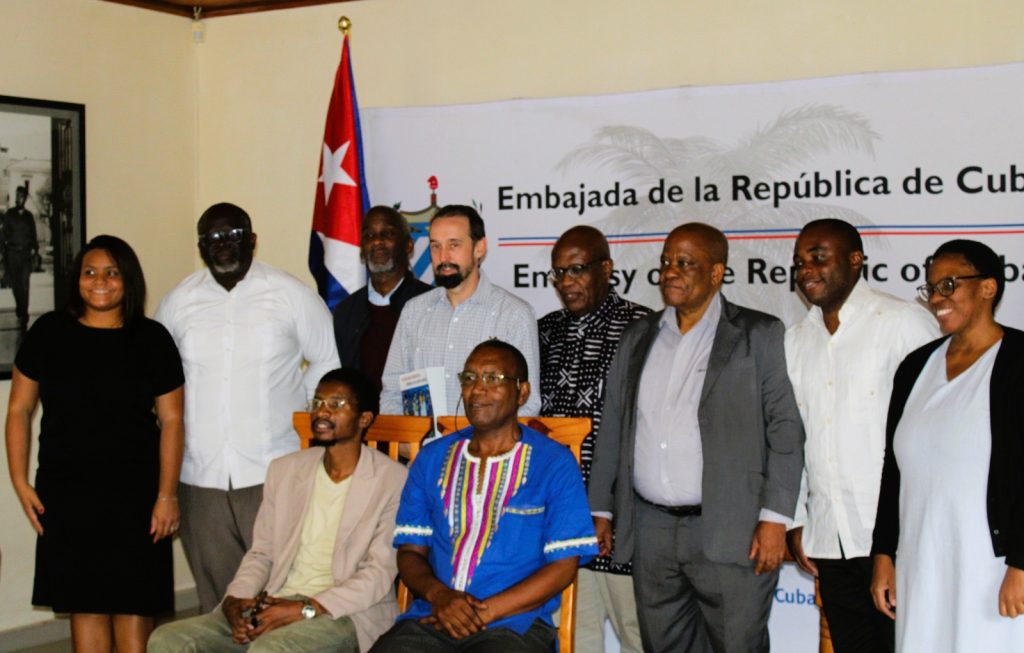
Culture: a weapon of struggle and a weapon of collaborative development
Cultural diplomacy can be understood as the exchange of ideas, values, traditions and artistic expressions between nations and peoples in order tofoster mutual understanding, solidarity, and cooperation. Unlike traditional diplomacy, which is often conducted through state officials and formal channels, cultural diplomacy operates through softer, people-to-people engagements – literature, music, art, film, and intellectual exchange. It is both a mirror and a bridge: reflecting the identity of a people while connecting them to others across geopolitical divides.
Its significance lies in its ability to humanise international relations. Where political narratives may polarise, culture has the capacity to reveal shared humanity. In times of geopolitical tension – such as Cuba’s ongoing economic isolation – cultural diplomacy becomes a vital counterweight, challenging dominant narratives and amplifying voices that might otherwise be marginalised. It enables nations like South Africa to express solidarity not only through policy positions but through lived, creative collaboration.
Within this framework, progressive literature and authorship emerge as powerful vehicles of cultural diplomacy. Writers are, in many respects, the custodians of collective memory and the architects of moral imagination. During the anti-apartheid struggle, literature served as both a weapon and a refuge – exposing injustice, mobilising resistance, and preserving the dignity of oppressed communities. The same applies to Cuban literature, which has long grappled with themes of sovereignty, resistance, and social justice.
The role of writers, therefore, is not incidental but strategic. Through translation projects, joint publications, literary festivals, and writer residencies, South African and Cuban authors can co-create narratives that speak to their shared histories and contemporary challenges. These collaborations can disrupt hegemonic discourses, particularly those that seek to isolate Cuba or diminish its historical contributions. By telling their own stories – on their own terms – writers participate in a form of narrative sovereignty.
Moreover, progressive literature can serve as an educational tool within public diplomacy. It can deepen public understanding of Cuba’s historical role in Africa, contextualise the current economic sanctions, and foster a sense of global citizenship rooted in solidarity rather than competition. Literary exchanges can also nurture emerging voices, ensuring that the next generation of writers continues to engage critically with issues of imperialism, inequality, and international justice.
Strategically, institutions such as writers’ unions, universities, and cultural organisations in both countries should formalise partnerships. These could include co-hosted literary symposia, collaborative research on liberation histories, and digital platforms that make Cuban and South African literature more accessible to broader audiences. Importantly, such initiatives should not be limited to elite spaces but must reach grassroots communities, where the spirit of solidarity is most deeply felt.
In essence, the historical alliance between South Africa and Cuba provides not only a foundation but a mandate. It calls on cultural workers – especially writers – to move beyond commemoration into active collaboration. In doing so, they transform memory into movement, and solidarity into strategy. At a time when Cuba faces renewed economic and political pressure, the pen, as much as any policy instrument, becomes a tool of resistance, affirmation, and international dialogue.
Among the South Africans whom Cuba so generously embraced as its own are towering figures of our literary and political heritage. Foremost among them is Alex La Guma, a literary giant whose remains rest in the revered El Cementerio de Cristóbal Colón. La Guma lies within the Heroes’ Acre, a solemn and distinguished section reserved for international figures who made profound contributions to Cuba’s revolutionary and humanist ideals.
Equally significant is the enduring presence of Oliver Reginald Tambo, the principal architect of the deep and lasting relationship between South Africa’s national liberation movement and Cuba. Tambo’sstatue stands in Parque de los Próceres Africanos, located in the Vedado district along Avenida de los Presidentes. This park, a dedicated space honouring Africa’s anti-colonial hero, situates Tambo within a broader continental narrative of resistance and emancipation.
Together, these sites – and the figures they enshrine – form a powerful geography of solidarity. They stand as enduring symbols of a shared history of struggle, exile, and unwavering commitment to freedom, linking the peoples of South Africa and Cuba in a bond that transcends borders and generations.
Through cultural diplomacy anchored in progressive literature, South Africa and Cuba can once again stand together – not on the battlefield, but in the realm of ideas – advancing a shared vision of justice, dignity, and human connection in a fractured world.
To deepen this narrative, it is important to recognise that the alliance between South Africa and Cuba was never confined to military or political solidarity alone– it was also profoundly cultural, even if that dimension was less formally articulated at the time. Songs of resistance, underground poetry, exile literature, and visual art all travelled across borders, often quietly, carrying with them the emotional and intellectual infrastructure of liberation. What is required now is to consciously activate that cultural current as a structured and strategic pillar of contemporary diplomacy.
At the heart of this lies the idea of memory as a diplomatic resource. The shared history of struggle– anchored in moments such as the Battle of Cuito Cuanavale – must be continually reinterpreted and retold through cultural production. Memory, when left unattended, can fade into symbolic rhetoric; but when mobilised through literature, it becomes a living archive that informs present-day consciousness. Writers from both countries are uniquely positioned to excavate these histories – not as static events, but as dynamic narratives that speak to current global inequalities and geopolitical tensions.
This brings us to a more expansive understanding of cultural diplomacy as narrative power. In a global media landscape often dominated by a handful of powerful nations, the stories of countries like Cuba are frequently framed through external lenses. The persistence of the US embargo against Cuba, despite overwhelming opposition in the UN, is not only a material condition but also a narrative one – sustained by particular representations of legitimacy, democracy, and economic order. Cultural diplomacy, therefore, becomes a means of reclaiming narrative agency.
For South African and Cuban writers, this reclamation can take multiple forms. There is room for a new canon of transnational liberation literature – works co-authored or collaboratively curated that explore intersections between African and Caribbean histories of resistance. Imagine anthologies that juxtapose township narratives with Cuban barrio stories; novels that trace the journeys of exiled activists between Havana and Lusaka; poetry that bridges isiZulu, Spanish, and English in a shared lexicon of struggle. Such creative outputs would not only enrich literary traditions but also function as instruments of soft power – subtly reshaping how global audiences understand both nations.
Equally important is the role of translation as diplomacy. Language remains one of the most significant barriers to meaningful cultural exchange. Translating Cuban literature into South Africa’s diverse languages – and vice versa – is not a technical exercise, but a political act. It affirms that these stories are not foreign, but interconnected. Translation expands the reach of solidarity, making it accessible beyond academic or elite circles and embedding it within everyday cultural consumption.
In this regard, tertiary institutions from both countries could play catalytic roles by establishingjoint literary programmes, research chairs on liberation literature, and exchange residencies for writers and scholars. Cultural festivals – whether in Johannesburg, Cape Town, or Havana – can be reimagined as diplomatic spaces where literature, music, and political dialogue converge. These are not merely artistic gatherings; they are platforms for shaping international consciousness.
Another critical dimension is the digital sphere. In an era where cultural production increasingly circulates online, digital platforms offer unprecedented opportunities for South African and Cuban writers to collaborate and disseminate their work globally. Podcasts, virtual readings, online journals, and collaborative storytelling projects can bypass traditional gatekeepers and reach audiences directly. This is particularly significant for Cuba, where economic sanctions have historically constrained access to global markets. Digital cultural diplomacy can help mitigate these limitations, creating alternative circuits of exchange and visibility.
At a philosophical level, progressive literature as a tool of cultural diplomacy must also grapple with the ethics of solidarity. Solidarity is not nostalgia; it is an active, evolving commitment. Writers must resist the temptation to romanticise past alliances without interrogating present realities. This includes engaging critically with internal challenges within both societies – inequality, governance, and social transformation – while maintaining a principled stance against external domination and coercion. In this way, literature becomes not only a bridge between nations, but also a mirror through which each society examines itself.
The legacy of leaders such as Fidel Castro and Nelson Mandela reminds us that international solidarity is most powerful when it is grounded in moral clarity and collective purpose. Today’s writers inherit that legacy, but they must reinterpret it for a different era – one defined not by armed struggle, but by battles over narrative, representation, and cultural sovereignty.
Ultimately, the task before cultural workers is to institutionalise imagination – to turn creative expression into a sustained diplomatic practice. This means building networks, securing funding, influencing policy, and ensuring that cultural diplomacy is recognised as a central component of international relations, not an afterthought. Governments, while important, should not be the sole drivers of this process. Civil society, independent publishers, and grassroots cultural movements must all play a role in shaping a vibrant, people-centred diplomacy.
In extending the historical alliance between South Africa and Cuba into the cultural realm, writers are not simply preserving a legacy – they are actively constructing a future. A future in which stories travel more freely than sanctions, in which shared histories become shared strategies, and in which the written word continues to affirm the enduring possibility of global solidarity in the face of division.
Flowing from this shared history and the imperative to translate solidarity into sustained cultural action, the National Writers Association of South Africa can articulate a set of principled, programmatic commitments that position writers not only as storytellers, but as active agents of cultural diplomacy – particularly in deepening ties with Cuba.
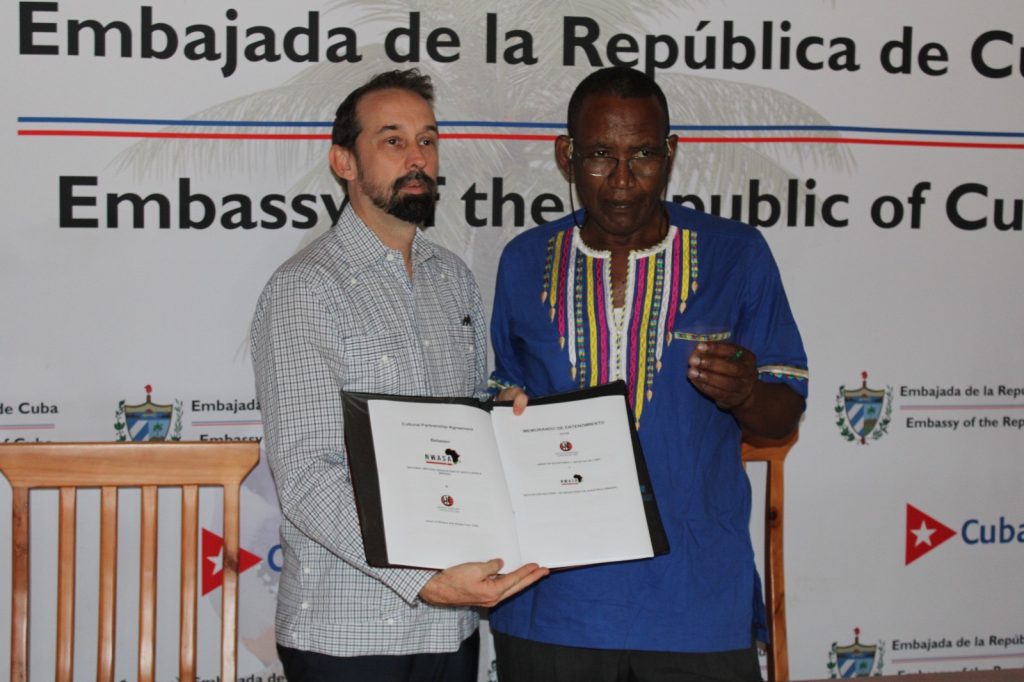
A framework of commitments for cultural diplomacy and solidarity
NWASA commits, first and foremost, to historical preservation and narrative justice. It will actively document, publish, and disseminate literary works that capture the shared liberation histories of South Africa and Cuba, with particular attention to pivotal moments such as the Battle of Cuito Cuanavale. This includes commissioning oral histories, memoirs, poetry anthologies, and critical essays that ensure this legacy remains a living, evolving archive rather than a static commemoration.
Secondly, the Association undertakes to institutionalise bilateral literary exchange. This will involve establishing formal partnerships with Cuban literary bodies, universities, and cultural institutions to facilitate writer residencies, reciprocal visits, and joint publications. Through collaboration with institutions such as the University of Havanaand local counterparts like the University of the Witwatersrand, the Association will create sustained platforms for intellectual and creative exchange.
A third commitment centres on translation as a tool of inclusion and solidarity. Recognising language as both a bridge and a barrier, the Association will invest in translation programmes that bring Cuban literature into South Africa’s linguistic landscape, while also translating South African works into Spanish. This initiative aims to democratise access to shared narratives and deepen people-to-people engagement beyond elite or academic audiences.
NWASA further commits to advocacy through cultural platforms. It will use literary festivals, publications, and public forums to raise awareness about the ongoing impact of the US embargo against Cuba, situating it within broader conversations about global justice and sovereignty. In doing so, it aligns itself with positions consistently upheld within multilateral spaces such as the UN General Assembly, while maintaining its independence as a civil society actor.
In recognition of the evolving nature of diplomacy, the Association undertakes to leverage digital platforms for global cultural engagement. It will develop online journals, podcasts, virtual readings, and collaborative storytelling initiatives that connect South African and Cuban writers in real time. These platforms will not only amplify voices but also circumvent structural barriers imposed by geography and economic constraints.
The Association also commits to nurturing a new generation of writers grounded in progressive internationalism. Through mentorship programmes, workshops, and educational partnerships, it will encourage emerging writers to engage critically with themes of anti-imperialism, solidarity, and cultural sovereignty. This ensures that the ethos embodied by figures such as Nelson Mandela and Fidel Castro is not merely inherited, but actively reinterpreted and sustained.
Another key undertaking is the promotion of collaborative literary production. The Association will support co-authored works, joint anthologies, and interdisciplinary projects that bring together South African and Cuban writers, poets, and scholars. These outputs will serve as tangible expressions of cultural diplomacy – texts that embody dialogue, not just describe it.
Importantly, the Association commits to ethical and critical solidarity. It recognises that true solidarity requires honesty and introspection. As such, it will foster spaces where writers can engage critically with both domestic and international realities, ensuring that cultural diplomacy does not become uncritical endorsement, but remains rooted in justice, dignity, and intellectual integrity.
Finally, NWASA undertakes to embed cultural diplomacy within national and continental agendas. It will work alongside government departments, cultural institutions, and regional bodies to ensure that literature and the arts are recognised as central to South Africa’s international relations strategy. In doing so, it positions writers not at the periphery, but at the heart of public diplomacy.
In Sum
These commitments reflect a shift from symbolic solidarity to structured engagement. Stated differently, a shift from sentimentality to sacrifice, from promises or pledges to declaration. These principles affirm that the historical alliance between South Africa and Cuba is not an artefact of the past, but a living mandate – one that calls on writers to transform memory into movement, and creativity into a force for international understanding and resistance.