
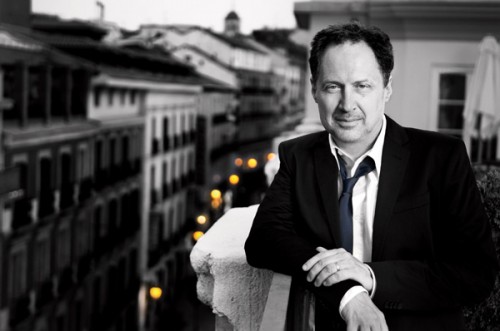
SAUL MOLOBI profiles a jazz trumpeter, sonic innovator and composer for the screen, Mark Isham. A documentary on him will be premiered this Tuesday in Johannesburg…
Mark Ware Isham, born on 7 September 1951 in New York City, is an American trumpeter, keyboardist, synthesist, recording artist, and award-winning composer whose career has spanned jazz, electronic music, ambient soundscapes, contemporary classical composition, and film and television scoring. A musician of remarkable versatility, Isham has built a distinctive artistic identity around the interplay of improvisation, atmosphere and orchestral expression. Whether performing on trumpet or composing for the screen, he communicates emotion through sound, often letting silence, space, and subtle tonal shifts speak as eloquently as melody itself.
Early life: The foundations of a musical imagination
Born to Patricia Jane and Howard Fuller Isham Jr., Mark grew up in a household where music and intellectual curiosity were part of everyday life. His father taught music and history, while his mother played the violin. This environment laid an early foundation for his musical development, exposing him to different instruments, musical traditions, and artistic expression.
Isham studied violin, piano, and trumpet from an early age. By 15, he was already performing in jazz clubs and symphonic settings in the San Francisco Bay Area. This early immersion in both jazz and classical music helped establish the musical breadth that would later distinguish his work. Jazz offered the freedom of improvisation and spontaneous expression; classical music introduced him to orchestration, compositional structure, and the expressive possibilities of instrumental arrangement.
Among his most significant influences was Miles Davis, whose innovative approach to trumpet playing and musical reinvention left a lasting impression. Davis demonstrated that a trumpet could communicate intimacy, vulnerability, and introspection without relying on technical display or sheer volume. Isham developed a similarly distinctive approach, often favouring a muted, delicate trumpet tone that seems to hover between the audible and the unspoken.
Crossing musical boundaries
Isham’s career developed as musicians increasingly explored the possibilities of electronic instruments, synthesizers, and the convergence of jazz and contemporary music. He became associated with Group 87, an electronic and jazz-fusion ensemble, while also performing with rock and soul musicians. These experiences broadened his musical vocabulary and encouraged him to explore the relationship between acoustic instruments and electronic textures.
His solo recordings established him as an artist unwilling to be confined by conventional genre classifications. Vapor Drawings (1983) introduced listeners to an evocative world in which trumpet, synthesisers, and atmospheric textures could coexist. Rather than treating electronic sound as a departure from jazz, Isham used it to extend his instrument’s expressive possibilities.
Albums such as “Castalia” (1988) and Tibet (1989) continued this exploration, drawing on contemplative moods, spacious arrangements and a fascination with sound as an immersive experience. His self-titled album, “Mark Isham” (1990), earned him a Grammy Award in the New Age category, recognising his ability to create music that transcended the boundaries separating jazz, ambient composition and contemporary instrumental music.
With Blue Sun (1995), Isham further demonstrated his jazz credentials. DownBeat’s recognition of the album as one of the decade’s leading jazz albums underscored his standing as a serious jazz artist and a film composer. His engagement with Miles Davis’s musical legacy continued with “Miles Remembered: The Silent Way Project” (1999), reflecting an ongoing dialogue with the innovations of one of jazz’s most influential figures.
A musician among musical giants
Throughout his career, Isham has collaborated with artists from a wide range of musical traditions, including Bruce Springsteen, Van Morrison, the Rolling Stones, Joni Mitchell, Willie Nelson and Chick Corea. These associations reflect both his technical versatility and his sensitivity to other performers’ musical character.
His work across genres is particularly significant because it illustrates a quality often associated with the finest jazz musicians: the capacity to listen, adapt and contribute without losing one’s own artistic identity. Isham’s trumpet playing can be lyrical and restrained, while his keyboard and synthesiser work lets him build expansive sonic environments. In each setting, he brings an understanding of musical space, texture, and emotional nuance.
From the jazz stage to the cinematic screen
Isham’s transition into film and television composition opened another major chapter in his career. Beginning in the early 1980s, he developed a substantial body of screen music, eventually scoring more than 200 film and television projects.
His approach to film scoring draws naturally on his experience as an improvising musician and his command of orchestration and electronic sound. Rather than accompany images, his scores often deepen a scene’s emotional meaning, establish a sense of place, or express feelings dialogue cannot fully articulate.
His score for Robert Redford’s “A River Runs Through It” (1992) earned him an Academy Award nomination for Best Original Score. The music’s lyrical restraint and contemplative character complement the film’s exploration of family, faith, nature, and the complexities of human relationships.
He later received a Golden Globe nomination for “Nell” (1995), further establishing his reputation as a composer capable of creating intimate, emotionally distinctive musical worlds. His work also extended into very different cinematic territories, including the supernatural action film “Blade” (1998), the ensemble drama “Crash” (2004), and Brian De Palma’s “The Black Dahlia” (2006), for which Isham received recognition from the International Film Music Critics Association.
More recently, his film credits have included “Judas and the Black Messiah” (2021), a historical drama whose subject matter and political intensity demanded a score responsive to the tensions of its setting.
His television work has been equally varied. He won a Primetime Emmy Award for “EZ Streets” and has contributed music to productions including “Once Upon a Time, Little Fires Everywhere” and “Godfather of Harlem”. His Emmy-nominated work on “Little Fires Everywhere” further illustrates his continuing relevance in a television landscape where music plays an increasingly sophisticated role in storytelling.
Isham’s honours include a Grammy Award and multiple Grammy nominations, an Academy Award nomination, a Golden Globe nomination and an Emmy win. He has also received the ASCAP Henry Mancini Career Achievement Award, recognising his contribution to film and television music.
The voice within: Returning to the recording studio
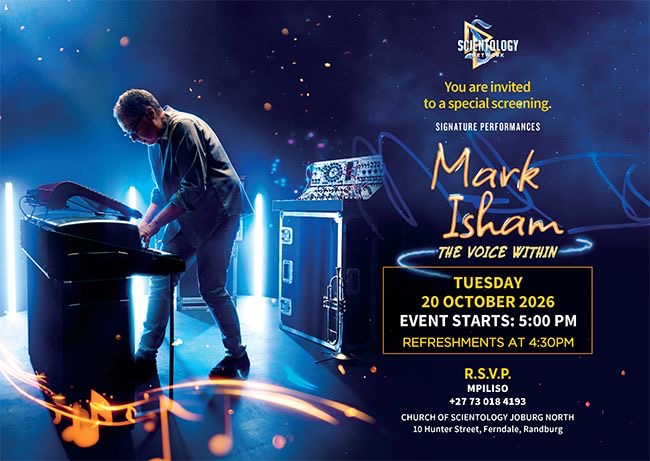
The documentary “Signature Performances: Mark Isham – The Voice Within” lets audiences look beyond the finished compositions and into the creative process of an accomplished musician. The film follows Isham as he returns to the studio to create his first new album in 15 years, bringing together an exceptional group of musicians in pursuit of a new musical statement.
The documentary’s central attraction is the chance to witness music taking shape: ideas emerging, sounds being tested, musicians responding to one another, and the often-unseen decisions that turn a composition into a finished recording. For audiences familiar with Isham’s trumpet playing and screen scores, this behind-the-scenes perspective promises a closer encounter with the artist behind the music.
The title, The Voice Within, is particularly suggestive given Isham’s career. His musical language has frequently favoured restraint over extravagance and emotional suggestion over overt declaration. The muted trumpet, the atmospheric synthesiser, and the carefully shaped instrumental phrase become vehicles for an interior voice, one that invites listeners to engage not merely with sound, but with the feelings and reflections sound can awaken.
The documentary also offers a timely reminder that artistic reinvention is not the exclusive preserve of emerging musicians. For an established artist, returning to the recording studio after an extended period can be an act of rediscovery: revisiting familiar musical instincts while remaining open to new collaborators, new possibilities and a changing relationship with one’s own creative voice.
Johannesburg premiere: An invitation to experience the music
The Church of Scientology Johannesburg North will host a special premiere of the Scientology Network original documentary “Signature Performances: Mark Isham – The Voice Within” on Tuesday, 20 October 2026.
The screening will take place at 10 Hunter Street, Ferndale, Randburg. It begins promptly at 17:00. Refreshments will be served before the documentary, and attendees are welcome to bring friends, family, and other guests who would appreciate an evening devoted to music and creative expression.
For jazz enthusiasts, film-music admirers, and anyone interested in how music is made, the screening offers a chance to see Mark Isham from a different perspective – not simply as the musician whose trumpet has shaped recordings and cinematic soundtracks, but as an artist still exploring the possibilities of his craft.
An enduring artistic signature
Mark Isham’s career reminds us that musical identity need not be restricted by genre. His journey from early trumpet performances and jazz experimentation to electronic soundscapes, award-winning albums and major film and television scores reflects a lifelong commitment to exploration.
Miles Davis’s influence shows in Isham’s sensitivity to tone and space, yet his achievements go well beyond homage. He has fashioned a musical language of his own, one that connects the immediacy of jazz improvisation with the carefully constructed emotional architecture of the screen.
Ultimately, Isham’s contribution lies in his capacity to make music serve different purposes without losing its humanity. It can invite contemplation, heighten suspense, evoke memory, or give voice to an emotion that words struggle to express. In the studio, on the jazz stage or through the moving image, his work continues to explore the relationship between sound and feeling.
Mark Isham: The Voice Within invites audiences to listen more closely – to the musician, the creative process, and, perhaps most importantly, the music within themselves.
***
I will be playing Mark Isham’s song in my jazz show, “Sunset Serenade”, on 101.9 Chai FM this Sunday from 17:00 to 19:00. Tune into 101.9 FM or stream live by clicking here.