By Saul Molobi
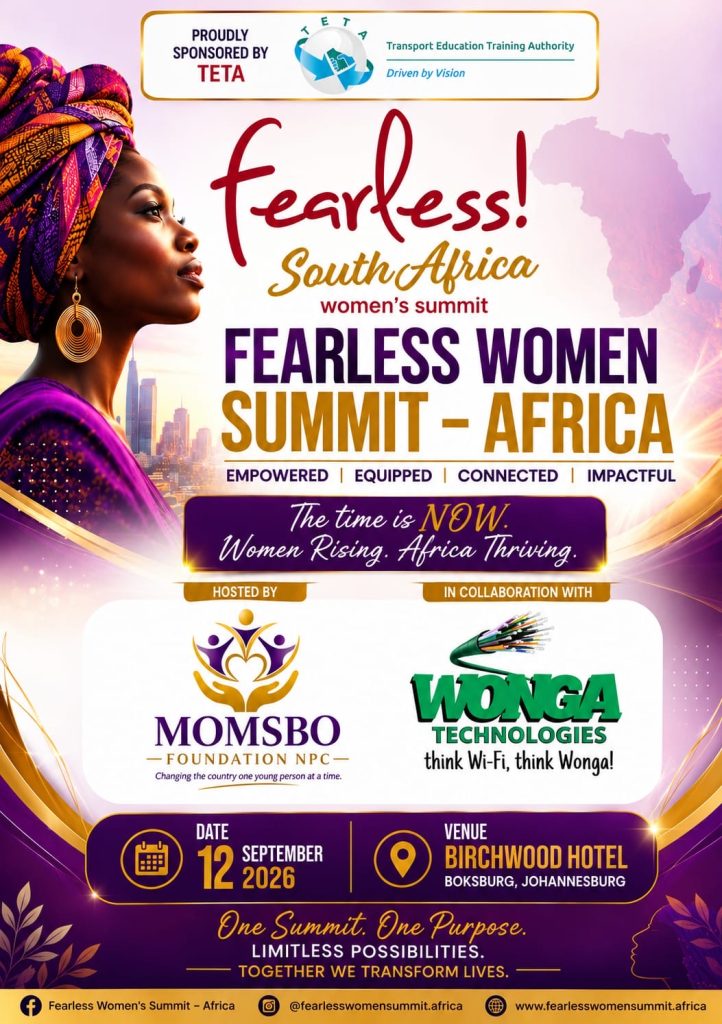
The One Woman Fearless South Africa Women Summit is conceived as a transformative platform for women’s empowerment, economic participation, leadership development and social renewal. Brought to South Africa by the Momsbo Foundation, in partnership with internationally acclaimed women’s empowerment advocate and entrepreneur Sharla Brown, the summit seeks to introduce an established global movement to the African continent while giving it a distinctly South African and African expression.
The initiative is founded on a powerful but deceptively simple premise: when one woman overcomes fear and discovers the courage to pursue her purpose, she creates the possibility for other women to do the same. Individual transformation can therefore become collective transformation when women are connected to one another through networks, mentorship, knowledge, economic opportunities and shared experiences.
The summit is consequently not intended to be another conventional women’s conference in which participants listen to inspirational speeches and return home motivated for a few days. It is conceived as an empowerment ecosystem in which inspiration is connected to practical knowledge, personal development is connected to economic opportunity, leadership is connected to confidence, and networking is connected to meaningful relationships that can continue long after the event has ended.
At its heart, the summit asks women to confront the fears – both visible and invisible — that prevent them from becoming the fullest expression of who they are capable of becoming. These fears may manifest as self-doubt, fear of failure, fear of rejection, fear of financial risk, fear of being judged, fear of occupying space, fear of leadership or even the fear of succeeding beyond the expectations that society has imposed upon them.
The One Woman philosophy seeks to transform that fear from a limitation into a point of departure.
Bringing an international movement to Africa
The South African summit represents an important milestone in the evolution of the One Woman movement, founded by Sharla Brown. Having already reached thousands of women through more than 200 events across the United States, Canada, the United Kingdom, Ireland, Australia and New Zealand, the movement has developed an international reputation for creating spaces in which women can confront limiting beliefs, develop practical capabilities, build relationships and pursue their ambitions with greater confidence.
Bringing the movement to South Africa is therefore not simply an exercise in importing an international event format. It represents an opportunity to create a dialogue between a global women’s empowerment philosophy and one of the world’s most compelling histories of women’s activism and resistance.
South Africa provides a particularly powerful environment for this conversation because its modern history has demonstrated repeatedly that women possess the ability to transform society when they organise around a common purpose. The women’s struggle against apartheid was not peripheral to the liberation movement; women were central actors in the country’s journey towards democracy.
The One Woman summit seeks to connect that extraordinary historical legacy with the contemporary challenges confronting women in the economy, workplace, entrepreneurship, leadership and society.
The message is therefore not that South African women need to be taught how to be courageous.
South African women already possess a profound tradition of courage.
The challenge is to translate that courage into new forms of economic agency, leadership, wealth creation, entrepreneurship, innovation and personal fulfilment.
Why South Africa, and Why now?
South Africa stands at an important moment in its women’s empowerment journey. More than three decades after the democratic transition, the country has established an extensive constitutional, legislative and institutional framework supporting gender equality. Women have entered virtually every sphere of public life and have demonstrated exceptional leadership across politics, business, academia, civil society, science, culture and entrepreneurship.
Yet the existence of formal equality has not eliminated structural inequality.
Large numbers of women continue to confront obstacles to economic independence, access to capital, property ownership, entrepreneurship, career advancement and leadership. Women-owned enterprises frequently experience difficulty accessing finance, markets and business development support, while women entering the professional and corporate environments may still encounter barriers to advancement and representation.
Young women face another layer of uncertainty as they navigate an economy characterised by unemployment, technological disruption and rapidly changing skills requirements. Rural women and women living in economically marginalised communities often confront these challenges with considerably fewer resources and networks than their urban counterparts.
The summit therefore arrives at a moment when South Africa needs to move beyond the language of empowerment as an abstract social ideal and focus increasingly on empowerment as measurable economic and social agency.
A truly empowered woman should have greater confidence to make decisions, greater access to knowledge and networks, greater capacity to generate income and wealth, and greater ability to exercise influence over the direction of her life, family, enterprise and community.
From inspiration to economic empowerment
The One Woman summit places economic empowerment at the centre of its philosophy because economic independence remains one of the most powerful foundations of personal freedom.
A woman who possesses financial literacy is better positioned to make informed decisions about her future. A woman who owns property has an asset that can contribute to long-term security and intergenerational wealth. A woman who builds a sustainable enterprise has the potential not only to create income for herself but also employment and opportunity for others. A woman who occupies a leadership position can influence institutional decisions that affect thousands of people.
For this reason, the summit’s focus on entrepreneurship, financial literacy, wealth creation, property ownership, leadership and professional development is not incidental. These elements collectively form an architecture of empowerment.
The intention is to help women move from simply dreaming about a different life to developing the knowledge, confidence, networks and strategies required to build it.
This is particularly important for women who have ambition but lack access to the networks through which opportunities are often distributed.
The summit seeks to close some of that gap by bringing successful entrepreneurs, executives, coaches, educators, speakers, investors, professionals and thought leaders into one environment where knowledge and relationships can be exchanged.
The psychology of fear
One of the summit’s most distinctive characteristics is its decision to place fear at the centre of the empowerment conversation.
Women’s economic exclusion is not always caused by the absence of opportunity. Sometimes opportunity exists, but psychological barriers prevent women from claiming it.
A woman may possess the qualifications for promotion but fear being perceived as too ambitious. An entrepreneur may have a viable business idea but fear failure. A professional may have expertise but hesitate to speak publicly. A young woman may possess enormous potential but lack the confidence to enter spaces where she does not see people like herself.
Fear can therefore become an invisible form of exclusion.
The summit seeks to confront this internal dimension of empowerment alongside the external structural barriers.
It recognises that policy reform, access to funding and institutional transformation remain essential, but they must be accompanied by personal transformation if women are to take full advantage of emerging opportunities.
The One Woman approach therefore asks women to examine not only what is preventing them from succeeding, but also what they may be allowing fear to prevent them from attempting.
That is a deeply personal conversation, but it has significant economic consequences.
A whole-woman approach to empowerment
The summit has been deliberately conceived around a holistic understanding of women’s lives.
Women do not experience their professional, personal, emotional, financial and social lives as separate compartments. Grief can affect leadership. Self-esteem can affect entrepreneurship. Financial insecurity can affect personal relationships. Lack of confidence can affect career advancement. Identity can influence ambition. Purpose can determine whether success itself feels meaningful.
The summit therefore brings together speakers whose expertise covers a broad spectrum of human and professional development.
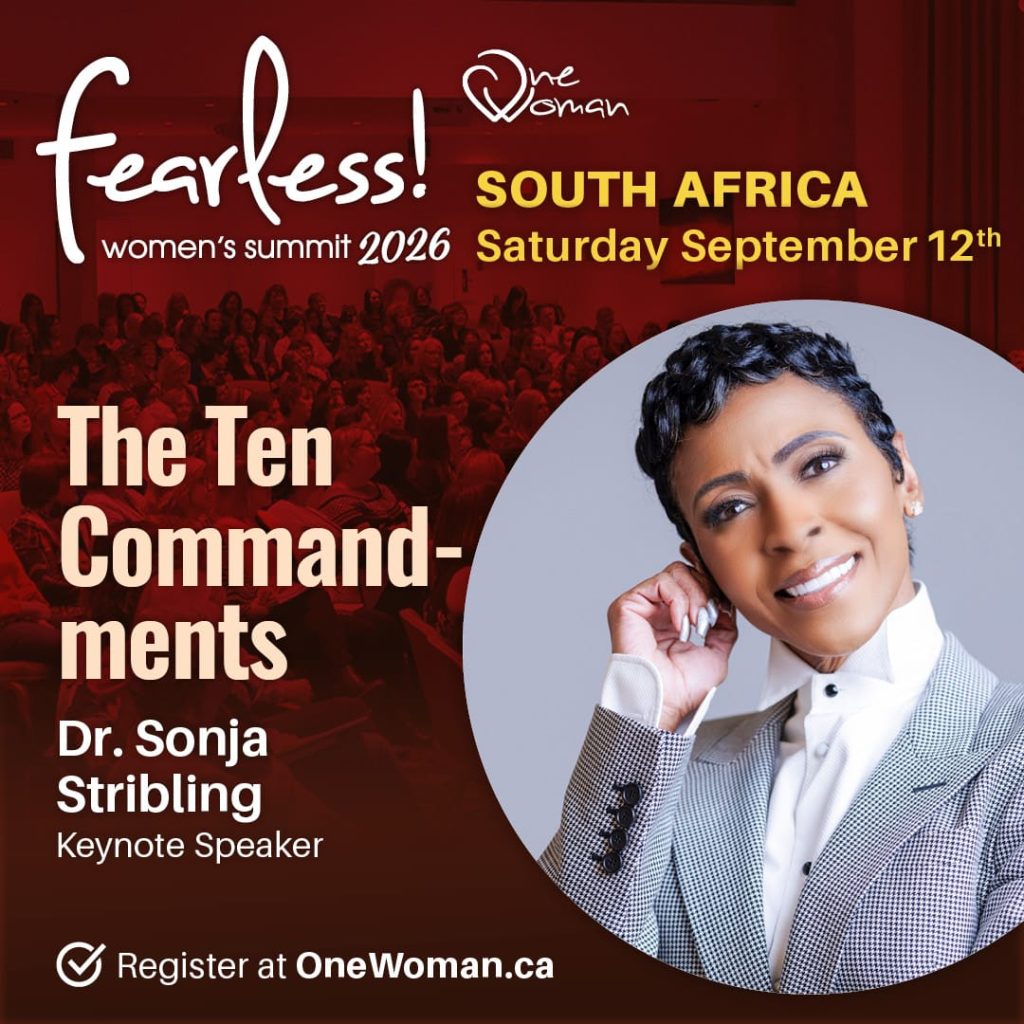
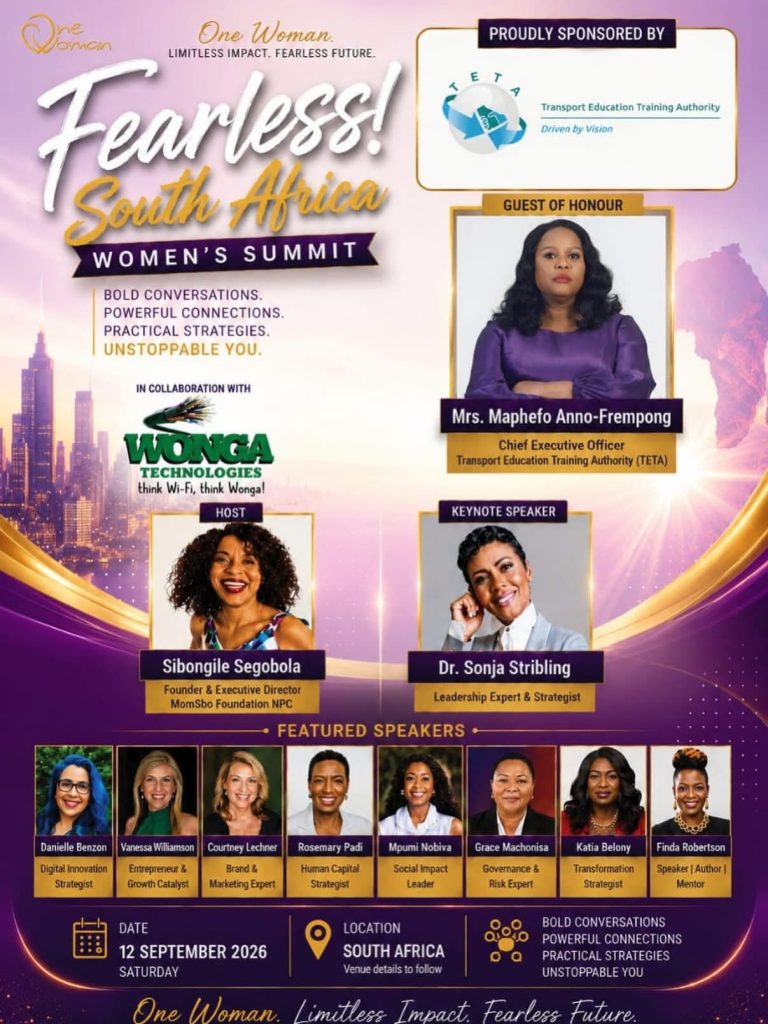
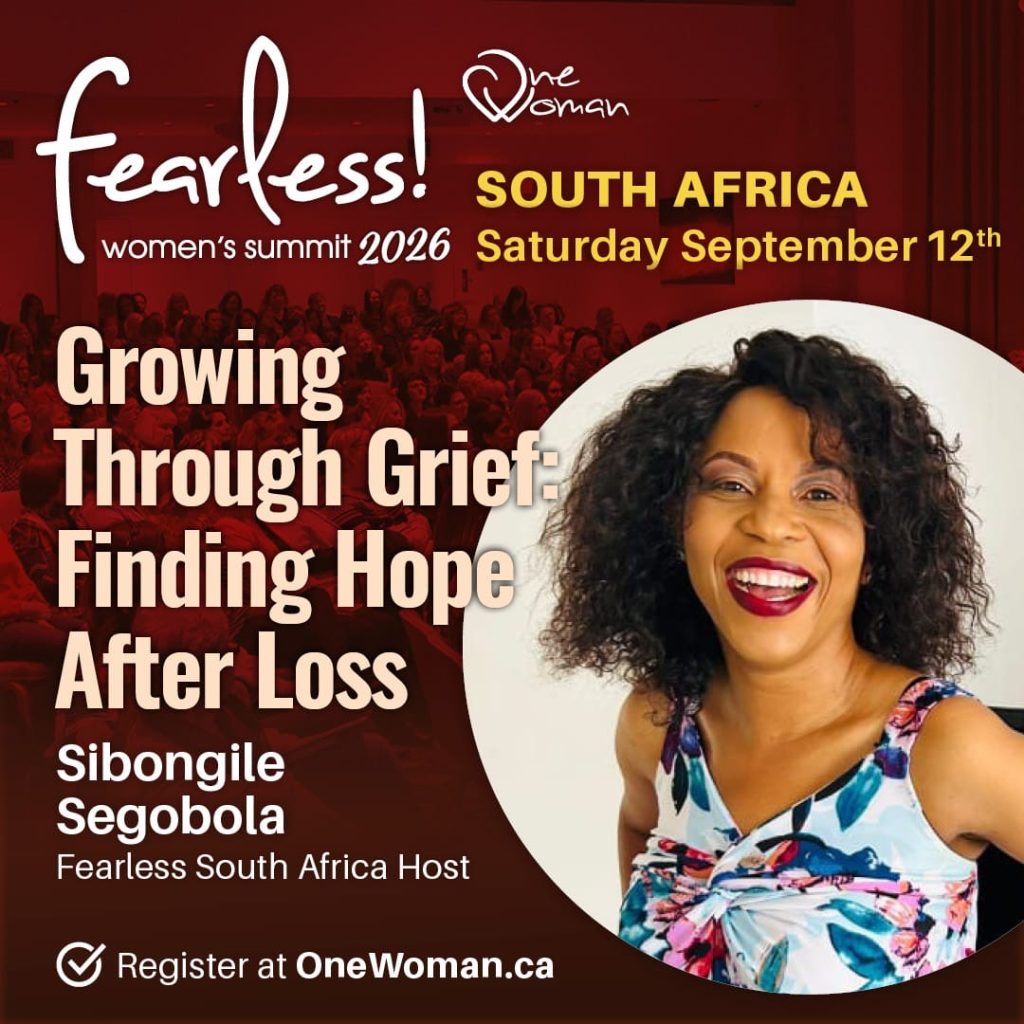
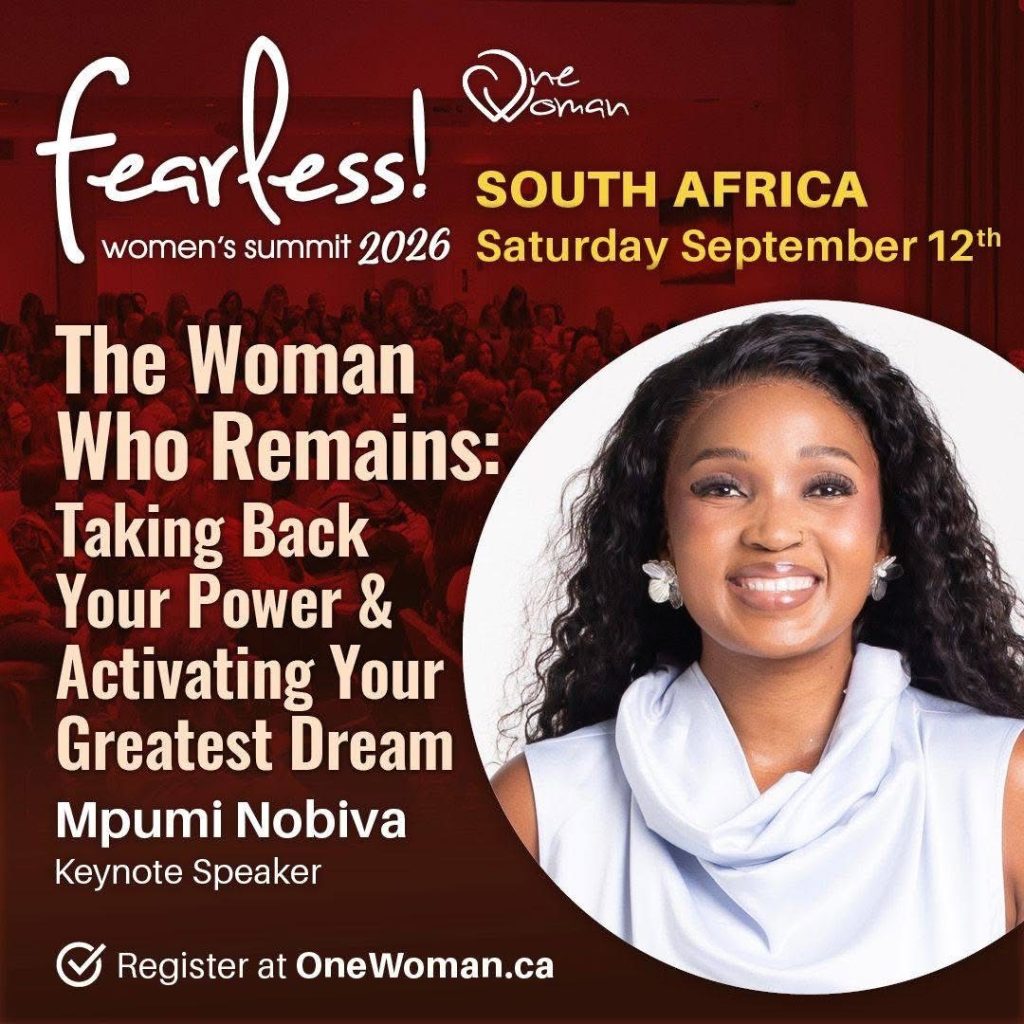
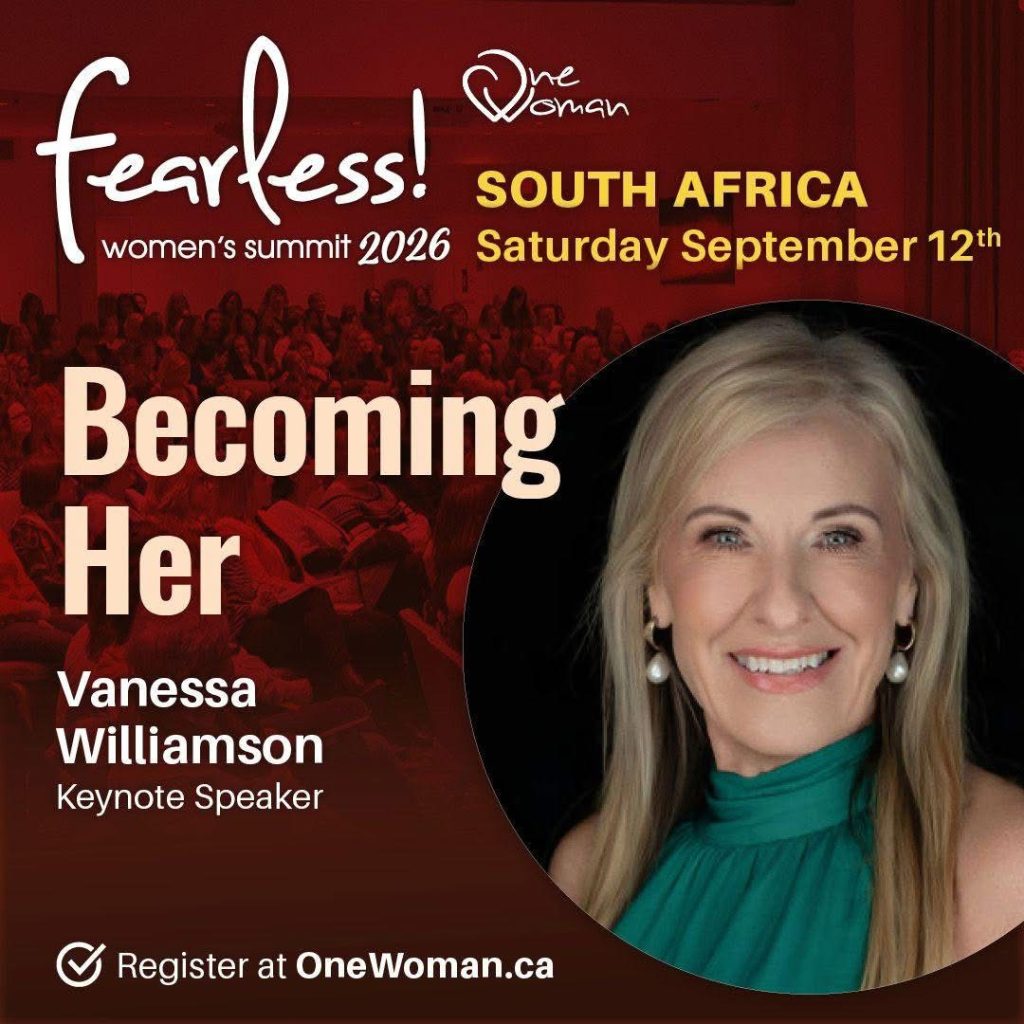
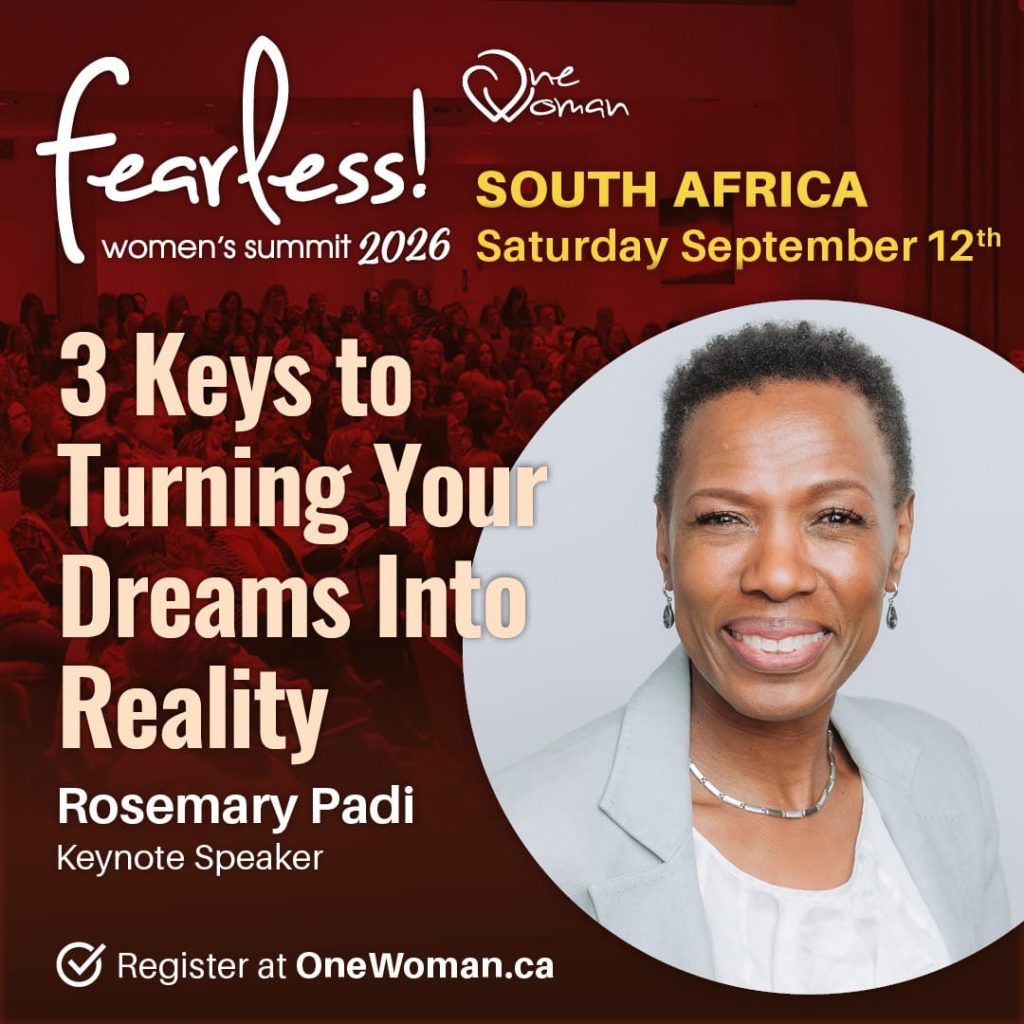
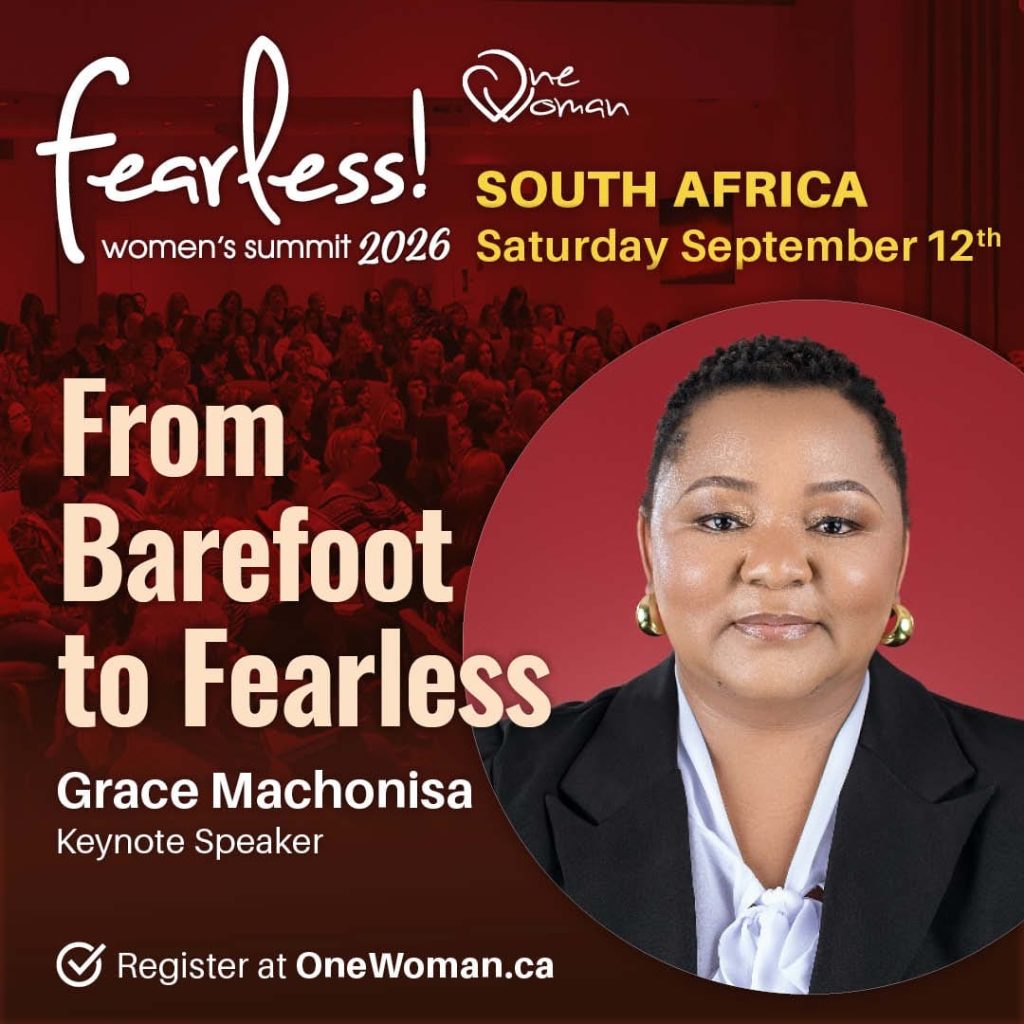
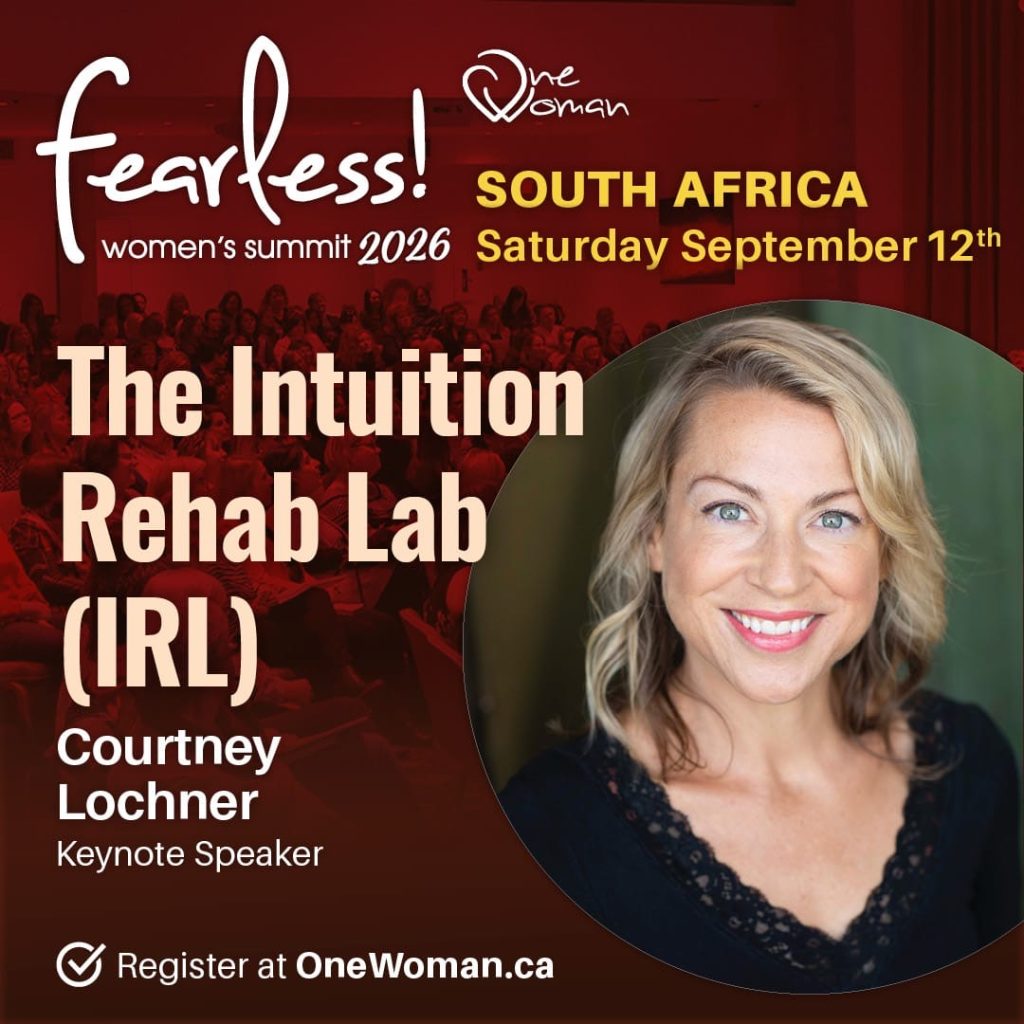
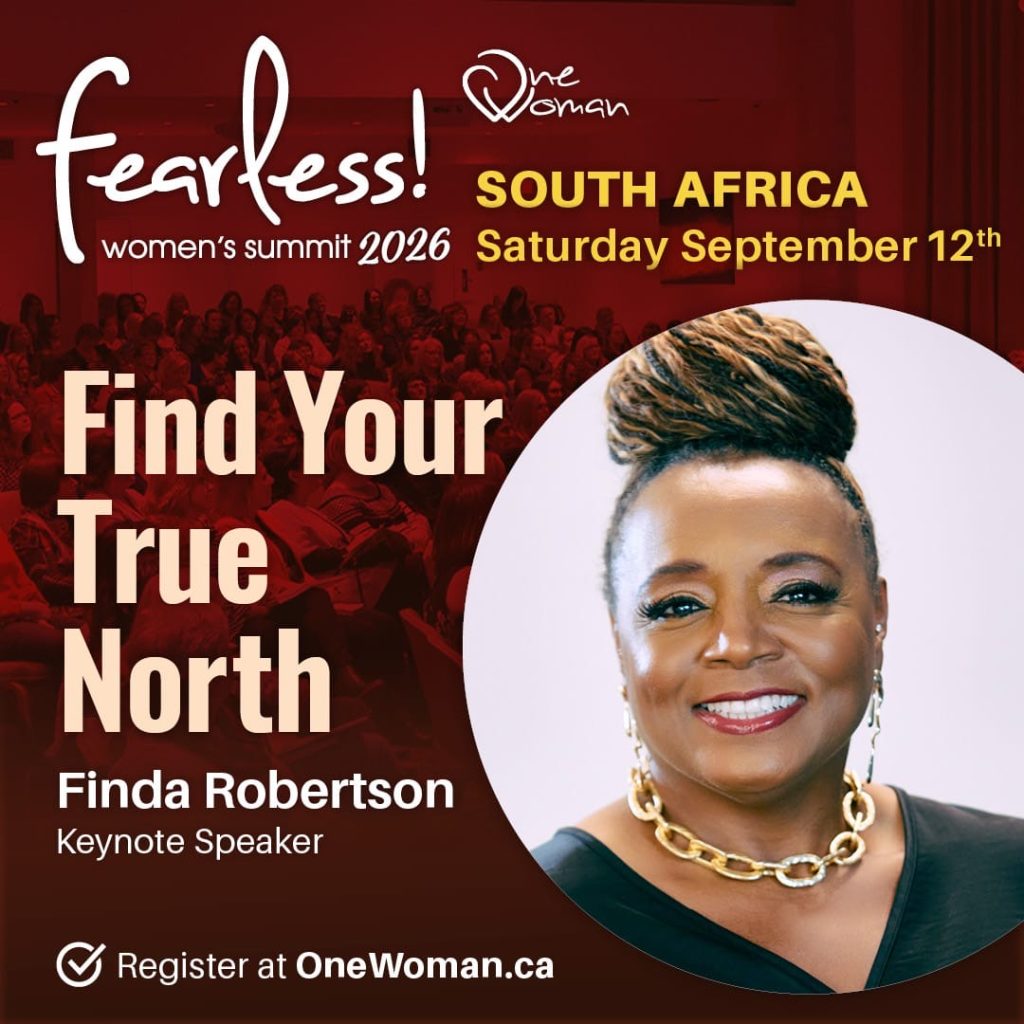
From Sibongile Segobola’s exploration of grief and finding hope after loss, to Katia Belony’s focus on wealth creation through property; from Danielle Benzon’s exploration of vulnerability and public expression to Vanessa Williamson’s work on identity and self-leadership; from Dr Sonja Stribling’s emphasis on wealth, power and leadership to Courtney Lochner’s exploration of intuition and wellbeing; from Rosemary Padi’s focus on turning dreams into reality to Grace Machonisa’s extraordinary journey from rural Zimbabwe to purposeful leadership; and from Finda Robertson’s call to discover one’s True North to Mpumi Nobiva’s challenge to women to reclaim their power and become visible – the programme creates a continuum of transformation.
Each speaker addresses a different door through which a woman may enter her next chapter.
Together, they create a larger conversation about what it means to become fearless.
Intergenerational and cross-cultural dialogue
Another defining feature of the summit is its potential to create dialogue across generations, professions, cultures and socioeconomic backgrounds.
The empowerment of women cannot be achieved by focusing exclusively on established corporate leaders or successful entrepreneurs. It must also include young women entering the world of work, emerging entrepreneurs trying to establish their businesses, women in rural communities, community activists, educators, professionals and women who may simply be searching for the confidence to take their next step.
The summit therefore seeks to create a space in which experience can flow in both directions.
Older and more experienced women can share lessons learned through decades of professional and personal experience, while younger women bring new perspectives shaped by technology, changing social norms and new forms of entrepreneurship.
The result should be more than networking.
It should be knowledge transfer between generations.
South Africa’s history of women’s activism provides a powerful foundation for this intergenerational conversation. The women who fought for political freedom created opportunities that subsequent generations inherited. The responsibility of today’s generation is to expand those opportunities into economic freedom, technological participation, ownership and leadership.
Johannesburg: A strategic African platform
Johannesburg provides an appropriate setting for this continental initiative because it is one of Africa’s most important commercial, financial and cultural centres. It is the capital of Gauteng Province – which is the economic capital of Africa with the province’s GDP being the eighth highest in Africa, bigger than the economies of 46 countries. The city itself contributes 30% to South Africa’s GDP – equal to the combined contribution of the second and third contributors, KZN at 16% and Western Cape at 14%. Johannesburg’s economy is the thirteenth on the continent – bigger than the GDPs of 42 African countries.
It is a city in which corporate South Africa, entrepreneurship, creative industries, civil society, international organisations and emerging businesses intersect.
Hosting the summit in Johannesburg creates the possibility of connecting women who would not ordinarily share the same professional or social spaces.
Corporate executives can encounter emerging entrepreneurs. Investors can meet women-owned businesses. Young professionals can connect with mentors. Community leaders can engage with corporate decision-makers. International speakers can develop relationships with African women leaders.
In this respect, Johannesburg is not merely the venue. It becomes part of the concept. It represents the economic environment in which the summit’s central proposition – that empowered women are essential to economic transformation – can be tested, demonstrated and expanded.
From a summit to a sustainable movement
The long-term ambition should extend well beyond the event itself.
The summit is conceived as the potential beginning of a sustainable South African One Woman platform that can establish an alumni network, develop mentorship programmes, facilitate business connections, create regional events and support women throughout the year.
The objective should be to ensure that the energy generated inside the summit does not disappear when participants leave the venue. A woman who meets a mentor should be able to continue that relationship. An entrepreneur who identifies a potential business partner should have mechanisms to develop the relationship. A participant who discovers a new business skill should have access to further training. A woman who decides to launch a business should be connected to relevant support institutions. A young professional looking for guidance should be able to access the wider One Woman network.
This is how an event becomes an ecosystem. And an ecosystem can become a movement.
Towards One Woman Africa
The ultimate strategic opportunity is to position South Africa as the African home of the One Woman movement and, over time, use the country as a platform from which the initiative can expand across the continent.
The longer-term vision could encompass regional summits, sector-specific programmes, entrepreneurship initiatives, mentorship networks, leadership academies and eventually a continental One Woman Africa network connecting women across borders.
Such an evolution would give the initiative significance beyond the immediate event.
It would contribute to a broader African narrative in which women’s empowerment is understood not merely as a question of equality, but as a fundamental component of economic development, innovation, social cohesion and continental transformation.
Africa cannot realise the ambitions of Agenda 2063 while excluding a substantial proportion of its population from full economic participation and leadership.
Empowering women is therefore not a peripheral development objective. It is central to Africa’s future.
The central proposition
The One Woman Fearless South Africa Women Summit ultimately rests on one central proposition: A fearless woman is not a woman who has no fear. She is a woman who refuses to allow fear to determine the limits of her life.
That distinction is fundamental.
The summit does not promise women a life without adversity, uncertainty or failure. Instead, it seeks to provide the tools, relationships, knowledge and inspiration necessary to navigate those realities with greater confidence and agency.
Its ambition is to help women move from hesitation to action, from isolation to networks, from aspiration to execution, and from individual achievement to collective impact.
In doing so, the summit seeks to honour the extraordinary legacy of South African women while responding to the demands of a new era.
The women of 1956 stood together and demonstrated that courage could change the political destiny of a nation.
The women of today are being called upon to demonstrate that courage can also change the economic and social destiny of families, communities, businesses and future generations.
That is the deeper meaning of One Woman Fearless South Africa. It begins with one woman. But it is ultimately about what becomes possible when thousands of women decide to rise together.