
By Curtis Singo
As 2021 draws to a close, it does so with the souls of our people in the African Continent burdened and demoralised by the new normal. This new normal came with destructive implications to their economic well-being because of the persistent nerves wrecking COVID-19 pandemic.
As if the sufferings caused by the COVID-19 are not enough, the recent events centred on the Republic of South Africa cannot be overemphasised due to happenings that drew international attention. These are the anti-African perceptions about our continent’s capabilities to fight COVID-19 and the significant four-country West African tour by President Ramaphosa amid the Omicron variant, which was not in the gloom.
Though pessimism was instigated against Africa following South African scientists’ detection of the Omicron variant, what is inspiring is that such gloom was not the first to be experienced. It is not secretive that the developed nations have disregarded Africa’s capabilities in their endeavours of being a global player for a long time. This is affirmed by the reaction of imposing travel restrictions while turning a blind to worse COVID-19 infections encountered daily in their respective countries.
This stigmatisation will of course, affect South Africa’s tourism industry and all countries included on the so-called red list, but in hindsight, more damaging to the developed nations as it also exposes their despicable approach towards Africa. Their attitudes resonate overwhelmingly with Hegel,s contention centuries ago that Africa “is the land where men are children, a land lying beyond the daylight of self-conscious history, and enveloped in the black colour of night. At this point, let us forget Africa, not mention it again. Africa is no historical part of the world”. Such assertion reveals the basis of the West’s agenda about how Africa is perceived hence the reaction to Omicron with no scientific basis.
Moreover, their posture disregards the fact that the outbreak of the COVID-19 pandemic did not only present South Africa with challenges but reinvigorates its centre as a hope for the continent with accolades on its response by the World Health Organisation (WHO). Now we understand why President Ramaphosa raced to fight the spread of COVID-19 through timeous lockdown early last year. He was aware that due to the continent’s historical lack of development in the health networks, Africa was likely to be the centre of the dreadfulness of the pandemic.
Commendable in this context was that without abundant resources but richer in brains, the African Union (AU) under President Ramaphosa during his presidency of this continental body showcased South Africa’s know-hows and inevitably put Africa on the global players’ map. Memories of how the Cabinet intended to confront this deadly virus constantly reflected the WHO decision of March 11, 2020, to declare COVID-19 a global pandemic.
Yes, it was not surprising when President Ramaphosa embarked on a wide range of consultations with critical stakeholders in the health space. The progress thereof is in the public archives and well recognised as South Africa extended the fight against the pandemic across the continent through pledges of support and collaborations.
Developed nations’ responses to South African scientists’ detection of the Omicron variant are far-fetched and worsen the vanishing year of 2021, which the persistence of the COVID-19 has characterised. However, amid any negativity, South Africans should be attentive that any development manifesting this global pandemic’s persistency has a high probability of being a subject of the public discourse.
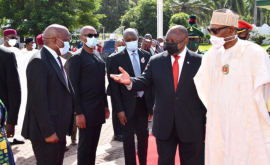
While confusion on the discovery of Omicron and the looming fourth wave being discoursed a fortnight ago, President Ramaphosa embarked on a West Africa tour, where he visited Nigeria, Ghana, Ivory Coast and Senegal, for bilateral engagements with his counterparts.
Although these visits were undertaken when the world was congested with the Omicron discourse, they didn’t deter President Ramaphosa from realising his 2019 inauguration commitment to strengthen and consolidate relations with the continent through bilateral engagements mechanisms such as the Bi-National Commissions (BNCs), which comprises areas in which countries would like to cooperate at the level of Heads of State.
These two scenarios (discovery of Omicron and West Africa visits) are critical for the South African government’s leadership role not only in Afica, but across the world too.
The West Africa tour should be seen as an opportunity to rally the entire continent in reiterating the assertion made by Africa’s long-departed Pan Africanist, Kwame Nkrumah, that “one cardinal fact of our time is the momentous impact of Africa’s awakening upon the modern world”. But, unfortunately, the relevance of such an argument can neither be emphasised nor isolated from the current debacle confronting South Africa and other countries in the continent because of Omicron.
As painful as it may be, South Africa and the entire African continent should be proud that it’s being rejected because of its strength and medical ingenuity and not something justifiable based on the scientific knowledge which has been the basis and guiding principles for any government in enforcing measures to curtail COVID-19 threats. Instead, the rejection thereof is motivating that a country from the southern tip of the African continent is the first to discover an Omicron variant scientifically; nevertheless, it has been active but undetected in those developed countries rejecting South Africa.
It can be argued that South Africa’s capability is unquestionable and places its health fraternity at the forefront in the quest for global health solutions to unexpected challenges. As we move towards the defeat of the COVID-19, South Africa should digest the current developments and be cognisant that anything related to COVID-19’s persistence has a high probability of being a subject of discussions occupying the public discourse.
Equally so, the visit by President Ramaphosa was very vigorous and epitomised consistency in his commitment for the 6th administration to be guided by the undertakings of his inaugural speech in 2019. Accordingly, it is fundamental in this context to revisit his profound visions outlined during the 2019 inauguration about South Africa in the continent, as his remarks are in our memories, particularly the Pan Africanist orientation recapitulating the golden days of South Africa’s engagements in the continent.
Then, little did we know that his choice of words during the inauguration will easily invigorate our memories about what he said versus his current undertakings three years down the line. In this context, he profoundly and sagaciously argued that “today, we reaffirm our determination to work with our sisters and brothers across the continent to realise the African Union’s vision of Agenda 2063; to forge a free trade area that stretches from Cape Town toCairo, bringing growth and opportunity all African countries; and we declare that our progress as South Africa depends on – and cannot be separated from – the onward march of our beloved continent Africa”.
Though his assertions might have been construed as mere rhetoric then, at this juncture, his visit to West Africa refreshes them like yesterday’s words as they presented wishes and aspirations of the African continent being realised by the type of recent visits. The visits were not a twist of fate but a testament and supplement to the pledge that the African continent would be a priority and the axis of the 6th administration’s international engagements.
Of note, and worth accentuation, upon ascending to the Union Buildings, President Ramaphosa visited several African countries starting at the SADC region. To date, it is convincing that he has covered ninety-five per cent of the African Continent through prevailing bilateral or regional platforms.
Though the visits came during complex challenges with the global economy struggling with the COVID-19 storm, it exhibited Africa’s commitment to realise its single market and a desire to trade with herself. In this regard, all leaders during the visits could not blink without mentioning the African Continental Free Trade Area, which comprises 55 countries merging a population of 1,3 billion with a combined Growth Domestic Product of $3,6 trillion.
The urgent implementation of this agreement, which is already underway, exhibited by the agreements signed during President Ramphosa’s visit to West Africa, will bring regional economic communities together. These agreements will further ensure that the continent sings economic development chorus from the same hymn book.
As the situation unfolds and looking at the dubious efforts to defocus South Africa and the continent, our leaders must again draw strength fromNkrumah’s aphorism that “seek ye first the political kingdom and all other things shall be added”. Accordingly, it was reassuring to note that President Ramaphosa and his peers’ persistently denounced the developed nations’ travel restrictions.
You see, such a move should be understood as an indispensable step in communicating that Africa is important and matters. For that reason, the visits to the four West African nations also provided an opportunity for the leaders to, in unison, attract international media coverage that helped to deliver Africa’s position against the thoughtless injustices directed to Africa. In this way, our African leaders demonstrate that they are on a mission of leading Africa to the pinnacle of economic leadership in global affairs.
Nevertheless, these four West African countries are very critical in their region and for their leaders to echo President Ramphosa’s sentiments of condemning the West’s decision should be interpreted as a gesture of cooperation amongst African leaders dealing with artificial uncertainties.
It is crystal clear to everyone that South Africa, Nigeria, Ivory Coast, Ghana, and Senegal are not ordinary countries on the continent but very important and rich in economic opportunities, which through cooperation will surely accelerate Africa’s developmental plans before 2063.
*******
Curtis Singo is a seasoned communications specialist working in the South African public service. He writes in his personal capacity – therefore the views expressed in the article are his.