
In 1994, South Africans set out on a journey to eradicate colonialism of a special type from their country through one tool that became known as “transformation”. What happened instead was the transformation of a special type. The promise of transformation only materialised for the few.
South Africa’s post-apartheid transition is neither a paradise nor a walk in the park. It is normal for post-revolutionary countries to encounter a crisis somewhere down the line of their history. We were utopian in our view to assume that South Africa was eternally destined to be a paradise; we were naïve to think that our forward march would be the proverbial walk in the park. The life of each country is full of the ups and downs. That’s why we should take our hats off to salute historical nations like China, England, Ethiopia, and Russia – nations that have existed for this long, for centuries, but still manage to keep their center together.
Many attempts at statehood have come and gone, some civilisations like the fictional Atlantis of Plato lie buried and forgotten under the sea. The Atlantis of this world exist in real life: just read the article “15 Amazing Underwater Cities Around the World”, you will be amazed.1 “The legend of Atlantis is an enduring one,” we learn from this article. “Was Atlantis even a real city? No, sadly not. Invented by Plato some 2,300 years ago, he claimed that this utopian civilisation, which allegedly existed 9,000 years before even his time, was punished by the gods for becoming selfish, greedy, and amoral and thus sunk into the seas. Which sea exactly is not known.” Then, “while Atlantis is an entirely fictional sunken city, there are plenty of real ones out there that, through some misfortune, if not necessarily the wrath of gods, can now only be found at the bottom of the sea or, indeed, a lake.”
South Africa’s turn to face its crisis moment has arrived: the question is what do we do? Do we follow the Atlantis to our death in the belly of the sea, do we move around in circles of one crisis after another like Haiti, or do you follow the example of the likes of the USA and China who triumphed over their trying, post-revolutionary moments?
Rest assured: the current difficulties will not be the last we’ll see of a crisis. Many more are still heading our way and each will be an opportunity for South Africa to take a leap to become better and better. Zimbabwe experienced its first major crisis in 2002, that is some 20 years after independence, and it is not yet over it. Independent Ghana witnessed a military coup in 1966, and thereafter suffered years of political instability. Angola and Mozambique were plunged into a civil war immediately after their independence. Post-apartheid South Africa hasn’t seen a crisis of the scale that was experienced in Mozambique, Ghana, Liberia or Sierra Leone. For now, ours is just load-shedding, potholes, economic decline, rampant corruption, collapsing state institutions, etc. But we are already panicking and losing control. We must keep our cool. Now it’s the time for leadership.
The problem and its solution are like siblings who are always quarrelling with each other yet are forever inseparable.
The solution to our problem is just here, not far from where the problem resides. Every problem coexists with its solution.
For a man or woman living in poverty, the solution to their condition is inherent to that very same condition. The trick is for the human mind to innovate – to think, uncover, and combine different ingredients that are required to make up the solution. These ingredients are variables that are already in existence in the abstract realm. They are billions in number, as many as the number of the stars in the universe. A genius is a time-traveller who is gifted with the mind that can pierce through the wall to this realm to transcend into the abode of these variables, play with them, juggle them around to find the right combination and mould it into a solution. But remember, to see your way to the solution and beyond requires more than just a brilliant mind; you must also have the courage to think outside proverbial box, show determination, be patient, but eschew procrastination when it’s time to implement your solution. That’s a challenge for leaders.
Countries that succeed are those that are able to solve problems of society through innovative methods. Remember that every invention already exists in another dimension of our reality. An invention happens because it’s possible. As long as an invention is possible, then it already exists. The trick is for the human mind to find this invention by discovering its constituent variables that would bring it to life.
We should treat innovation not as rocket science but as an everyday human activity. Humans solve problems on daily basis in the course of their everyday lives. They innovate all the time – from using a spoon to eat and a chair to sit, to singing a song to stop a baby from crying and washing one’s face with a cloth.
These are human inventions that we take for granted. Leaders should be those who are better at finding the combination of variables to solve society’s problems. They should have this gift. They must be the best among us when it comes to problem solving. Countries that get to transform themselves and change the conditions of their people are those with leaders who able are to solve problems of society through the innovative method.
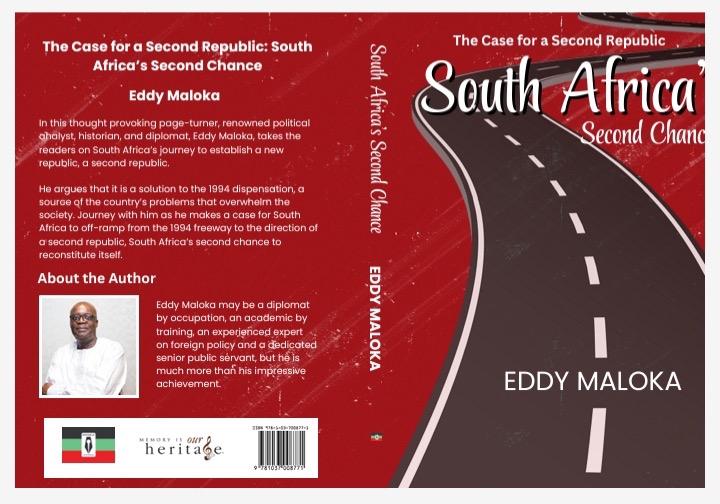
This book will attempt to make a case for South Africa to off-ramp from this 1994 freeway to the direction of a second republic. We assume that in 1994, we established the first post-apartheid republic that is now as old as a generation that is 30-years old. Every creation has its own fixed life span. Some insects’ age is limited to just a few days; a human can become a centenarian, but only those who are lucky. A cat becomes a fully matured adult around seven years, but a dog doesn’t require so many years, two is generally adequate for it. Welwitschia leaves can live for a thousand years. For nations to age, they follow a circle of thirty years. Post-apartheid South Africa is now a mature adult. Time has come for the country to move to its higher stage of development and it can do this by reconstituting itself into a new republic, the second republic. Clinging to the status quo when time demands radical change can only lead to disastrous consequences.
The intention of this book is modest; it is written by an everyday South African for everyday South Africans, for our thinkers and for our leaders. Let me see, as we turn to the next page, if I can convince you about what South Africa should do to leap into a higher stage of its development as a nation, to free itself from the clutches of the 1994 paradigm to a new freedom, and to become a second republic.
Imagine a world with only three talents – oratory, thinking, and action. Imagine further that a tyrannical creator of this world is so mean and stingy that she decides that none among her creatures will ever be endowed with all the three talents together in one person. Strictly speaking: one person, one talent.
Period. Then, the one gifted with thinking, has an unbelievable mind, but can’t articulate his ideas nor act on them. The orator is such a brilliant public speaker, but his speeches are just hot air, devoid of ideas, and lack any sense of action. The doer is so brave and ready to act fearless, but has no brain, let alone the skill to express himself. Our second republic would rebel against such a tyranny, for as an idea, it’s worth considering; in its deeds, it will deliver; as a clarion call, its message is convincing.
***
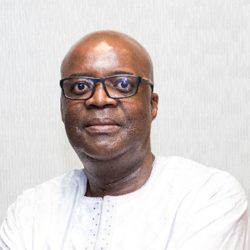
This is a “Preface” to Prof Eddy Maloka’s latest offering, “South Africa’s Second Chance: The Case for a Second Republic”. Prof Maloka is a former CEO of the AU’s African Peer Review Mechanism (APRM). His book was published by Skotaville and it is available in all the major bookshops.