
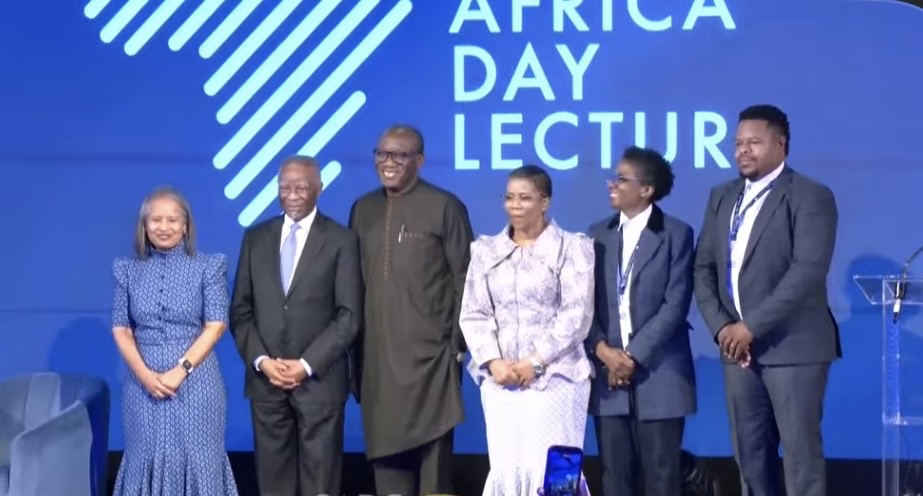
The Publisher of this new portal, SAUL MOLOBI, watched the full YouTube SABC recording of the 16th Thabo Mbeki Africa Day Lecture, here are his reflections…
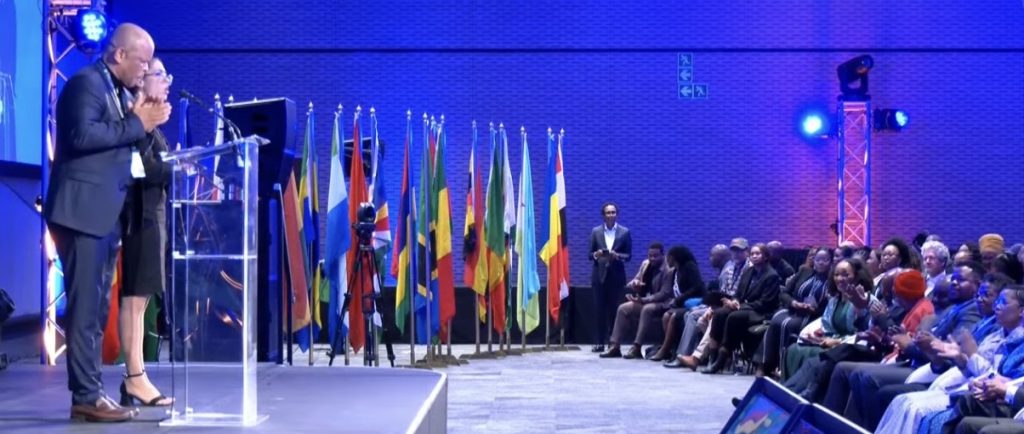
At a time when the world is experiencing geopolitical fragmentation, deepening inequality, democratic uncertainty, and growing mistrust in institutions, the 16th Thabo Mbeki Africa Day Lecture arrived not merely as another commemorative gathering, but as an urgent continental intervention. Convened at the Century City Conference Centre in Cape Town under the theme “Rebuilding African Unity in an Age of Fragmentation: Sovereignty, Solidarity, and the Renewal of Institutions,” the lecture became one of the most intellectually significant African dialogues of 2026.
Hosted by the Thabo Mbeki Foundation in partnership with University of South Africa, the gathering assembled political leaders, diplomats, academics, students, activists, and development practitioners around a central question: What does African unity require in the present age, and what practical work must Africans undertake to rebuild institutions capable of securing the continent’s future?
The event brought together towering African intellectual and political figures including Thabo Mbeki, keynote speaker Prof Kayode Fayemi, Prof Puleng LenkaBula, Dr Geraldine Fraser-Moleketi, Prof Funmi Olonisakin, and representatives of the African Union Commission.
What unfolded throughout the evening was not ceremonial rhetoric, but a candid and deeply reflective examination of Africa’s contemporary condition.
Africa at a Historical Crossroads
Moderator Cathy Mohlahlana opened proceedings by situating the lecture within the historical significance of South Africa’s constitutional democracy, which this year marks thirty years since the adoption of the Constitution. She reminded the audience that South Africa’s democratic breakthrough represented not only a national victory over apartheid, but a triumph for African unity and humanity itself.
Yet beneath the celebration lay a sober recognition that the continent now faces a different era — one marked by fragmentation, instability, and institutional erosion.
The lecture’s central concern emerged almost immediately: while Africa has formally achieved political independence, many of the continent’s institutions remain fragile, economies externally dependent, and societies vulnerable to conflict, inequality and disillusionment.
This tension between political liberation and unfinished transformation became the defining thread of the evening.
Professor Puleng LenkaBula framed the challenge sharply. Universities, she argued, cannot remain isolated ivory towers while societies around them struggle with violence, institutional collapse, and inequality. Institutions of learning must become active partners in rebuilding society and shaping a new African future.
Her intervention reflected a growing realization across the continent: Africa’s challenges are no longer simply about resisting colonial domination, but about constructing capable, ethical, and developmental institutions from within.
The Crisis of Institutional Legitimacy
One of the most intellectually forceful contributions came from Dr Geraldine Fraser-Moleketi, who argued that Africa’s deepest crisis is not one of diversity, borders, religion, or ethnicity. Africa has always contained multiplicity.
Rather, she argued, the continent faces a crisis of institutional legitimacy.
Her observation cut to the heart of contemporary African politics. Across many countries, citizens increasingly distrust governments, parliaments, police services, and courts. Democratic institutions appear distant from ordinary people, while corruption, exclusion, and inequality weaken public confidence.
In perhaps one of the evening’s most memorable formulations, she stated that a coup does not begin when soldiers seize television stations. It begins much earlier — when citizens lose faith in civilian institutions themselves.
This diagnosis resonated deeply with broader continental realities. From military takeovers in parts of West Africa to democratic fatigue in established constitutional states, the lecture confronted the uncomfortable truth that elections alone do not guarantee democratic legitimacy.
The question therefore became not merely how to preserve institutions, but how to rebuild trust in them.
Kayode Fayemi and the Call for Strategic African Sovereignty
Professor Kayode Fayemi’s keynote address represented the intellectual centerpiece of the evening.
Combining the insights of a scholar, former governor, policy thinker, and Pan-Africanist, Fayemi painted a portrait of a continent filled simultaneously with extraordinary possibility and profound contradiction.
Africa, he argued, possesses immense demographic strength, entrepreneurial energy, cultural influence, and strategic importance. African music, technology, fashion, literature, and innovation increasingly shape global culture.
Yet these advances coexist alongside insecurity, inequality, unemployment, institutional fragility, and authoritarian tendencies.
For Fayemi, this contradiction reflects the incomplete nature of African sovereignty itself.
True sovereignty, he argued, cannot simply mean territorial independence or flag sovereignty. Real sovereignty means possessing the institutional and economic capacity to make independent developmental choices — the ability to educate citizens, industrialize economies, feed populations, manage resources responsibly, and negotiate globally from positions of confidence.
This was a significant reframing of the sovereignty debate.
In the post-colonial era, African states often defined sovereignty defensively, focusing on territorial integrity and non-interference. Fayemi suggested that in the twenty-first century, sovereignty must instead be measured by state capability and developmental effectiveness.
This argument became particularly important in relation to the African Continental Free Trade Area, which Fayemi described not merely as a trade agreement, but as a strategic instrument for continental transformation.
Africa’s future, he insisted, lies not in fragmentation or narrow nationalism, but in deliberate integration.
Pan-Africanism Beyond Symbolism
A recurring theme throughout the lecture was the need to rescue Pan-Africanism from symbolism and return it to practical politics.
For decades, Pan-Africanism has often been celebrated rhetorically while remaining weak institutionally. Speakers throughout the evening challenged Africans to rethink solidarity not as abstract sentiment, but as concrete cooperation.
The representative of the African Union Commission emphasized that sovereignty is strengthened — not weakened — by effective continental cooperation. She pointed to examples such as the African Vaccine Acquisition Trust during the COVID-19 pandemic as evidence that collective action can produce practical results.
Fayemi expanded this argument by confronting the rise of Afrophobia and xenophobia within Africa itself.
His remarks were particularly poignant in the South African context. He reminded the audience that South Africa’s liberation was sustained by solidarity from across the continent, and that violence directed at fellow Africans undermines the moral foundation of Pan-Africanism itself.
In this way, the lecture insisted that Pan-Africanism must become both moral and material — rooted simultaneously in human solidarity and economic transformation.
Mbeki’s Intervention: The Centrality of Capital and Development
If Fayemi supplied the philosophical framework of the evening, President Thabo Mbeki grounded the conversation in developmental pragmatism.
Again and again, Mbeki returned the discussion to one central question: Where will the capital come from to eradicate African poverty?
His intervention shifted the discussion from ideals to implementation.
Africa, he argued, cannot industrialize, educate populations, modernize agriculture, build infrastructure, or develop technology without massive investment capital. Roads, factories, universities, railways, and energy systems all require financing.
Drawing from the experience of the New Partnership for Africa’s Development (NEPAD), Mbeki recalled earlier efforts to mobilize African pension funds for African development. Yet only South Africa and Ghana meaningfully contributed.
This reluctance, he suggested, reflected a deeper continental problem: Africans themselves often lack confidence in African development prospects.
Mbeki’s comparison with China proved especially illuminating. China’s leadership, he noted, understood that domestic capital alone would not be sufficient for rapid modernization. Through strategic planning and political cohesion, China successfully attracted international investment into national development priorities.
Africa, he implied, has not yet achieved equivalent strategic coherence.
The challenge therefore is not only economic, but political.
Without continental solidarity, political coordination, and institutional credibility, Africa will struggle to mobilize the scale of capital necessary for transformation.
The Youth Question and Africa’s Demographic Future
Another recurring theme was the centrality of African youth.
Speakers repeatedly emphasized that by the middle of this century, one in every four people globally will be African. This demographic reality presents both opportunity and danger.
Young Africans are increasingly demanding accountable governance, dignity, jobs, inclusion, and transparency. Across the continent, youth movements are reshaping political discourse and challenging established systems.
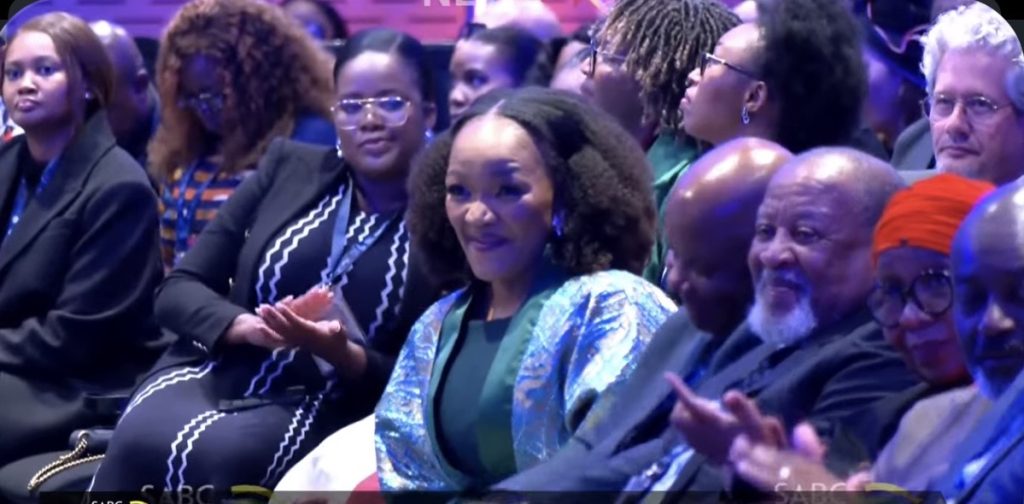
Audience interventions reinforced this urgency. Contributors argued that African education systems remain disconnected from African realities and insufficiently focused on solving continental problems. Others emphasized that young people possess creativity and innovative potential but are frequently excluded from leadership and decision-making processes.
The lecture therefore identified youth not merely as beneficiaries of future development, but as central agents in shaping Africa’s trajectory.
Beyond Reflection: A Call to Action
Perhaps the greatest significance of the 16th Africa Day Lecture lay in its refusal to settle for easy optimism.
The speakers acknowledged Africa’s immense potential, but equally confronted difficult realities: institutional decay, economic dependency, governance failures, social fragmentation, and persistent poverty.
Yet the tone of the evening was not despairing.
Instead, the lecture called for seriousness — intellectual seriousness, political seriousness, and developmental seriousness.
Its core message was clear: Africa’s future will not be determined by historical victimhood alone, nor by demographic potential in itself, but by the quality of the continent’s institutions, leadership, solidarity, and strategic choices.
In his concluding reflections, President Mbeki warned against abstract rhetoric disconnected from practical implementation. Development, he reminded the audience, requires functioning states, effective public institutions, investment capital, and political cohesion.
Africa’s renewal, therefore, cannot remain a slogan.
It must become a programme.
As the evening concluded, one was left with the sense that the Africa Day Lecture had achieved something increasingly rare in contemporary public discourse: it created a space where difficult truths could be spoken honestly without surrendering hope.
The lecture did not provide all the answers.
But it asked the right questions.
And perhaps, in this historical moment of uncertainty and fragmentation, that is precisely where rebuilding African unity must begin.
A call to action
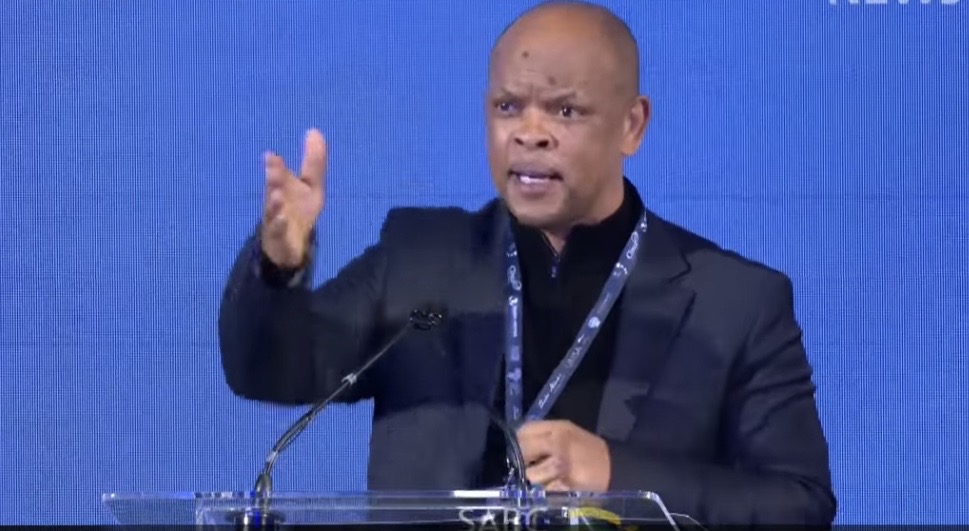
Nkosiphendule Kolisile, CEO of the Thabo Mbeki Foundation, had the final say.
Days and moments like this remind us that it feels good to be African.
These are not merely events. They are calls to action.
I hope universities such as Stellenbosch University, Walter Sisulu University, and University of South Africa will take this lecture seriously and ask how its ideas can become part of teaching and intellectual engagement.
One of the dangers we face is the regionalization of history and identity, where communities know only their own local realities and lose sight of the broader African story.
Professor Fayemi has challenged us to understand South Africa within the context of the African continent.
He has challenged us to act.
We must confront leadership crises, economic exclusion, poverty, inequality, and social fragmentation honestly.
We cannot blame all our problems on undocumented immigrants or external actors.
Our problems are deeper than that.
If we are to remain credible as a country and continent, then our solidarity must begin with Africans themselves — with Zimbabweans, Basotho, Sudanese, Palestinians, Cubans, and all oppressed peoples.
The work of Pan-Africanism is practical work.
It is moral work.
And it is the responsibility of all of us.