
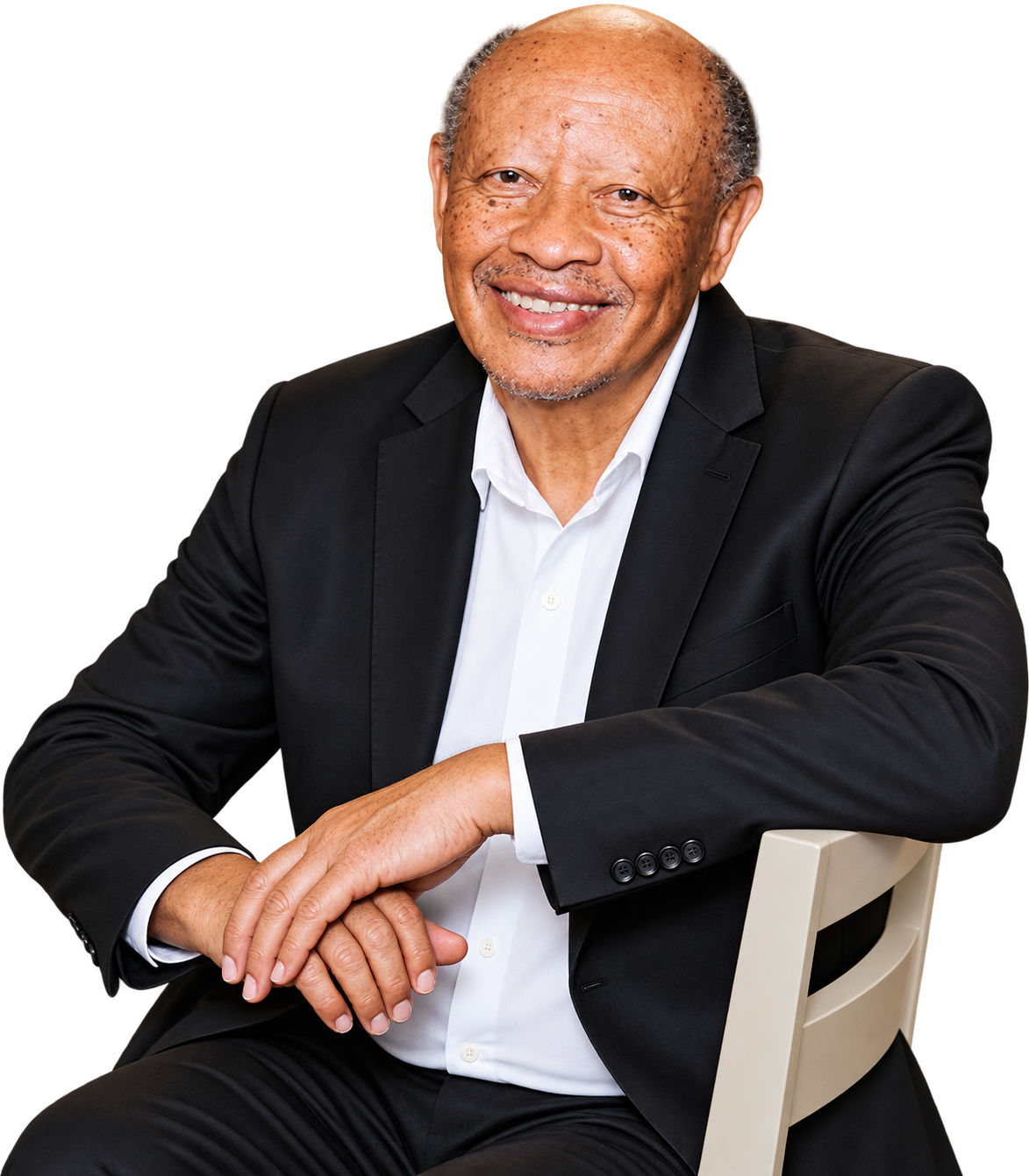
“Your painting is complete, but your colours will always remain.”
Dr Leeto Patrick David Mokhuane, affectionately known to many as Bra Pat, was a remarkable South African whose life brought together medicine and art, scholarship and service, discipline and humour, professional excellence and profound humanity.
He passed away on 29 August 2026, leaving behind a rich legacy that extends far beyond his distinguished career as a psychiatrist. He was a husband, father, grandfather, brother, uncle, mentor, teacher and friend whose influence was felt in his family, among his students and colleagues, in the medical profession and in the communities he served.
Early life and the artist within
Dr Mokhuane was born on 6 April 1945 at 1682 Motshumi Street, Batho Location, Bloemfontein, to Mary and Gabriel Demas. He was born in a family deeply rooted in faith, education, healthcare, artistry, service and the history of African communities in Bloemfontein.
His early schooling began at Mangaung Primary School, after which he attended Bantu High School before completing his secondary education at St Francis College, Mariannhill.
From childhood, Pat demonstrated an extraordinary intellectual curiosity and a natural gift for art. Together with his late brother Philip, himself an accomplished painter and artist, he taught himself the foundations of drawing and painting. Their childhood creativity was wonderfully simple and inventive: using bricks their father had made for renovations, the brothers would draw elaborate structures and beautiful roses in the sand.
At St Francis College, his artistic talent was nurtured under the guidance of Sr Maria Pientia Selhorst. His ability was already sufficiently advanced for one of his works, The Betrayal of Peter, to be selected for the 1965 Interfaith Bantu Art Exhibition at the Durban Art Gallery.
This lesser-known chapter of his life reveals something important about the man he would become. The artist never disappeared when the doctor emerged. Creativity, observation, sensitivity and a deep appreciation for human experience remained integral to his character throughout his life.
Pat initially pursued tertiary studies in Fine Arts, but became increasingly dissatisfied with an art curriculum that he felt did not adequately reflect the African experience and creative identity. Consistent with the independent spirit that characterised him, he made the courageous decision to change direction.
He returned to Mariannhill, where he taught Afrikaans and Sesotho, before embarking on the journey that would ultimately make him a pioneer in South African medicine.
Choosing the road less travelled
In 1971, Pat entered medical school at the University of Natal, completing his MBChB in 1977.
His intellectual hunger, however, did not end with his medical degree. At a time when psychiatry was poorly understood, heavily stigmatised and even ridiculed within sections of the medical profession, Pat deliberately chose this challenging discipline.
Psychiatry was sometimes dismissed as a field for dealing with people who were considered simply “mad”, and few doctors were prepared to specialise in it. Pat was undeterred.
He proceeded to the Medical University of Southern Africa (MEDUNSA) to pursue a master’s degree in medicine (MMed) with specialisation in psychiatry. In doing so, he entered a field in which there were very few Black psychiatrists and ultimately became recognised as South Africa’s first Black psychiatrist.
His choice was an act of both professional courage and social commitment.
He understood that mental illness was not something to be hidden, feared or treated as an occult condition. It was a medical and human reality deserving of knowledge, dignity, compassion and professional treatment.
A doctor who chose service
After obtaining his postgraduate qualification in psychiatry, Pat did not immediately pursue the more lucrative possibilities of private practice. He recognised the acute shortage of specialist psychiatric skills in the public sector and chose to serve where his expertise was most needed.
He served the community of Ga-Rankuwa with distinction, participating in outreach programmes to local clinics and helping to empower both doctors and nurses.
His commitment was never simply about treating individual patients. He understood medicine as a social responsibility. Through outreach, mentorship and the transfer of knowledge, he strengthened the capacity of the broader healthcare system.
This was characteristic of Pat: he did not measure his worth by how much he could earn from his knowledge, but by how many people could benefit from it.
He was a member of the Psychiatric Society of South Africa and the South African Medical Association, contributing to the professional development and recognition of psychiatry within the medical fraternity.
The teacher
Pat’s contribution to medicine extended into the classroom.
He lectured both undergraduate MBChB students and postgraduate MMed students at MEDUNSA, where he became much more than a lecturer. He was a mentor and an educator who sought to make his students understand rather than merely memorise.
Those who passed through his classroom remember him as patient, knowledgeable, structured and approachable. He had the ability to take a difficult and often intimidating discipline and make it accessible.
And then there was his humour.
Pat could bring unexpected laughter into the classroom. His dry wit, understated delivery and perfectly timed jokes often caught students by surprise. This was not merely entertainment; it was part of his teaching philosophy. He understood that people learn better when they feel comfortable enough to engage, question and think.
Through his teaching, he helped dismantle some of the stigma surrounding psychiatric illness and encouraged a new generation of doctors to consider psychiatry as a serious, intellectually demanding and deeply humane field of medicine.
Many students were drawn into psychiatry because of the way he taught it.
His influence therefore lives not only in the patients he treated but also in the doctors he helped produce.
Private practice
In time, Pat entered private practice, serving patients at Louis Pasteur Private Hospital in Pretoria and, on weekends, at Legae Private Hospital in Mabopane.
Yet even in private practice, his approach remained grounded in the values that had defined his public service. He never lost sight of the person behind the diagnosis.
His patients encountered a physician whose professional discipline was matched by compassion and humanity. His medical career demonstrated that excellence and service did not have to be opposites.
Medicine, art and humanity
Perhaps the most beautiful way to understand Pat is to see his life as a meeting point between medicine and art.
The psychiatrist studies the complexity of the human mind. The artist studies the complexity of human experience. Pat was gifted with both perspectives.
His early fascination with drawing and painting taught him to observe. Medicine taught him to understand. Psychiatry taught him to listen. Teaching taught him to communicate. And family taught him love.
These strands came together in a man who could be deeply serious about his responsibilities while maintaining a wonderfully dry and disarming sense of humour.
His smile was infectious. His humour was often understated. His discipline was unquestionable. His humility was extraordinary.
Despite the pioneering nature of his achievements, he never carried himself as though he were better than anyone else.
A husband and family man
No account of Bra Pat’s life would be complete without speaking of his beloved wife, Queen Mokhuane.
They were married on 3 July 1976 in Dube, Soweto, and celebrated fifty years of marriage in 2026.
For half a century, they loved, worked, raised their family, challenged and supported one another, and navigated life’s triumphs and difficulties as true partners.
Their marriage was a testament to love, mutual respect, trust, sacrifice and companionship. They demonstrated that one person’s light does not have to diminish for another to shine.
To his children, Ofentse, Letshego and Obakeng, Pat was a father in the fullest meaning of the word. He provided not merely for them, but guided, advised, challenged and loved them.
To his children-in-law, Zosuliwe and Freya, he extended the same warmth and acceptance.
To his grandchildren, Amali and Inaya, he was a loving grandfather whose presence became part of the fabric of their lives.
And to his many nieces and nephews, he was Malome and Rrangwane – father figure, counsellor, adviser, protector, role model and family elder.
Together with Queen, he became a source of strength and a safety net for generations of their extended family.
The keeper of family memory
As the oldest surviving elder of the Mokhuane family, Pat carried something that cannot be replaced: memory.
He had witnessed the passing of parents, brothers, sisters and other loved ones. He carried stories of generations — stories of people, places, struggles, achievements, relationships and family traditions.
He was, in the truest sense, a living bridge between generations.
With his passing, that bridge has fallen silent.
But the stories he carried need not disappear. They now live in those to whom he told them, in the values he embodied and in the generations that follow.
Remembered by his peers, students and colleagues
For those who had the privilege of working alongside or learning from Dr Pat Mokhuane, his passing is not only the loss of a distinguished psychiatrist, but the departure of a teacher, mentor and pioneer whose influence extended far beyond the walls of the institutions in which he served.
One of his colleagues remembers him with particular pride:
“Our Prof… the first psychiatrist to conduct psychiatric sessions in Rustenburg in the 1990s. He was always eager to share his knowledge…”
These words capture an essential quality of Dr Mokhuane. Knowledge, for him, was never something to be guarded. It was something to be shared, cultivated and passed on to the next generation. He understood that the true measure of a teacher was not simply what he knew, but how many others he could empower through what he knew.
Another colleague reflected on the profound sense of loss:
“Eish, what a painful moment for us. Somebody who cared deeply for patients and students. He was such fun to be with, both in class and outside. We were truly blessed to have such teachers and mentors.”
This remembrance speaks to the duality that characterised Bra Pat. He was a rigorous and accomplished medical professional, but he was never distant or inaccessible. He combined intellectual discipline with warmth, humour and an extraordinary capacity to make people feel at ease.
For generations of students, he was more than a lecturer. He was a mentor who opened minds, challenged assumptions and helped young doctors appreciate the importance of psychiatry and compassionate patient care. His teaching helped to demystify mental illness and challenged the stigma that had for so long surrounded psychiatric conditions.
The same colleague concluded with words that perhaps best capture the magnitude of his educational legacy:
“I know his teachings loom large amongst legions of his students. This was a great African teacher!”
Indeed, Dr Mokhuane’s classroom extended far beyond the lecture theatre. It travelled with his students into hospitals, clinics, consulting rooms and communities across South Africa. Every doctor who was shaped by his teaching became, in some measure, an extension of his legacy.
He leaves behind not merely students, but generations of practitioners carrying forward knowledge, values and lessons that he so generously shared.
That is the enduring mark of a great teacher: when the teacher is gone, the teaching remains alive.
A life of quiet achievement
It is tempting, when remembering a pioneering doctor, to focus on titles and milestones: first Black psychiatrist, specialist, lecturer, mentor and medical practitioner.
But those who knew Pat understand that his greatness cannot be reduced to a curriculum vitae.
His achievement was in the totality of his life. He demonstrated that intellectual excellence could coexist with humility. That professional ambition could coexist with service. That discipline could coexist with humour. That medicine could coexist with art. That a pioneering career could coexist with devotion to family.
He leaves behind an example of a life lived not for recognition, but for purpose.
He is survived by his wife, three children and two grandchildren.
Farewell, Bra Pat
Tsela tshweu, Bra Pat: pioneer, healer, teacher and artist. Yes, farewell to a beloved husband, father and grandfather. Farewell to a brother, uncle, mentor and friend.
Your work is done. Your painting is complete. But your colours will always remain.
They remain in the doctors you taught, the patients you served, the family you loved, the stories you carried, the laughter you shared and the lives you touched.
And the rich texture of your love will live in us forever.
And so, as the family bids farewell, the words of those who came before us provide the language that grief sometimes cannot find:
Robala ka kagiso Motlhaping, motho wa Thipa-Swadi,
Motho oo tlhapang ka mašwi a kgomo e e senang dinaka.
Robala ka kagiso, setlogolo sa Barolong,
Batho ba ga Gogomela!
Namane tsa Tholo,
Di jang mogope, di bo di olala,
Diphologolo tse di dinaka di motsopodia,
Matshophetshophe, tse di thupana thekeng.
Re tla go rata ka bosakhutleng.
Re tla go gopola ka metlha le metlha.
Tsamaya ka kagiso Papa.
O Segatlhamela masisi,
One o se legatlapa!
O gatlhametse bosisi jwa loso,
O sena poifo!
Jaanong kgwele ya mothaisi e kgaogile!
Robala ka kagiso, Papa.
_________________________________
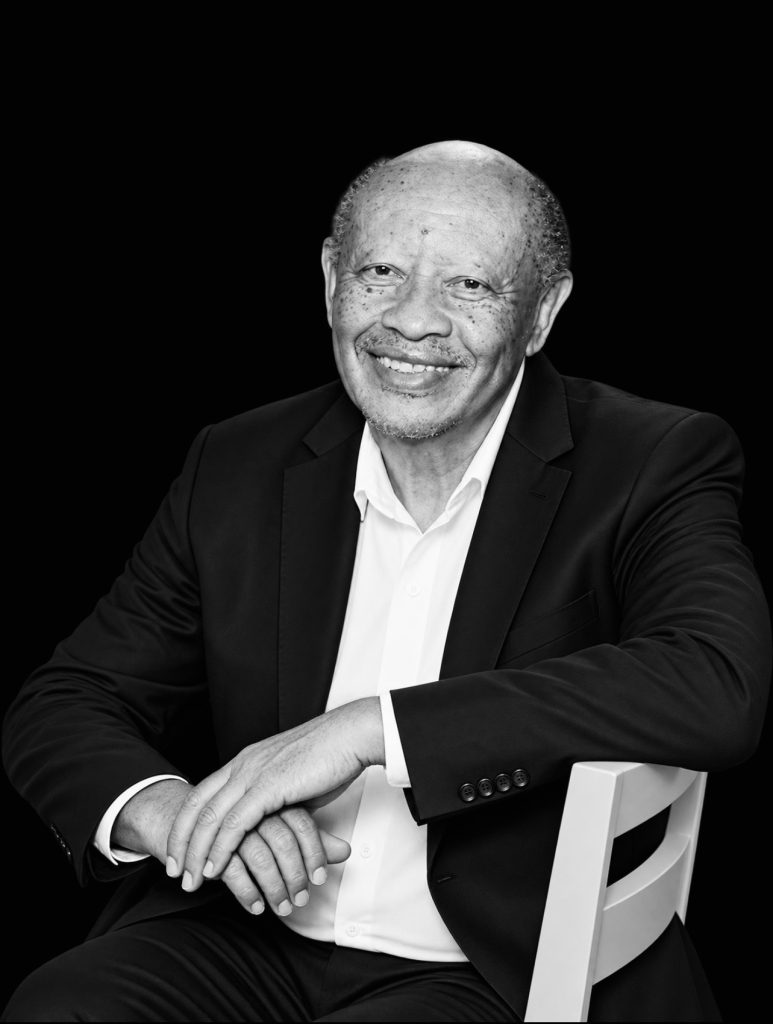
Funeral programme for the late Dr Leeto Patrick David Mokhuane
PART 1: HOME
Viewing: 08:00-09:00
Prayer: 09:00-09:15
PART 2: CHURCH | 10:00 – 11:00
Requiem Mass
PART 3: TRIBUTES | 11:00 -12:30
1. Reading of obituary: Keletso Matlhape
2. Welcome by the MC
3. Tribute on behalf of the Mokhuane family: Klassen Lekgetho
4. Tribute on behalf of the Demas family: Ella Khan
5. Tribute on behalf of the Moeng family: Pat Moeng
6. Tribute on behalf of the kids: Ofentse, Letshego, Obakeng
7. Video tribute on behalf of the grandchildren: Amali & Inaya
8. Tribute on behalf of the wife: Dr Mary Manthata Setati
9. Representative from National Department of Health: MsCaroline Mongale
10. Representative for Sefako Makgatho Health Sciences University Alumni Association: Dr Solly Motlanthe
11. Tribute by friend: Dr Cornelius Moalusi
12. Tribute from church choir member: Abey Temane
13. Tribute from friend: Dr Lance Phalatse
14. Representative of UKZN alumni & colleagues: Dr Taole Mokoena
15. Vote of thanks on behalf of the Mokhuane family: Clifford Mokhuane
16. Closing prayer: Father Sefiri