
Kenya’s Vision 2030 long-term development strategy intends to transform the country into a middle-income country by 2030. Some efforts have already begun to take shape: Through political, structural, and economic reforms, the administration has pushed for economic growth and social improvement since 2008.
The Big Four agenda, which focuses on food security, affordable housing, manufacturing, and universal healthcare, was introduced in 2017. Kenya is also ideally positioned to profit from regional and international trade prospects such as the African Continental Free Trade Area (AfCFTA) and the African Growth and Opportunity Act (AGOA). These initiatives, taken together, have the potential to hasten Kenya’s incorporation into the global economy.
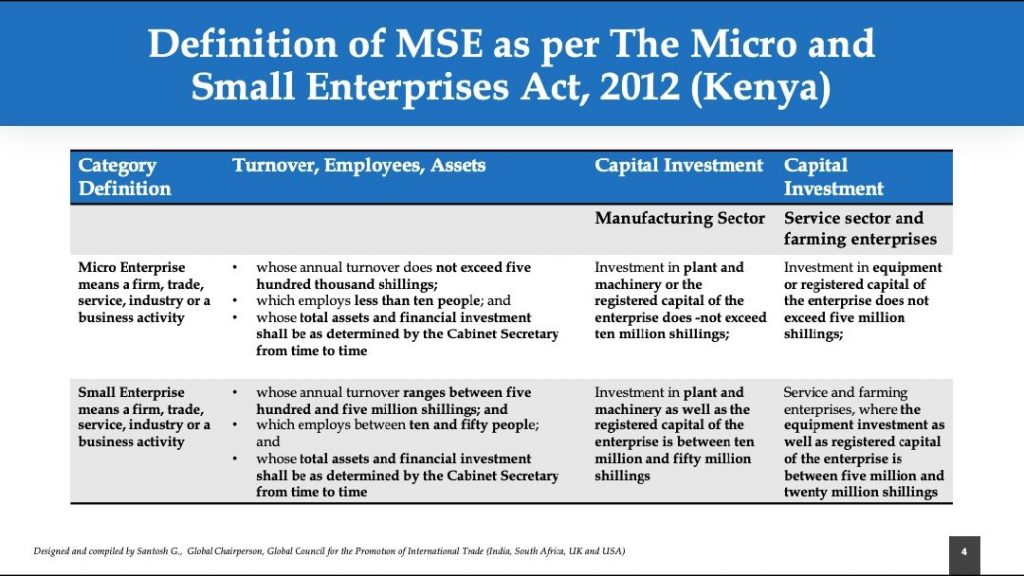
MSE stands for Micro, Small Enterprises. In accordance with the Micro and Small Enterprises Act, 2012, the enterprises are classified into two divisions. These categories are:
- Manufacturing enterprises – engaged in the manufacturing or production of goods in any industry
- Service enterprises – engaged in providing or rendering services.
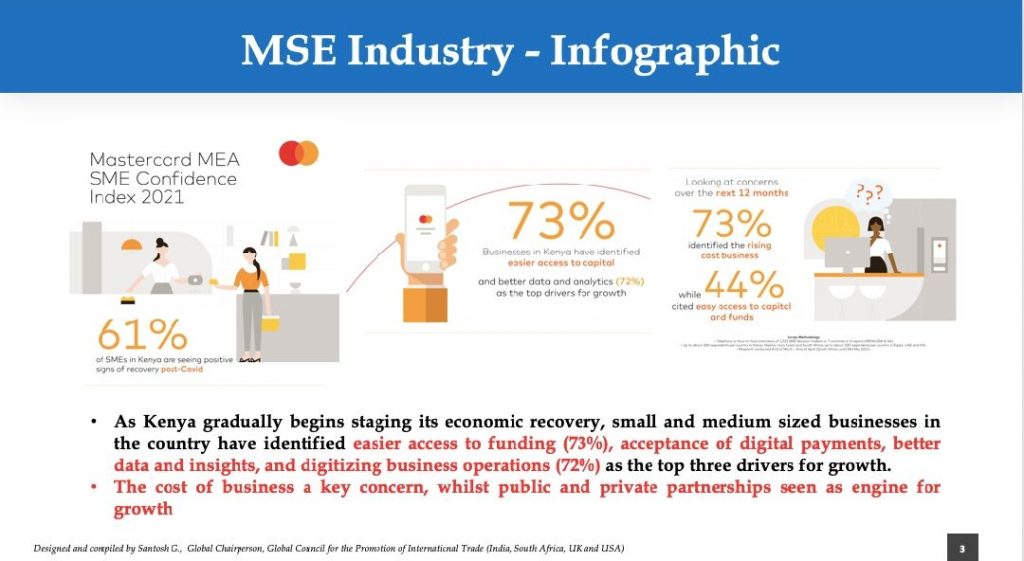
As Kenya gradually begins staging its economic recovery, small and medium sized businesses in the country have identified easier access to funding (73%), acceptance of digital payments, better data and insights, and digitizing business operations (72%) as the top three drivers for growth.
The cost of business a key concern, whilst public and private partnerships seen as engine for growth.
Definition of MSE as per The Micro and Small Enterprises Act, 2012 (Kenya):
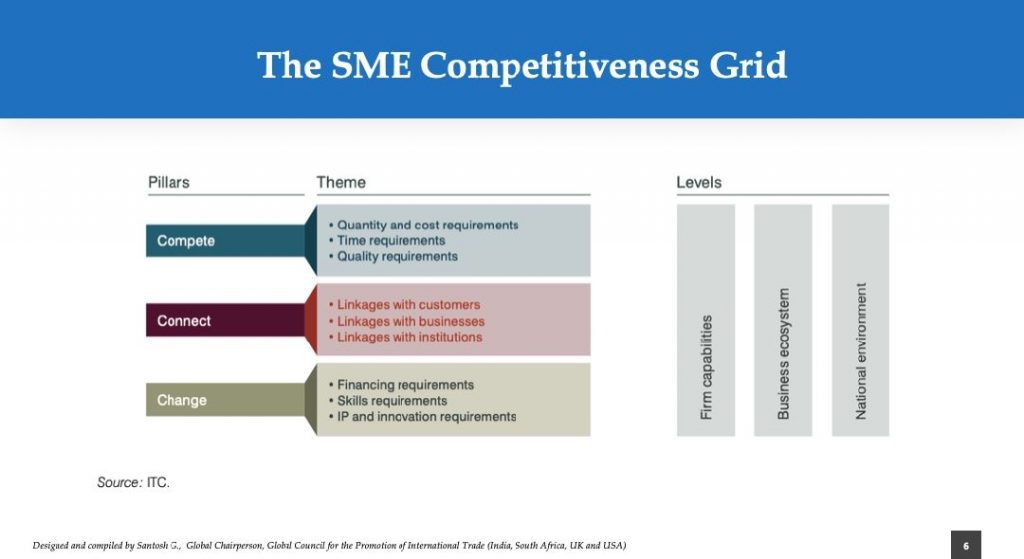
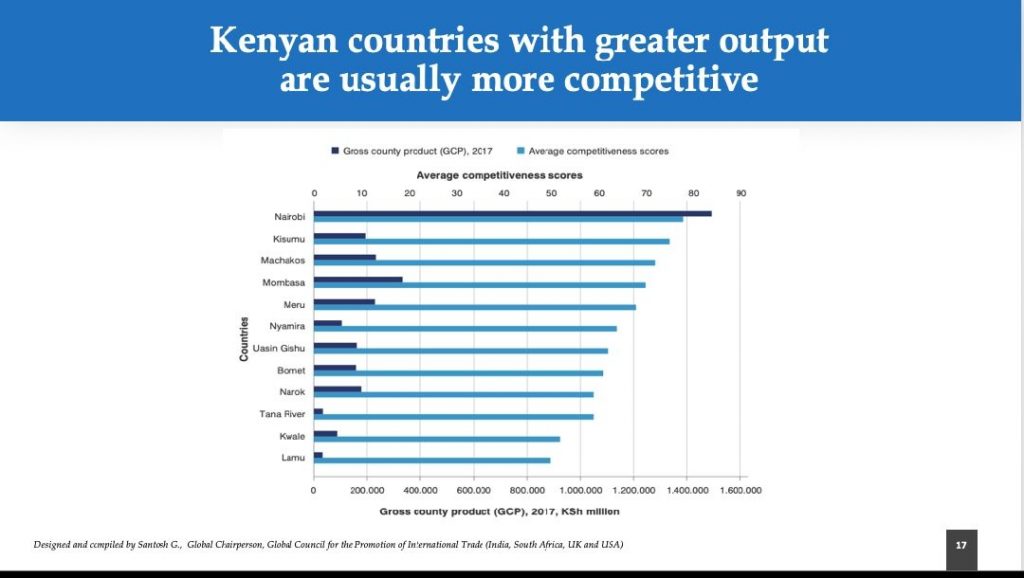
The International Trade Centre (ITC) Survey findings
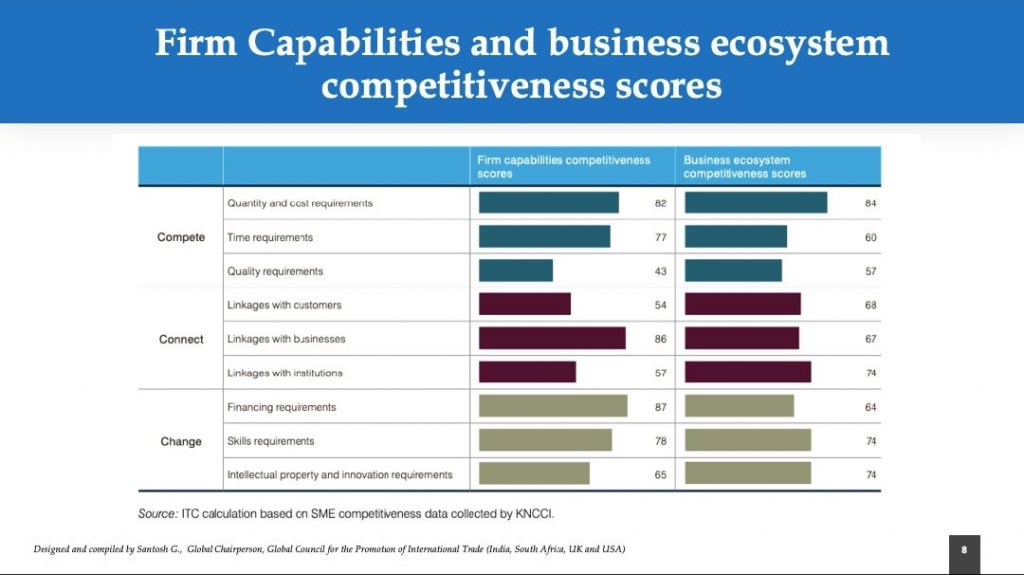
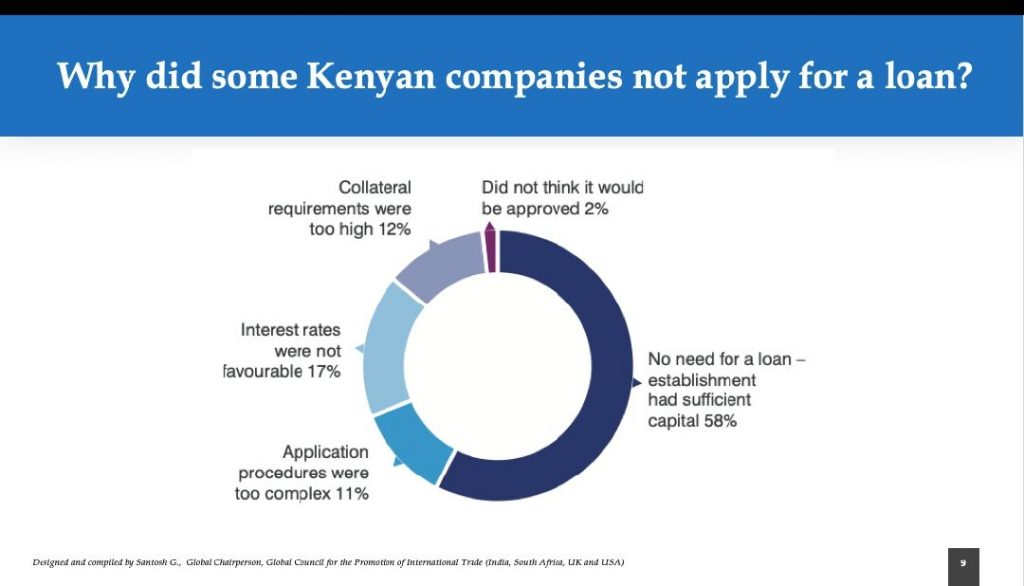
- Loan approval rate is high, but SMEs need targeted solutions – Kenyan firms manage their finances quite well, with 81% saying they have detailed knowledge of the loan process, 82% saying they have good ability to manage their cash flow to execute payments, and 89% owning a bank account.
- Overall ability to meet production requirements masks regional differences in access to utilities
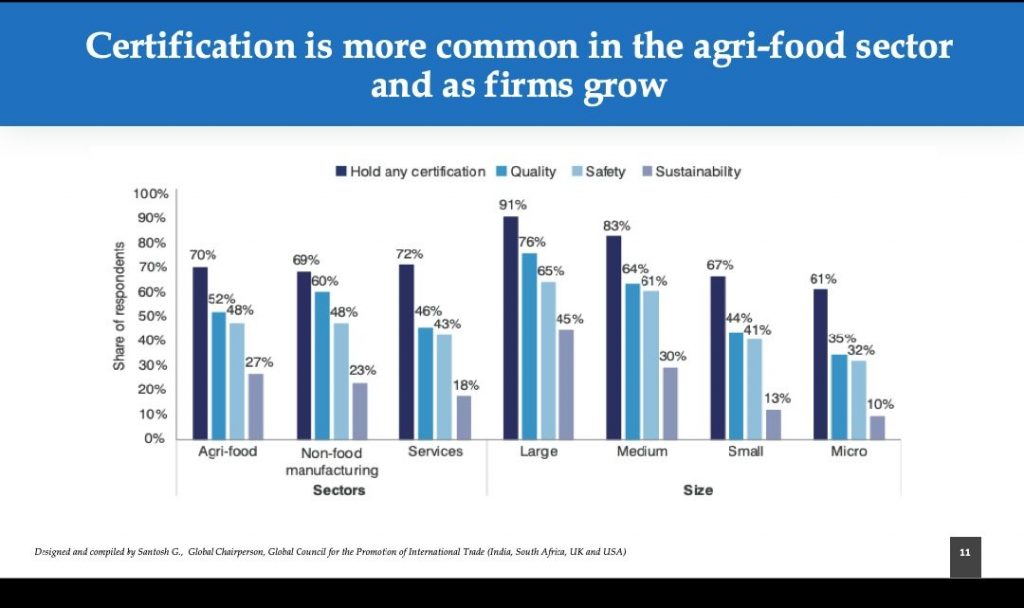
- Data reveal the complex relationship between certification and competitiveness – 75% of the firms interviewed for this report gave a high rating to the quality of certification bodies and to the availability of information on standards and certificates.
- Agri-food companies praise logistics services, but regional differences exist – 74% of surveyed agri-food firms praised the quality of logistics services, 65% said these services were too expensive.
- Non-food manufacturing firms innovate to stay competitive, but at high cost
- SME competitiveness differs by location as well as the gender and age of managers
- Recommended policies to improve the competitiveness of SMEs in Kenya.
Kenya Economy to Rebound After First Contraction in 29 Years
GDP shrunk 0.3% last year, compared with 5% growth in 2019
The $97.8 billion economy seen growing more than 6% this year
Kenya’s economy projected to grow by 6.1 pct in 2021
The Governor of the Central Bank of Kenya (CBK), Patrick Njoroge, stated that some vitality is returning, particularly in service sectors such as hotels, which were badly impacted by the COVID-19 pandemic in 2020.
“One industry to mention is agriculture, which is still in a state of flux due to the rains. While some sections of the country are receiving adequate rains, others are experiencing drought “In Nairobi, Njoroge informed journalists. The performance of agricultural sector will be a significant driver of economic growth in 2021 and is anticipated to expand by 2.6 percent.
Kenya’s economy would grow by 5.6 percent in 2022, according to the central bank, despite the fact that it will be a presidential election year, which is normally associated with slower GDP growth (GDP).
Kenya Is Becoming a Global Hub of FinTech Innovation
The United States was the epicentre of global financial technology innovation for more than half a century, developing credit cards, ATMs, and online banking. However, it is currently lagging behind, as China has surpassed the United States as the leader in mobile payments, and African countries, particularly Kenya, are rapidly widening the circle of financial inclusion using familiar technologies such as mobile phones and SMS-style messaging. Companies can take three key lessons from the most recent wave of innovation: bundling services (think banking and cellular as one offering) is critical to success; finance is about trust, but trusted companies can lend their credibility to newcomers with promising offerings; and technology that enables mass adoption or expansion is frequently old, not cutting edge. (Source: Harvard Business Review)
From the United States to China, and now Kenya, recent waves of FinTech give a framework for determining who is ahead and who is behind in terms of meeting a population’s financial requirements. What humans all have in common is a want for access and a need for trust. By combining these two pressures to tackle consumer concerns, developing countries can leapfrog developed countries. It will be critical to reimagine these dynamics, using lessons acquired from emerging leaders, in order to keep up with the next wave of innovation.
Effect of digital financial services on the
Effect of digital financial services on the growth of SMEs in Kenya
- Mobile payments have become a favorite means of making financial transactions
- Applications available for mobile digital devices is expected to increase enormously
- Digital payment technology has increased over the last decade
- Consumers grow more familiar with the different payment systems available and encourage more transactions
- E-commerce has increased profitability for small and medium enterprises
- Digital financial services has a positive effect on the growth of small and medium enterprises
The M-Pesa has revolutionised the lives of many people in the Global South, most of all the ones living in difficult economic circumstances.
- Grew agent network same pace as customer base- keeping transactions per agent per month steady at around 1,000 / agent / month.
- Invest time and money in recruiting agents with the right skills and incentives.
- Geographically spread out agents to ensure proximity to consumers.
- Hub-and-spoke for Agents and Super-Agents- The super-agents became the hubs, the sub-agents became the spokes, ensuring ‘last-mile delivery’ of e-cash services to M-Pesa end-customers.
GCPIT’s Commitment to MSMEs of Kenya
- Kenya MSME Directory listing of 10000 SMEs in 5 Years in association with KDA and other stakeholders (Launch-Jan’2021).
- Digital Skilling (Online) of 10000 SMEs by next 3 Years
- Purpose driven Digital Leadership Training
- Launch of virtual Industry Clusters to promote various sectors
- Sustainable Business Practices, Sustainable Product and Service Innovation
- Launch of 25+ Centre of Excellence for Innovation, Incubation and Entrepreneurship and Procure2finance portal.
Disclaimer
The Global Council for the Promotion of International Trade (India, the United States, the United Kingdom, and South Africa), the Global Council for Cluster Excellence and Research (GCCER), the Confederation of Indian Micro, Small, and Medium Enterprises (CIMSME), and UFirst Eduversity have started “Sustainomics”, a new newsletter created in collaboration with the twelve global alliances.
The group utilizes data and information from the public, private and internal sources, including data from actual it’s open data access. While we consider information from external sources reliable, we do not assume responsibility for its accuracy.