
By Nthambeleni Gabara
A progressive initiative that embodies a shared aspiration to strengthen governance systems, enhance institutional effectiveness and promote citizen-centred public administration across the African Continent was officially unveiled in Durban on Wednesday, 03 June 2026.
In South Africa, the newly launched initiative – the Public Value Governance (PVG) represents a paradigm shifts in that it is anchored on citizen-focused policies and strengthening leadership capacity within the public sector.
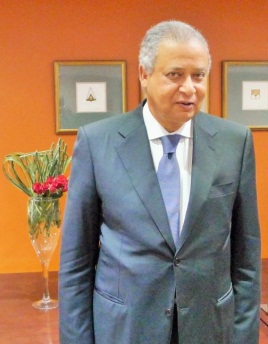
One of the speakers at the PVG launch was Ambassador Ashraf Rashed who addressed the gathering as both the Chairperson of the African Peer Review Mechanism (APRM) National Commission of Egypt, and Chairperson of the APRM Task Force for the Governance Support Programme.
Ambassador Rashed said the PVG launch is taking place at a pivotal moment, when across Africa, governments are navigating profound economic, social, technological, and geopolitical transformations.
“Citizens are demanding more responsive institutions, greater accountability, improved service delivery, and meaningful participation in public decision-making. At the same time, public institutions are being called upon to address increasingly complex challenges, including unemployment, inequality, climate change, digital transformation, social cohesion, and sustainable development.
“The question before us is not simply how governments can manage change, but how they can lead change in ways that create tangible and lasting public value. The PVG represents an important evolution in governance thinking. It moves beyond traditional approaches focused primarily on procedures and administrative efficiency,” he said.
Instead, he said, it places citizens at the centre of governance and asks a fundamental question: how can public institutions create value that improves people’s lives, strengthens public trust, and advances the collective well-being of society?
This approach, Ambassador Rashed said it resonates strongly with the principles and aspirations of the African Peer Review Mechanism (APRM). Since its establishment in March 2003, the APRM has promoted good governance, accountable leadership, institutional effectiveness, transparency, and citizen participation.
Through peer learning, voluntary self-assessment, peer reviews, and constructive dialogue, the APRM has encouraged African states to strengthen governance systems capable of delivering development while preserving stability, inclusiveness, and social justice.
The APRM’s governance reviews across the continent have consistently demonstrated one important lesson: sustainable development cannot be achieved without strong institutions, and strong institutions cannot be sustained without public trust. According to Ambassador Rashed, when citizens trust public institutions, they are more willing to participate in public life, support reforms and contribute positively to national development.
Therefore, it is for this reason that he argued that the PVG provides a practical framework for rebuilding and sustaining this trust and it further encourages public leaders to focus not only on what governments do, but also on the value citizens derive from government action.
The APRM’s Governance Support Programme
The APRM’s Governance Support Programme was conceived in response to a challenge repeatedly identified through APRM country reviews: the implementation gap between governance commitments and actual results. APRM reviews have generated valuable recommendations aimed at strengthening governance, enhancing accountability, and improving institutional performance. Yet implementation remains one of the most important challenges facing countries.
The Governance Support Programme seeks to address this challenge by supporting member states in translating governance recommendations into practical reforms, strengthening institutional capacities, and promoting the sharing of successful African experiences and best practices.
In this regard, Ambassador Rashed said the Public Value Governance Programme should represent a valuable contribution to the broader objectives of the Governance Support Programme.
“It provides senior public officials with the knowledge, tools, and leadership capacities necessary to drive meaningful change and create measurable value for citizens. By investing in leadership and implementation capacity, we help ensure that governance reforms do not remain aspirations on paper but become realities that positively impact the daily lives of people.
“The launch of this programme is particularly significant because it also seeks to institutionalise the principles and values shared by the APRM and the Open Government Partnership, including transparency, accountability, participation, ethical leadership, and responsiveness to citizens’ needs. By investing in public leadership, this programme is investing in the future resilience and effectiveness of public institutions,” he said.
This is how Ambassador Rashed further expressed his views while addressing the gathering: “from APRM perspective, the Public Value Governance can make important contributions in terms of strengthening citizen-centred governance by ensuring that policies and services respond to real societal needs.
“Secondly, it can improve policy coherence and implementation through greater collaboration across institutions and sectors, thirdly, it can support innovation and adaptability in an increasingly complex and rapidly changing environment and lastly, it can reinforce ethical leadership, accountability and integrity.”
He concluded his address by arguing that the challenges faced by African governments today are interconnected and cannot be addressed through traditional approaches alone.
“They require collaborative governance models that bring together governments, citizens, civil society, academia, and the private sector in pursuit of shared public value. This programme reflects precisely that spirit of partnership and collaboration,” he said.
South Africa and Egypt enjoy longstanding and excellent relations founded on mutual respect, common African values and a shared commitment to peace, development, and prosperity. Egypt, according to Ambassador Rashed, highly values the relations and remain committed to further strengthening cooperation with South Africa across all fields, including in governance, public administration, institutional development, and capacity building.