
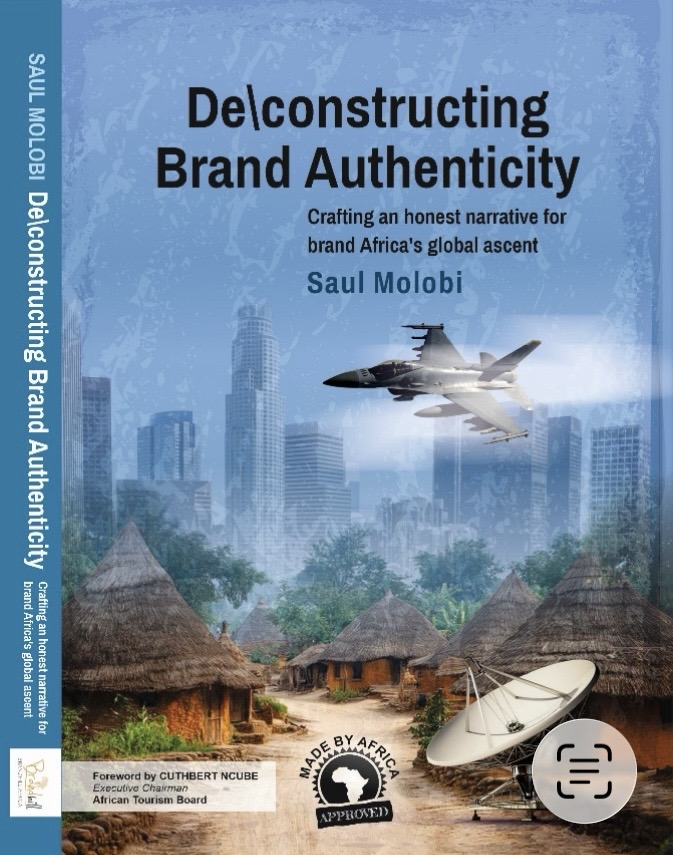
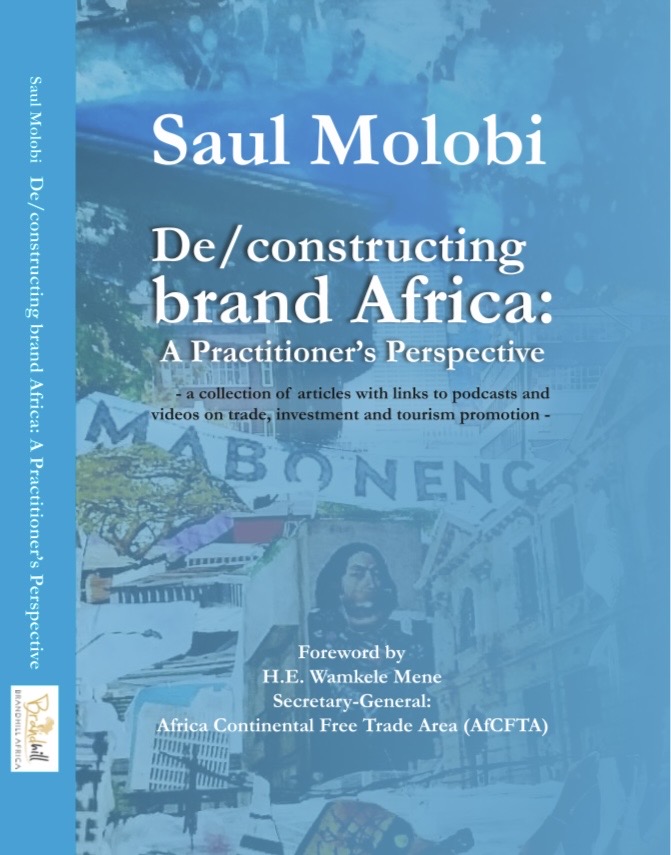
This time, I deliberately turn inward – unpacking the title of my latest book, De/constructing Brand Authenticity, not merely as a phrase, but as a provocation and a framework – expanding it into a fully fledged narrative that interrogates how Africa tells its story, how it proves its value, and how it earns its place in the global imagination.
The great fallacy that continues to haunt brand Africa is the comforting belief that perception can be engineered through clever slogans, borrowed narratives, and cosmetic campaigns. For decades, Africa has been encouraged – sometimes seduced – to mirror external branding templates that were never designed to hold the continent’s lived realities, contradictions, or aspirations. De/constructing Brand Authenticity enters this contested space with a necessary provocation: that Africa’s global ascent will not be won through borrowed scripts, but through the deliberate construction of an honest narrative architecture rooted in truth, proof, and lived African excellence. In other words, reputation cannot be outsourced. It must be authored from within.
At the heart of this argument is a radical repositioning of authenticity – not as a soft, feel-good concept, but as a hard-edged strategic discipline. Authenticity becomes strategy when identity is clearly articulated, governance is credible, innovation is visible, and storytelling is anchored in evidence rather than aspiration alone. This demands coherence between what Africa says about itself and what it demonstrably does. It insists that branding is not the final layer applied at the end of development, but a reflection of development itself. Where institutions function, where policies are executed, where entrepreneurs scale, where artists shape global culture, and where communities build resilient local economies – there, brand Africa is already being written in action.
Too often, the continent’s branding debates fixate on image repair while sidestepping the deeper work of system repair. Yet the world is increasingly sophisticated in distinguishing between narrative and reality. No amount of polished communication can permanently mask governance failures, infrastructural decay, or inconsistent policy environments. Conversely, no amount of negative stereotyping can indefinitely obscure sustained excellence. Authenticity therefore becomes Africa’s most powerful competitive advantage precisely because it is difficult to fake. It is built slowly, through consistent behaviour over time, and defended through institutional integrity.
This is why the insistence that “reputation is earned, not wished into being” is not rhetorical flourish – it is strategic instruction. Earning reputation requires Africa to move from episodic success stories to systemic proof. It requires documenting and amplifying case studies of African solutions solving African problems at scale. It requires elevating entrepreneurs, scientists, creatives, farmers, and industrialists not as anomalies, but as representatives of a deeper continental capacity. Most importantly, it requires political and economic leadership that understands brand not as communications, but as consequence.
In this framing, storytelling is no longer about romanticising Africa or sanitising its complexities. It is about narrating a continent in motion – one that acknowledges its wounds, confronts its failures, and still asserts its agency to define its future. Honest narratives do not weaken a brand; they strengthen it. They signal maturity. They signal confidence. They signal a willingness to be judged by substance rather than spectacle.
Beyond coherence, the authenticity project also demands intentional ownership of Africa’s intellectual and cultural capital. For too long, African knowledge systems, aesthetic languages, and indigenous innovations have been filtered through external lenses before being validated as “global.” This dynamic quietly reinforces dependency in the realm of meaning-making. A truly authentic Brand Africa must reverse this flow by asserting Africa as a primary source of ideas, not merely a site of extraction or adaptation. Universities, think tanks, cultural institutions, creative hubs, and policy environments must be empowered as engines of original thought – producing frameworks, theories, technologies, and artistic movements that travel outward on Africa’s terms.
This shift also reframes the role of the African diaspora. Rather than being positioned only as ambassadors of culture or remitters of capital, the diaspora becomes co-authors of Africa’s evolving narrative architecture – bridging markets, transferring skills, and opening corridors of influence. Authenticity, in this sense, is not geographically confined; it is relational. It is built through networks of Africans and Afro-descendants who remain anchored in continental realities while operating fluently in global systems.
Crucially, authenticity as strategy forces an uncomfortable conversation about standards. One cannot claim global excellence while tolerating mediocrity at home. The pursuit of an honest Brand Africa requires a relentless culture of quality – across public service, manufacturing, education, healthcare, infrastructure delivery, and creative production. This is not about mimicking Western benchmarks, but about establishing African benchmarks that are globally competitive. When “Made in Africa” consistently signals reliability, craftsmanship, and innovation, brand power follows organically.
There is also a generational dimension to this argument. Africa’s youth are already practicing authenticity instinctively – blending tradition with technology, local idioms with global platforms, activism with entrepreneurship. They are less interested in permission and more invested in proof. Any serious brand authenticity agenda must therefore place young people at its centre, not merely as beneficiaries, but as architects. Their startups, art, digital platforms, social movements, and hybrid identities represent the most dynamic expressions of contemporary Africa. To sideline them is to sabotage the future narrative.
Equally important is the need to move from symbolic inclusion to economic inclusion. Authenticity collapses when large segments of society remain excluded from opportunity. A brand that celebrates possibility while millions experience precarity becomes internally contradictory. Inclusive growth, spatial justice, gender equity, and rural development are therefore not peripheral social issues; they are core brand issues. They shape how citizens experience their own country and, by extension, how they speak about it to the world.
Finally, De/constructing Brand Authenticity insists that Africa must become comfortable with long-termism. Brand-building is slow work. It unfolds across decades, not campaign cycles. It requires patience, discipline, and institutional memory. The temptation of quick wins and headline-grabbing moments must give way to the quieter labour of building systems that endure. Authenticity is cumulative. Each policy implemented with integrity, each product delivered with quality, each story told with honesty adds a small brick to a much larger edifice.
In this expanded view, brand Africa is not a logo, a slogan, or a promotional drive. It is a civilisational project. It is the collective outcome of how Africa governs, produces, creates, educates, trades, and treats its people. When these fundamentals align, the narrative will not need excessive persuasion. The world will recognise Africa not because it was told to – but because the evidence will be undeniable.
Ultimately, De/constructing Brand Authenticity challenges Africa to stop auditioning for global approval and start authoring its own standard of excellence. The path to global ascent will not be paved by imitation, but by coherence – between values and actions, between promise and performance. When Africa aligns who it is, what it does, and how it tells its story, authenticity ceases to be a buzzword and becomes infrastructure. And from that foundation, a credible, competitive, and respected Brand Africa can finally rise.
Tujenge Afrika Pamoja! Let’s Build Africa Together!
Enjoy your weekend.
Saul Molobi (FCIM)
PUBLISHER: JAMBO AFRICA ONLINE
and
Group Chief Executive Officer and Chairman
Brandhill Africa™
Tel: +27 11 759 4297
Mobile: +27 83 635 7773
Physical Address: 1st Floor, Cradock Square Offices; 169 Oxford Road; Rosebank; JOHANNESBURG; 2196.
eMail: saul.molobi@brandhillafrica.com
Website: www.brandhillafrica.com
Social Media: Twitter / Instagram / LinkedIn / Facebook / YouTube / Jambo Africa Online / WhatsApp Group / 101.9 Chai FM