
By Dr Ramona Baijnath
The newly launched Public Value Governance (PVG) programme represents a significant investment in building capable leadership for the Kwazulu-Natal provincial government, says Kwazulu-Natal Premier’s Office Training Advisor for Leadership and Management Development, Sally Reddy.
“This programme represents a significant investment in building capable leadership within the provincial government. The Managing Change and Public Value Governance Empowerment Programme is a strategic investment in public value, which has equipped 92 senior and middle managers to lead change, strengthen governance and improve service delivery.
This flagship programme is building capable leaders and has the potential to be expanded across all levels of management in KwaZulu-Natal,” said Reddy.
The 3-day PVG programme was officially launched on Wednesday in Durban, brought together senior and middle managers from across the KwaZulu-Natal provincial government. The PVG initiative seeks to equip public sector leaders with the knowledge, skills, and tools required to effectively manage change, promote good governance, and create measurable public value for citizens.
According to Reddy, the PVG was delivered by the Department of Public Service and Administration (DPSA) in partnership with the KwaZulu-Natal provincial government, the University of Pretoria and the African Peer Review Mechanism (APRM).
The Managing Change and PVG Empowerment Programme-a flagship initiative aimed at strengthening leadership, governance and service delivery across the public sector, resulted in the training of 92 senior and middle managers.
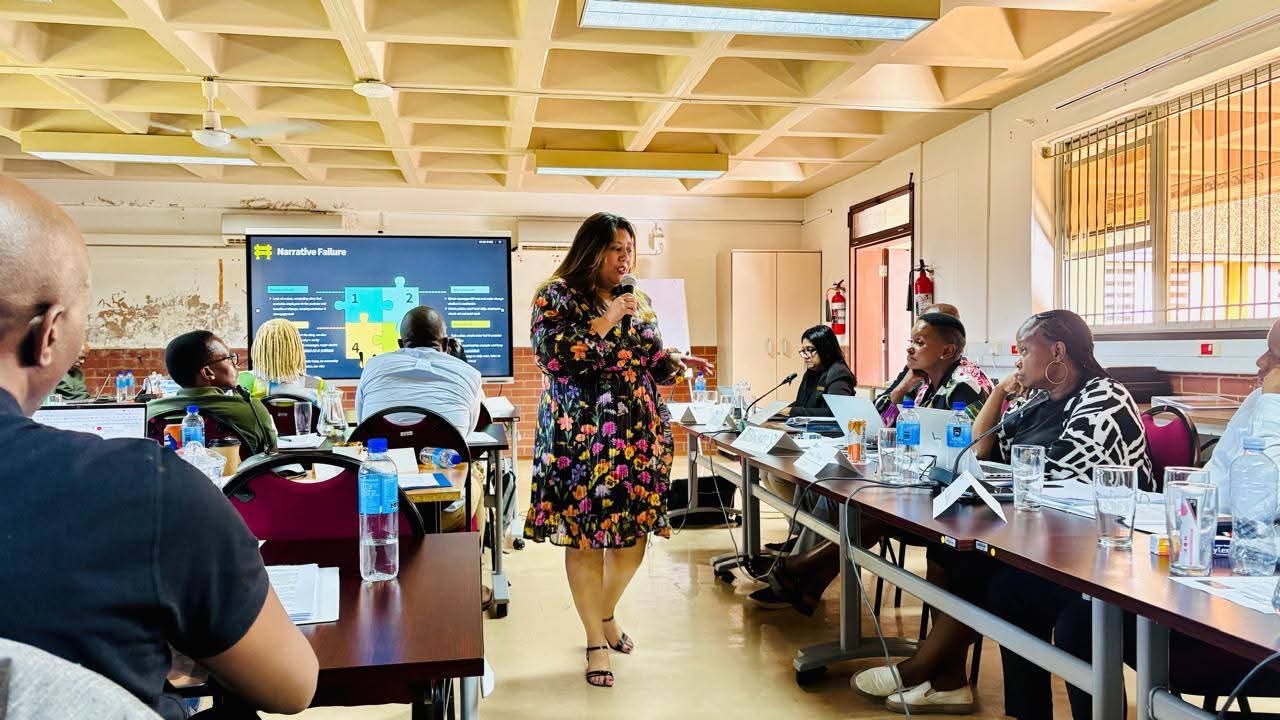
Dr Ramona Baijnath from the Gauteng Department of Infrastructure Development facilitated sessions on Leading with Purpose – Driving Transformation from the Heart, which explored leadership, belonging, caring, service. It was these sessions that encouraged participants to build trust, align change initiatives with shared values and create environments that support innovation and ethical action.
The Deokaran Test
The price of integrity without protection, examined the links between ethical governance, corruption, inequality, and public service delivery outcomes. Drawing on the Babita Deokaran case, she highlighted the importance of accountability, institutional integrity and protection for whistleblowers. A key message was that sustainable transformation depends not only on sound policies and systems, but also on leaders committed to implementing them with integrity and purpose.
Dr Mary Mangai from the University of Pretoria led the participants through the session on the evolution of governance from traditional Public Administration and new Public Management to PVG, highlighting the importance of collaboration, citizen-centred outcomes, and shared accountability in the public service. Drawing on Mark Moore’s Strategic Triangle, she demonstrated how successful public initiatives depend on aligning public value, legitimacy and stakeholder support and operational capacity.
Through interactive discussions and practical case studies, participants applied these principles to projects in their departments and real-world challenges, strengthening their ability to design and lead initiatives that deliver meaningful outcomes, build public trust, and improve service delivery through collaborative governance.
One of the participants, Phindile Sibiya, Deputy Director at the Department of Agriculture and Rural Development, described the value of the programme as follows: “This training transformed my perspective on service delivery. I now see the value of co-creation, working alongside communities to develop solutions that build trust, drive meaningful change, and strengthen our nation. The subject matter experts brought the concepts to life through practical examples and engaging in discussions that made the learning both relevant and impactful.”
In an exclusive interview with The Public Servant, another participant Xolani Mkhathini, Deputy Director, Internal Audit, at the provincial department of Economic Development, Tourism and Environmental Affairs said: “the programme equipped me with practical tools to drive institutional reform, align services with citizen needs, and build public trust. The subject matter experts demonstrated exceptional knowledge and kept participants engaged throughout, ensuring that the learning remained closely connected to the realities faced by public servants.”
An official from the Office of the Premier, Sandile Ndlovu, Director responsible for HIV & AIDS Coordination, said: “the training showed me that lasting change begins within. It deepened my understanding of public value governance and the power of partnerships, trust, and collective action in delivering meaningful outcomes for communities. The facilitators’ expertise and experience challenged us to reflect deeply on our leadership role in shaping positive change.”
The programme reflects a growing commitment to strengthening leadership capacity within the public service and advancing a culture of accountability, innovation, and citizen-centred governance. As participants continue with their learning journey, the initiative reinforces the message that the future of public sector transformation depends on leaders who can combine strategic thinking with heart, head, and hands, actively demonstrating the Batho Pele ethos of I Belong, I Care, I Serve.
Dr Patrick Sokhela, Acting Deputy Director-General, Government Services Access and Improvement at the DPSA, who addressed participants on the challenge of translating policy into action, his presentation underscored the need for coordinated implementation, strong leadership, collaborative governance, and a commitment to public value across all spheres of government.
Dr Sokhela further reinforced the programme’s critical contribution to developing a capable, ethical and developmental state, which is a government priority. The programme was led by Dr Patrick Sokhela and was supported by both Dr Ramona Baijnath and Dr Mary Mangai, whose expertise has inspired more action-oriented leadership across the province.