
By Selemogo Maleho
The launch of “The Lion of the North: Peter Nchabeleng, his family and the national liberation struggle in South Africa” on Thursday, 13 March 2025, was an extraordinary moment of literary and historical significance. The Peter Mokaba Auditorium, filled beyond capacity, became a sacred space for remembrance, storytelling and intellectual discourse, as the audience gathered to honour the life and legacy of Peter Nchabeleng through the words of his son, Mpho Nchabeleng. The event was more than a book launch; it was a reaffirmation of the importance of publishing in shaping national consciousness, preserving historical truths, and defining the trajectory of South Africa’s cultural and economic development.

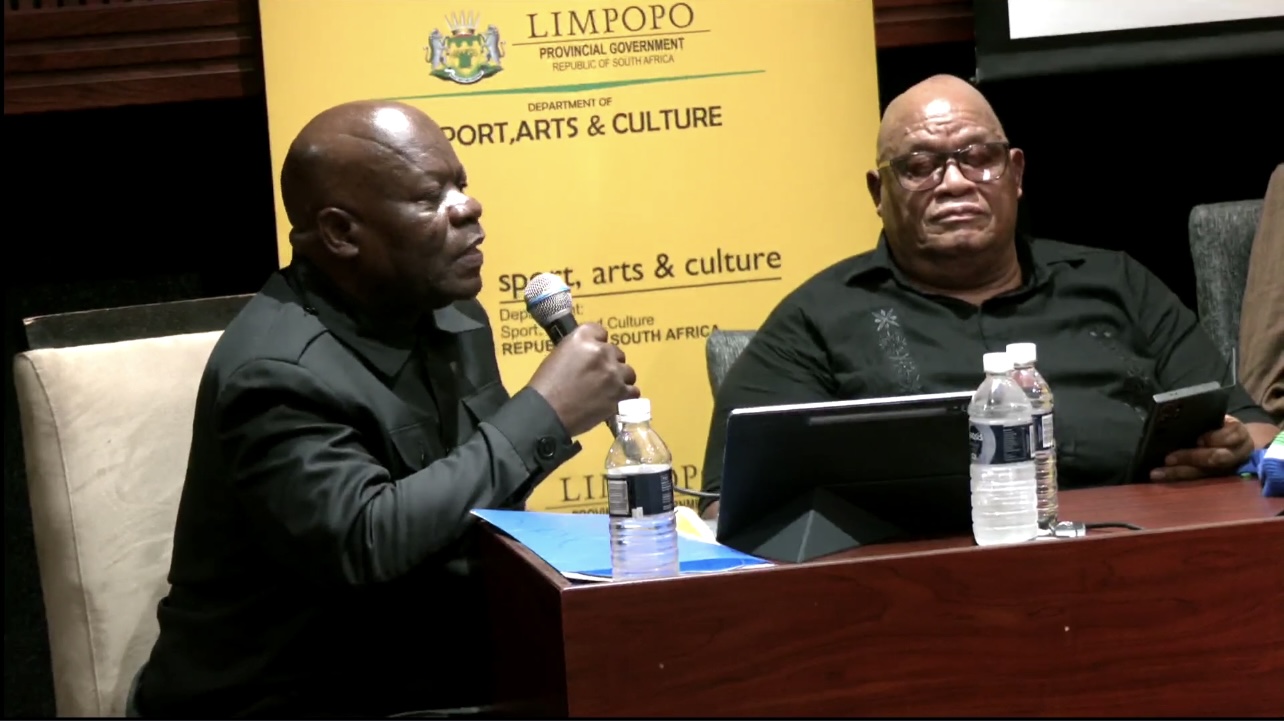
Guided by the eloquence of Programme Director Motalane Monakedi, the evening unfolded with seamless transitions from one moving segment to the next. Mr Monakedi is a former Executive Mayor of Capricorn District Municipality. The acting Head of the Department of Sport, Arts and Culture (DSAC), Ms Kgathane Veronica Mokgonyana (Chief Director: Cultural Affairs, officially welcomed the distinguished guests, struggle veterans, literary figures and members of the Nchabeleng family. She spoke with conviction about the role of the provincial government in supporting the arts, particularly literature, which she described as a “pillar of cultural identity and historical preservation”. She reaffirmed the department’s commitment to buying books by local authors and ensuring that works such as “The Lion of the North” reach public libraries, schools and community reading centres. This, she emphasised, was not just about encouraging reading but about fortifying South Africa’s collective memory and instilling a sense of pride in its struggle heritage.


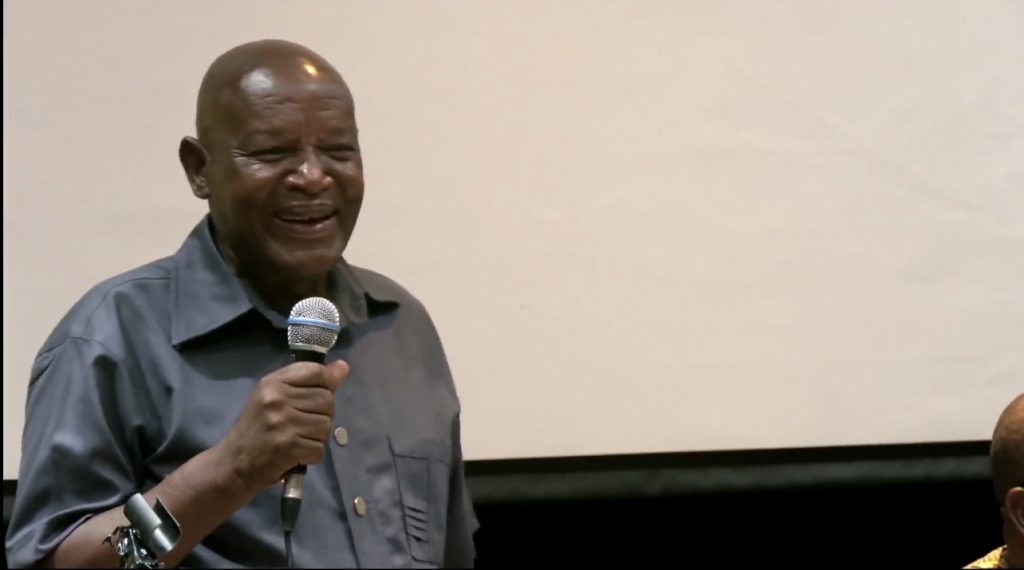


The weight of history filled the room when Elleck Nchabeleng took the stage to introduce his family. His words were deeply personal, painting a picture of the sacrifices they had endured as they watched Peter Nchabeleng lead the struggle against apartheid with unyielding resolve. He spoke of the late struggle icon not just as a revolutionary but as a father, a mentor and a moral compass whose example continues to guide his descendants. His speech resonated with many in the audience, particularly those who had lived through the apartheid era and understood, firsthand, the personal cost of resistance. He decried the non-prosecution of those police officers who killed him in detention.
Ambassador Louis Mnguni, a veteran of the liberation struggle, then took to the podium to share his reflections on Peter Nchabeleng, a man he had worked alongside in the fight for freedom. His speech was an evocative retelling of history, filled with the kind of lived experience that no textbook could capture. He recounted moments of both triumph and despair, of hard-fought battles, clandestine meetings, and the unwavering belief in justice that kept them going through the darkest of times. He described Nchabeleng as a leader who understood that the struggle for liberation was not just about ending apartheid but about restoring the dignity of a people who had been dehumanised for centuries. His account painted a vivid picture of Nchabeleng’s courage, reminding the audience that the freedoms enjoyed today came at a great cost.


The evening then took on a thought-provoking turn when Saul Molobi, CEO of Brandhill Africa and a leading expert nation brand architect, delivered a profound address on the dialectical interdependence between brand identity, institutional behaviour, and brand image. His speech was a masterclass in the interconnectedness of history, publishing, economics and national identity. He explained that publishing is fundamentally about branding and that branding, in turn, is about the economy. “Branding is a revenue generator,” he stated emphatically, challenging the audience to reconsider the economic implications of publishing.
Molobi argued that a nation’s brand is not built merely through slogans or marketing campaigns but through the depth and authenticity of its storytelling. “If a nation does not tell its own story, others will tell it for them – and they will do so in ways that serve their own interests,” he warned. He illustrated this point by highlighting how developed nations have built robust economies by exporting their stories through books, films and other cultural products. By contrast, he lamented how African nations have often allowed their histories to be misrepresented because they have not taken ownership of their narratives.

He then drew the connection between publishing and institutional behaviour, arguing that institutions – whether governmental, educational or corporate – must align their practices with the identity they wish to project. “A brand is only as strong as the institutions that uphold it,” he said, emphasising that South Africa’s nation brand cannot be separated from the behaviour of its institutions. If South Africa wants to be seen as a progressive, knowledge-driven society, it must invest in its intellectual capital. He urged the government and private sector to view the publishing industry not just as a cultural asset but as an economic driver capable of creating jobs, generating revenue, and positioning South Africa as a global thought leader. His impassioned plea for increased investment in publishing struck a chord with the audience, particularly in a country where local authors often struggle to find support.
Following Molobi’s speech, the audience was treated to an intimate and engaging conversation between Mpho Nchabeleng, the book’s author, and renowned struggle veteran, Sechaba Nkoana. Mpho spoke candidly about the process of writing “The Lion of the North”, describing it as both a deeply personal journey and an immense historical responsibility. He shared the painstaking research that went into the book – interviewing struggle veterans, sifting through archival records, and piecing together his grandfather’s story in a way that was both factually rigorous and emotionally compelling. Sechaba’s skillful questioning allowed the audience to gain insight into the emotional weight of writing about one’s own family while also ensuring that the narrative remained true to the broader historical struggle.


When MEC Funani Jerry Maseko finally took the stage to deliver his keynote address, he did so with a sense of purpose and conviction. He reaffirmed the provincial government’s commitment to nurturing literature and the arts, declaring that books like “The Lion of the North” must be made accessible to all South Africans. He expressed his wish that his department would purchase copies of the book for distribution in schools and libraries across Limpopo, a move that was met with resounding applause. “A society that does not read is a society that does not grow,” he stated, urging young South Africans to embrace books as tools for self-empowerment and nation-building.
As the evening drew to a close, Maurice Nchabeleng took the stage to extend a heartfelt vote of thanks to all those who had contributed to the event’s success. But the celebration was not over yet. A beautifully crafted cake, designed by Memory Masebenza of Mellow Crafts, was unveiled to the delight of the audience. Inspired by the book’s cover, the cake was a stunning visual representation of the intersection between literature and creativity. The moment was made even more special as the MEC, VIP guests and members of the Nchabeleng family gathered around to cut the cake, marking the occasion with both reverence and joy.


The evening ended with a book signing session, where attendees had the opportunity to engage with the author and take home a piece of history in the form of a personally signed copy of “The Lion of the North”. The conversations that filled the auditorium long after the formal programme had ended were a testament to the profound impact of the event.
As guests departed, one thing was certain: “The Lion of the North” was not just a book – it was a call to remember, to honour, and to continue the work of those who had sacrificed for freedom. It was a reminder that South Africa’s history is still being written, and it is the responsibility of every generation to ensure that it is told with truth, integrity and pride.