
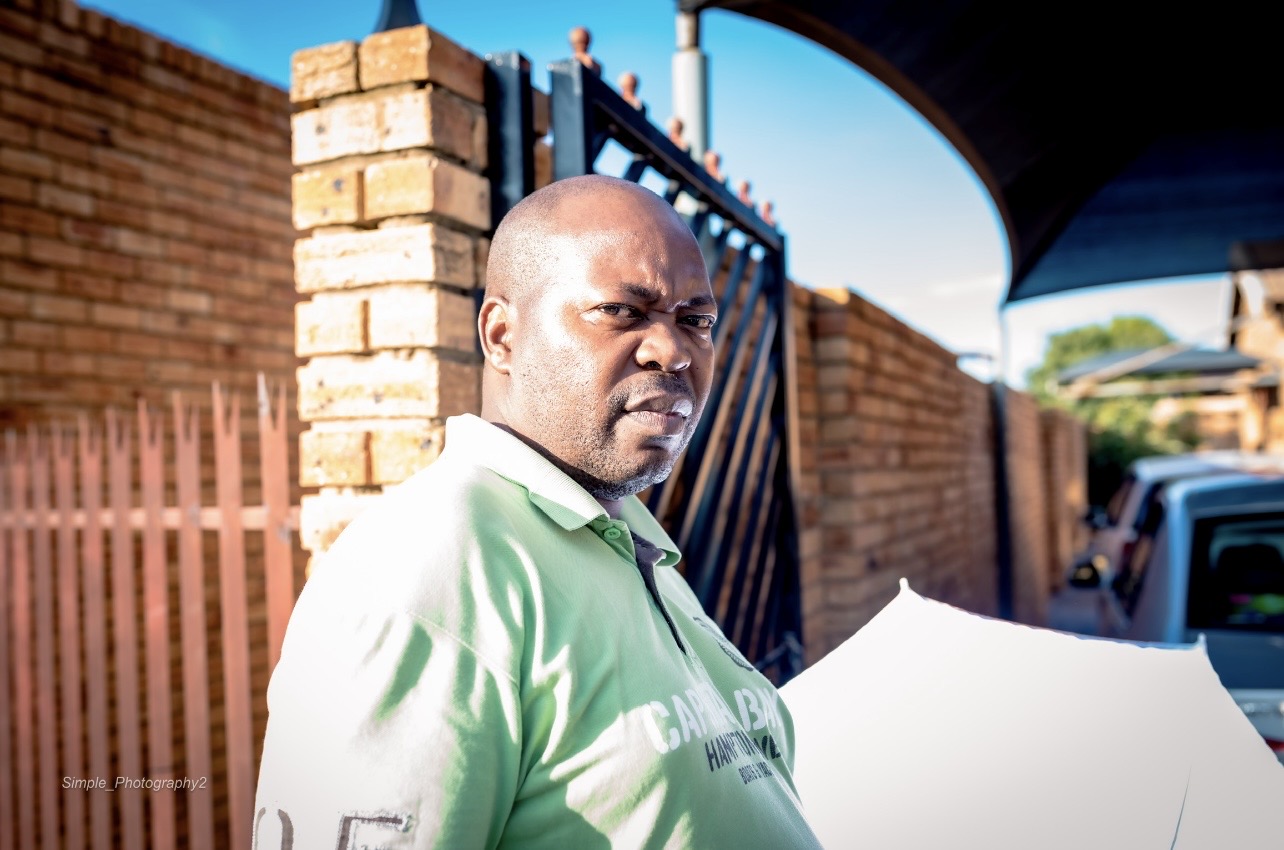
My name is Thabile Mange. I am a civil servant, author and publisher. I became a writer almost by accident. When I was still a Catholic in Kagiso, the then-priest, the late Father Mantsobisi Shomang OMI, introduced a newsletter. However, no one was contributing to it. The priest ended up writing and editing the newsletter himself.
I decided to help by writing opinion pieces and stories. That was how I discovered my writing talent. It was also the beginning of my writing career. Later, I started contributing to newspapers. In 2014, the Sunday Sun invited me to become a columnist. My column was called “Mange’s Agenda”. In 2017, I started writing books, and I have never looked back. I now have 14 books to my name. My books cover a range of subjects, including religion, politics, and social issues.
My Debut Book
My debut book is titled God’s Servants or Money Grubbers? I wrote the book to examine the rise of prosperity pastors whom I believed were more interested in money than in the spiritual well-being of their followers. At the time, prosperity pastors were making waves and attracting huge followings. Some were engaging in bizarre practices, including feeding their followers snakes and rats. Strangely enough, these activities appeared to increase their popularity.
However, prosperity pastors have also made a positive contribution to the Christian community. In the past, many black Christians, including some spiritual leaders, were taught a theology that glorified poverty. Prosperity preaching challenged that approach and encouraged people to believe that they could aspire to a better life. I sold more than 400 copies of my debut book. More importantly, the book gave me the confidence to continue writing. It effectively launched my career as a book author.
Kagiso Women Making Waves
My second book was Kagiso Women Making Waves – On Their Own Terms. The book features 13 women from Kagiso—ordinary women doing extraordinary things. One of them was the late Professor Shirley Motaung, a highly regarded and respected academic. Born into a poor family in Kagiso, she focused on her education. She worked hard, obtained a PhD, and eventually became a professor and lecturer at Tshwane University of Technology. Her life demonstrated that poverty does not have to determine one’s future. She showed that, through education, determination, and perseverance, it is possible to rise above difficult circumstances. May her soul continue to rest in peace.
Another phenomenal woman featured in the book is Dr Hajira Mashego. She is currently the Director of Sport at Tshwane University of Technology. Her late father was a physiotherapist, and she followed in his footsteps. Dr Mashego has worked for various companies and government departments, including the national Department of Sport. She has also lectured at Medunsa, now known as Sefako Makgatho Health Sciences University. Her journey is an inspiration to many young people.
Women Abuse: A Cancer Killing Our Nation
My third book is titled Women Abuse: A Cancer Killing Our Nation. Indeed, violence and abuse against women remain a serious problem in our country. The stories of women who have suffered abuse are well documented, yet women continue to lose their lives at the hands of men. At the time of writing, eight women had been killed on different days and dates in Kempton Park. One cannot help but ask: When will this madness stop? Will it ever stop? There are no easy answers.
I subsequently wrote Men Abuse: A Silent Scourge. There is a strong perception that men cannot be victims of abuse. Yet they can be. The abuse of men is often overlooked because men are generally viewed as perpetrators rather than victims. This perception can result in the abuse they experience being minimised or ignored. While men may be less likely to report physical abuse, they can experience verbal, emotional, and financial abuse. Unfortunately, these forms of abuse are not always taken seriously.
The Face of Poverty is Black
My sixth book is titled The Face of Poverty is Black. In 1994, South Africa became a democracy. Many black South Africans believed that democracy would provide an opportunity to break the cycle of poverty. Yet, more than three decades later, many black people in South Africa continue to live in poverty and economic hardship. The persistence of poverty among black South Africans raises difficult questions about the extent to which democracy has transformed the economic lives of ordinary people. For many black people, the struggle for economic freedom continues. In that sense, it is not yet Uhuru.
Absent Fathers: A Generational Curse?
My seventh book is titled Absent Fathers: A Generational Curse? Men are sometimes accused of fathering children without taking responsibility for raising and supporting them. In some communities, this has become so common that it is treated as normal. But something being common does not make it acceptable. The absence of fathers can have serious consequences for children and families. Abandoned children may experience emotional and financial difficulties, while fatherlessness can contribute to broader social problems. The book examines the consequences of absent fatherhood and asks whether the pattern is being passed from one generation to the next.
Absent Mothers
My eighth book examines another side of the same problem: absent mothers. When we talk about absent parents, we often think only of physical absence. But absence can take different forms. There are mothers who are physically present in the home but emotionally absent. They are there, but they are not really there. Emotional absence can be just as painful as physical absence. A child may have a mother living under the same roof yet still grow up feeling neglected, disconnected, or alone.
A Drug Addict Turned Entrepreneur
My eleventh book is titled A Drug Addict Turned Entrepreneur. The book tells the story of Sizwe, a young man from Kagiso who battled drug addiction before turning his life around.
Sizwe is now an entrepreneur and has been free from drugs for more than eight years. His story has been covered by various media platforms and has inspired many people struggling with addiction. His journey demonstrates that addiction does not have to be the end of one’s story. With determination, support, and a willingness to change, a person can rebuild their life.
Poor Whites
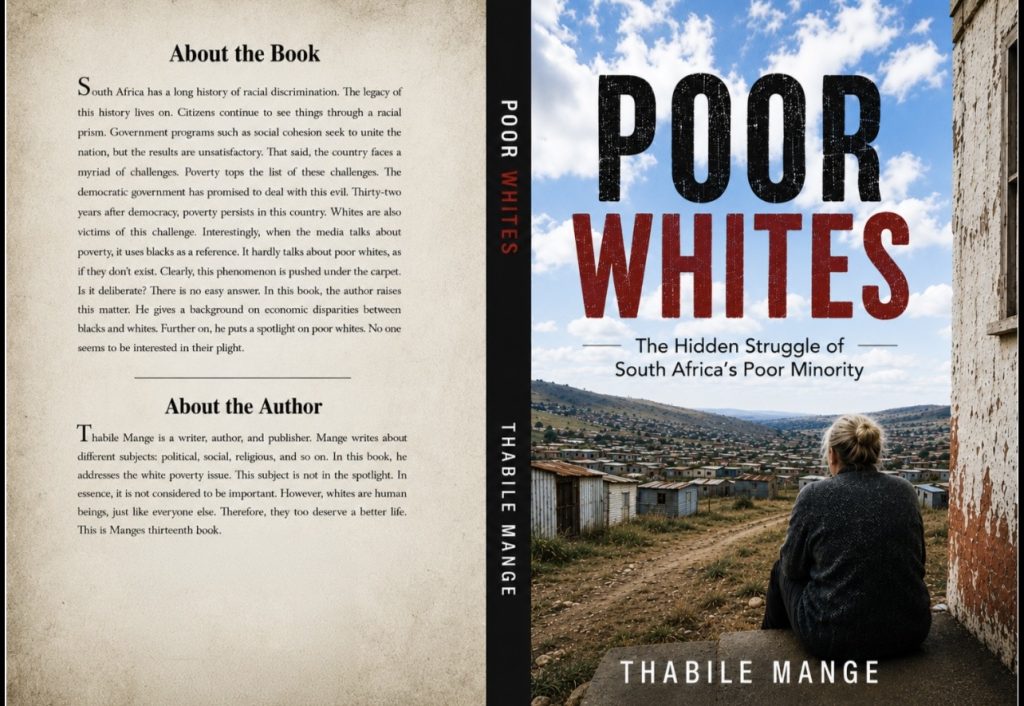
My twelfth book is titled Poor Whites. There is a common perception that all white people are wealthy. This is a misconception. There are white South Africans who live in poverty and experience economic hardship. Some are marginalised and excluded from meaningful participation in the mainstream economy.
The history of South Africa has also created complex economic and social circumstances for different communities. Some poor white people feel that they are being judged or excluded because of the actions and policies of previous generations. The book explores this often-overlooked aspect of South African society and challenges the assumption that race automatically determines economic status.
An Unsung Struggle Hero
My latest book is titled An Unsung Struggle Hero: The Story of Mike Matsobane. The book tells the story of Michael “Bra Mike” Matsobane, a Pan Africanist Congress stalwart and veteran of the struggle against apartheid. His story is one of sacrifice, perseverance, and service. The book will be launched at the Gauteng Archives Centre on 3 October 2026. For me, this book is more than another publication. It is an attempt to preserve the story of a man whose contribution to South Africa’s liberation struggle and community life deserves to be remembered.
From an unexpected beginning with a small Catholic newsletter in Kagiso to writing newspaper columns and publishing books, my journey as a writer has taken me places I never imagined. I became a writer by accident. But I have continued writing by choice. And I have no intention of stopping.