
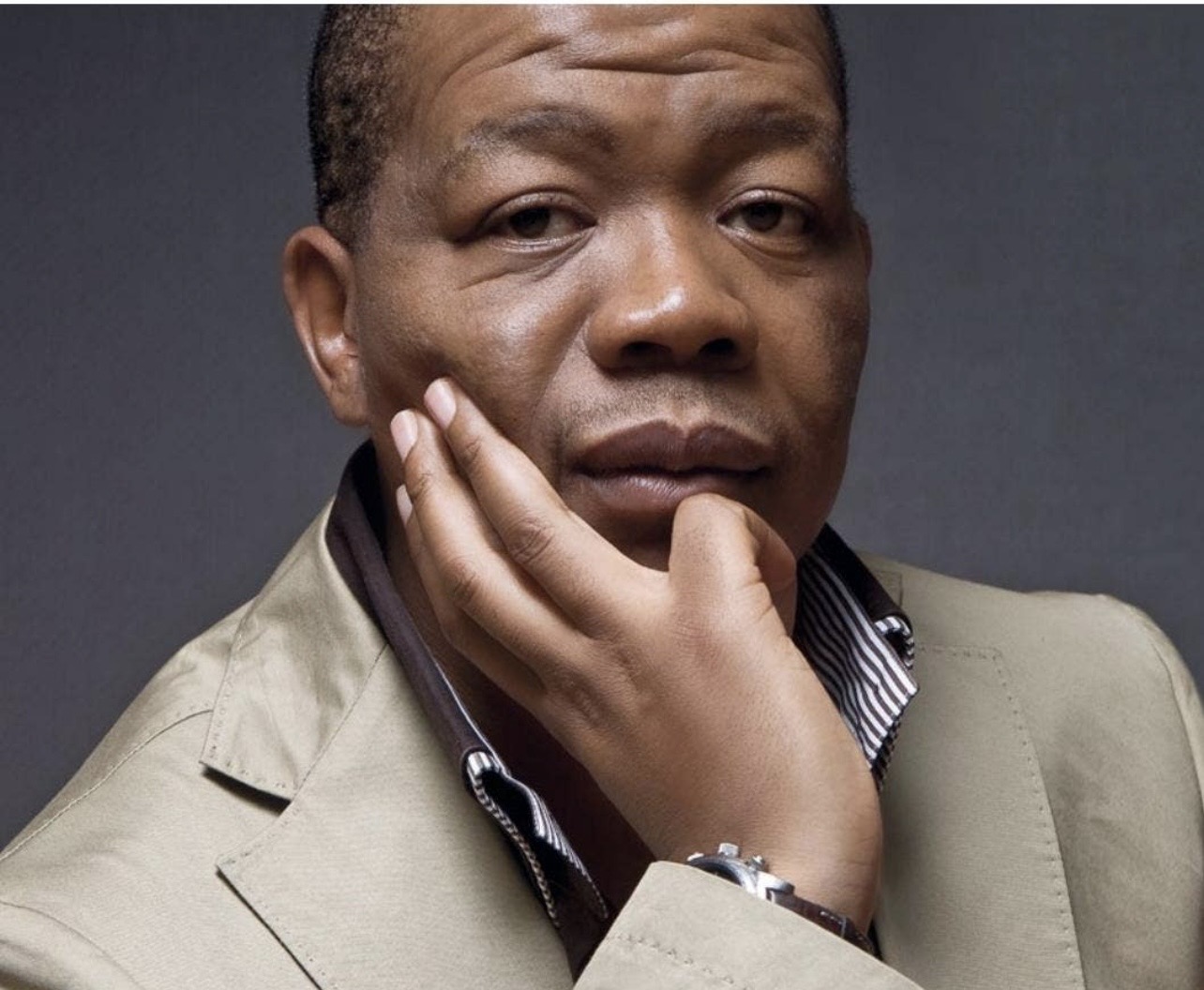
By Richard Thabo Moloko
President Cyril Ramaphosa’s decision to address the nation on migration reflects a reality that South Africa’s political leadership can no longer avoid. What was once treated as a peripheral policy issue has become a central question of governance, state legitimacy and electoral politics.
The migration debate is often framed as a contest between two opposing camps. On one side stand those who advocate open borders and Pan-African solidarity. On the other are those who demand stricter border controls and stronger immigration enforcement.
Both perspectives contain elements of truth, yet both fail to address the deeper
structural realities driving migration.
South Africa’s migration challenge is not fundamentally an immigration problem. It is a manifestation of broader failures of governance, uneven development and state capacity across Southern Africa and the continent as a whole.
Migration is not the disease. It is a symptom.
The real question is why millions of Africans continue to leave their countries of birth in search of opportunities elsewhere.
The answer lies not at South Africa’s borders but in the governance failures,
economic stagnation, institutional decay and political instability that continue to
characterise significant parts of the continent. The debate has been sharpened by comments from political leaders, commentators and Pan-Africanists. Some insist that Africans should move freely throughout the
continent. Others argue that South Africa must place the interests of its citizens first.
Yet both positions overlook a critical reality.
Political integration cannot succeed where economic integration has failed.
The European Union did not emerge because leaders simply declared unity. It emerged because member states progressively developed compatible institutions, governance standards, economic systems and regulatory frameworks.
Africa remains far from that reality.
While South Africa confronts its own serious developmental challenges, it remains one of the continent’s largest economies, possesses relatively sophisticated financial institutions, and maintains public services that are significantly more developed than
many of its neighbours.
These disparities inevitably create migration pressures.
When a young Zimbabwean, Mozambican, Malawian or Congolese believes he or she has a better chance of employment, education, healthcare or personal security in South Africa, migration becomes a rational economic choice.
The problem is that migration on this scale places additional pressure on already strained public services, labour markets and infrastructure.
The result is growing social tension.
What is often presented as xenophobia is frequently a manifestation of resource
competition. Throughout history, societies experiencing economic stress become less tolerant when communities compete for scarce jobs, housing, healthcare and public services.
This dynamic is neither uniquely South African nor uniquely African.
It is a universal political phenomenon.
The real policy failure is that South Africa allowed a manageable immigration challenge to evolve into a national political crisis.
Successive governments failed to secure borders adequately, modernise immigration systems, improve population management, process asylum applications efficiently
and enforce immigration laws consistently.
The result has been a growing perception that the state has lost control.
Citizens are generally willing to accept difficult realities when they believe
government is competent and in control.
When confidence in state capacity declines, migration becomes politically explosive.
Yet an even deeper challenge is now emerging.
The migration debate is taking place against a backdrop of growing geopolitical instability.
The prolonged disruption of shipping through the Strait of Hormuz represents one of the most significant strategic threats facing developing economies, including South Africa.
Nearly a fifth of globally traded oil passes through this narrow maritime corridor connecting the Persian Gulf to international markets. A prolonged blockade or severe disruption would trigger substantial increases in
global energy prices.
For South Africa, this would immediately translate into higher fuel costs, increased transport expenses and elevated inflation.
However, the most serious long-term consequences may not be energy-related.
They may be agricultural.
The Gulf region plays a critical role in global fertiliser production and trade. Major producers in the Middle East supply nitrogen-based fertilisers, ammonia and related inputs essential for agricultural production worldwide.
A prolonged disruption to energy supplies inevitably raises fertiliser production costs because natural gas is a critical feedstock in nitrogen fertiliser manufacturing.
Higher gas prices translate directly into higher fertiliser prices.
For African agriculture, this creates a dangerous chain reaction.
Higher fertiliser costs reduce application rates by farmers.
Lower application rates reduce yields.
Reduced yields increase food prices.
Higher food prices increase poverty and food insecurity.
Food insecurity contributes to social instability and ultimately drives migration.
The implications for Southern Africa are particularly significant.
The region already faces structural vulnerabilities arising from climate change, recurring droughts, logistics constraints, electricity shortages and fiscal pressures. An extended Hormuz disruption would intensify each of these vulnerabilities simultaneously.
Countries with weak agricultural systems could experience declining food production.
Countries already dependent on food imports would face higher import costs.
Governments would encounter increasing pressure to subsidise food and fuel.
Fiscal deficits would widen.
Economic growth would slow.
Migration pressures would increase.
Viewed through this lens, the migration challenge confronting South Africa is
inseparable from broader questions of economic resilience and regional governance.
Migration, energy security, food security and geopolitical stability are interconnected components of a single system.
This reality demands a more sophisticated policy response.
South Africa requires secure borders and effective immigration administration.
But it also requires regional development strategies that reduce migration pressures at their source.
It requires stronger SADC governance mechanisms capable of addressing economic and political dysfunction before they spill across borders.
It requires investment in agricultural resilience, fertiliser security and energy
diversification. And it requires a foreign policy that recognises that instability in neighbouring states eventually becomes a domestic policy problem.
The central lesson is simple.
Migration crises do not emerge in isolation.
They are the product of cumulative failures across multiple systems.
Weak governance produces economic decline.
Economic decline produces migration.
Geopolitical shocks amplify economic vulnerabilities.
Resource scarcity intensifies social tensions.
Social tensions become political crises.
The debate now unfolding in South Africa should therefore not be reduced to slogans about borders or Pan-Africanism.
The real challenge is rebuilding state capacity while simultaneously addressing the structural conditions that drive migration in the first place. Only then can South Africa move beyond managing symptoms and begin addressing causes.
The future stability of both South Africa and the wider region may depend on it.
***
Richard Thabo Moloko is with the Centre for Systemic Renewal – a nascent initiative that is intended to evolve into a platform for research, policy dialogue, strategic reflection and practical interventions aimed at strengthening state capacity, economic development and social cohesion.