
By Saul Molobi
The outcomes of the Second Elective General Assembly of the National Writers’ Association of South Africa (NWASA) signal much more than a routine leadership transition. They represent a reaffirmation of the enduring role of writers as custodians of memory, architects of social consciousness, and defenders of humanity in a rapidly changing and increasingly fragmented world.
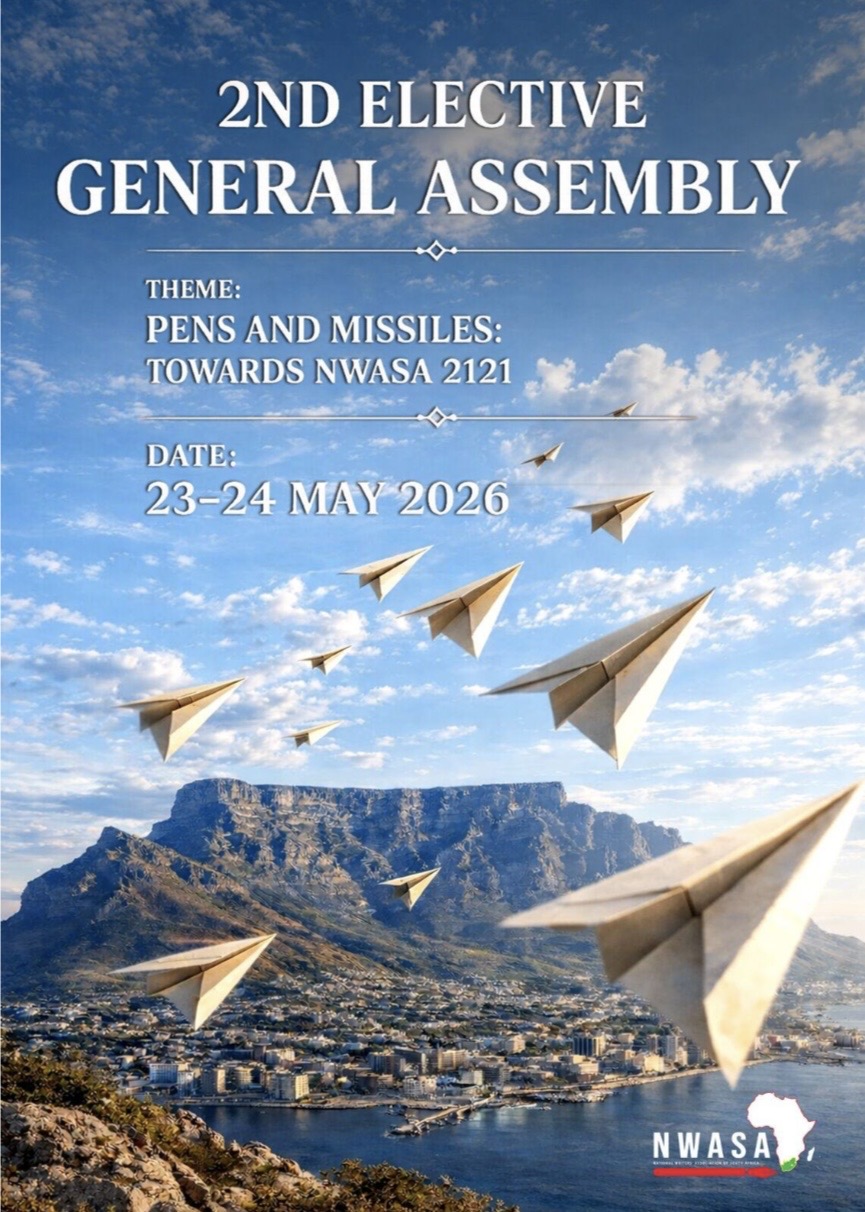
Held from 23 to 24 May 2026, the Assembly brought together writers, scholars, artists, activists, community builders, and international literary partners in a gathering that reflected both the diversity and growing influence of South Africa’s literary community. Since its establishment in 2021, NWASA has expanded into a formidable movement of more than 750 members, with a footprint that extends beyond South Africa’s borders and into the broader global literary landscape.
The Assembly received messages of solidarity from writers’ organisations across the world and a notable message of support from former President Kgalema Motlanthe. His remarks underscored the significance of NWASA’s journey and its contribution to South Africa’s intellectual and cultural development. His recognition of the association’s roots and its founding President, the late Nana Walter Kefuoe Chakela, served as a reminder that literary institutions are built not merely on structures and constitutions, but on vision, sacrifice, and collective purpose.
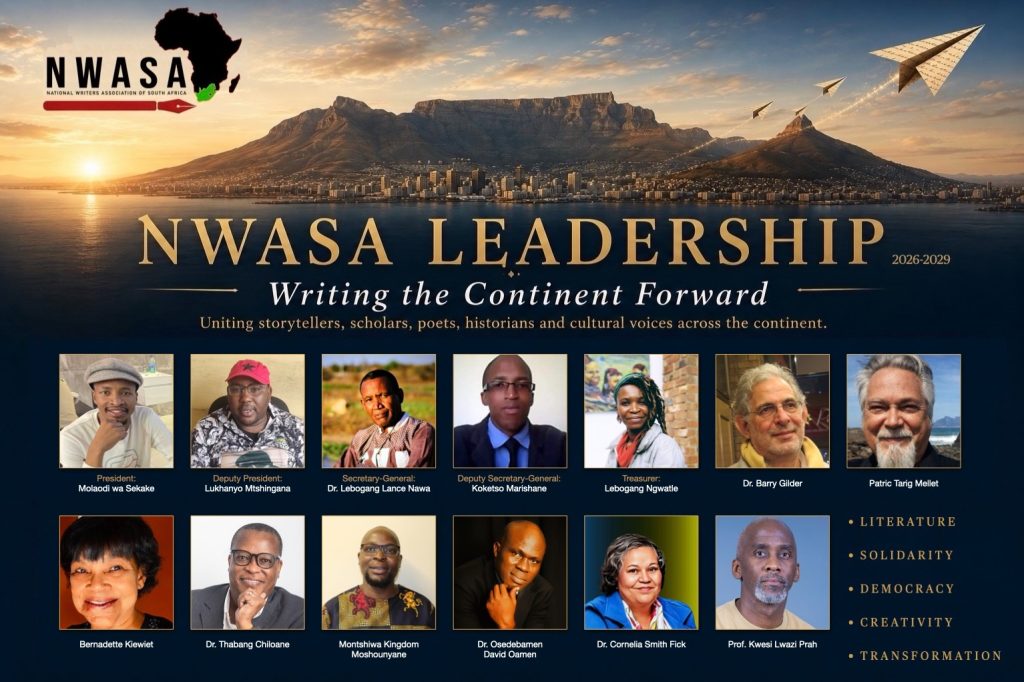
The General Assembly entrusted the leadership of NWASA to a newly elected National Executive Committee that reflects a blend of literary excellence, intellectual depth, organisational experience, and commitment to the advancement of South African literature. The association will be led by President Molaodi wa Sekake, supported by Deputy President Lukhanyo Mtshingana. Dr Lebogang Lance Nawa was elected Secretary-General, with Koketso Marishane serving as Deputy Secretary-General, while Lebogang Ngwatle assumes responsibility as Treasurer. The broader executive team comprises distinguished writers, scholars, activists and cultural practitioners, including Dr Barry Gilder, Kingdom Moshounyane, Patric Tariq Mellet, Dr Osedebamen Oamen, Dr Cornelia Smith Fick and Dr Thabang Chiloane.
In a further demonstration of the Assembly’s commitment to inclusivity and intellectual diversity, delegates mandated the National Executive Committee to co-opt two additional members nominated from the floor, namely Professor Kwesi Lwazi Prah and Bernadette Kiewiet. Collectively, the new leadership represents a wealth of experience and a shared vision to strengthen the literary sector, expand opportunities for writers, deepen international partnerships, and position NWASA as a leading voice in the preservation and promotion of South Africa’s literary heritage.
At a time when societies across the world are grappling with disinformation, social polarisation, conflict and cultural amnesia, the election of a new leadership collective comes with both opportunity and responsibility.
According to re-elected Secretary-General, Dr Lebogang Lance Nawa, the Assembly demonstrated that writers remain indispensable participants in the national conversation.
“NWASA emerges from this Assembly more united, more focused, and more determined to ensure that literature remains at the centre of preserving memory, shaping consciousness, and strengthening social cohesion. Writers are not mere observers of history; they are active participants in the making of history,” said Dr Nawa.
One of the most significant outcomes of the Assembly was the adoption of a declaration that reaffirmed the enduring value of literary craft and committed members to advancing literature as a vehicle for preserving collective memory, building enduring legacies, and nurturing social cohesion. These commitments arrive at a time when societies face unprecedented challenges in maintaining shared narratives and common purpose.
The declaration also reflected a distinctly internationalist outlook. Delegates expressed concern over the erosion of multilateralism, the rise of global conflict, and what they described as breaches of international law by dominant global powers. In keeping with a long tradition of writers standing in solidarity with oppressed peoples, the Assembly extended support to the people of Palestine, Iran, Lebanon, Venezuela, Cuba, and others confronting conflict, occupation, and repression.
Dr Nawa noted that literature has historically served as a voice for those who are marginalised and excluded from centres of power.
“Our Assembly affirmed that writers have a responsibility not only to tell stories but also to stand on the side of justice, human dignity, and peace. Literature must remain a bridge between peoples and a powerful instrument against oppression, exclusion, and ignorance,” he said.
Closer to home, delegates expressed concern about the resurgence of xenophobia in South Africa. This position reflects an understanding that the literary community cannot remain silent when social cohesion is threatened. Throughout South Africa’s history, writers have played a critical role in challenging prejudice, exposing injustice, and advancing a vision of a more inclusive society.
The Assembly also celebrated excellence and achievement through a series of prestigious awards. The recognition of literary giants such as Dr Mothobi Mutloatse, Zukiswa Wanner, Professor Pitika Ntuli, Lefifi Tladi, Elinor Sisulu, Sol Rachilo, Dr Athol Williams, Patric Tariq Mellet, and Dr Mongane Wally Serote reflected NWASA’s commitment to honouring those who have contributed significantly to the intellectual and cultural life of South Africa.
Particularly inspiring was the recognition of ten-year-old author Hallelujah Khumalo with the Rising Star Award. Having published her first book at the age of five, she represents the future of South African literature and serves as a powerful reminder that the cultivation of literary talent must begin early.
The Assembly’s recognition of international partners further demonstrated NWASA’s growing global reach. Among those honoured were several distinguished literary figures whose contributions have strengthened cultural exchange, literary diplomacy, and global solidarity among writers. They included renowned Chinese poet and President of the Chinese Ethnic Writers Association, Jidi Majia, alongside Professor Zhu Zhenwu of Shanghai Normal University; Dazra Novak, President of the Union of Writers and Artists of Cuba (UNEAC); Marcos Freitas, President of the Academia de Letras do Brasil; celebrated Malawian author and literary activist Shad Chikoti of the Malawi Writers Union; Russian poet and literary leader Vadim Terekhin of the BRICS Writers Association; Murad Sudani, Secretary-General of the General Union of Palestinian Writers (GUPW); and Professor Prithviraj Taur of India’s Swami Ramanand Teerth Marathwada University.
The keynote address by acclaimed novelist and activist Dr Zukiswa Wanner reinforced the central message of the gathering: that literature remains one of humanity’s most powerful tools for understanding itself and imagining a better future.
As NWASA embarks on its next chapter, the challenge before its leadership will be to translate the Assembly’s resolutions into tangible programmes that support writers, expand readership, strengthen literary education, and deepen international collaboration.
Dr Nawa believes the organisation is well positioned to do so.
“The future of literature in South Africa depends on our ability to nurture new voices while preserving the wisdom and experiences of those who came before us. This Assembly has given us a clear mandate to build a vibrant, inclusive, and globally connected literary movement that serves both our country and humanity,” he said.
The significance of the Second Elective General Assembly lies not merely in the resolutions adopted or the leaders elected. Its true importance lies in its affirmation that writers continue to matter. In an era defined by rapid technological change, political uncertainty, and social fragmentation, the written word remains one of society’s most powerful instruments for preserving truth, inspiring imagination, and advancing human progress.
The Assembly’s message is clear: literature is not a luxury. It is a necessity for any society seeking to understand its past, navigate its present, and shape its future.