
JJ African policymakers, development institutions and youth leaders have called for sweeping reforms to education, labour and investment policies to harness the continent’s growing youth population as a driver of economic transformation rather than a source of social strain.
The calls came during panel discussions on the sidelines of the African Development Bank Group’s 2026 Annual Meetings in Brazzaville, under the theme “Harnessing Africa’s Demographic Dividend for Accelerated Economic Transformation in Africa.”
Speakers warned that Africa’s rapidly expanding youth population could become either its greatest economic asset or a destabilising force, depending on governments’ ability to create productive jobs, strengthen skills development and support entrepreneurship at scale.
According to the United Nations, Africa’s population is projected to nearly double by 2050, with young people expected to account for a significant share of global labour force growth.
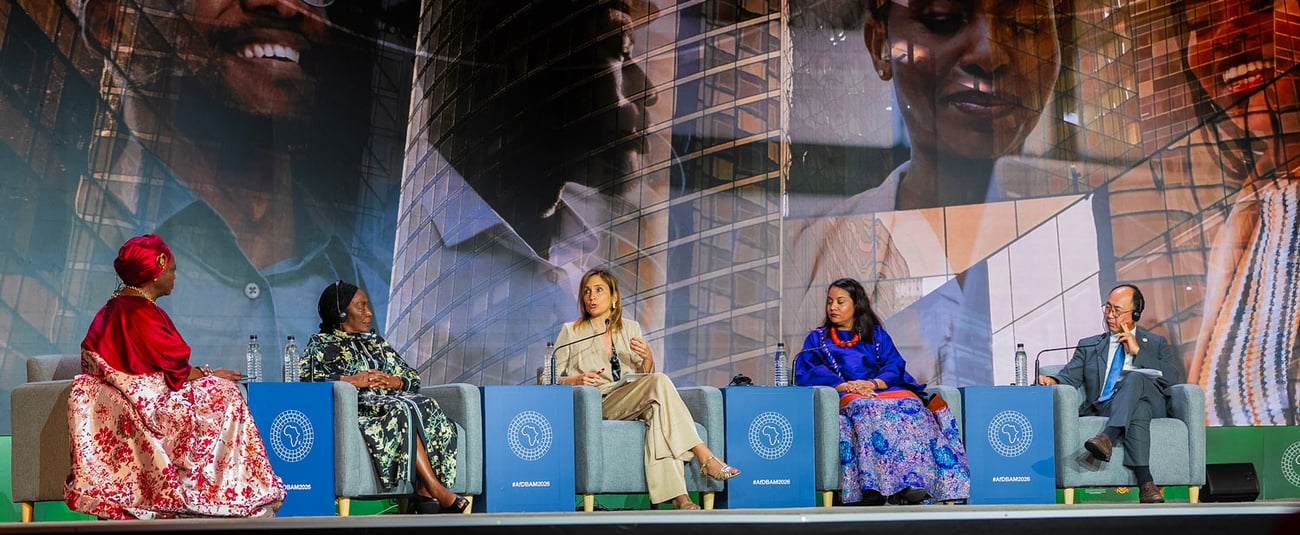
The first panel brought together Ericah Shafudah, Namibia’s Minister of Finance and Governor to the African Development Bank; Dr Sangheon Lee, Chief Economist and Director of the Employment Policy Department at the International Labour Organization (ILO); Federica Diamanti, Associate Vice President for External Relations at the International Fund for Agricultural Development (IFAD); and Mouna El Jaouhari of the United Nations Office for Project Services (UNOPS), covering the Democratic Republic of Congo, Burundi and Rwanda.
Opening the discussion, Minister Shafudah said that many African countries had failed to align education and labour policies with market realities, resulting in persistent youth unemployment despite continued investment in both.
“We are producing more than what is actually demanded in the economy,” she said. “Most countries are not able to absorb all graduates into the labour market.”
She acknowledged that weak coordination between governments and the private sector had compounded skills mismatches.
Lee argued that Africa’s youth employment crisis was fundamentally a challenge of economic transformation, not a “youth problem.”
“The issue is the lack of productive employment,” he said. “Economic growth does not automatically create opportunities.”
Lee warned that many young Africans who find work remain trapped in low-productivity, insecure, and informal jobs, and called for stronger coordination among education systems, industrial policy, and labour market reforms — including improved social protection and better wage structures to incentivise skills development.
Diamanti stressed that although agriculture remains central to Africa’s employment challenge, it is still widely perceived by young people as low-income subsistence work rather than a pathway to prosperity.
“The young generation does not see prosperity in agriculture,” she said and urged
governments to shift from focusing solely on production to building integrated value chains spanning processing, storage, logistics, mechanisation and digital innovation.
She also called for stronger private-sector partnerships to align training with future labour market needs, particularly in artificial intelligence and digital technologies.
El Jaouhari noted that Africa’s economies remained insufficiently job-rich to absorb the millions of young people entering the labour market each year, partly due to infrastructure deficits, limited industrialisation, and fragmented investment strategies.
Making the case for enterprise over employment
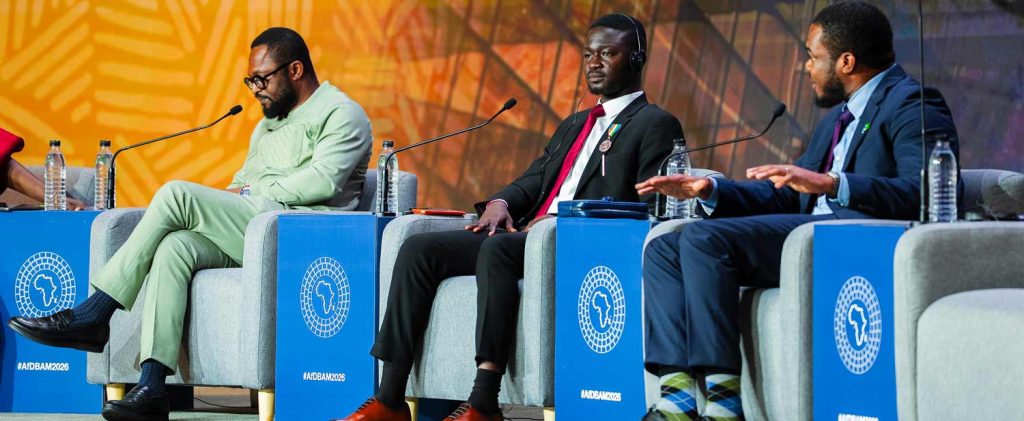
Sa Ben Konaté, President of the Federation of Young Entrepreneurs of Côte d’Ivoire, said social expectations and education systems continue to steer young Africans towards office employment rather than enterprise creation and technical professions.
“We need a shift in mindsets for young Africans,” he said, recounting how he had built a business employing more than 100 people from modest initial capital. He called for stronger incubation systems, vocational training, industrial support facilities, and easier access to credit.
Dr Jide Okeke, Director of Regional Programmes for Africa at UNDP, challenged the notion that African youth were idle, arguing instead that the continent’s core challenge lay in low productivity and poor-quality jobs.
“We need to move from employment based on survival to employment based on enterprise,” he said, citing UNDP’s Timbuktoo initiative, which supports African innovation ecosystems through technology hubs, enterprise incubation and catalytic investment.
Bening Ahmed Wiisichong, Secretary-General of the Pan-African Youth Union, criticised what he described as the superficial inclusion of young people in policymaking and called for stronger institutional engagement through youth councils and regional youth structures.
He urged governments to dismantle barriers to intra-African mobility under the African Continental Free Trade Area (AfCFTA), arguing that cumbersome visa requirements continued to restrict opportunities for young entrepreneurs seeking to expand across borders.
Throughout both panels, speakers stressed that Africa’s demographic transition would yield a genuine dividend only if governments moved beyond policy declarations to implementation, enterprise development and large-scale job creation.
“We should stop counting jobs and start counting value-creating enterprises,” Okeke said.