
From the perspective of the clergy, political gatherings are not judged by the size of their attendance, the militancy of their slogans, or the sophistication of their declarations. They are judged by a higher standard: moral truth, ethical coherence, accountability, and fidelity to the struggles of ordinary people. The ultimate question is whether a gathering provides direction to the wounded, hope to the excluded, and a credible path forward for those who bear the burden of poverty, unemployment, inequality, and social despair.
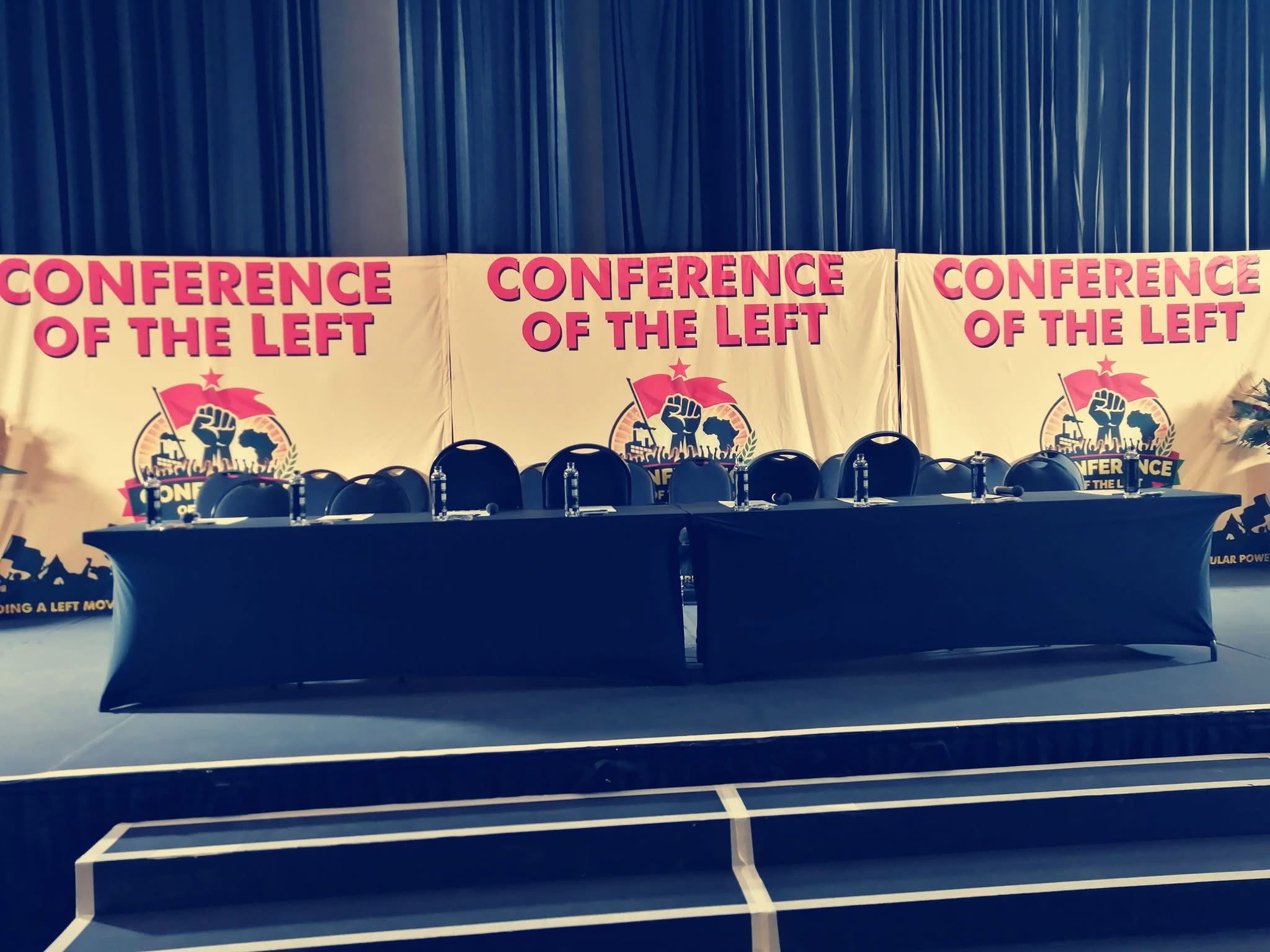
It is through this lens that one must evaluate the so-called “Conference of the Left” convened by the South African Communist Party (SACP). While the conference presents itself as a historic initiative aimed at rebuilding progressive forces and advancing working-class power, a closer examination suggests that it is less a conference of the left than a conference about the crisis of the left.
The distinction is important.
A genuine conference of the left presupposes a degree of ideological coherence, strategic agreement, organisational discipline, and political purpose. It brings together forces that may differ on tactics but share a common understanding of their historical mission and the means through which that mission can be achieved. What emerged from the SACP gathering, however, appears to be something fundamentally different: an assemblage of fragmented political tendencies united more by dissatisfaction with existing conditions than by agreement on a common programme for transformation.
Indeed, the conference’s own framing reveals this contradiction. It describes itself as a platform for dialogue, coordination, strategic reflection, and future convergence. Such objectives are not inherently problematic. Dialogue is necessary. Reflection is essential. Coordination is desirable. Yet these are characteristics of a process seeking unity, not of a movement that has already achieved it.
In theological language, one might say that the gathering resembles a wilderness journey rather than an arrival at the promised land.
The deeper challenge facing the progressive left is not merely organisational fragmentation. Fragmentation itself is a symptom of a more profound crisis: the absence of trusted, visionary, and unifying leadership.
South Africa’s poor are not suffering because there are too few conferences. They are suffering because there are too few leaders willing to confront uncomfortable truths, acknowledge political failures, and rebuild public trust through principled action. The unemployed youth searching for opportunities, the workers confronting economic insecurity, the communities abandoned by failing institutions, and the millions trapped in cycles of poverty require more than declarations. They require leadership capable of transforming social frustration into political direction.
Leadership, however, begins with truth.
One of the most significant weaknesses of the conference is the reluctance among some of its conveners to fully confront their own historical responsibilities. For decades, the SACP participated in alliance politics, exercised influence within government structures, and helped shape strategic decisions that affected the trajectory of democratic South Africa. Any serious project of renewal must therefore begin with an honest assessment of that history.
The principle is simple: there can be no meaningful renewal without self-examination.
In Christian theology, confession precedes restoration. Before healing can occur, wounds must be acknowledged. Before redemption can be proclaimed, responsibility must be accepted. Political movements are not exempt from this principle. A movement that seeks to lead society toward a different future must first demonstrate the courage to critically evaluate its own role in producing the present.
Without such reflection, renewal risks becoming little more than political rebranding.
The conference also exposes a growing ambiguity about the meaning of the term “left” itself. Across the globe, left politics has traditionally been associated with commitments to economic justice, democratic participation, social equality, worker empowerment, and the redistribution of power and resources. Yet within the South African context, the term increasingly risks becoming so broad that it loses all analytical value.
When formations with sharply divergent political traditions, contradictory policy positions, and competing class interests are gathered under a single banner without clear ideological boundaries, unity can easily become confusion. Inclusivity, while important, cannot substitute for political clarity.
Every movement requires principles that define both what it stands for and what it rejects.
Without such boundaries, the concept of the left becomes an empty vessel into which any grievance, frustration, or political ambition can be poured.
From the perspective of the clergy, this represents not merely a strategic problem but a moral one. People who are suffering require clarity. They require honesty. They require movements that possess the courage to define themselves with precision and discipline.
What South Africa desperately needs is not another gathering characterised by unresolved contradictions. It needs a progressive movement anchored in ethical leadership, intellectual rigour, organisational discipline, and an unwavering commitment to social justice.
It needs leaders who are willing to sacrifice personal ambition for collective purpose.
It needs leaders who can unite workers, communities, intellectuals, faith-based organisations, young people, women, and social movements around a coherent programme for national renewal.
It needs leaders who understand that credibility is earned through accountability rather than rhetoric.
For this reason, the SACP’s gathering should not be understood as the rebirth of the left. It should be understood as evidence of the left’s continuing search for itself.
The conference reflects genuine frustrations with economic inequality, social exclusion, and political stagnation. These frustrations are real and legitimate. Yet frustration alone cannot build a movement. Anger alone cannot sustain a political project. Opposition alone cannot provide a vision for the future.
Only principled leadership can accomplish that task.
Until such leadership emerges, the progressive left will remain trapped between memory and possibility—rich in history but uncertain about its future, abundant in rhetoric but limited in direction.
The image that comes to mind is the biblical description of people wandering without guidance: numerous, hopeful, restless, yet lacking a common destination.
The challenge before the South African left is therefore not simply to convene conferences. It is to cultivate leaders capable of transforming fragments into a movement, grievances into a programme, and aspirations into a shared national vision.
Until then, gatherings such as this will remain what they presently appear to be: not a conference of the left, but a reflection of the left’s unfinished struggle to rediscover its purpose.
For the clergy, the priority at this moment should not be participation in politically ambiguous initiatives that have yet to demonstrate ideological coherence, moral accountability, or a credible programme for social transformation. Our calling is to return to the communities, to listen to the cries of the poor, the unemployed, the excluded, and the forgotten.
We must engage the people with humility and honesty, acknowledging the mistakes and shortcomings that have contributed to the erosion of public trust in the African National Congress. Where the movement has failed, we must encourage repentance, correction, and renewal.
In doing so, we should appeal to communities not to abandon the historic mission of transformation, but to participate in its renewal by giving the ANC an opportunity to rebuild itself, restore ethical leadership, and continue the unfinished task of advancing social justice, equality, and a better life for all South Africans.